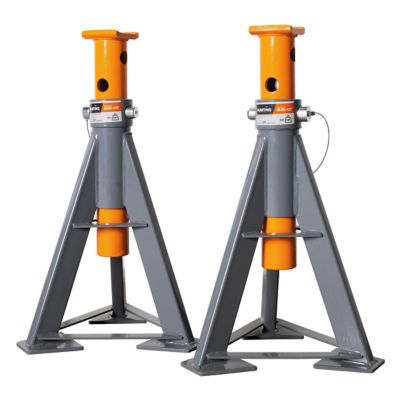
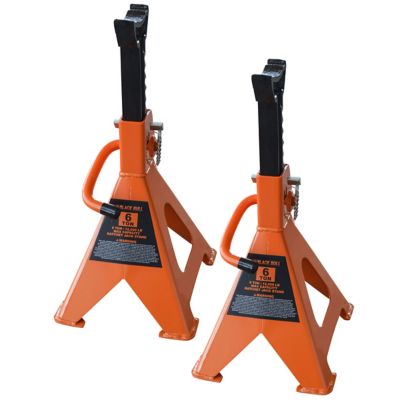
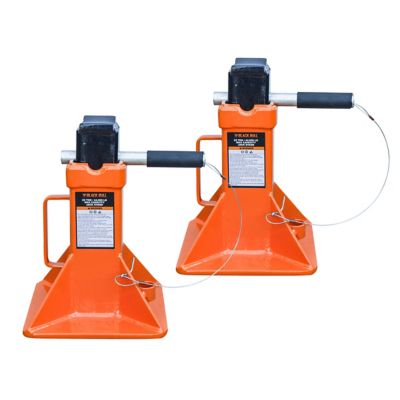
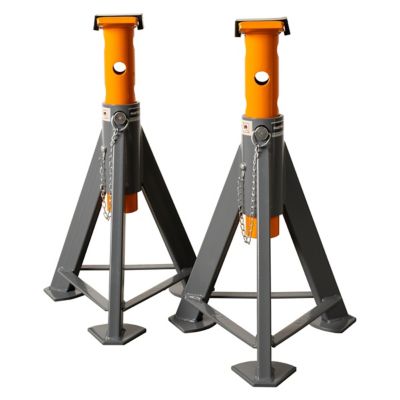
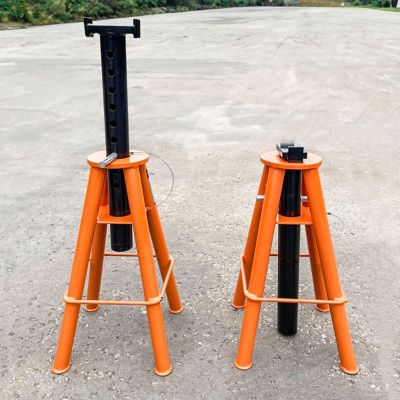
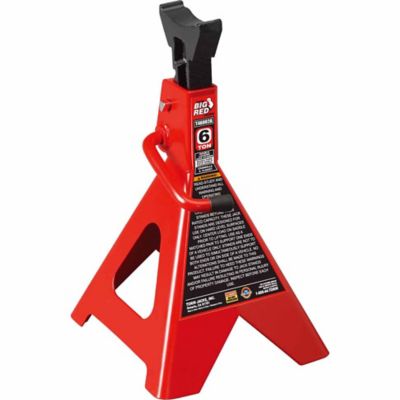
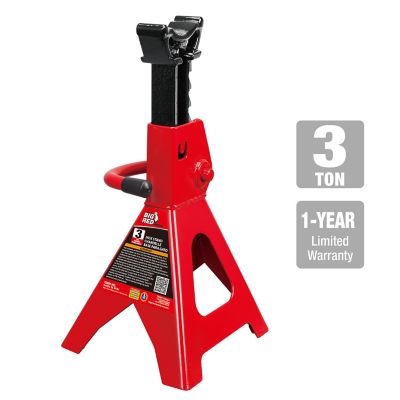
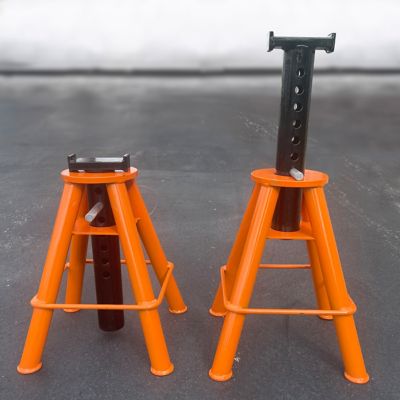
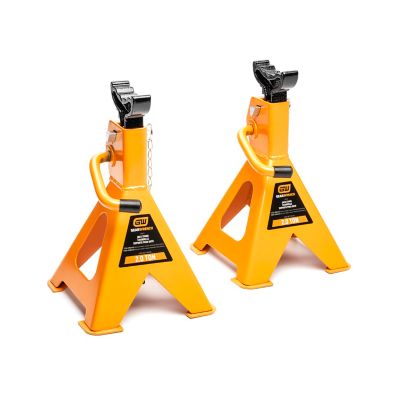
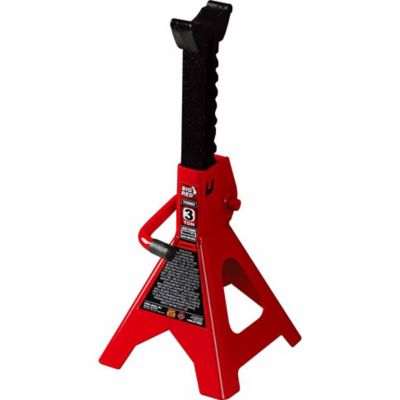
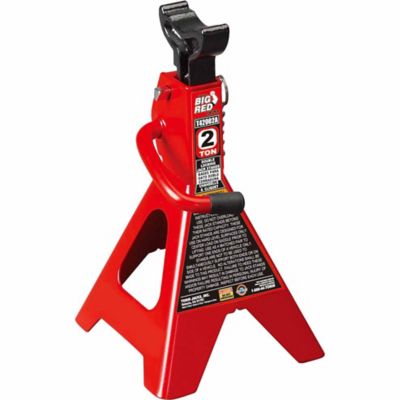
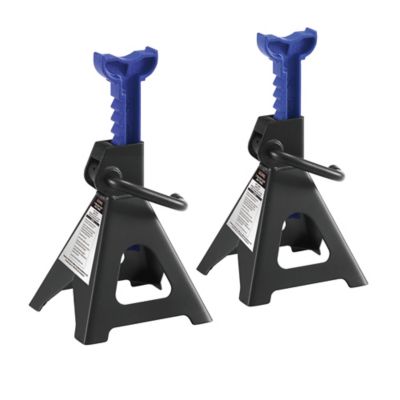
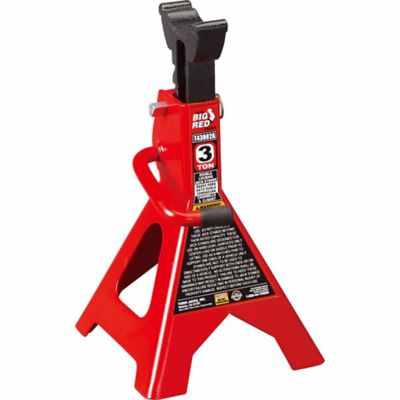
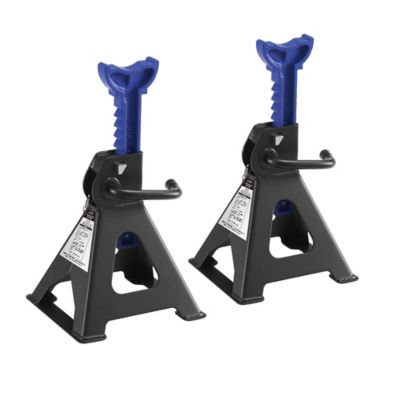
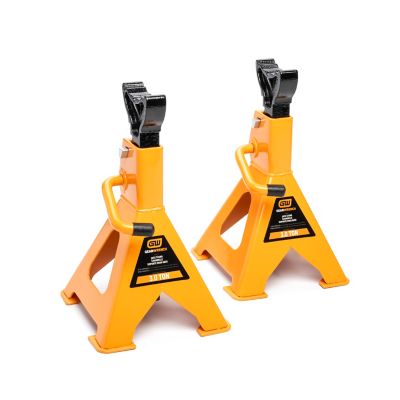
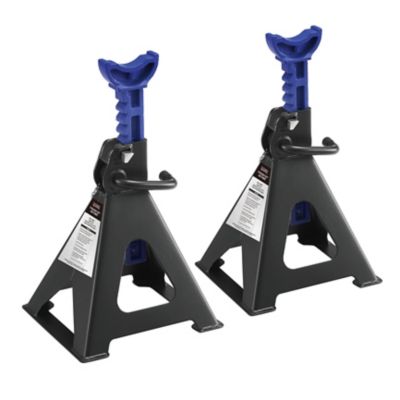
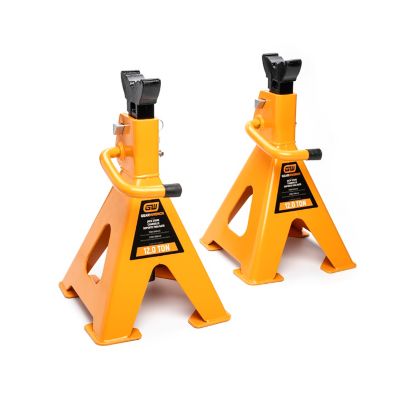
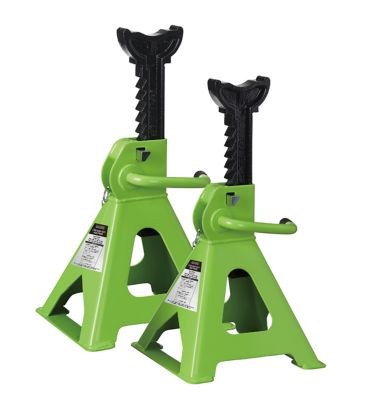
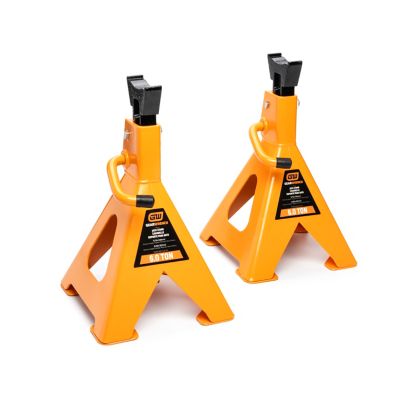
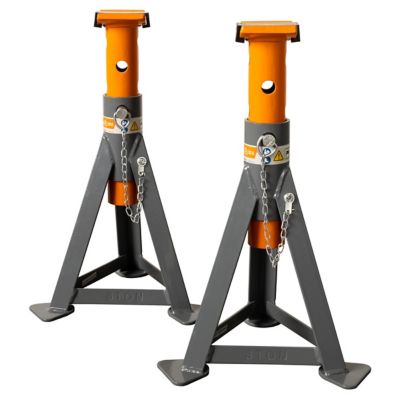
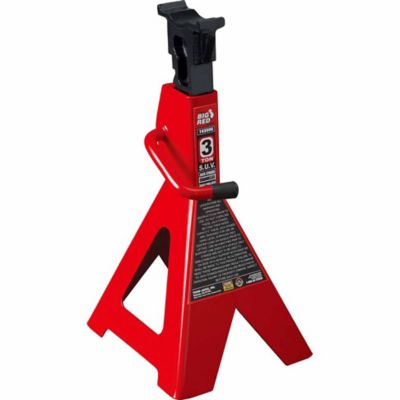
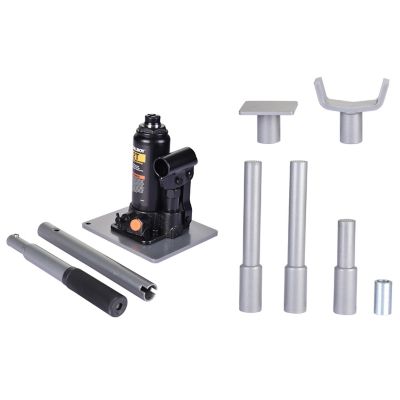
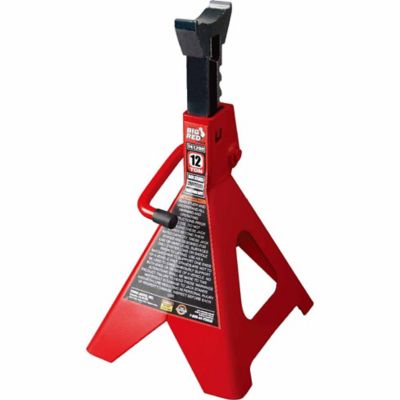
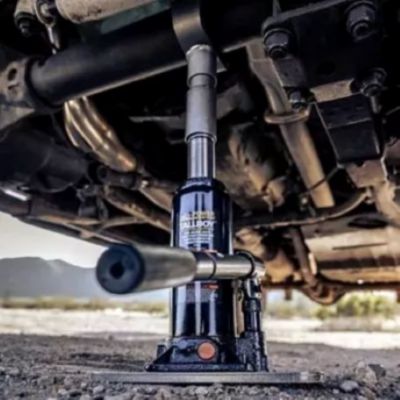
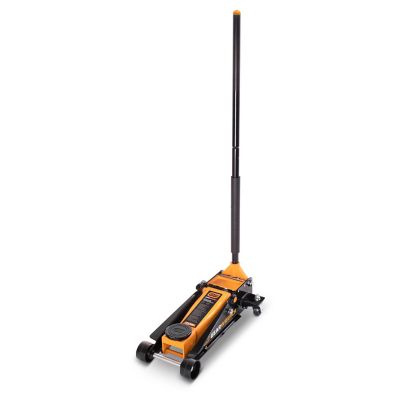
Jack stands for trucks provide stationary support for a raised pickup, SUV, or other compatible vehicle while maintenance and repair work takes place. Many trucks call for greater weight capacity and a taller support range than passenger cars, but the right match depends on the vehicle and the stand manufacturer’s requirements—not simply whether a stand looks heavy enough. A compact pickup and a farm truck carrying a service body can have very different support needs. Rated capacity, minimum and maximum support height, saddle shape, and base dimensions all matter when comparing truck jack stands. Capacity deserves particular attention because a rating may apply to a pair of stands or to an individual stand, depending on the manufacturer. A pair’s rating should never be mistaken for the capacity of each stand. Vehicle weight information, permanently mounted equipment, remaining cargo, and the planned support arrangement help establish what the equipment must handle. Simply dividing the truck’s weight by four is not a sound way to select a stand rating. Loads do not always distribute evenly, and vehicle configurations differ. The owner’s manual and the jack stand instructions are the references for approved support locations, capacity requirements, and operating limits. For someone keeping a pickup ready for feed runs, hauling fencing supplies, or making trips between the house and pasture, suitable stands are part of a properly equipped shop. They also serve drivers handling routine wheel and brake maintenance, provided the stands suit the vehicle and the work. A hydraulic floor jack raises the load; jack stands support it once properly positioned and loaded according to their instructions. Those jobs are different, and a lifting jack is not a substitute for stands. Nobody should get beneath a vehicle supported only by a hydraulic jack. That distinction matters whether the work takes ten minutes or fills an afternoon in the farm shop. Choosing equipment around the truck’s actual requirements is more useful than buying by appearance, handle size, or a capacity number alone.
Support height is where truck applications often separate themselves from lower-clearance vehicles. A stand needs to fit beneath the approved support point at its lowest setting and reach the required working height without exceeding its limits. Taller tires, suspension changes, and a higher frame can increase the reach needed, though a lifted truck does not automatically make every tall stand suitable. Minimum height matters, too: an otherwise suitable stand may not fit into the intended setup if its lowest position is too high. The floor jack’s lifting range, the truck’s approved lifting and support points, and the stands’ adjustment range need to work together. Stacking blocks beneath a stand or adding an improvised saddle extension is not a substitute for equipment designed for the job. For lower-clearance passenger vehicles,
Jack Stands for Cars offers a separate category to consider against the vehicle’s requirements. Truck stands can have pin-style or ratcheting height adjustment, with locking arrangements that vary by design. The important details are positive engagement, readable instructions, and a mechanism that can be checked before the load rests on it. Some designs include an additional locking feature, but that feature does not replace correct setup or inspection. Saddle shape also deserves a close look. The contact surface must suit the manufacturer-approved support point without resting against vulnerable lines, brackets, or components. A frame rail and an axle tube present different contact shapes, and neither is automatically an approved location on every truck. Base width and construction affect the stand’s footprint, while the size of the feet affects how that footprint meets the floor. Broad bases can take up more room around a wheel or beneath the chassis, so working clearance matters alongside height. The goal is a compatible support arrangement, not just enough room to slide a stand under the truck.
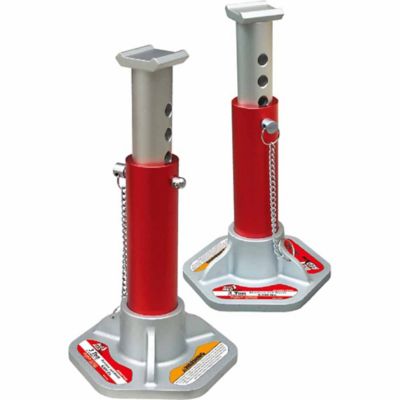
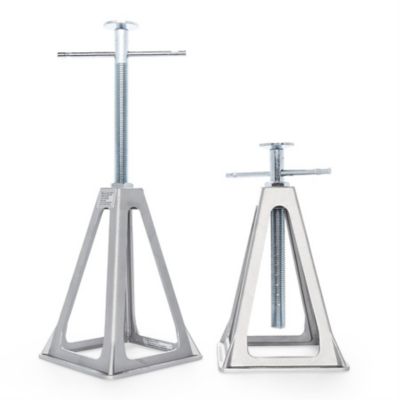
Steel is a common material for truck jack stands, with formed or welded sections providing the structure that carries the load. Some stands feature aluminum construction, which can make carrying and positioning them easier, but material alone does not establish suitability for a truck. The stated rating and intended application still come first. Painted and powder-coated finishes help protect exposed metal, although chips, trapped moisture, and shop grime can leave surfaces needing attention. Stands that spend time beside a feed-room door or beneath a workbench benefit from dry storage where the locking parts and labels remain protected. Before each job, inspection should cover the base, support column, saddle, welds where present, and all locking components. Bent parts, cracks, substantial corrosion, missing hardware, or a locking mechanism that does not engage properly are reasons to take a stand out of service. Repairs, lubrication, and replacement parts should follow the manufacturer’s directions; welding on a damaged stand or substituting a bolt for a specified pin can change how the equipment carries a load. Keeping a matched pair together also helps prevent mix-ups between stands with different ratings or adjustment systems. The shop floor matters as much as the equipment. Jack stands belong on a hard, level surface that meets their instructions, typically sound concrete—not loose gravel, dirt, or asphalt that can allow the feet to sink or shift. Wheel chocks and the vehicle manufacturer’s parking and support procedures help address movement, while clear floor space makes positioning easier to check. For someone who handles maintenance on a family pickup or keeps a working truck going between jobs, stands can make a practical gift when the vehicle requirements are known. Capacity, reach, contact fit, and storage space make better selection points than appearance. Whether the truck is a daily driver or a regular part of chores around the property, properly matched jack stands belong in a maintenance setup built around the vehicle, the task, and safe support.