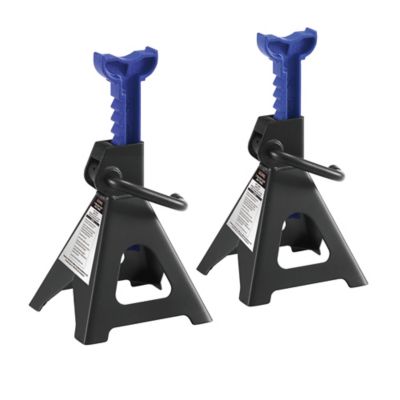
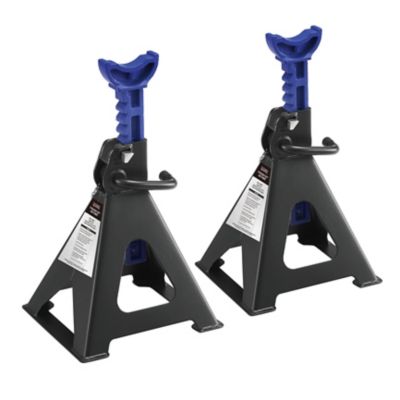
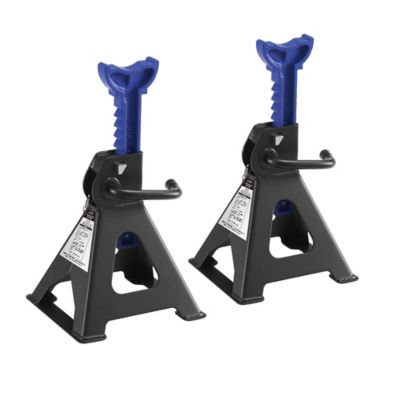
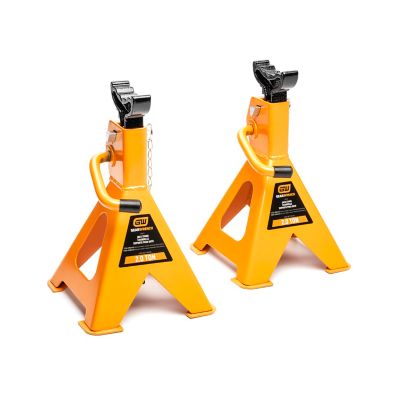
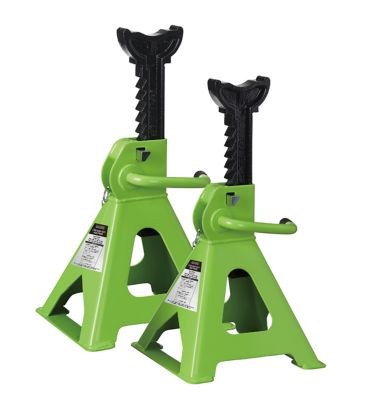
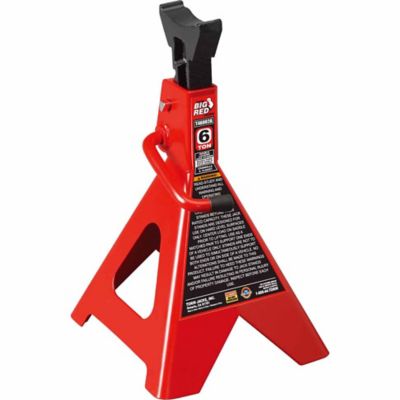
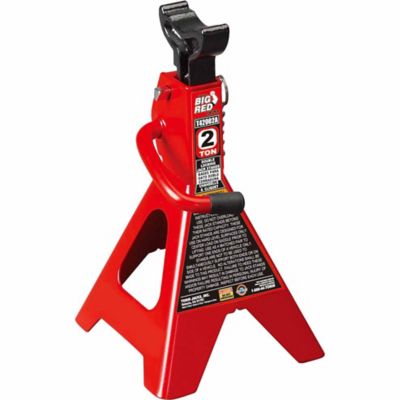
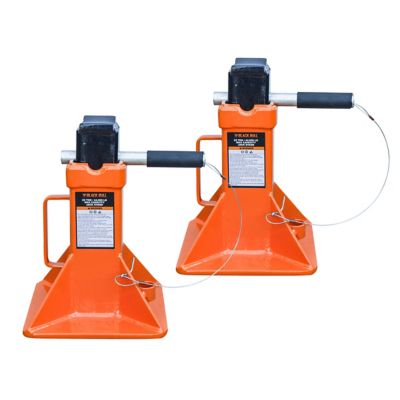
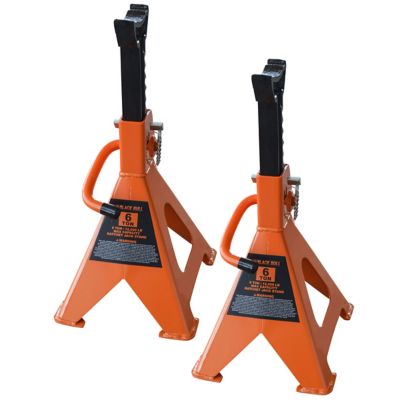
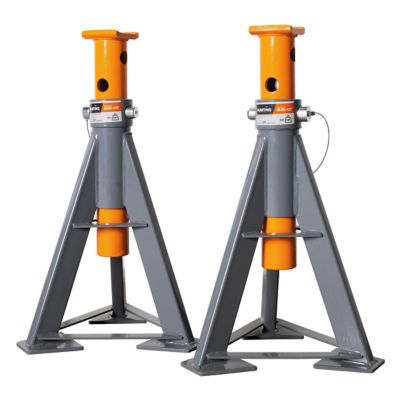
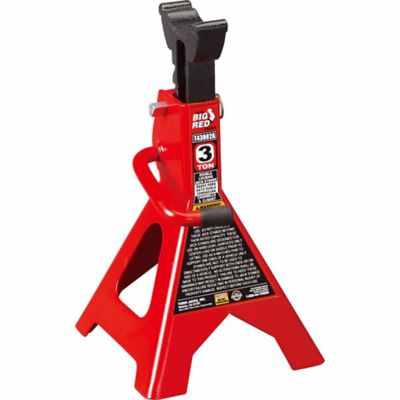
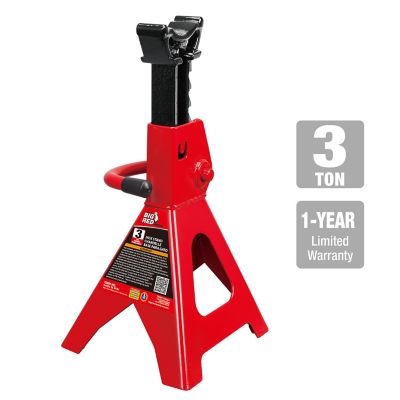
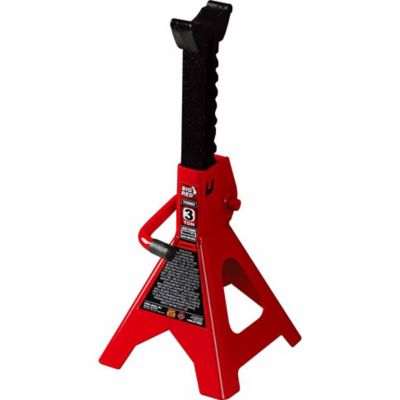
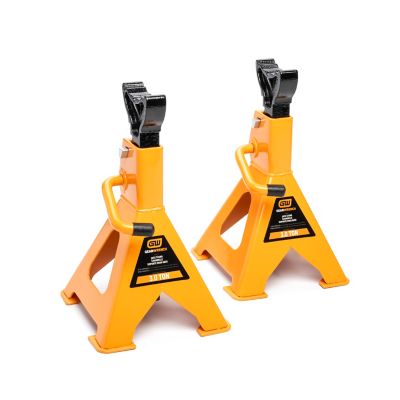
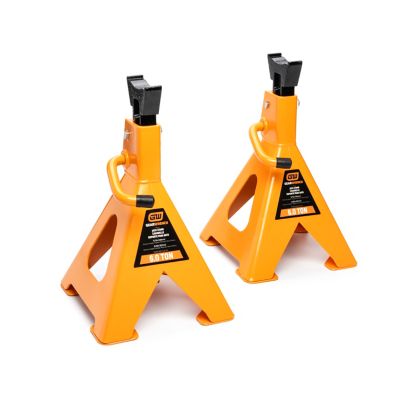
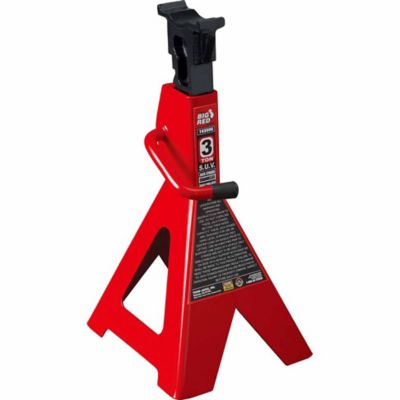
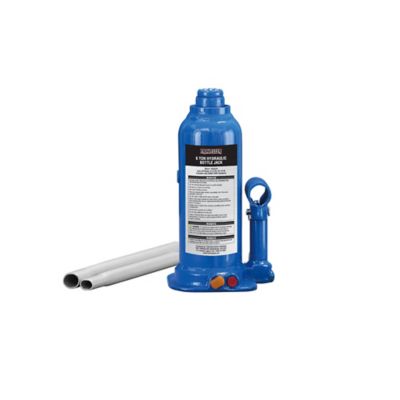
Heavy-duty jack stands provide stationary support for raised vehicles and equipment while maintenance or repairs are underway. They belong alongside a suitable lifting jack, not in place of one: the jack raises the load, while properly positioned stands support it at approved contact points. That distinction matters when a pickup needs brake work, a utility trailer needs attention at the running gear, or a shop truck needs suspension service. Hydraulic pressure alone is not a safe way to hold a vehicle above someone working underneath it. Heavy-duty stands serve farm shops, repair bays, fleet maintenance crews, and home garages where larger loads call for more support than a light-duty stand can provide. Their intended applications depend on the stated capacity, working height, saddle design, and equipment manufacturer’s requirements—not simply the words “heavy duty” on the label. Capacity deserves particular attention because manufacturers may rate a stand individually or rate a matched pair together. A pair rating is not the rating of each stand, and two individually rated stands should not automatically be treated as having a combined capacity unless the manufacturer permits that arrangement. For ratings expressed in U.S. short tons, one ton equals 2,000 pounds. The load on the stands also depends on how much of the vehicle is raised and how its weight is distributed; each support may not carry an equal share. A lifted pickup, a loaded work truck, and an empty trailer can put very different demands on their supports, even when they appear similar in size. The most useful comparison is between the stand’s documented rating and the support requirements for the actual job. Matching pairs, readable capacity labels, and clear operating instructions make those comparisons easier. A higher weight rating offers no substitute for the correct support point or a stable setup, and stands should never carry more than their stated limits. Equipment with articulated frames, suspended attachments, or unusual weight distribution may require specialized supports and blocking rather than ordinary vehicle stands.
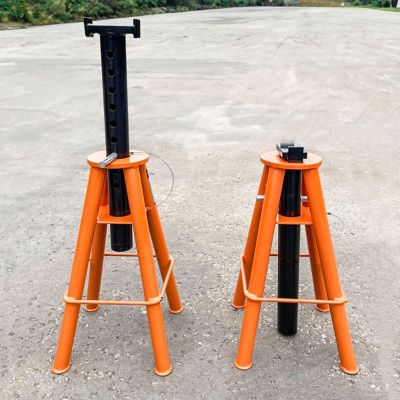
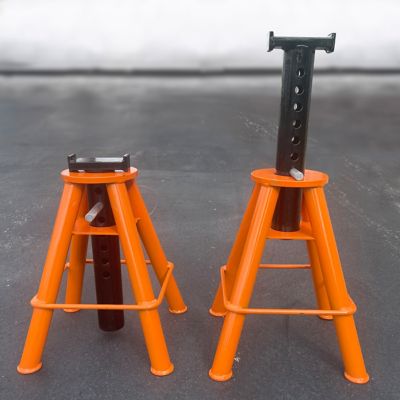
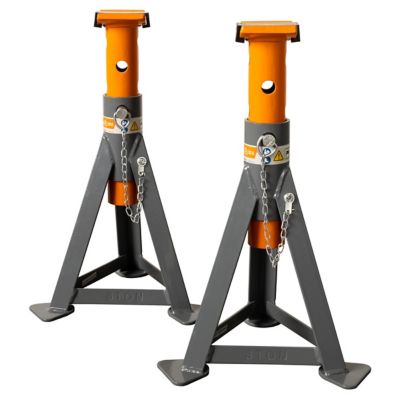
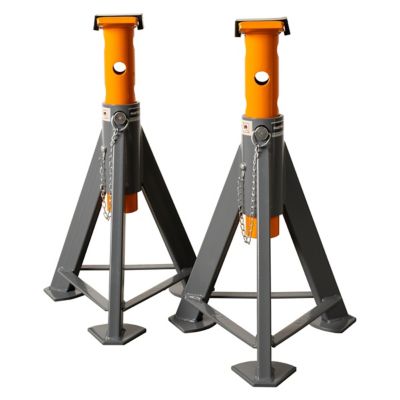
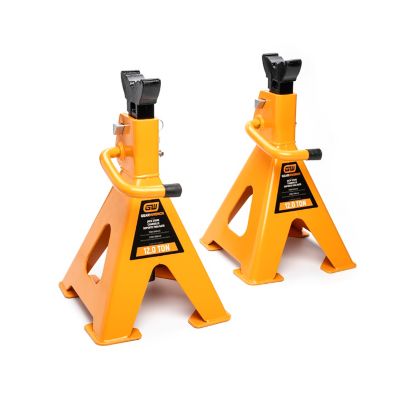
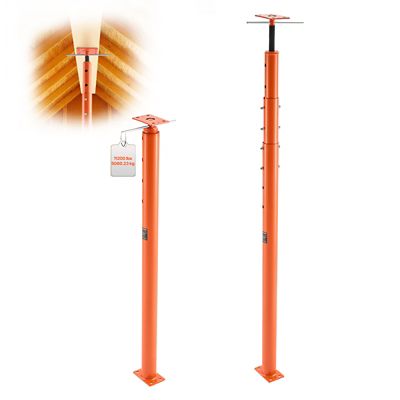
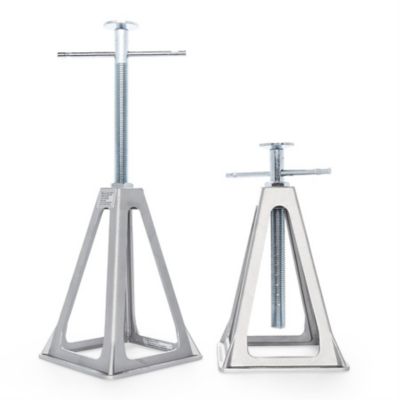
Construction and fit determine how a heavy-duty jack stand works in a particular shop. Steel is common in this category, with welded frames, formed legs, and reinforcing members carrying the load from the saddle down to the floor. Some designs have an open, four-legged base, while others have a broad plate or another footprint suited to their intended application. A wider footprint can help resist tipping, but no base shape makes dirt, gravel, sloping ground, or soft asphalt a suitable working surface. These supports generally require hard, level concrete that can bear the load, unless the manufacturer specifies another approved surface. The base needs room to sit flat without rocking, crowding a floor drain, or resting partly over an edge. Above that base, the support column may adjust through a ratchet mechanism or a series of holes secured by a load-bearing pin. Ratchet designs offer closely spaced height positions, while pin-style designs provide fixed settings along the column. Neither mechanism should be judged by appearance alone; the stated rating, full engagement of the locking components, and manufacturer’s instructions determine its proper application. Any secondary lock supplied with the stand also needs to be engaged as directed. Minimum and maximum support heights matter just as much as capacity. A tall stand may suit a truck frame but fail to fit beneath a lower support point, while a shorter stand may not reach the approved contact point at the required working position. The lifting jack must also have enough suitable travel to place the load onto the stands without exceeding its own limits. Saddle shape and width help determine whether the stand fits a frame rail, an axle housing, or another approved contact area. Contact surfaces should seat securely rather than balance on an edge, bracket, or rounded section that the vehicle manufacturer does not identify as a support point. Scrap lumber, loose spacers, and improvised extensions are not substitutes for a stand with the proper working range. Manufacturer-approved adapters may address certain applications, but they must be compatible with the stand and the equipment being supported.
In a working garage, the best-fitting stand is one that suits both the vehicle and the space around the repair. A broad base needs clearance beneath the chassis, and the saddle must reach its support point without interfering with the parts coming off. Brake service, axle work, and suspension repairs can require different support locations because removing a component may change what can safely carry the vehicle’s weight. Stands should not support a part that is about to be removed, and major component removal can shift the load enough to require a different support arrangement. Pickup owners comparing support options can also browse
Jack Stands for Trucks with their vehicle’s required support height, contact points, and load rating in mind. Around the farm, similar care applies to trailers and equipment: a support suitable for a truck axle is not automatically suitable for a tractor, raised implement, or machine with a moving frame. Those jobs may call for dedicated stands, mechanical locks, or blocking specified by the equipment maker. Wheel chocks and any parking-brake requirements should follow the vehicle instructions, with movement controlled before work begins. Keeping stands in service also takes more than wiping them off after a greasy job. Before each use, check for bent legs, cracked welds, damaged teeth, distorted pin holes, missing retainers, and corrosion that could weaken a load-bearing section. A stand that has been overloaded, struck hard, or visibly damaged should be taken out of service rather than straightened or welded back together without manufacturer authorization. Dirt and packed grease can hide damage or keep a locking mechanism from seating fully. Cleaning methods and lubrication should follow the stand manufacturer’s directions, and labels need to remain legible. Dry storage helps limit corrosion, while keeping matched stands and their original locking parts together makes the next job easier to set up. For the person tending a work truck between chores or maintaining several vehicles in a shop, properly matched heavy-duty jack stands provide an important mechanical support during repairs.