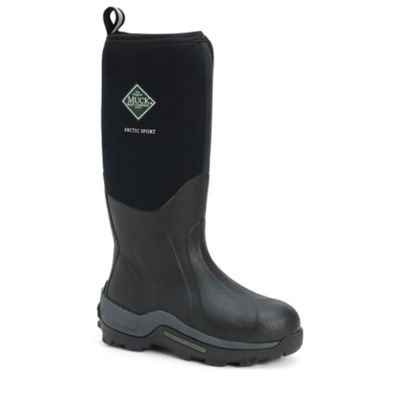
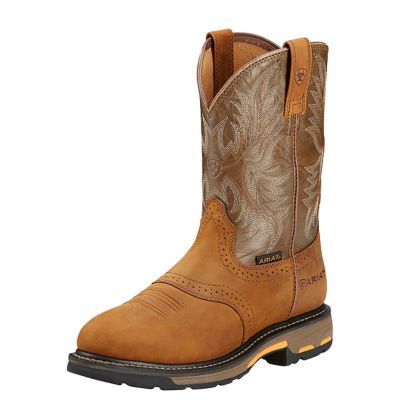
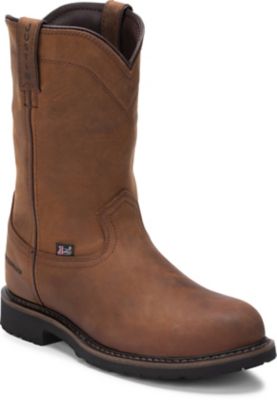
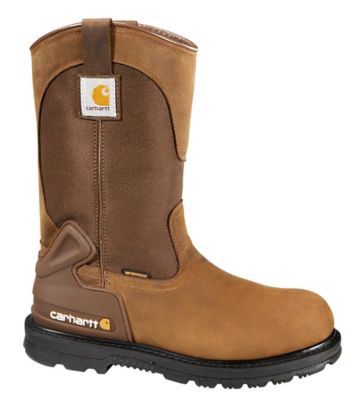
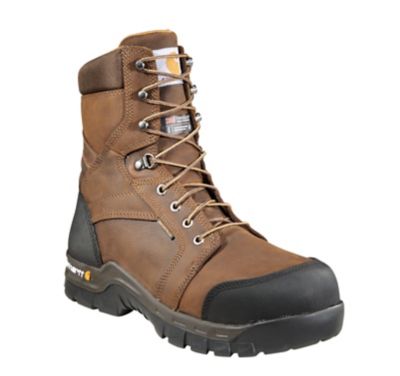
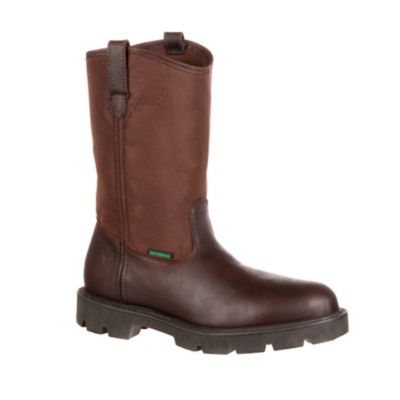
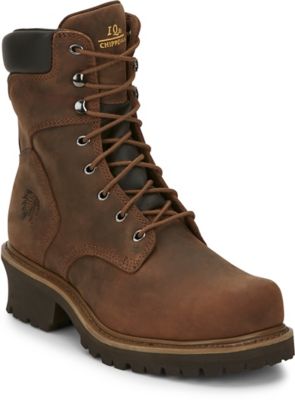
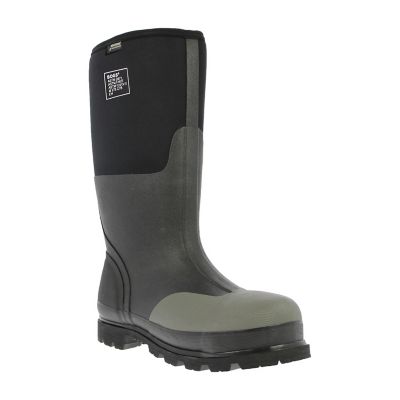
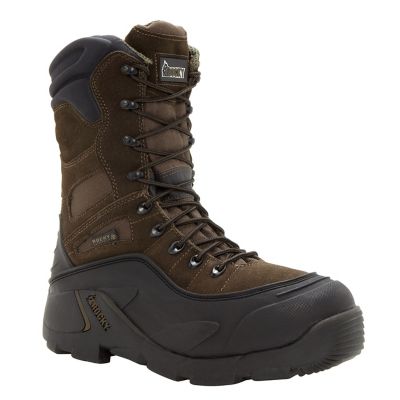
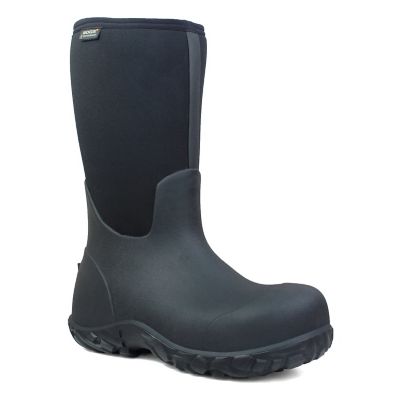
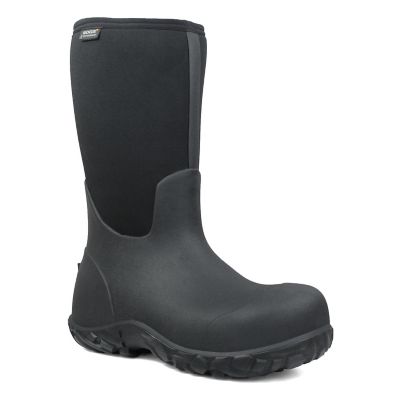
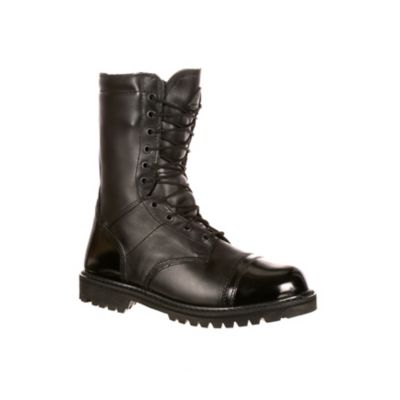
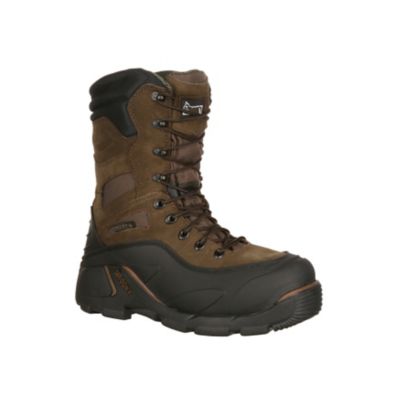
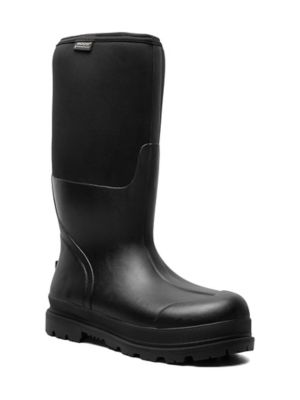
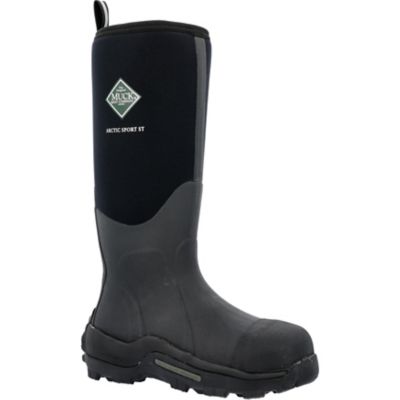
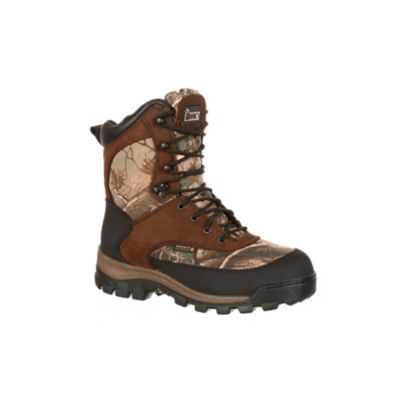
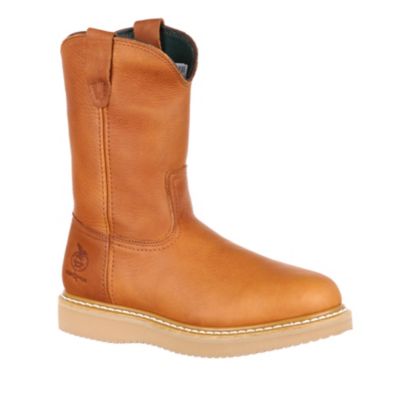
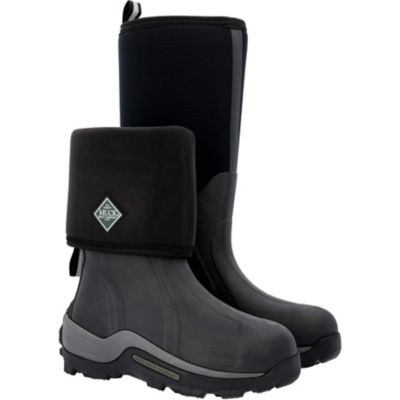
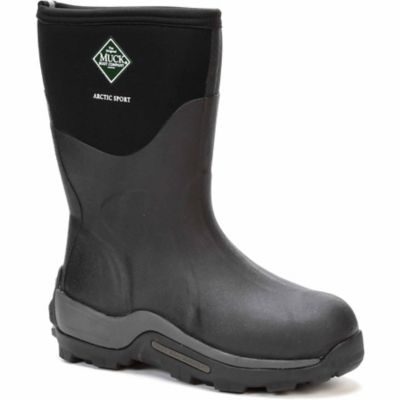
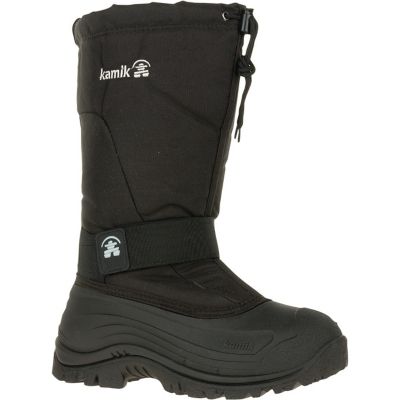
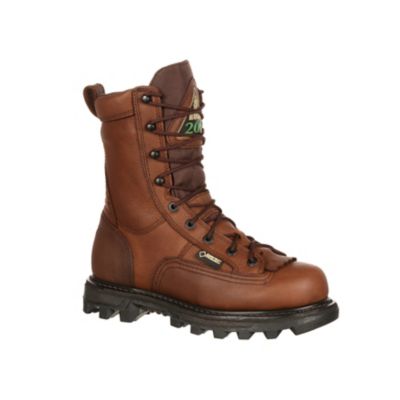
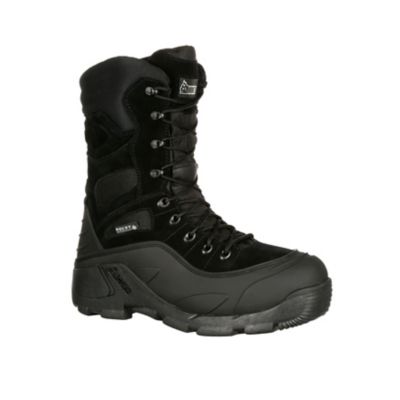
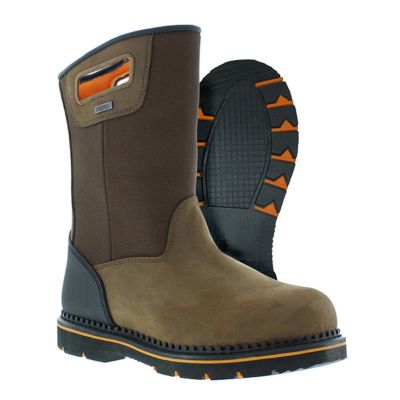
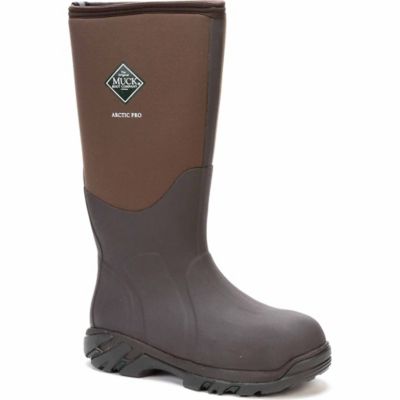
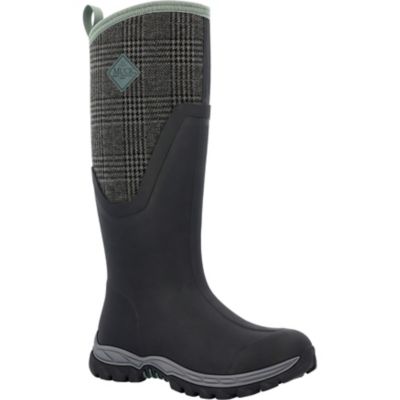
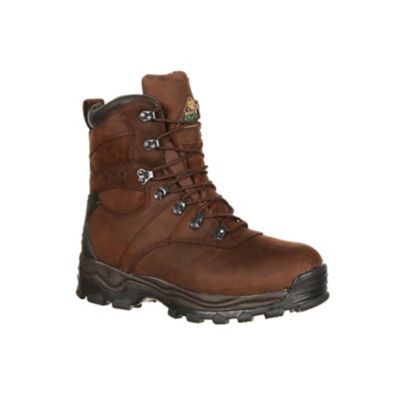
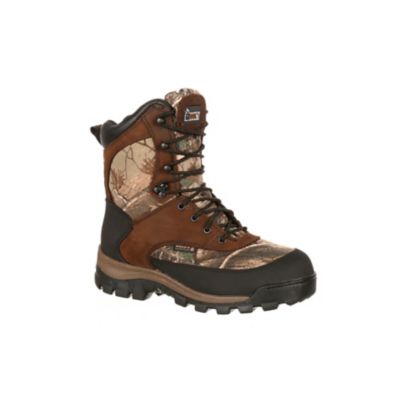
Insulated pull-on work boots are built for the kind of days when the ground is wet, the air bites at your ears, and getting out the door needs to happen without fuss. Their laceless design makes them easy to step into, which comes in handy when you are heading out before daylight to check livestock, clear a gate, load feed, or get a job started at the shop. A tall shaft helps cover more of the lower leg, while built-in insulation helps hold warmth around the foot during cooler months. Many pairs combine an insulated lining with a waterproof membrane, sealed construction, or a rubberized exterior to help keep out rain, slush, mud, and melting snow. Keeping moisture away matters because wet insulation loses much of its ability to hold heat. For work around barns, farms, ranches, construction sites, winter roads, and outdoor maintenance, look for boots that match the conditions you face most often. A pair intended for damp fall ground may feel different from one made for standing in deep snow or spending long stretches outside in freezing weather. If your routine takes you through muddy lots and puddled gravel, a waterproof pull-on boot with a smooth, easy-to-clean exterior can save time at the end of the day. If you spend hours on hard floors or frozen ground, pay close attention to cushioning, arch support, and the way the sole flexes beneath your stride.
Insulation weight is one of the main details to compare when shopping. Around 400 grams can offer a practical balance for ordinary cold-weather work, especially when you stay active and move between indoor and outdoor spaces. For deep snow, long periods below freezing, or slower-paced work where your feet are not generating as much heat, 600 grams or more may be a better fit. More insulation is not always the best match for every person or task, since an overly warm boot can lead to sweating when you are hauling, walking, or working hard. Moisture from sweat can leave feet chilled later, so pair insulated boots with wool or moisture-managing socks and leave enough room for your toes to move. Avoid packing on extra socks if they make the boot tight; cramped toes have less room to circulate warmth. Fit is especially important in a pull-on style because there are no laces to fine-tune after you step inside. The heel should stay in place with only a small amount of natural lift, the instep should feel secure without pressure, and the shaft should not pinch your calf when you squat or climb. Try boots on with the socks you expect to wear on the job, and check the fit late in the day when feet have had time to swell. A roomy toe box helps with comfort, while a firm heel counter can help keep your stride steady on uneven ground. Outsoles also deserve a close look. Deep tread can help grip muddy paths, packed snow, and loose soil, while oil-resistant or slip-resistant compounds may be useful around equipment, sheds, and shop floors. For more demanding cold-weather conditions, browse
Heavy Duty Insulated Boots for taller coverage and construction suited to tough outdoor work.
Safety needs vary by task, employer, and worksite, so check the job requirements before choosing a pair. Steel-toe and composite-toe options can help protect against falling tools, equipment, lumber, and other hazards, and models marked to meet applicable ASTM standards may be required for certain jobs. Steel toes are known for a strong protective barrier, while composite toes are nonmetallic and can be useful where metal-free footwear is requested or where cold transfer through the toe is a concern. Neither safety toe type replaces careful footing, proper site practices, or attention to the boot’s other protective features. Look for a sole with a stable heel, traction suited to the ground underfoot, and enough flexibility for climbing into a truck, stepping over a threshold, or walking across uneven pasture. Pull-on boots also make a practical gift for someone who spends more time outside than they do in the living room. They can be a thoughtful choice for a farmer, ranch hand, utility worker, tradesperson, grounds crew member, or anyone who checks animals and equipment through cold, wet weather. When giving boots as a gift, knowing the recipient’s usual size, preferred toe protection, and typical work conditions will make the choice easier. Consider whether they need a shorter boot for driving and indoor chores or a taller shaft for mud, snow, and standing water. Look at care instructions as well: brushing off grit, rinsing away salt, drying boots away from direct heat, and allowing the lining to air out can help preserve fit and comfort through the season. With the right insulation, waterproof protection, safety features, and tread, pull-on work boots can make early-morning chores, winter maintenance, and long outdoor shifts more manageable from the first step to the last.