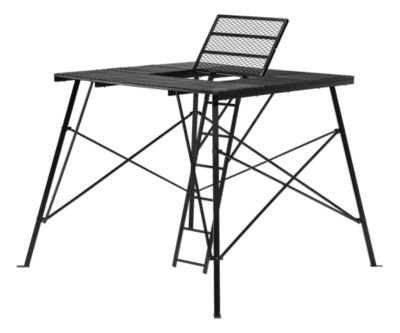
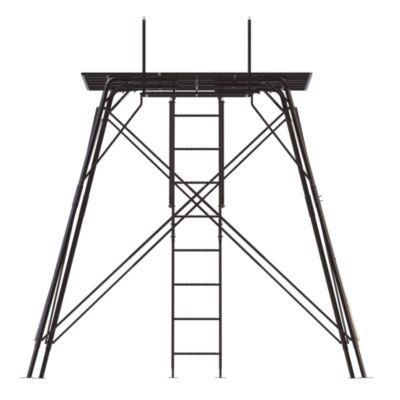
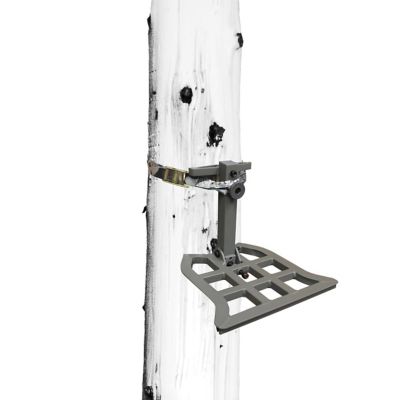
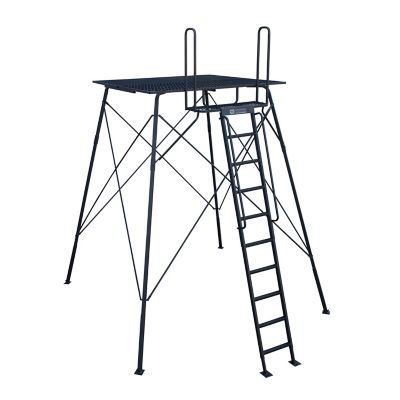
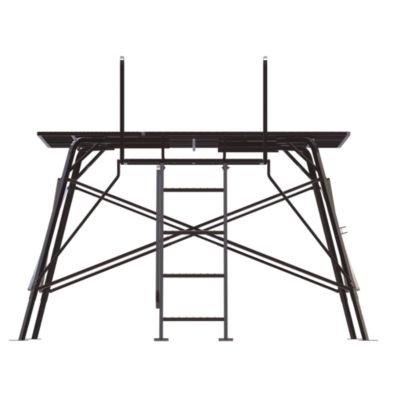
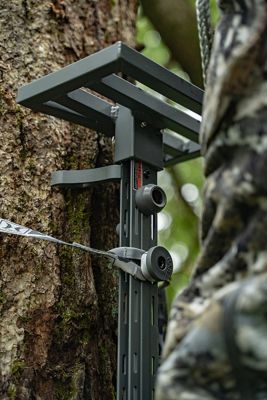
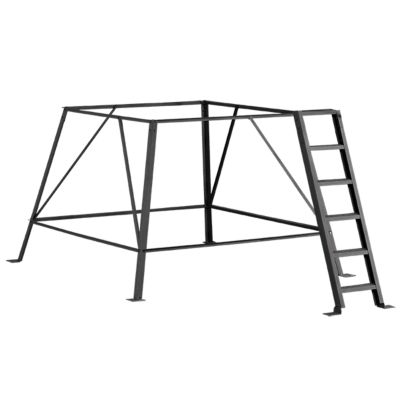
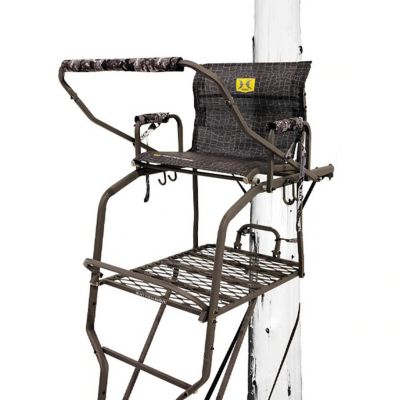
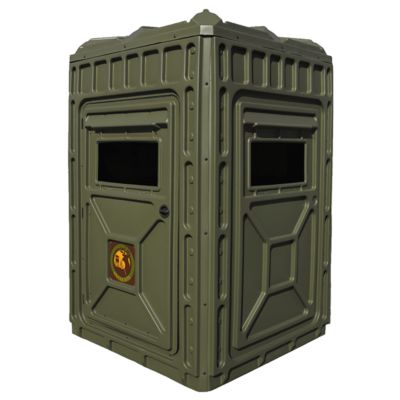
Hunting platforms provide a raised standing surface for a hunter, but the term covers two different types of equipment: compact tree saddle platforms and larger platforms that support elevated hunting blinds. A saddle platform attaches to a suitable tree and gives a hunter foot support while a compatible hunting saddle and tether support the body. A blind platform is a larger structural base, often supported by steel legs, that holds a compatible soft-sided or hard-sided blind above the ground. These designs serve different purposes and are not interchangeable. For someone walking into a timber tract with a pack, a small saddle hunting platform keeps the setup centered on portability, boot room, and secure tree attachment. For a landowner establishing a longer-term hunting spot along a field edge, an elevated blind platform puts more emphasis on deck dimensions, structural support, access, and blind compatibility. Neither category replaces the safety equipment or installation requirements specified by its manufacturer. Platform size makes a noticeable difference once boots and hunting gear enter the picture. A compact foot platform may pack neatly against a bag, while a wider standing surface can offer more room to reposition feet during a long sit. The right fit depends on boot size, the hunter’s stance, and whether the platform is designed to accommodate leaning, sitting, or standing movements within a saddle system. On a blind platform, the deck needs to match the blind’s approved footprint and mounting arrangement, not merely look large enough from the ground. Interior space also matters when the setup includes seating, packs, and another hunter. An elevated position can improve the view over some brush or uneven ground, but it does not guarantee a clear shooting lane or keep human scent from reaching wildlife. The intended hunting location, permitted equipment, and manufacturer’s limits should shape the choice before platform height or deck size takes center stage.
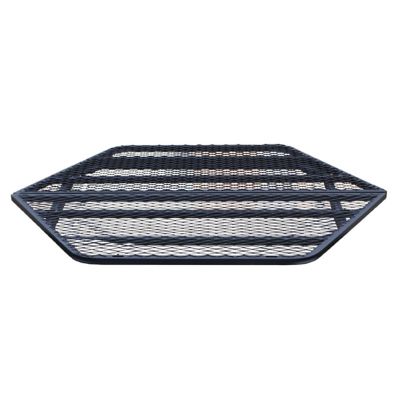
Materials and construction affect how a hunting platform carries, feels underfoot, and holds up through repeated trips. Aluminum is common in mobile saddle platforms because it helps keep pack weight manageable, while steel is common in larger raised blind platforms where a substantial framework supports the deck and enclosure. Actual equipment weight and load capacity still depend on the complete design; material alone does not establish either one. Cast shapes, welded frames, bracing, attachment points, and deck construction all contribute to how a platform performs within its stated limits. Textured foot surfaces can help boots maintain purchase, though no surface removes the need for careful footing. Open deck patterns may allow dirt and moisture to pass through, while solid surfaces have different cleaning and maintenance needs. Powder-coated steel needs attention wherever scratches expose bare metal, and aluminum components still need inspection for cracks, distortion, and damage around attachment points. On a tree saddle platform, strap condition, buckle operation, tree contact, and any leveling adjustment deserve as much consideration as the standing surface. Tree diameter and shape must fall within the manufacturer’s requirements, and a platform that attaches one way may not accommodate every climbing system or saddle arrangement. Larger hunting blind platforms bring another set of fit considerations: level bearing surfaces, specified footing conditions, anchoring, bracing, and approved blind connections. A flat-looking patch beside a pasture is not enough to establish that a tower belongs there. Ground conditions, overhead clearance, access restrictions, and the complete assembly instructions all matter. Capacity ratings also need a close reading because the stated limit may account for occupants, equipment, the blind, or other loads in a particular way. A roomy deck does not mean it can carry additional people. Ladders, stairs, rails, and entry openings should match the approved setup, with room to enter and exit as intended. For elevated hunting, the manufacturer-specified fall-protection system and attachment procedures remain essential; a foot platform, ladder, or blind enclosure is not a substitute.
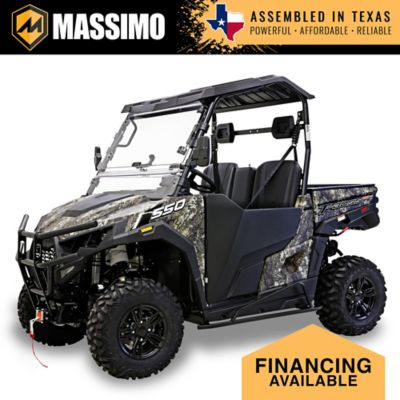
The best match often comes down to how far the equipment travels and how long it stays in one place. A hunter moving between permitted trees may put a higher value on a compact profile, manageable carrying weight, and attachment hardware that stays organized in a pack. Someone maintaining a fixed blind on private land may care more about deck room, compatible entry arrangements, and the ability to inspect the structure without overlooking connections beneath the blind. A shared hunting spot also calls for a careful look at each person’s ability to manage the climb and entry; extra height is no benefit if access does not suit the people who will hunt there. Transportation deserves attention before a large platform reaches the property gate. Frame sections, ladders, and deck panels can be awkward to carry through narrow openings or across rough ground. Access planning may also include
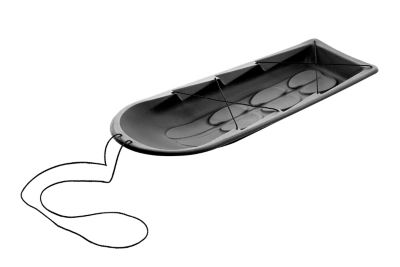
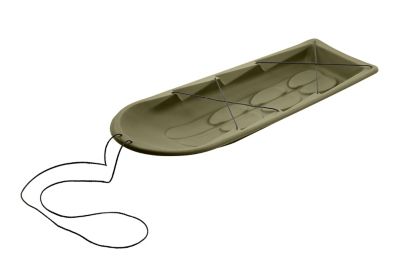
Hunting Vehicles, with the vehicle’s cargo limits, approved tie-down points, and property rules setting the boundaries for hauling equipment. Once in place, a platform benefits from regular inspection rather than a glance from the ground. Loose hardware, worn straps, damaged welds, bent components, and changes around footings or anchors are reasons to stop and address the issue according to the manufacturer’s directions. Replacement parts need to match the approved system; improvised repairs and unapproved alterations can change how the structure carries weight. Cleaning away mud and debris, allowing components to dry before storage, and keeping straps away from damaging chemicals help preserve the equipment between outings. For a gift, compatibility matters more than guessing at a hunter’s preferred setup. Knowing the intended tree saddle system, blind dimensions, access needs, and carrying preferences helps narrow the field. Whether the goal is a packable foothold in the woods or a raised base overlooking open ground, hunting platforms should suit the location, the hunter, and the complete equipment system—not just the view from the top.