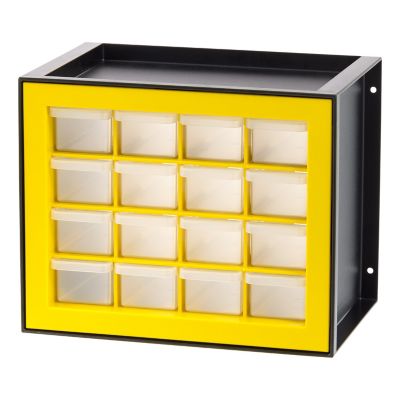
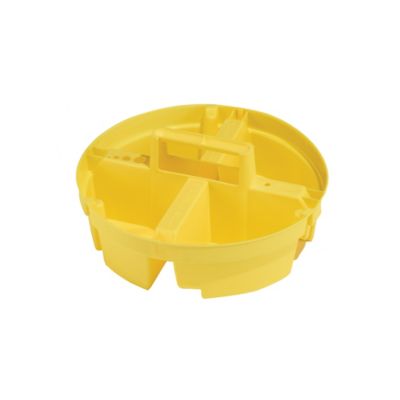
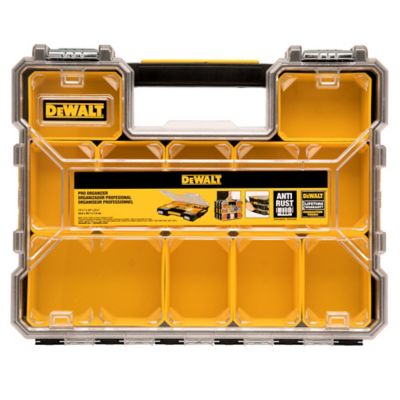
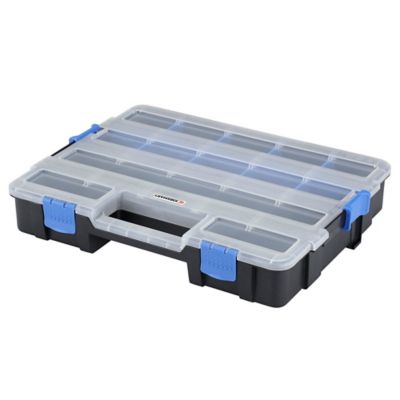
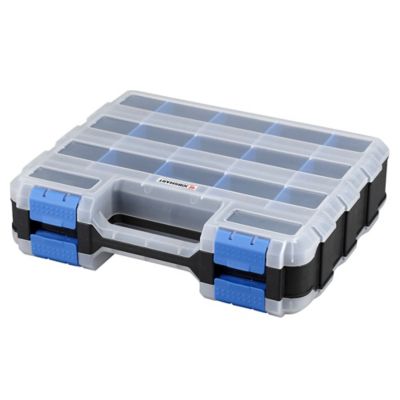
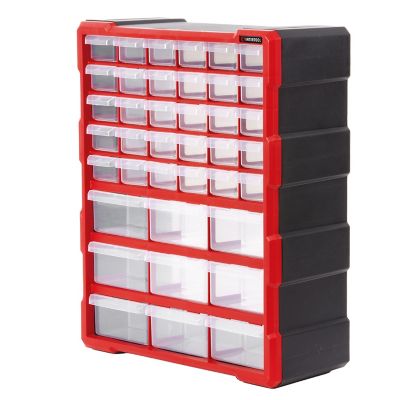
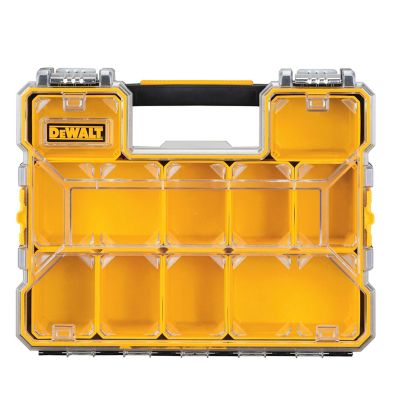
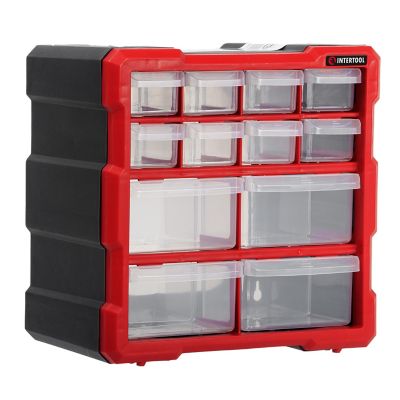
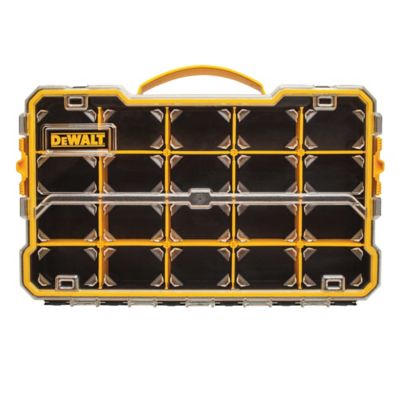
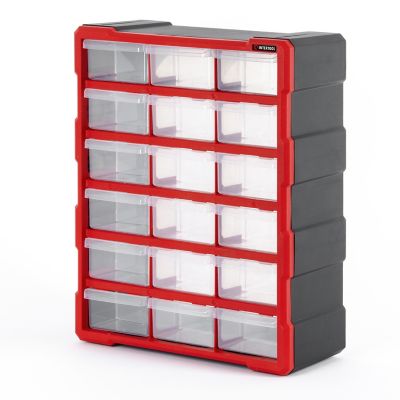
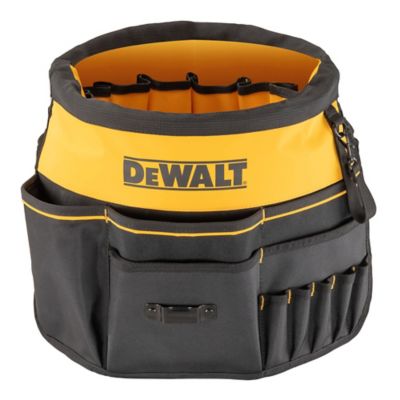
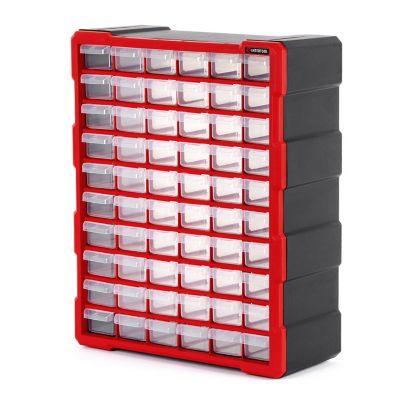
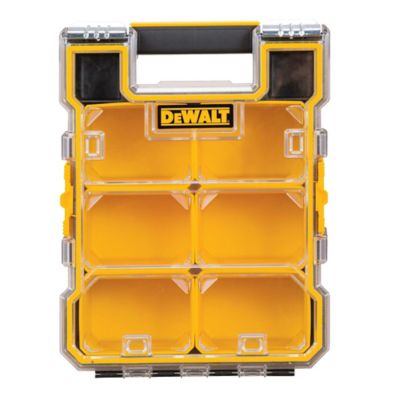
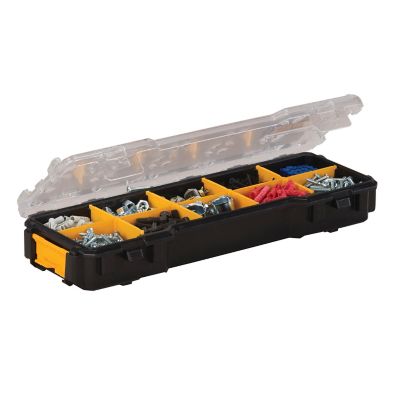
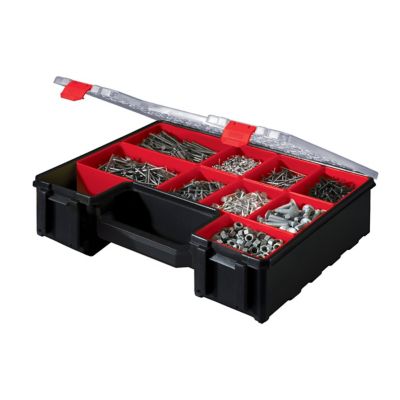
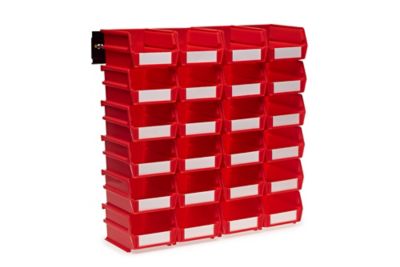
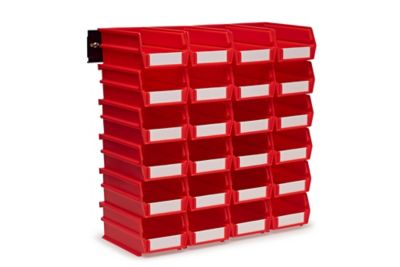
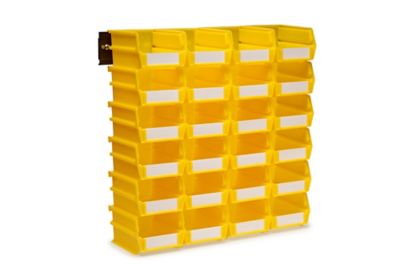
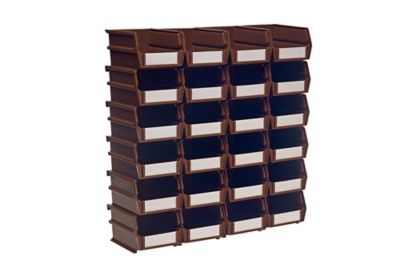
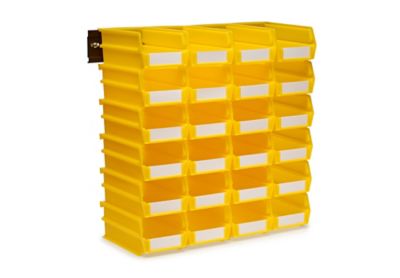
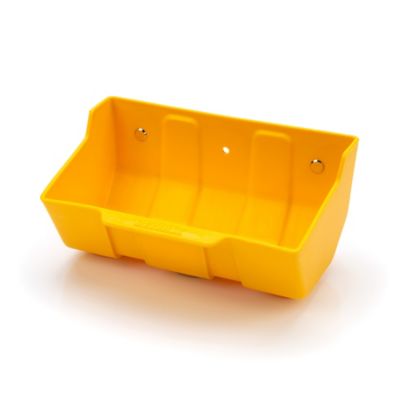
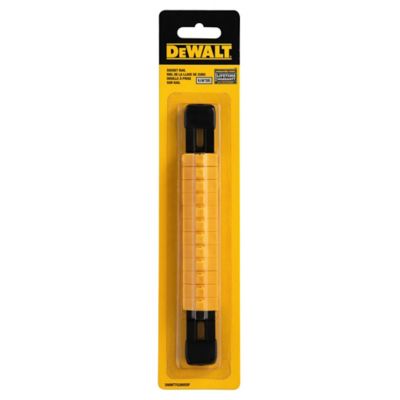
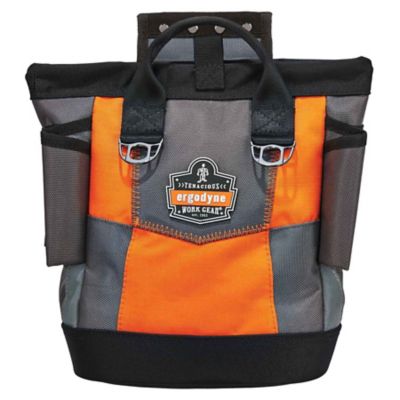
Hardware organizers are storage containers that keep small parts such as screws, nuts, bolts, nails and washers separated and easy to find. With compartments, drawers or open bins, they bring order to the little pieces that keep a farm shop, garage or workbench running. A gate repair goes a lot smoother when the right nut and washer are together instead of buried at the bottom of a coffee can. These organizers suit homeowners handling everyday repairs, farmers maintaining equipment, woodworkers sorting fasteners and mechanics keeping small components close at hand. Different layouts serve different jobs: shallow compartments make short screws and small washers easier to see, while deeper bins leave room for longer bolts and larger fittings. Drawer cabinets put several groups of parts within reach of a bench, and portable cases carry a selection out to the barn or across the property. Open-front bins work well where frequent access matters more than carrying everything along. Clear lids or drawer fronts can make contents visible at a glance, while label spaces help distinguish parts that look alike. Sorting by diameter, length, thread type or intended task helps prevent mix-ups, especially when metric and standard hardware share the same workspace. Even similar-looking screws can have different threads or head styles, so separate sections do more than tidy a bench; they make it easier to grab a matching replacement. Adjustable dividers offer flexibility as a collection changes, while fixed compartments keep their layout without any setup. A useful arrangement leaves enough space to reach in without digging through several layers. For someone who moves between fence work, equipment upkeep and repairs around the house, hardware storage can turn a handful of scattered supplies into a setup that makes sense from one job to the next. It also gives loose parts a clear home after a project, rather than letting them migrate into tool drawers, pockets and the corners of the workbench.
Materials and construction affect how a hardware organizer handles its daily workload. Plastic organizers are generally lighter to carry, and transparent sections can help with checking contents before heading to a job. Metal cabinets offer a sturdy structure for a fixed workstation, though their weight matters when choosing a shelf or bench location. Individual designs vary, so carrying capacity, drawer construction and mounting instructions deserve a close look. A container filled with steel fasteners can weigh considerably more than its empty shell suggests. Handles, hinges and latches all play a part when an organizer travels from the shop to the truck and back. A lid that closes closely against compartment walls helps keep small pieces from shifting between sections during transport, but that feature depends on the design rather than the appearance of the case. Removable bins can bring just one group of parts to the work area, leaving the rest in place. For bench storage, drawer stops help limit accidental pullouts, and smooth drawer movement makes small parts easier to reach without jolting the cabinet. Fit involves more than outside dimensions. A cabinet needs room for drawers to open, a portable case needs clearance for its lid, and a bin should be deep enough for its contents without hiding everything at the bottom. Long screws may need uninterrupted compartments, while tiny retaining clips benefit from shallow spaces with corners that are easy to reach. Wall-mounted storage also depends on suitable mounting hardware and a supporting surface that can carry the loaded weight. Moisture, spills and shop dust are worth considering wherever metal hardware is stored. An enclosed organizer may help limit exposure, but a closing lid alone does not establish a watertight seal. Product specifications explain those limits. Keeping containers away from leaking plumbing, damp floors and areas where fluids splash helps protect both the storage system and the parts inside.
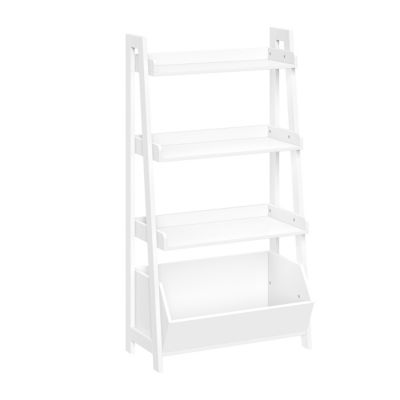
A practical hardware storage setup fits the way work happens, whether that means a bench beside the vise or a case that travels with the toolbox. Frequently needed fasteners belong within an easy reach, while less common pieces can stay in clearly marked drawers nearby. Shelving provides another layer of organization for cases, bins and larger supplies, and
Organizer Shelves can help bring those storage pieces together without covering the work surface. Shelf depth, spacing and load limits matter when several filled containers share the same spot. Leaving room around handles and drawer fronts makes the arrangement easier to use, particularly when hands are full or work gloves make a small latch harder to grip. Labels written in plain terms, with dimensions where they matter, help everyone in a shared shop return parts to the same place. Keeping packaging information or part numbers with specialized hardware can also save time when an exact replacement is needed. Care is usually straightforward, though cleaning methods should match the material and manufacturer’s directions. Empty compartments before wiping them out, remove grit from drawer tracks, and let containers dry before returning metal parts. Solvents and harsh cleaners can damage some plastics, so a gentle approach helps preserve visibility and keeps surfaces in good shape. Hinges, handles and closures benefit from an occasional check, especially on cases that see regular travel. Cracked compartments or loose latches can let small parts escape, turning a simple repair into a search through the truck bed. Separate storage for sharp fasteners also helps keep them from spilling into general-purpose tool compartments. For someone setting up a first workshop or bringing order to an established one, a hardware organizer can make a practical gift, particularly when its size matches the recipient’s space and work habits. The real value shows up in everyday moments: finding the matching bolt without emptying a drawer, carrying the needed pieces to a repair and putting the leftovers where they belong when the job is done.