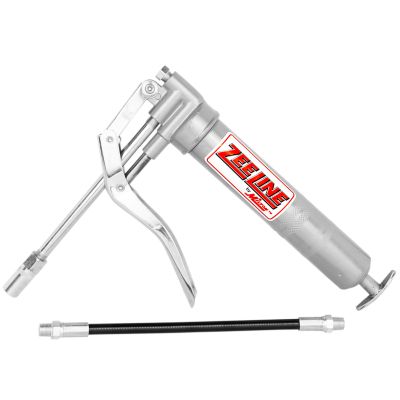
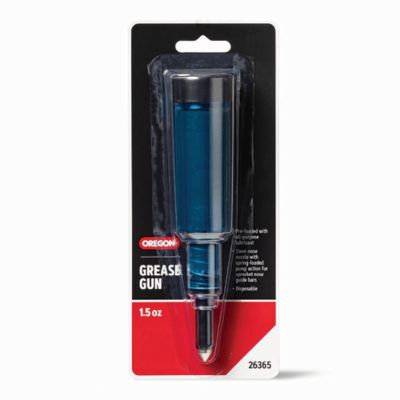
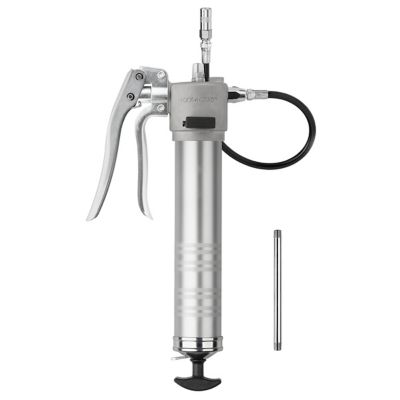
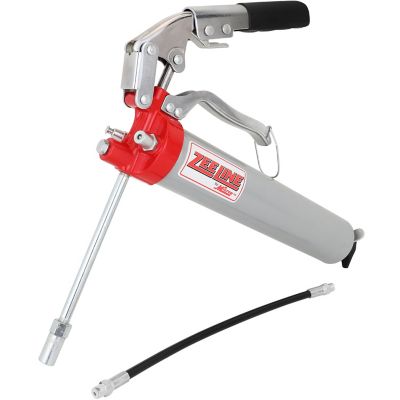
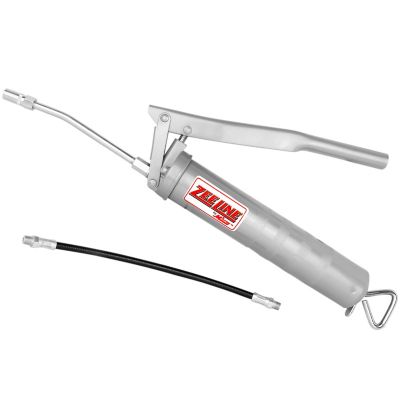
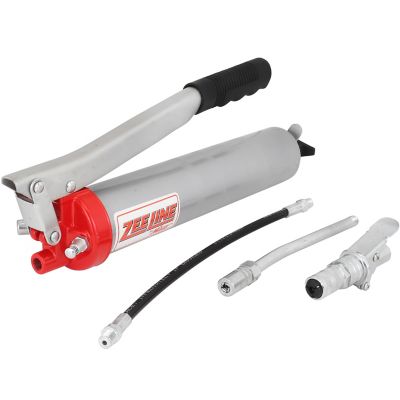
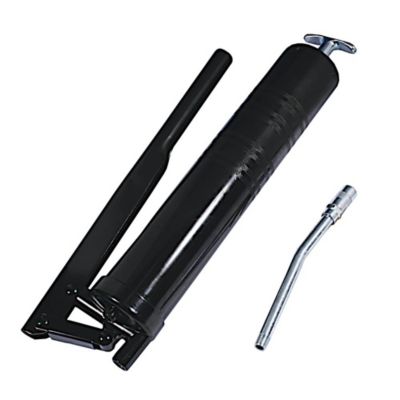
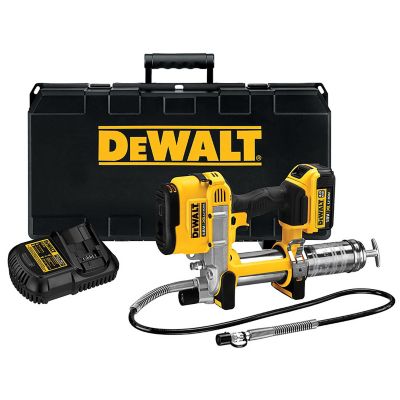
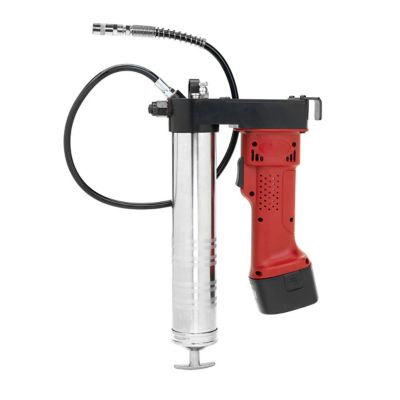
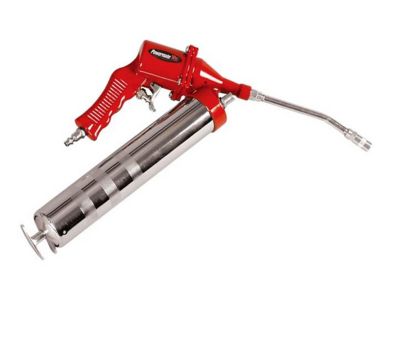
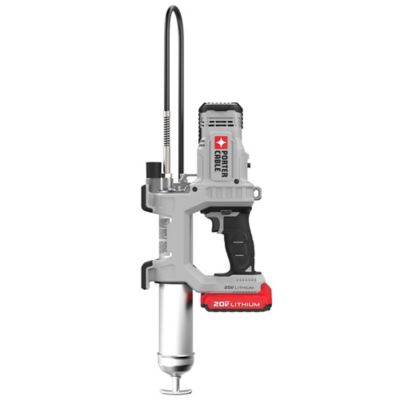
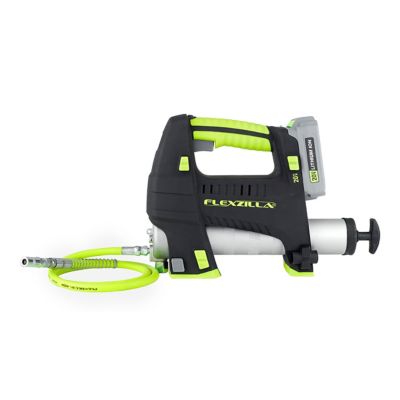
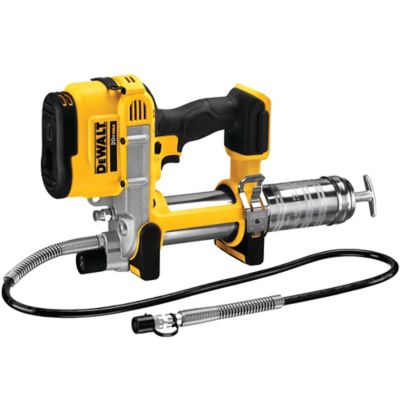
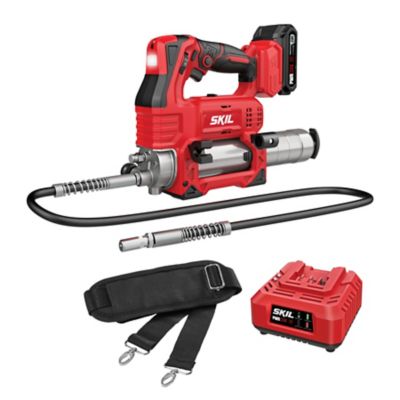
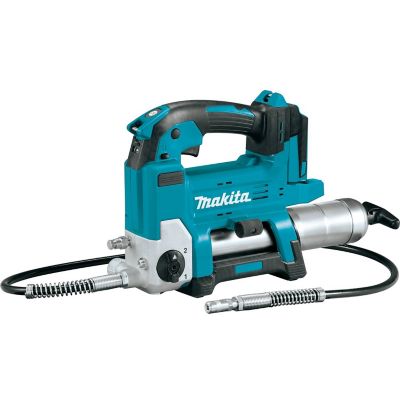
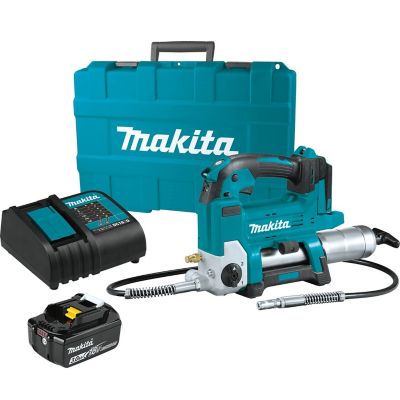
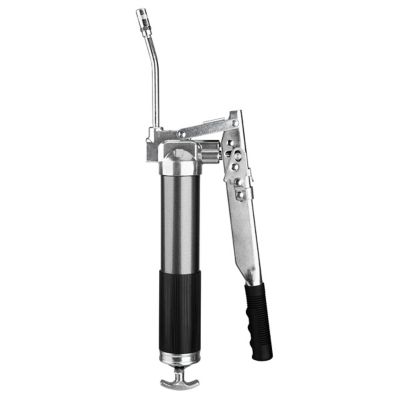
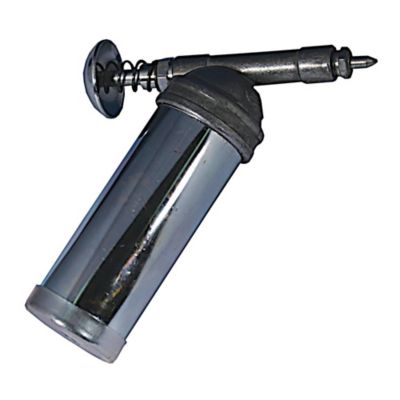
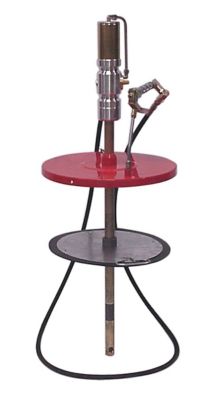
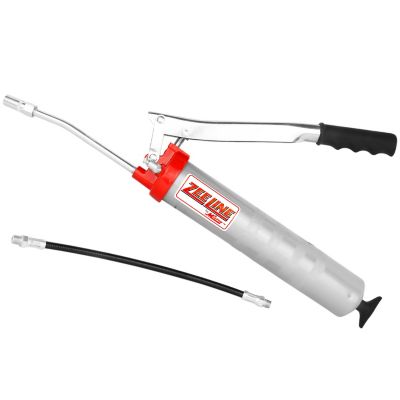
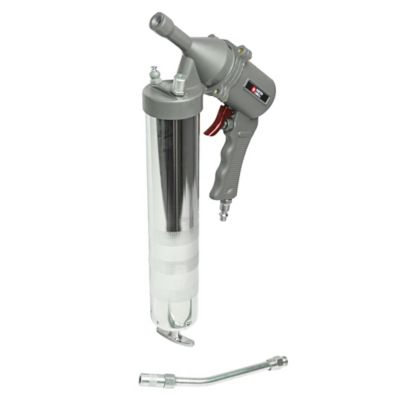
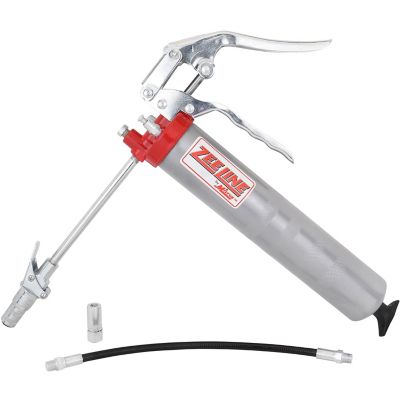
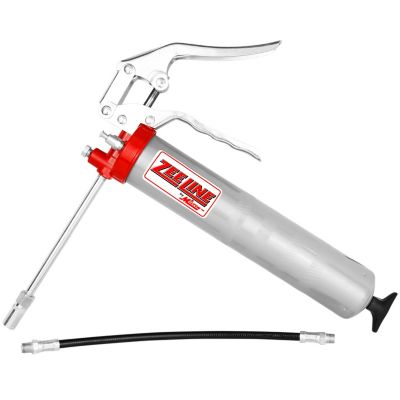
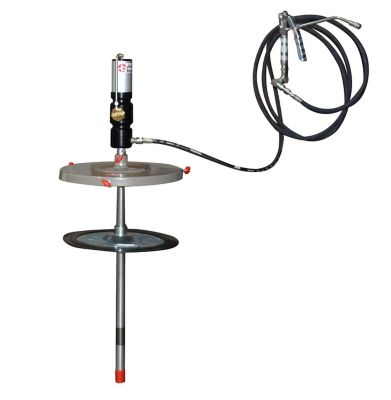
Grease guns deliver lubricant through grease fittings, often called zerks, to service points on machinery, vehicles, and equipment. Their job is to move grease into places where moving parts need lubrication, helping limit friction and wear when paired with the right lubricant and maintenance schedule. Around a farm, acreage, or equipment shop, that can mean tending to loader pivot pins, mower spindles, implement joints, or serviceable steering components. A grease gun belongs alongside the tools that keep everyday work moving, whether the next job involves feeding livestock, mowing a field, or hauling materials across the property. Manual, pneumatic, and cordless grease guns handle that same basic task, but each suits a different pace and setting. Manual grease guns rely on hand pressure and make sense for occasional maintenance or equipment with only a few accessible fittings. Pistol-grip designs generally allow one-handed pumping, leaving the other hand free to steady the hose or coupler. Lever-action designs typically call for two-handed operation and room for the lever to travel; pressure and grease output depend on the model rather than the handle style alone. Pneumatic grease guns run on compressed air, reducing hand pumping at a shop bench or service bay where an air supply is within reach. Cordless grease guns run on rechargeable batteries and offer powered dispensing without an air hose trailing behind. That freedom can be handy when moving between implements parked along a fence line or servicing a loader away from the shop. For someone maintaining several machines with many grease points, less repeated squeezing can make a long maintenance round easier on the hands. For a pickup owner or acreage caretaker with a shorter list of grease fittings, a straightforward manual tool may cover the work just fine. The best match comes down to the equipment, the number and location of service points, and how often lubrication is part of the routine.
Fit matters at both ends of a grease gun: where the lubricant loads into the barrel and where the coupler connects to the machine. Cartridge size and loading method deserve a close look, especially when matching a tool to grease already kept on the shelf. Some guns accept cartridges, while others also support suction filling or filling from a grease pump; those options depend on the tool’s design. A larger barrel can reduce refill stops during a long service round, while a compact grease gun can be easier to carry for smaller jobs, provided its capacity and fitting connection suit the equipment. Steel barrels bring a sturdy feel to regular shop work, and corrosion-resistant finishes help protect exposed metal. Aluminum components can trim carrying weight, though overall construction, seals, and hose ratings matter more than any single material. Comfortable grips and a handle with enough clearance for a gloved hand are worth considering when the tool will see frequent work. At the business end, a rigid extension can help keep the coupler lined up with an easy-to-reach fitting, while a flexible hose can reach around a frame rail or into a recessed lubrication point. Hose length should suit the reach without leaving excessive slack to manage around machinery. Standard couplers, locking couplers, right-angle attachments, and specialty adapters serve different access needs, so connection compatibility is more important than simply choosing the longest hose or the highest pressure rating. A locking coupler can help maintain its connection during pumping, but it still needs room to attach and release. Maximum pressure describes the tool’s capability, not a target for every bearing or joint. Grease output per stroke or minute also affects how the tool handles small fittings versus service points that call for more lubricant. On powered grease guns, variable-speed control, an air-release valve, and a clear view of the work area can make dispensing and priming more manageable. Battery compatibility matters for cordless tools, while pneumatic tools need an air supply that meets their stated requirements.
Good grease gun care starts with keeping dirt out of the lubricant path. A coupler dropped onto a gritty shop floor can carry contamination straight to a fitting, so clean contact surfaces and protected storage matter as much as a strong barrel. A capped hose end, a clean rag, and a dedicated spot in the tool cabinet help keep the next maintenance round from starting with a mess. Seals, threads, hoses, and coupler jaws deserve occasional inspection, particularly on a tool that rides in a service truck or travels between barns and equipment sheds. Air pockets can interrupt grease flow after refilling, making an accessible bleed valve a practical feature rather than just another specification. Clear labeling also helps when separate grease guns hold different lubricants; not all grease formulations are compatible, and matching the equipment manufacturer’s requirements is essential. More grease is not automatically better, especially at sealed assemblies or bearings with specified fill amounts. Unexpected resistance can point to a blocked fitting or another service issue rather than a need for greater force. Because pressurized grease can cause serious injection injuries, hoses and attachments need suitable pressure ratings, and suspected leaks should never be checked with a hand. Maintenance belongs on stopped equipment secured according to its manufacturer’s instructions, with raised components properly supported. These considerations make grease guns useful for farmers, grounds crews, mechanics, equipment operators, and homeowners who look after serviceable machinery. They can also make a practical gift for someone setting up a workshop, provided the loading style, power source, and attachments match that person’s equipment. In a shop that handles both mechanical upkeep and refinishing,
Gravity Feed Spray Guns serve a separate purpose: applying coatings rather than lubricating fittings. Keeping those jobs distinct helps each tool earn its place on the bench. For grease guns, the goal stays simple: manageable handling, a sound connection, and controlled delivery of the specified lubricant to the points that need attention.