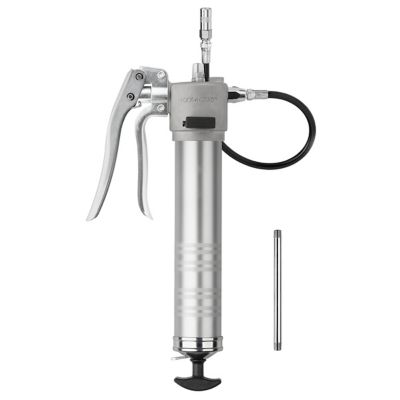
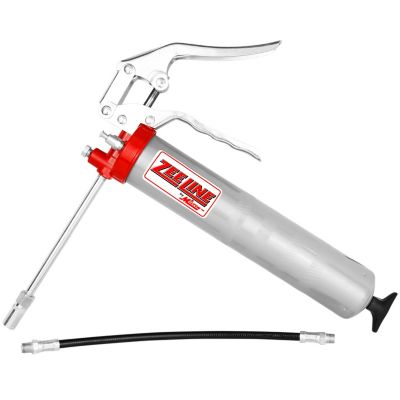
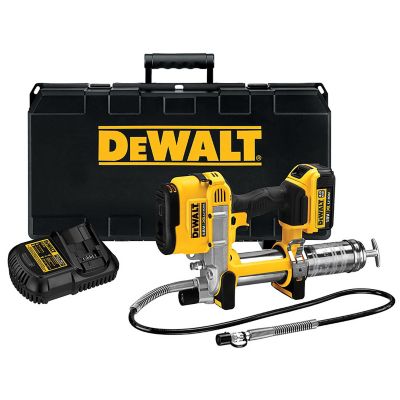
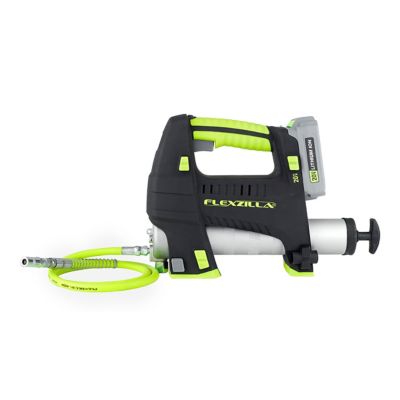
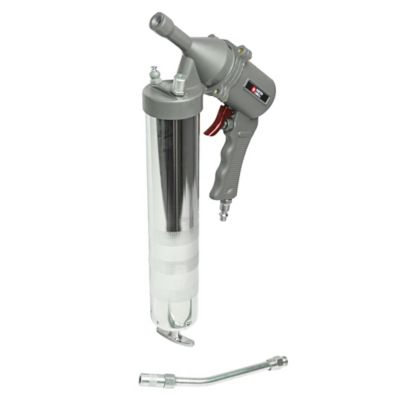
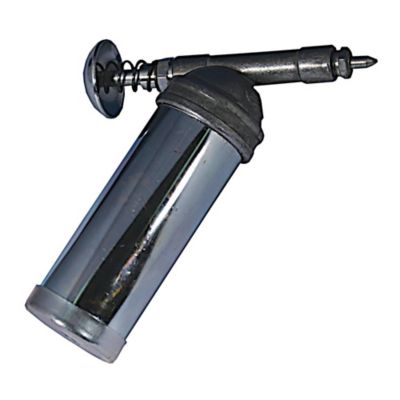
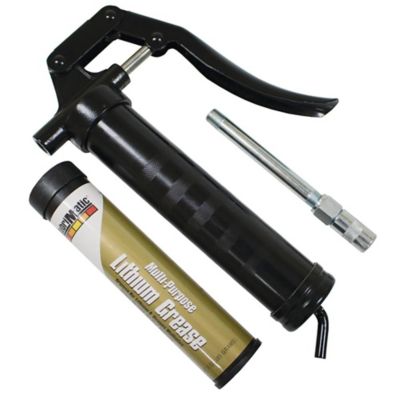
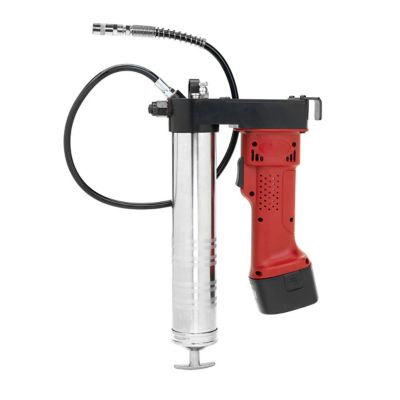
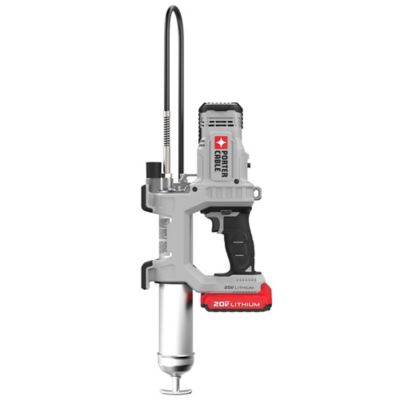
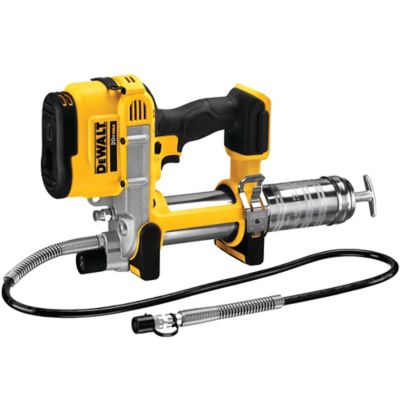
Pistol grip grease guns are handy, hardworking tools for keeping equipment moving smoothly. Built with a trigger-style handle, they let you operate the gun with one hand while the other hand guides the hose or holds a fitting in place. That setup comes in handy around tractors, mowers, trailers, loaders, balers, gates, utility equipment and other machinery with grease fittings tucked into narrow or awkward spots. A pistol grip design can be easier to manage than a traditional two-handed lever gun when you are working underneath a machine, reaching around a frame or trying to keep your balance beside a piece of equipment. Regular greasing helps reduce friction, wear and moisture intrusion at pivot points, bushings, bearings and other moving parts. For many folks, it is part of the same routine as checking tire pressure, topping off fluids and looking over belts before heading out to the field or finishing a long day around the property. When shopping for pistol grip grease guns, start by considering how often you grease equipment and where you usually work. A compact, lighter model may be a good fit for occasional maintenance and smaller machines, while a more rugged option may better suit a farm, shop, landscaping business or construction operation where the grease gun sees frequent use. Comfortable grips, a trigger that is easy to squeeze and a hose with enough flexibility can make a noticeable difference when several fittings need attention.
Pressure and loading style are also important details to compare. Pistol grip grease guns may be designed for high-pressure application, high-volume delivery or a balance of both, and some offer selectable modes for switching between pushing a larger amount of grease and working through a stubborn fitting. Higher pressure can help when grease passages are packed or fittings are difficult to service, but pressure ratings should always be matched to the equipment manufacturer's recommendations. Standard grease cartridges are convenient and help keep the job clean, while bulk loading or suction filling can be useful for people who go through a lot of grease and want to reduce packaging waste. Look for an air bleed valve or another priming feature if you want help clearing trapped air after loading. Air in the barrel can interrupt grease flow and leave you pumping a dry-feeling handle even though the gun is full. A visible barrel or grease-level window can make it easier to monitor the remaining supply, especially when working through a long maintenance list. Hose length matters, too. A shorter hose is easier to control in a crowded shop, while a longer hose gives you more reach around axles, suspension parts and large equipment. Many users also appreciate a secure coupler that locks onto the grease fitting, helping keep the connection steady and reducing messy slips. Keep in mind that a tight coupler should be released according to its design rather than pulled sideways, which can damage the fitting or the coupler. The right pistol grip grease gun should feel balanced in your hand, prime without a fight and deliver grease in a controlled stream instead of making every service job a wrestling match. For a broader look at lubrication tools and related options, visit
Grease Guns.
A pistol grip grease gun can be useful for more than large-scale farm work. Homeowners use them to maintain riding mowers, utility trailers, snow equipment, hitch components and other gear that spends time outdoors. Landowners, ranchers, mechanics, landscapers and fleet operators may keep one in a service truck, barn or workshop so routine lubrication is close at hand. It can also make a practical gift for someone who enjoys maintaining an older tractor, restoring equipment, caring for a small acreage or keeping a busy workshop in order. Before giving one as a gift, it helps to consider whether the recipient already has a preferred cartridge size, grease type or coupler style. Some machines call for specific lubricants, and different grease formulations should not be mixed unless the equipment maker or grease manufacturer says they are compatible. Using the correct grease and wiping dirt from the fitting before connecting the coupler are simple habits that protect the joint from contamination. Pump slowly until the recommended amount has been applied, and stop if a seal begins to bulge or grease has nowhere to go; forcing extra pressure can damage seals or reveal a blocked passage. Wipe away excess grease when finished, cap the hose or coupler, and store the gun in a clean, dry place away from direct heat. During the warmer part of the year, dust and fine field debris can cling to fresh grease, while cooler weather may make grease thicker and priming a little slower, so taking a moment to clean fittings and warm supplies naturally can help. A dependable pistol grip grease gun belongs in the same practical category as a socket set, air hose and good pair of work gloves: it is a straightforward tool that earns its keep by helping equipment run quieter, last longer and stay ready for the next job.