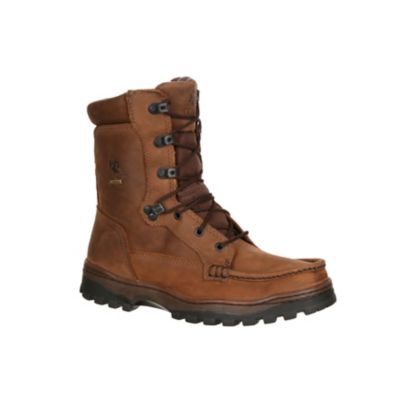
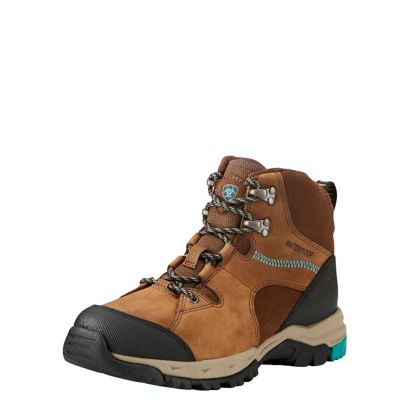
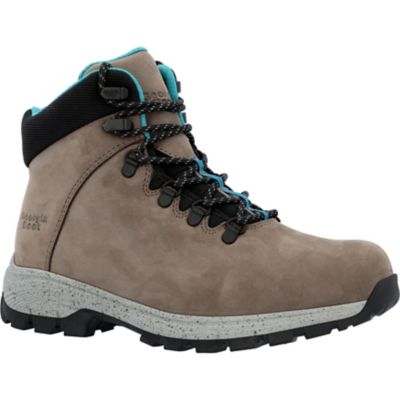
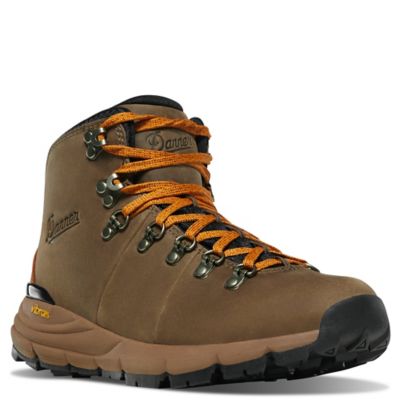
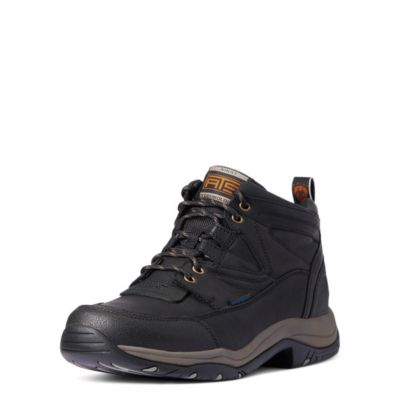
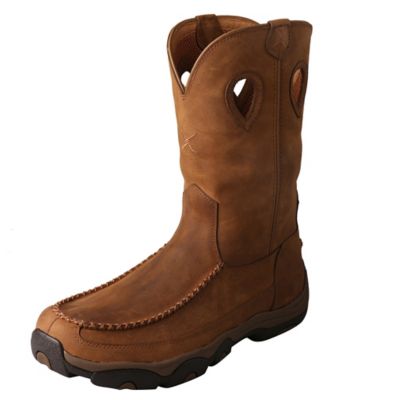
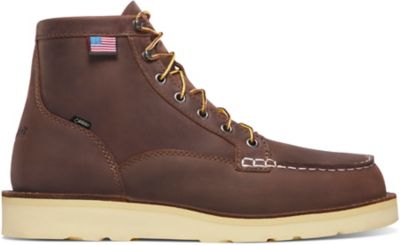
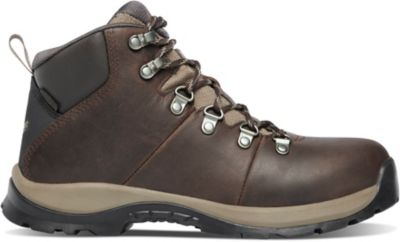
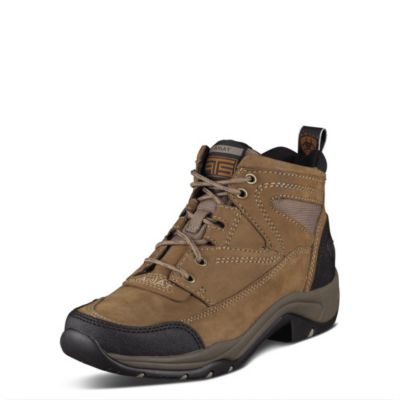
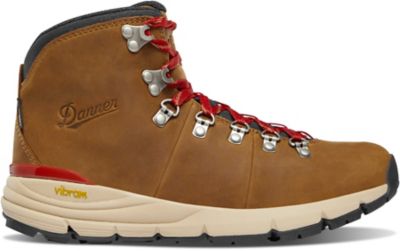
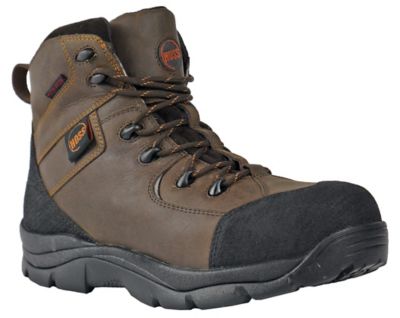
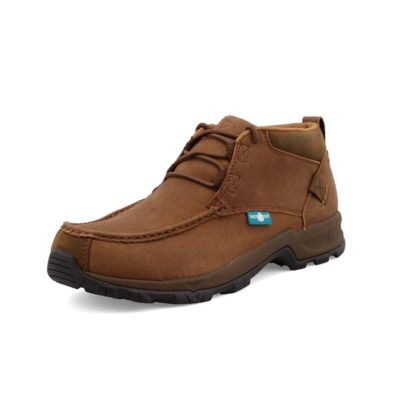
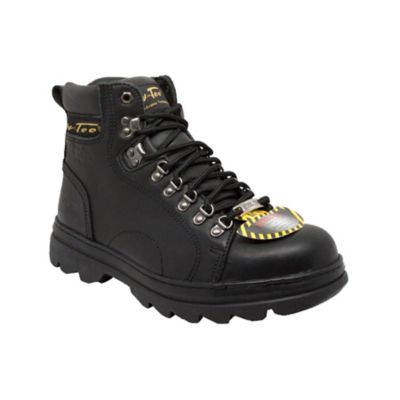
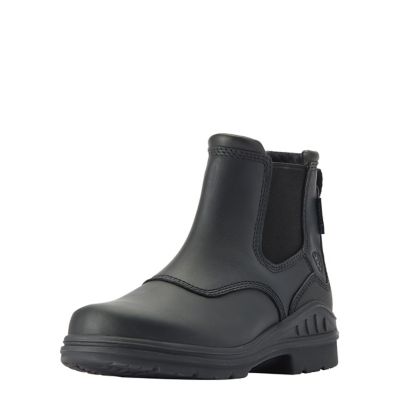
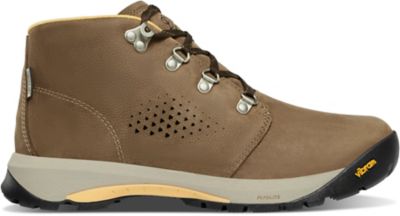
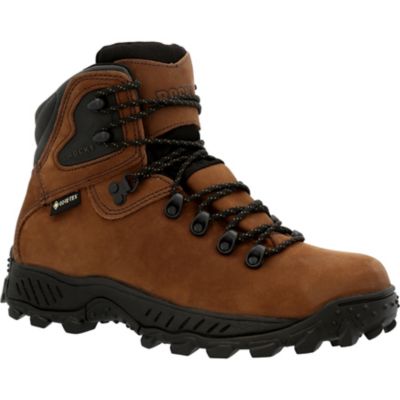
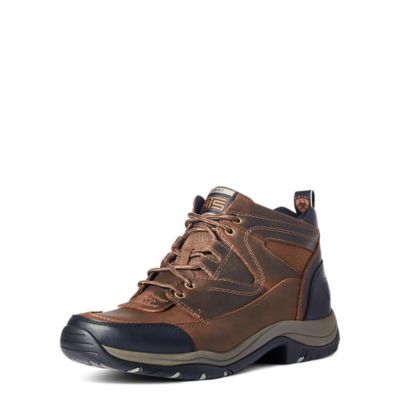
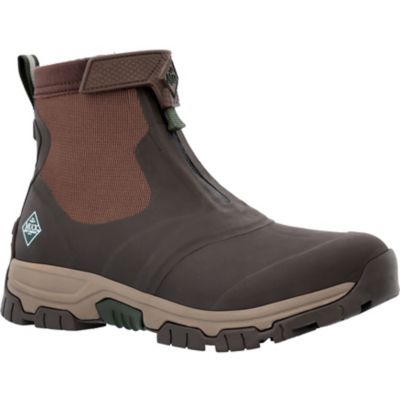
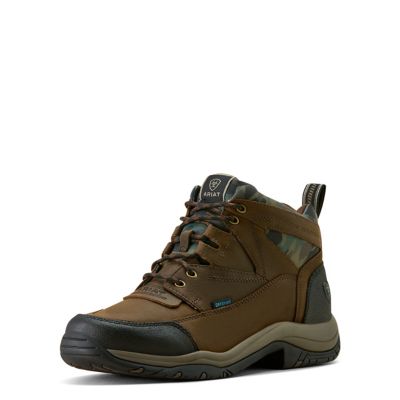
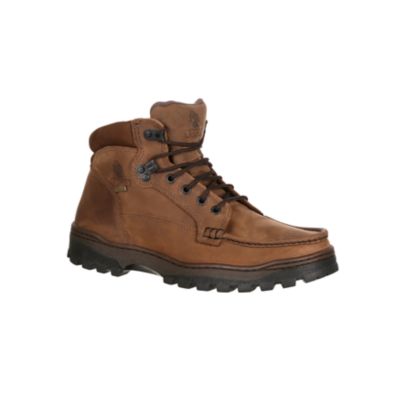
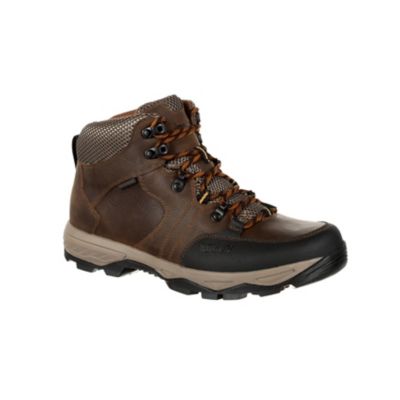
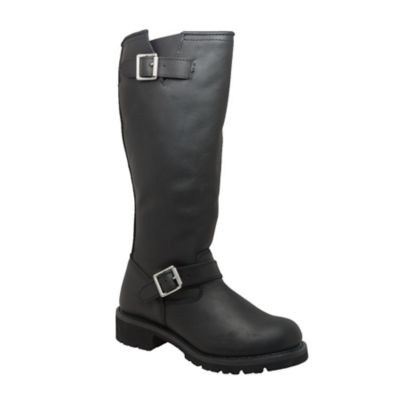
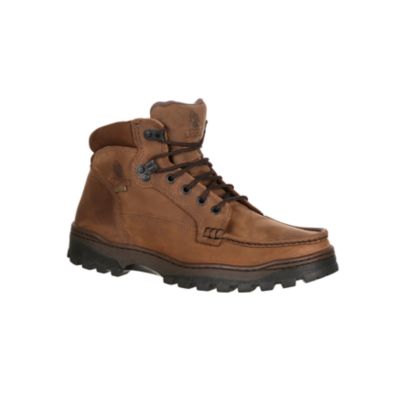
Full-grain leather hiking boots bring sturdy leather uppers, underfoot support, and trail-ready traction together for long walks beyond the pavement. Full-grain leather retains the hide’s outer grain layer rather than having that surface sanded away to create a more uniform look. That grain gives the material its natural character and helps it stand up to scraping against rocks, brush, and rough ground. Small variations in texture are part of the leather, while the finish, thickness, and boot construction influence how each pair feels and performs. With wear, the uppers gradually flex around the feet and develop creases where the boots bend. That settling-in process can make a properly fitted pair feel more personal, but it will not turn a cramped boot into the right size. Full-grain leather also offers some natural resistance to water, though leather alone does not make a boot waterproof. Waterproof performance depends on the complete design, including membranes, seams, and tongue construction. For someone following a rocky creekside path, walking a wooded property, or covering miles on a state park trail, those construction details matter as much as the leather itself. A rubber outsole with well-spaced lugs can help shed loose dirt, while heel and forefoot tread patterns influence grip when climbing or descending. Rubber compounds vary, and deep tread does not guarantee a sure footing on every surface. Cushioning through the midsole helps soften repeated steps, while a firmer platform can feel steadier under a loaded pack. Some boots include a shank or other reinforcing structure that reduces twisting through the middle of the foot. Taken together, the upper, midsole, and outsole determine whether a boot feels flexible enough for an easy woodland loop or more supportive for uneven ground and longer outings.
Fit is where full-grain leather hiking boots earn their place in a regular walking routine. The heel should sit securely without excessive lifting, and the toes need enough space to spread naturally and move forward slightly on a downhill stretch without striking the front. A close fit through the instep can help keep the foot from sliding, but pressure across the top of the foot or pinching along the sides points to a shape or volume mismatch. Length, width, and interior volume all count; moving up a size is not always the answer to a narrow toe box. Trying boots with the hiking socks and any footbeds intended for the trail gives a better picture of the complete fit. Feet can also swell over the course of a long walk, so a pair that feels barely roomy at the start may feel crowded several miles later. Lacing systems offer another way to fine-tune the feel. Lower eyelets control tension across the forefoot, while upper hooks can help hold the heel in place without pulling every section equally tight. A padded collar may soften contact around the ankle, but collar height alone does not establish how much support a boot provides. The stiffness of the sole, the shape of the heel cup, and the fit around the foot all play a part. Full-grain uppers often need a gradual break-in period, making short walks around the property a better first outing than an all-day trail trip. A little initial firmness can be expected; sharp pressure, numbness, or rubbing that worsens with every step should not be dismissed as normal. For hikers carrying day packs, folks taking the dog down a gravel lane, or landowners crossing uneven acreage, the best match balances protection and support with enough flexibility for a comfortable walking stride. Extra weight and stiffness are not automatic benefits when the usual route is short and mostly level.
Leather care helps full-grain hiking boots keep their shape, flexibility, and resistance to everyday abrasion. Dirt packed into seams and dried mud around flex points can contribute to wear, so regular brushing and gentle cleaning matter more than waiting until the boots look neglected. Care directions vary with the leather finish and any waterproof lining. A cleaner or conditioner intended for one type of leather may darken another, soften it too much, or interfere with a surface treatment. Checking the maker’s directions and testing a care product on a small, less noticeable area can help prevent an unwanted change in appearance. Boots that become wet need time to dry naturally with the laces loosened and removable footbeds taken out. Direct heat from a stove, heater, or dryer can dry out leather and affect components, so steady air circulation is the better choice. Conditioning should follow the leather’s needs and the recommended care schedule rather than leaving a heavy coating on the surface. The soles deserve attention, too: rounded-off lugs, separating edges, and uneven heel wear can change how a boot grips and supports the foot. Repair options depend on construction, and not every leather hiking boot can accept a replacement sole. These practical details make the category worth considering for regular hikers, campers, and anyone who spends plenty of time walking rough ground, provided the footwear matches the task. Hiking boots are not a substitute for job-required safety footwear, and protective toe or electrical hazard ratings should never be assumed. For a gift, knowing the recipient’s size, preferred width, usual terrain, and sock choice is more helpful than choosing by appearance alone. Shoppers comparing trail footwear with leather options for other routines can also explore
Men's Full Grain Leather Boots. Across those choices, a sound fit, suitable traction, and manageable care requirements are what make a pair ready for the miles ahead.