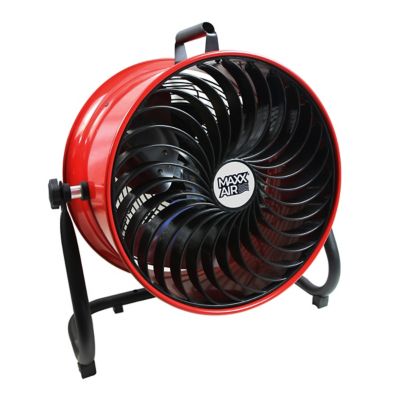
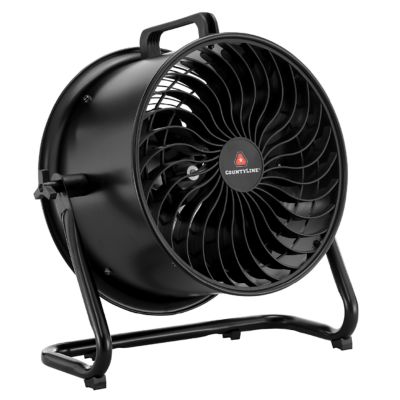
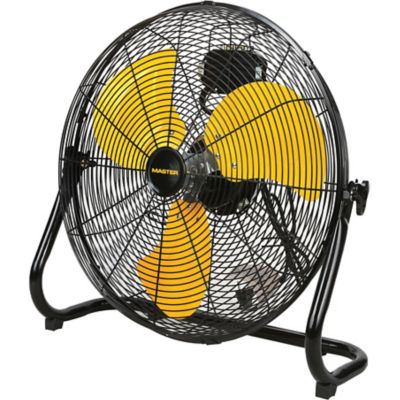
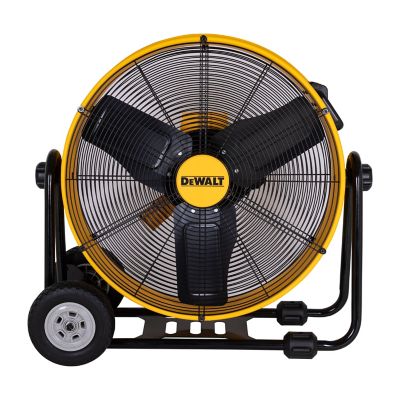
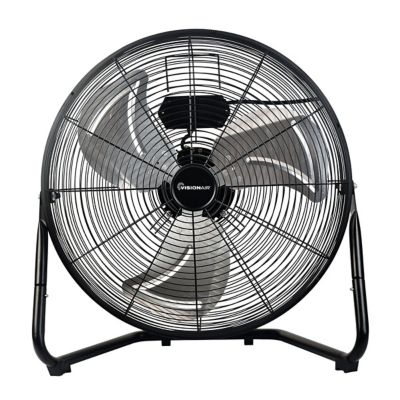
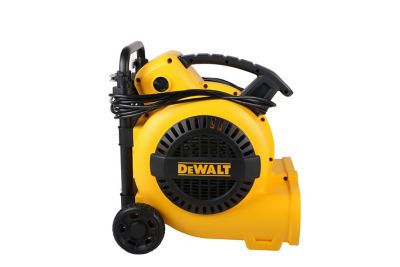
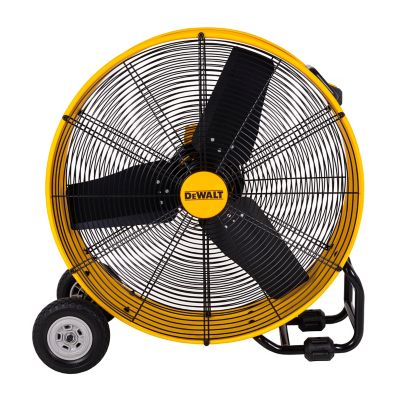
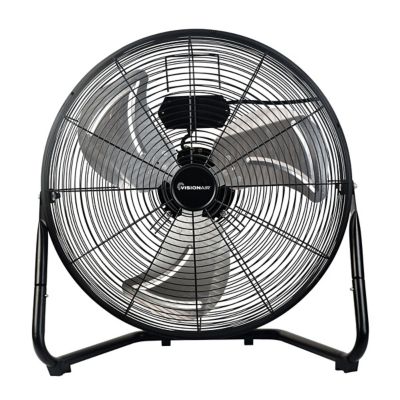
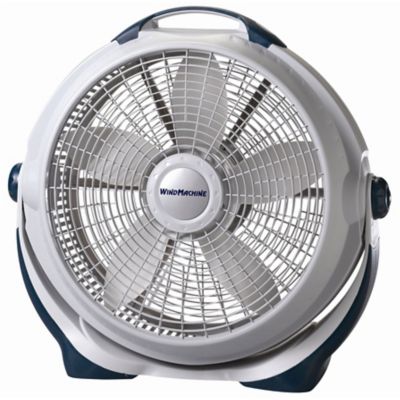
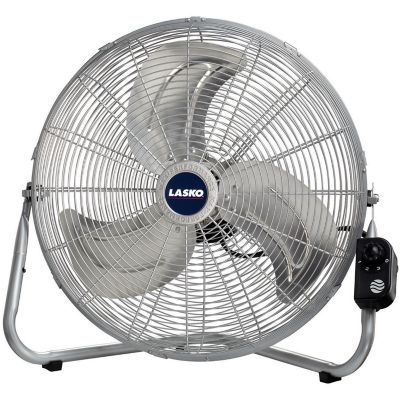
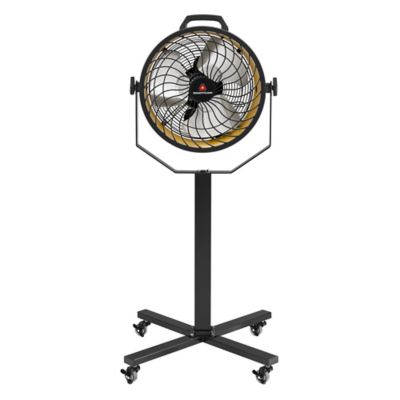
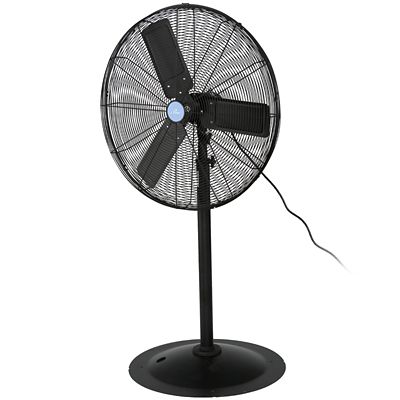
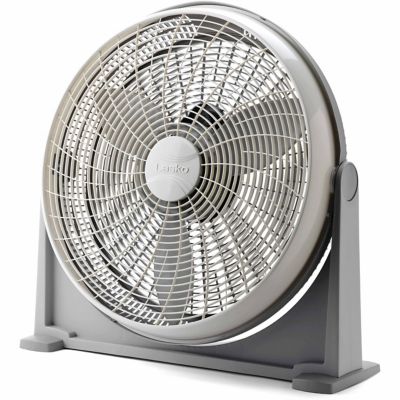
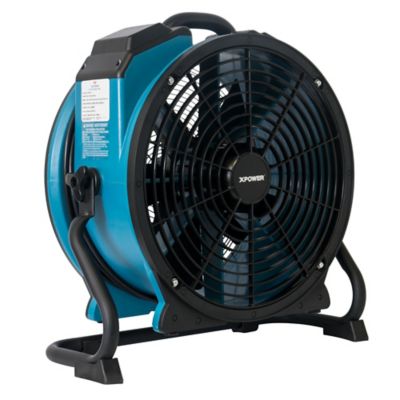
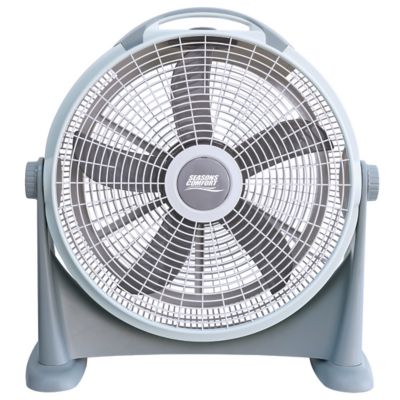
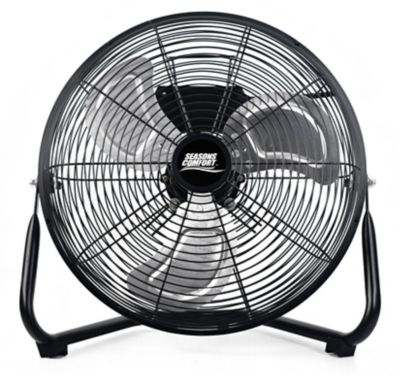
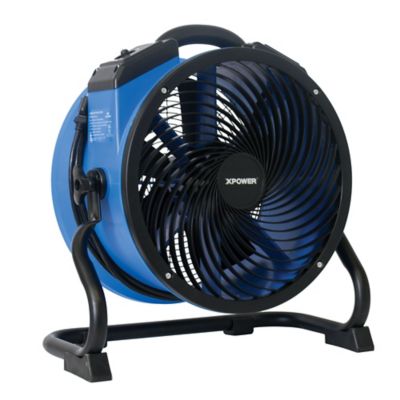
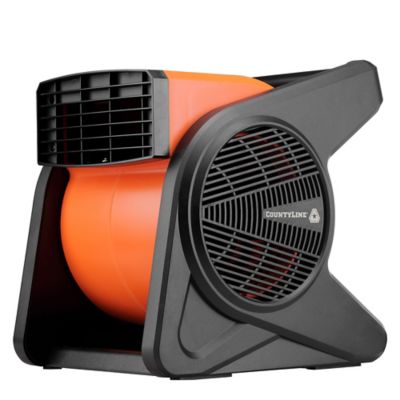
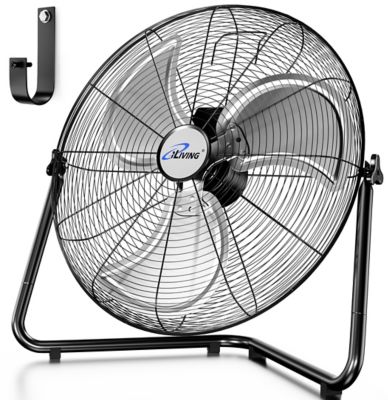
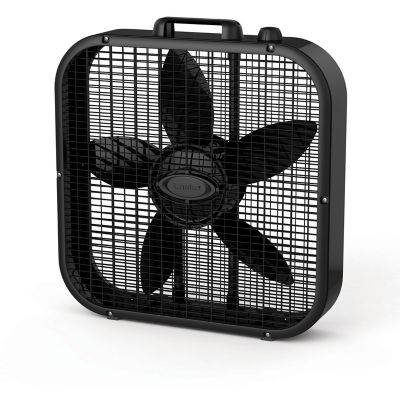
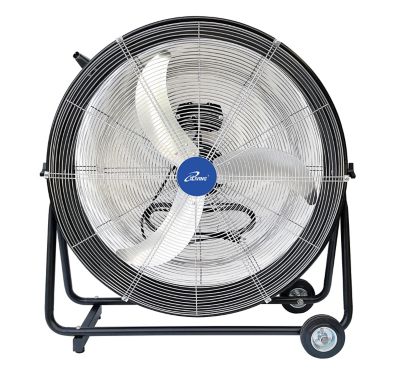
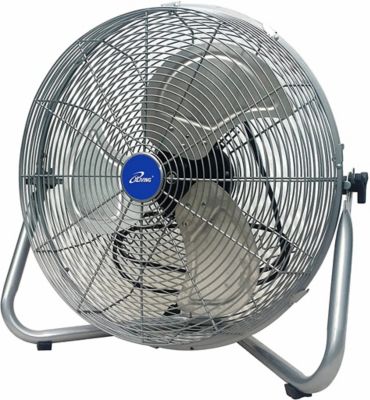
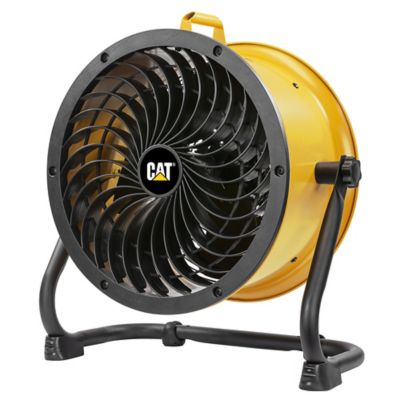
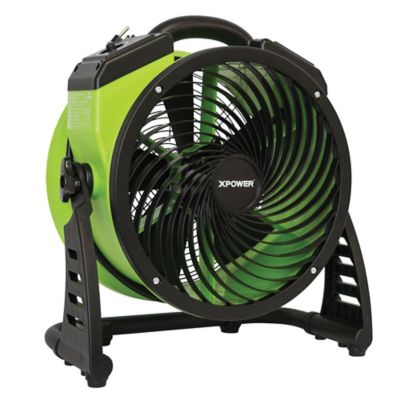
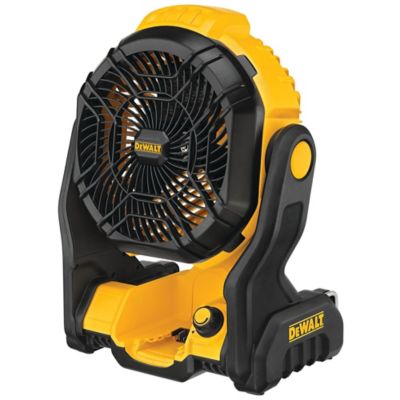
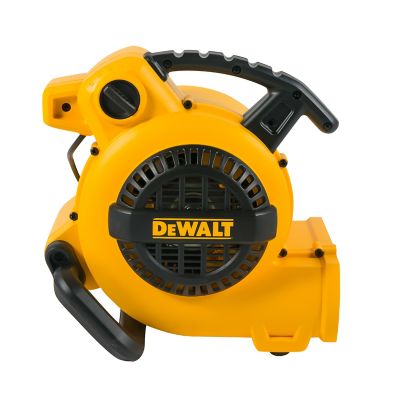
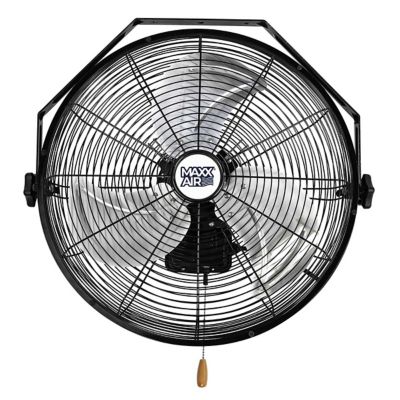
Floor fans are portable electric fans that sit near ground level and move air through a room or work area. Their low stance makes them handy beside a workbench, across from a favorite chair, or along an open stretch of garage floor where a steady breeze makes the space more comfortable. Unlike an air conditioner, a floor fan circulates the air already in the space rather than refrigerating it. That makes airflow direction, placement, and room layout important parts of how it performs. Several designs fall under the floor fan category, each with its own strengths. High-velocity floor fans generally concentrate airflow through a round housing, making them a practical match for workshops, garages, and other open areas. Box fans have a square frame and a broad face that suits everyday room circulation. Compact air circulators often have a pivoting head that points the stream across a room or upward, while oscillating floor fans sweep from side to side to reach a wider seating or work area. Low-profile air movers serve a different purpose, directing a focused stream along floors or other surfaces for drying tasks when the equipment and surrounding conditions are appropriate. These styles are not interchangeable in every setting: a fan that feels right beside a shop bench may be more than a small home office needs, and a household fan may not suit a dusty work area. For folks moving between the house, a hobby room, and a garage, carrying handles and a manageable frame can matter as much as the fan’s overall size. A floor fan also needs enough clear space around its intake and outlet to move air freely. Tucking it behind feed sacks, under a crowded bench, or against a curtain can restrict airflow and put nearby materials where they do not belong. The best fit leaves room for both the fan and the everyday foot traffic around it.
Airflow, sound, and adjustment features help separate one floor fan design from another. Airflow may be listed in cubic feet per minute, or CFM, which describes the volume of air a fan moves under stated test conditions. A higher CFM figure generally indicates greater airflow, but the shape of the air stream and the distance to the person or work area matter, too. A narrow, forceful stream across a garage is different from a softer spread of air around a desk. Published CFM figures are most helpful when the testing methods and speed settings are comparable; blade diameter alone does not tell the whole story. Multiple speed settings give a fan more flexibility, allowing a gentler breeze near a chair and stronger circulation across a larger workspace. A tilting head changes the vertical direction, while oscillation moves airflow from side to side. Those adjustments can help air reach around furniture or cover a shared space without repositioning the entire fan. Sound deserves attention wherever conversation, phone calls, or focused work are part of the day. Blade design, motor sound, speed, and vibration against the floor all contribute to what a fan sounds like in practice. If a sound rating is provided, the listed speed and measurement distance are worth checking before comparing numbers. Construction matters just as much as controls. Steel housings and guards can add weight and resist everyday bumps, while plastic housings tend to make carrying easier. Aluminum blades appear in some designs, though blade material by itself does not determine performance or lifespan. A sturdy base, secure adjustment knobs, and feet that grip the floor help a fan stay put when running. Footprint matters in a narrow mudroom or crowded shop aisle, and the handle should be easy to grasp without reaching near the guard. Controls that are easy to reach, a cord that reaches a suitable outlet, and a frame that fits its storage spot all make a difference over the long haul.
The setting should always match the floor fan’s intended use and electrical rating. An indoor household fan belongs in the conditions described by its manufacturer, not automatically in a wash area, open-sided building, or worksite with airborne debris. Dusty agricultural spaces and areas with flammable vapors or combustible dust call for equipment specifically rated for those conditions; an ordinary floor fan is not a substitute. Air movement also does not replace required ventilation, dust collection, or exhaust equipment. Pointing a fan at sawdust can spread it through the room rather than solve the problem. For everyday placement, a firm, level surface helps keep the frame steady, and cords belong away from walking paths, rolling tool cabinets, and places where doors could pinch them. Children and animals should not be able to reach moving parts or pull the unit over by its cord. A guarded blade still needs clear space around it, and a fan should never run with a damaged guard, cord, or plug. Regular care starts with switching the fan off and unplugging it before cleaning or moving it. Dust buildup on the guard, blades, and intake can interfere with airflow, so cleaning according to the manufacturer’s directions helps keep air moving as intended. Some guards are designed to open for access, while others require a different cleaning method; disassembly should stay within the instructions for that fan. Electrical components need protection from water, and any washing or lubrication should follow the stated care requirements. Between jobs, a dry storage spot protects the cord and keeps the housing from collecting shop debris. For a broader look at air-moving options for different spaces,
Electric Fans includes related fan styles beyond floor-standing designs. A well-matched floor fan earns its place through straightforward details: airflow that reaches the right spot, controls that suit the task, construction suited to the surroundings, and a size that stays out of the way while the work gets done.