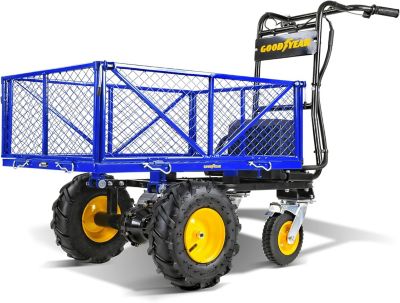
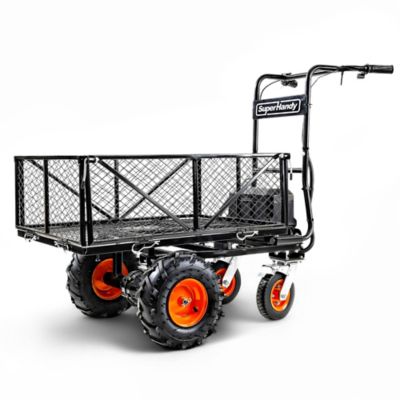
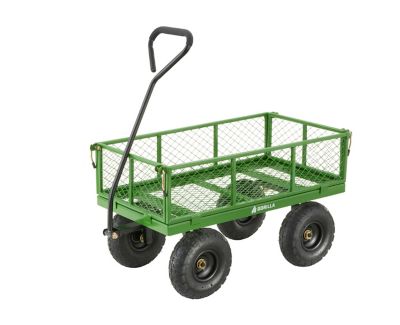
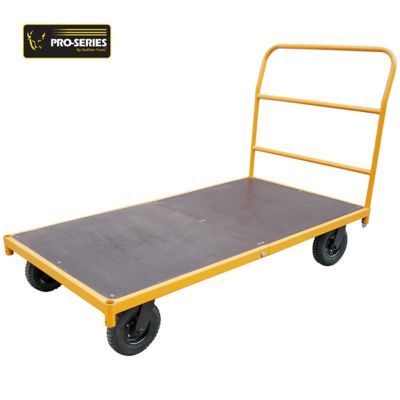
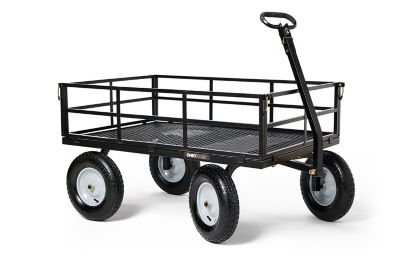
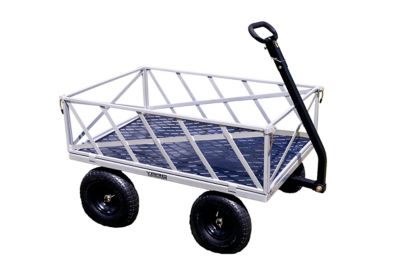
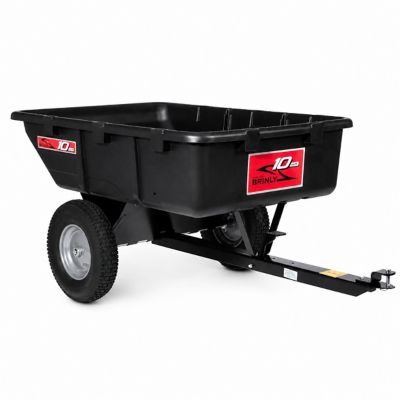
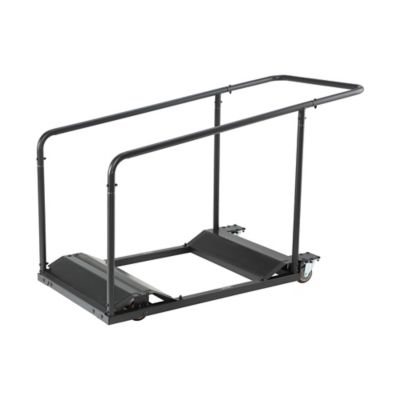
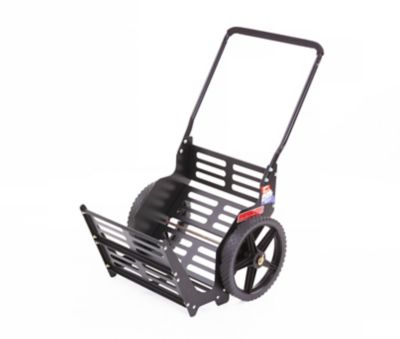
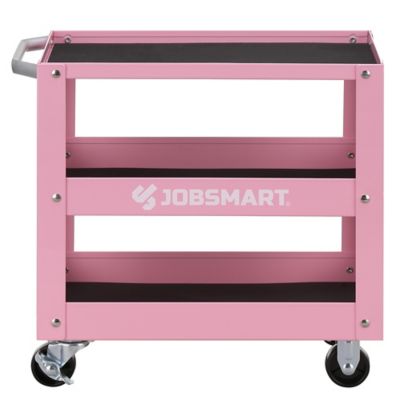
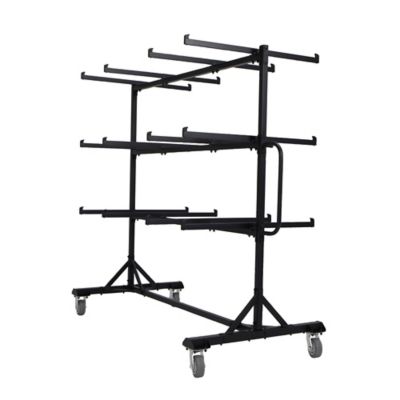
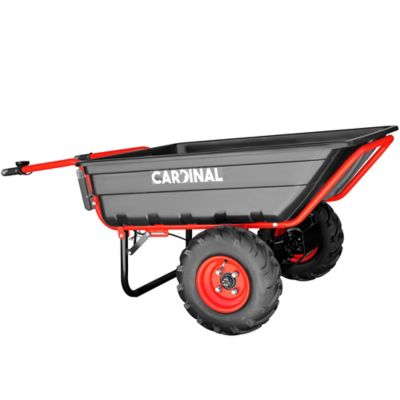
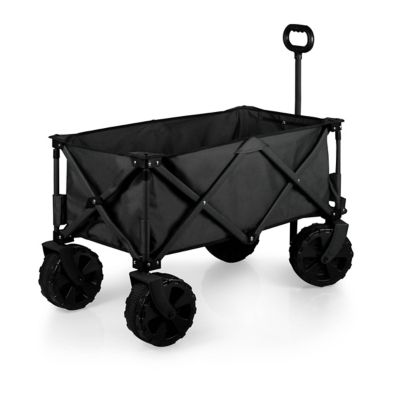
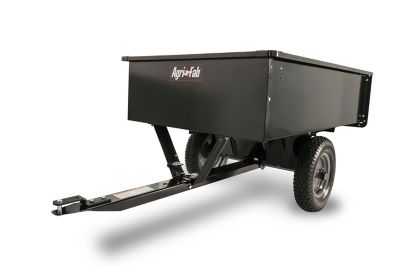
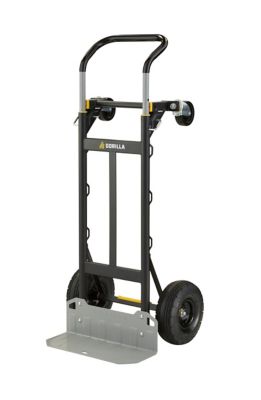
Flatbed utility carts are wheeled platform carts made to move supplies, tools, boxes, and equipment without carrying each load by hand. Their open, level decks give larger loads room to sit flat, while a push handle or pull handle helps steer the cart between work areas. Around a farm, garage, workshop, or storage building, that can mean fewer trips with feed bags, parts bins, fencing supplies, or shop equipment. Instead of balancing a stack against a hip or dragging a crate across the floor, the load rides on a platform built to support its weight. These carts fit jobs where a deep wagon bed or wheelbarrow tub would make loading and unloading awkward. An open edge allows a box or tool case to slide onto the deck, though heavy objects still call for suitable lifting equipment or another set of hands. Deck size affects how much can sit securely on the cart, and usable space matters just as much as overall dimensions. A wide platform can hold several containers side by side, while a narrow footprint is easier to work through a crowded shed or between shelving. Low decks keep the lifting height down; taller platforms may put supplies closer to a comfortable working height. Deck surfaces also make a difference. A smooth surface is easier to wipe clean, while a textured surface can help limit shifting when the load makes good contact with it. Small hardware and loose parts belong in bins rather than spread across an open deck. Raised edges or removable sides, where included, can provide another way to contain cargo, but they do not replace load restraints when those are needed. For chores that start at a workbench and end across the building, a flatbed cart keeps the load together and gives it a steady place to ride.
Materials and running gear shape how a flatbed utility cart handles everyday work. Steel frames provide a sturdy foundation for demanding hauling tasks, with deck construction and frame bracing contributing to the cart’s load rating. Aluminum construction can reduce the cart’s own weight, making an empty platform easier to reposition. Molded plastic or resin decks offer surfaces that are generally easy to wash, although their limits for concentrated weight, chemicals, and heat depend on the material and design. A metal finish helps protect the surface, but chipped coatings and deep scratches deserve attention before corrosion spreads. The wheels matter just as much as the platform, especially when the route includes concrete joints, doorway thresholds, or packed ground. Smaller casters generally suit smooth, hard floors, while larger wheels can roll over small obstacles more readily. Pneumatic tires can cushion the ride across uneven ground and need regular air-pressure checks. Solid tires eliminate flats from punctures, though their ride and rolling resistance depend on the tire material, wheel size, and load. Foam-filled designs offer another tire option on some carts. Not every flatbed cart is meant for travel beyond a paved surface, so the intended terrain should match the manufacturer’s specifications. Swivel casters help a platform turn in close quarters, while fixed wheels help it track along a straight path. Pull-handle designs can have a different turning pattern from push-handle platform trucks, which matters when maneuvering around parked equipment or a shop doorway. On suitable models, wheel brakes help hold the cart in place during loading and unloading. A smooth warehouse aisle and a rough path between outbuildings put different demands on the same hauling job; matching the wheel setup to the route makes the cart a better fit for the work.
A cart’s rated capacity is one part of finding that fit. The shape of the load, its balance, and the space needed to turn all affect how manageable it feels once loaded. A compact engine part can put substantial weight on a small section of deck, while a stack of empty tubs may take up nearly the whole platform without approaching the weight limit. Manufacturer guidance on load distribution helps distinguish those situations. Heavier cargo belongs low and centered, with the load spread across the deck as directed rather than piled along one edge. Tall stacks can block the view ahead or become unstable in a turn, and loose containers may need suitable restraints. Handle height and grip space also matter when steering with work gloves, especially on repeated trips between a storage room and a loading area. Enough clearance for hands, feet, doorframes, and shelving makes a hauling route easier to navigate. The cart’s own weight adds to the total being moved, so a large capacity does not automatically make a fully loaded platform easy to control. Slopes call for particular caution and should fall within the cart manufacturer’s operating limits. For tight storage spaces or occasional hauling,
Folding Utility Carts offer another format to consider, with folded dimensions and locking mechanisms worth comparing alongside deck size and capacity. Routine care helps keep any cart ready for its next trip: clearing twine and debris from axles, checking fasteners, inspecting tires, and maintaining bearings as directed can prevent small problems from interrupting a job. Spilled feed, soil, and grit are best cleared away before they collect around moving parts. Storage should leave the cart clean, dry, and out of the walkway, with brakes engaged or other manufacturer-approved measures in place to prevent rolling. For property owners, maintenance crews, gardeners, and shop workers, a well-matched flatbed utility cart can take much of the carrying out of everyday chores while keeping supplies close at hand.