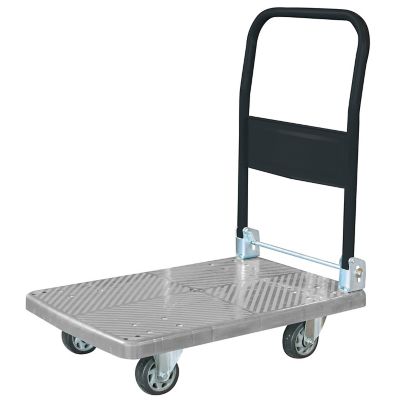
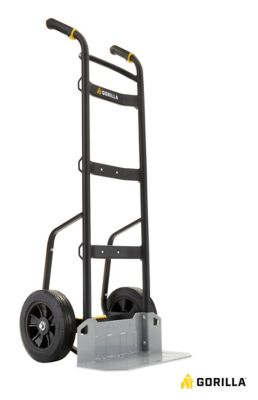
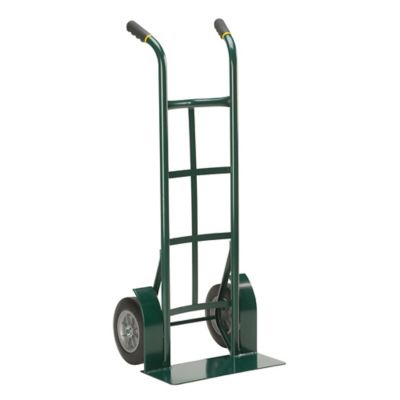
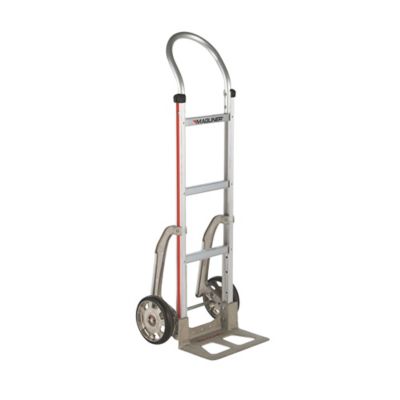
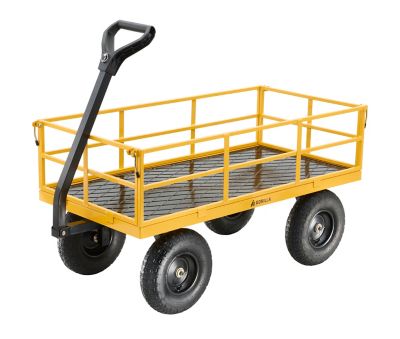
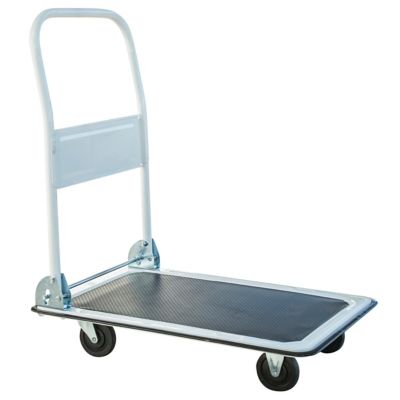
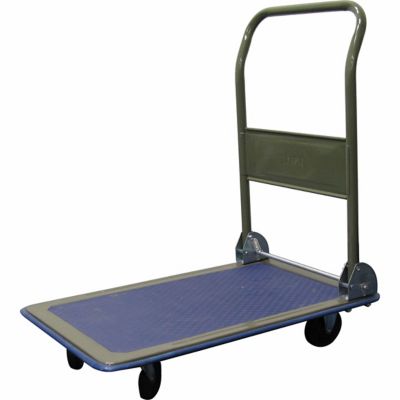
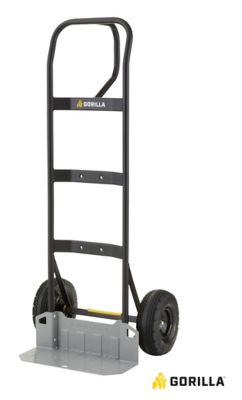
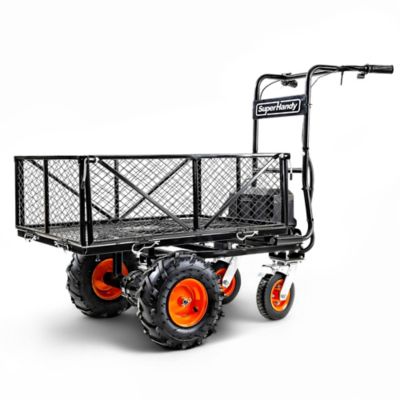
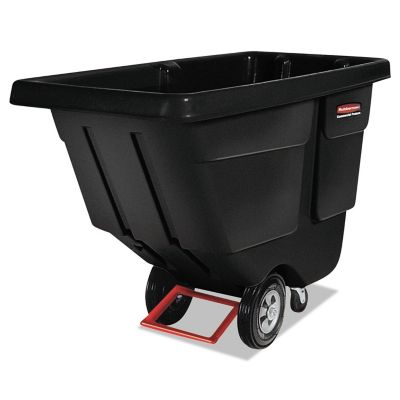
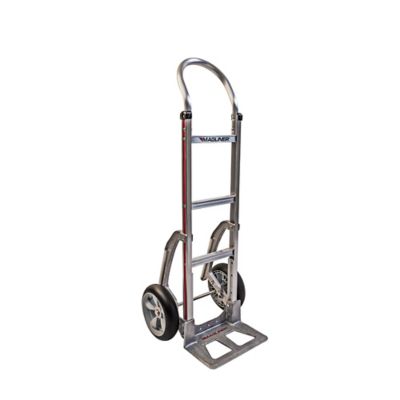
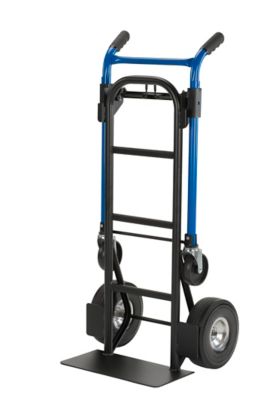
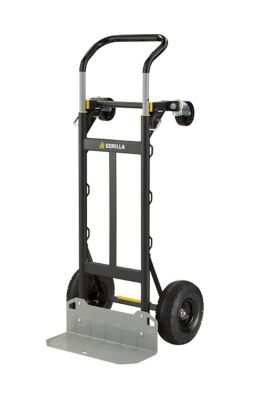
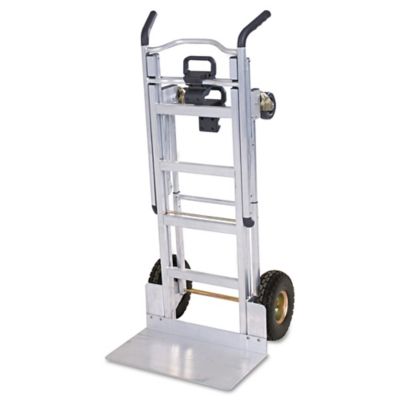
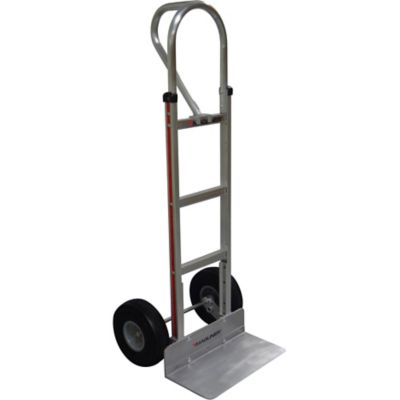
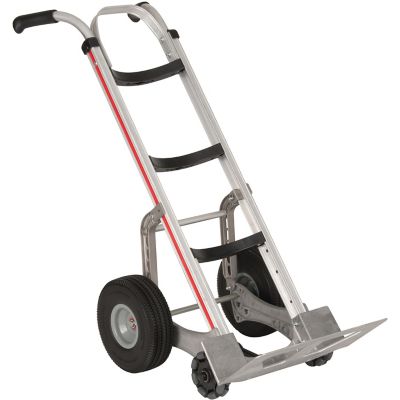
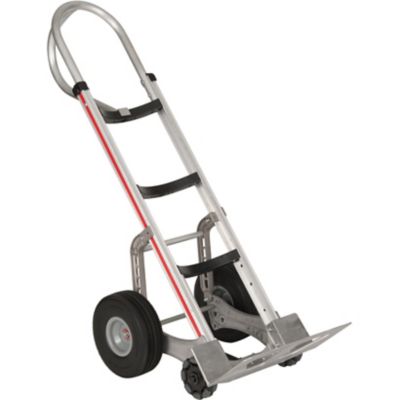
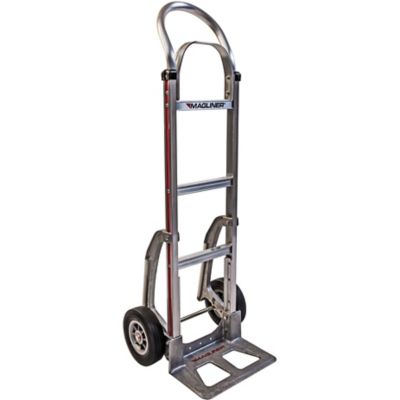
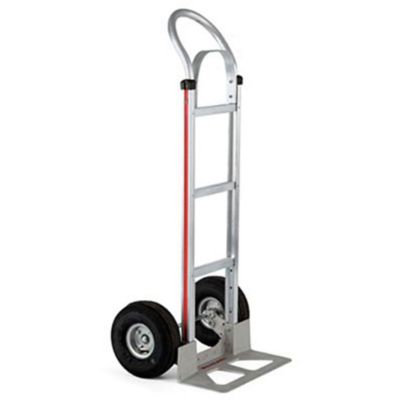
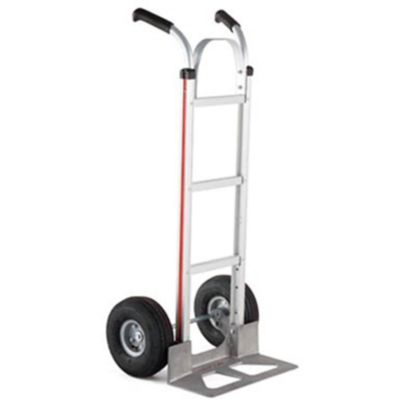
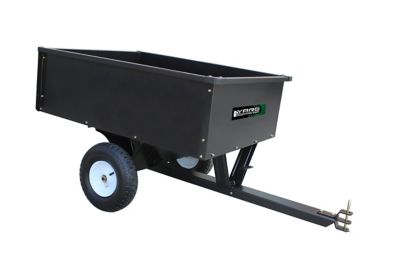
Utility hand trucks are a practical way to move heavy, bulky, or awkward loads without putting all that strain on your back. Their familiar L-shaped frame, two wheels, and lower toe plate make it easier to tilt a load back and roll it where it needs to go. Around a farm, ranch, workshop, garage, or home, a hand truck can handle jobs that are too much for one person to carry comfortably, from feed bags and fencing supplies to storage bins, cases of bottled water, toolboxes, and boxed equipment. They are also handy for moving appliances, firewood, landscaping materials, and other heavy goods across a driveway, barn floor, loading area, or warehouse. A traditional upright two-wheeler is a solid choice for stacking and transporting tall, narrow loads, while a convertible model can shift from an upright hand truck to a four-wheel platform cart for wider or lower items. Folding hand trucks are useful when storage space is tight or when you want to keep one in a vehicle, shed, or utility closet. For homes and small properties, compact construction can make a big difference; a hand truck that folds or stands neatly against a wall is more likely to be close by when a heavy box arrives or a project needs one more trip. When comparing utility hand trucks, start with the type of work you expect to do and the weight of your usual loads. Capacity ratings can range from around 300 pounds for lighter residential use to 1,000 pounds or more for heavy-duty work, but the load should always stay within the manufacturer's stated limit. Keep in mind that a bulky load may be difficult to control even when it weighs less than the maximum capacity, especially on uneven ground or slopes.
Wheel style is another important consideration. Pneumatic, air-filled tires provide some cushion over gravel, packed dirt, rough pavement, and uneven barn approaches, much like the tires on a small garden cart. They can make a loaded hand truck easier to steer across outdoor surfaces, though they may need occasional air and can be punctured. Solid rubber or flat-free wheels do not require inflation and are a dependable option for garages, shops, warehouses, and paved walkways. Larger wheels generally roll more easily over thresholds, cracks, and loose ground, while smaller wheels can help keep a compact frame easy to store. If stairs are part of the job, look for a stair-climbing design with a multi-wheel or tri-star wheel arrangement made for stepping a load upward or downward in a controlled manner. Even with stair-capable wheels, heavy loads should be moved slowly, kept balanced, and handled with care; a hand truck is not a substitute for a second person when an item is oversized or difficult to control. Toe plate size matters, too. A wide toe plate offers better support for large cartons, plastic totes, bags, and irregularly shaped loads, while a narrower plate may work well for stacked boxes and tighter spaces. Handle design affects comfort and control. Loop handles can give you several gripping positions and make it easier to guide a load with one or both hands, while dual handles can help distribute control when moving a broad or heavy item. Look for sturdy frame construction, secure wheel hardware, smooth-rolling movement, and a handle height that feels natural for the person using it. Proper loading helps just as much as the hand truck itself: place heavier items low and close to the frame, center the load over the axle, secure tall or shifting items, and keep your path clear before you begin rolling.
Utility hand trucks can serve homeowners, farmers, ranchers, contractors, delivery workers, maintenance crews, warehouse staff, and anyone who regularly moves materials by hand. They can also make a thoughtful gift for someone settling into a new home, outfitting a workshop, managing a rental property, or preparing a barn and garage for the cooler months. A dependable hand truck often earns its keep during seasonal chores, when people are bringing supplies indoors, organizing outbuildings, moving animal feed, stacking firewood, or putting away outdoor equipment. It can be especially helpful when a family member is handling heavier tasks with limited lifting strength, since rolling a balanced load is usually more manageable than carrying it. Keep a hand truck where it will be protected from unnecessary weather exposure, and check the wheels, axle, frame, and fasteners before taking on a demanding job. Tires should be properly inflated when applicable, and worn or damaged parts should be addressed before use. Never let a load block your view, and use extra caution on ramps, wet pavement, loose gravel, and steps. For storing the items you move with a hand truck, including bins, seasonal supplies, and household materials, browse
Utility Storage options that help keep working areas orderly. With the right capacity, wheel style, toe plate, and frame for the job, a utility hand truck can become one of those hardworking tools that quietly saves time and effort every time a heavy load needs to go from one place to another.