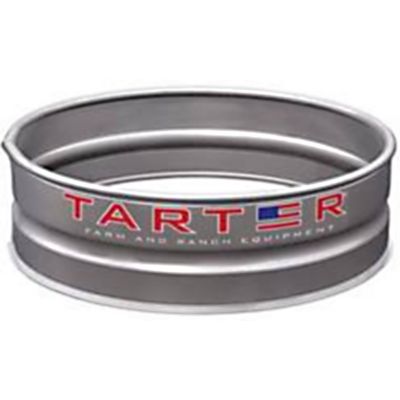
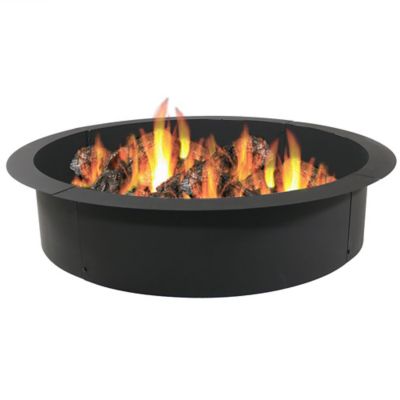
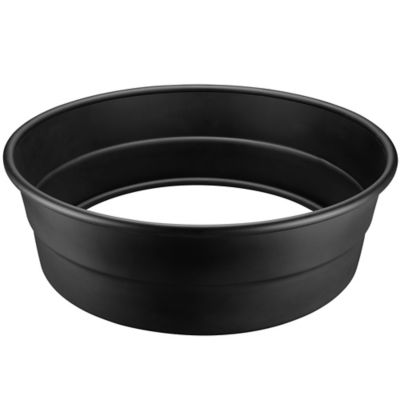
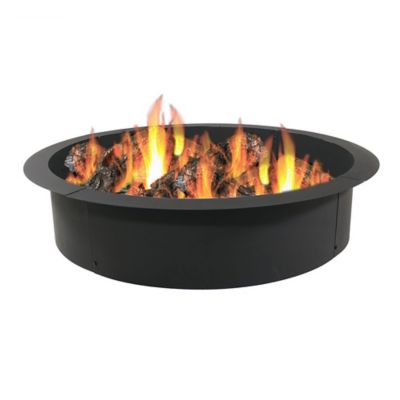
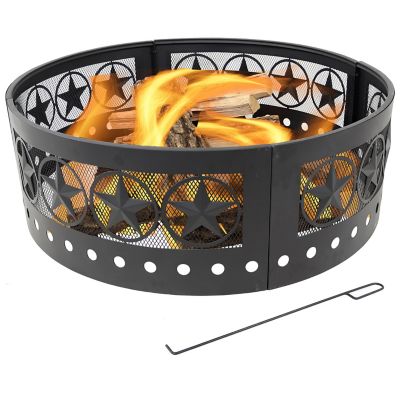
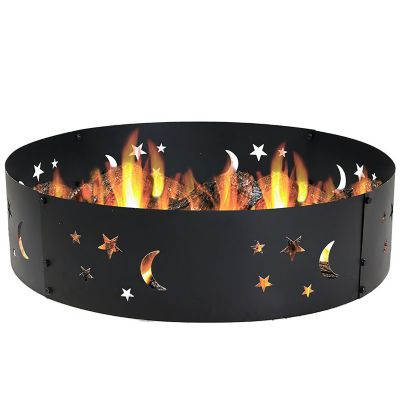
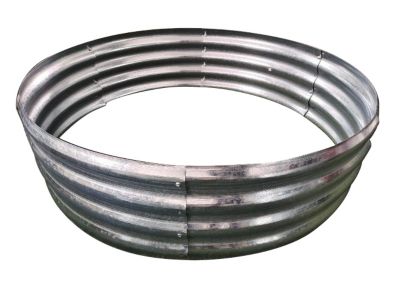
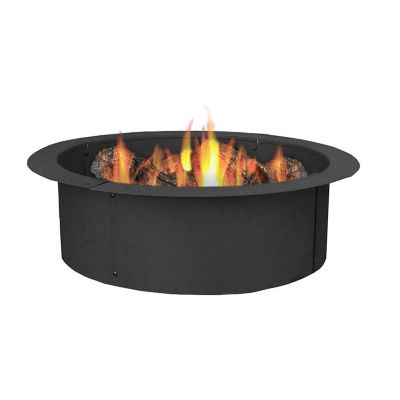
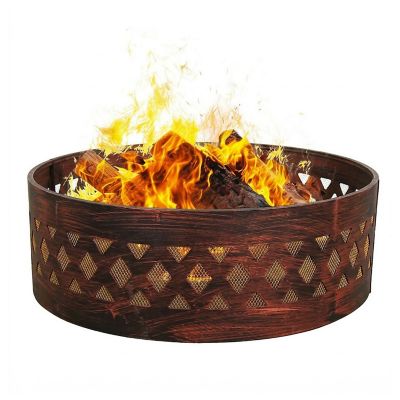
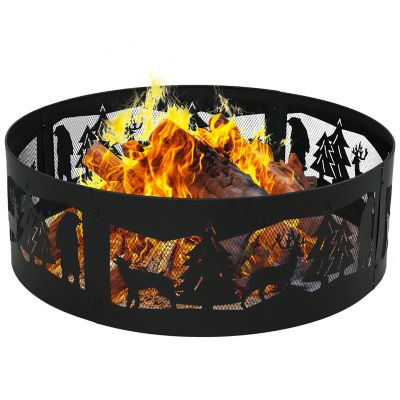
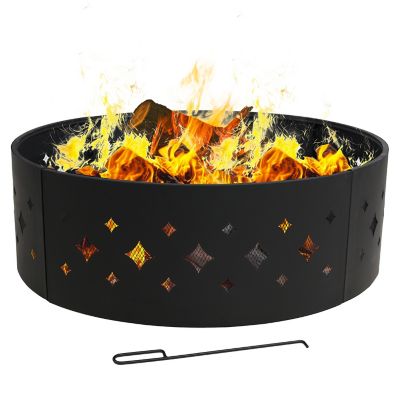
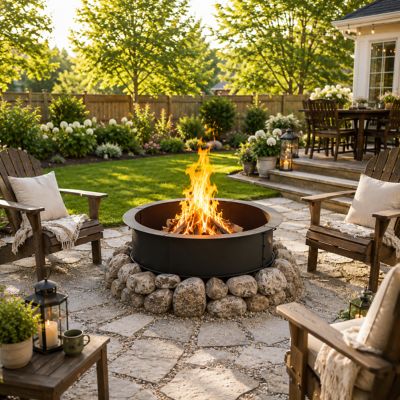
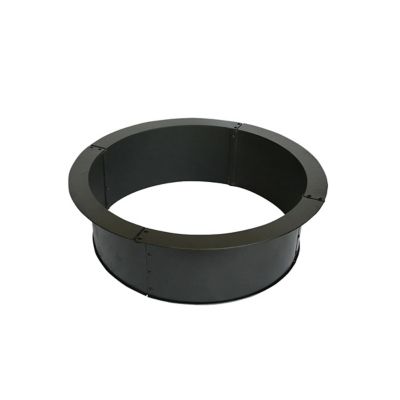
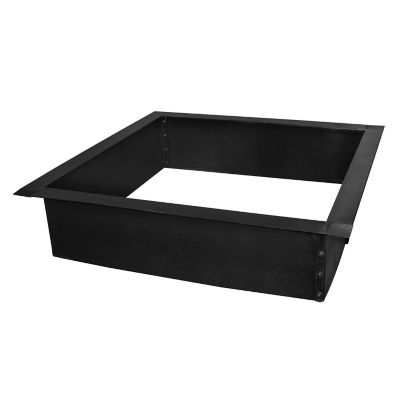
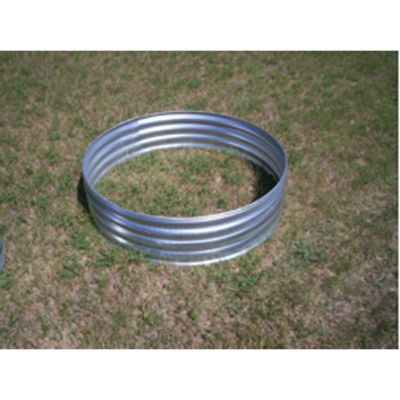
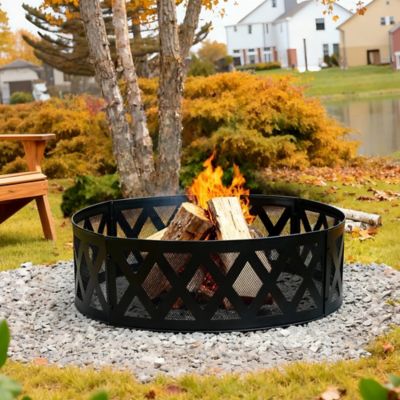
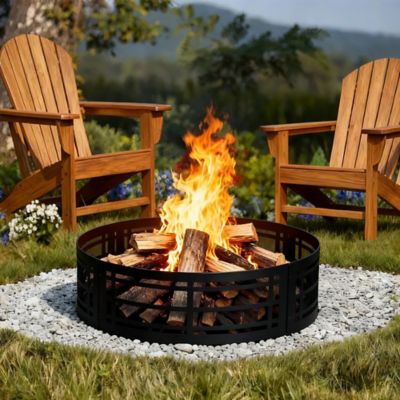
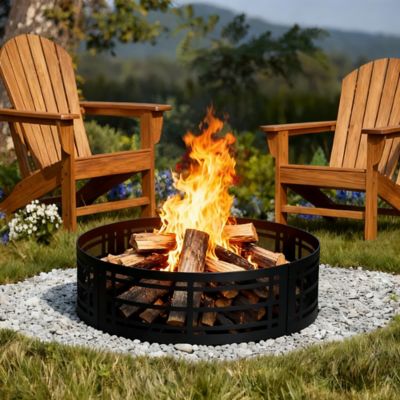
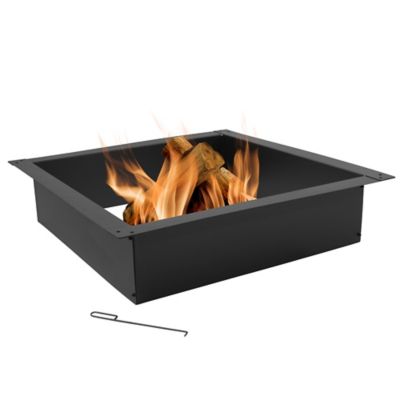
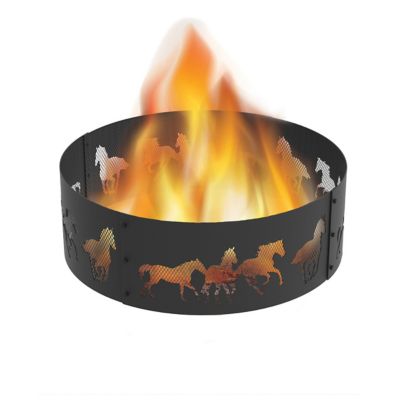
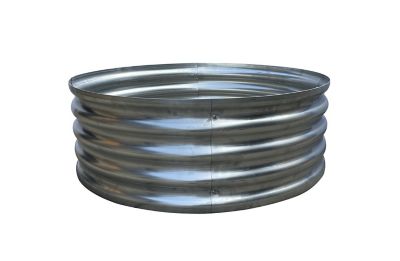
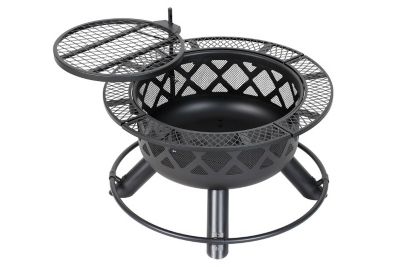
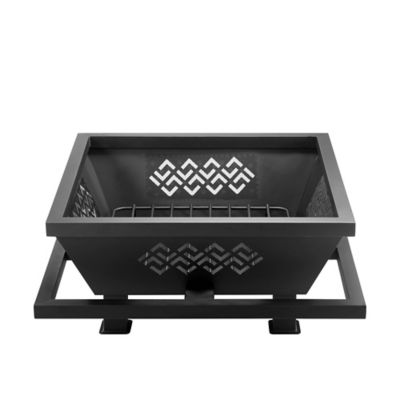
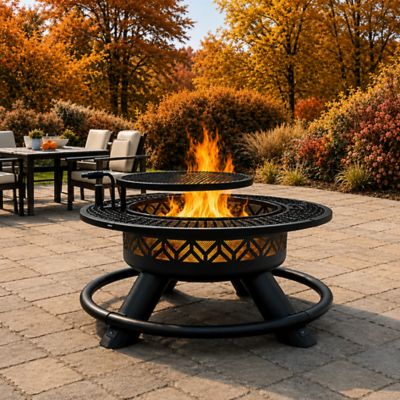
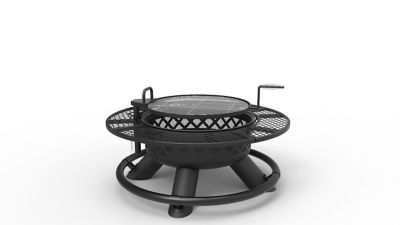
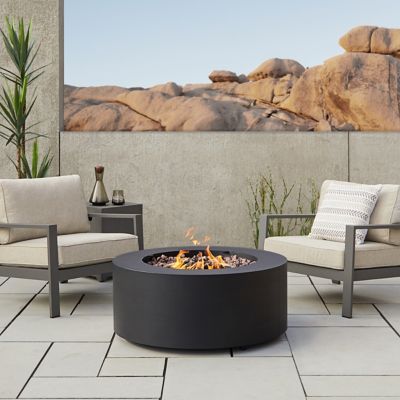
A fire pit ring is a metal enclosure that defines the burning area of a wood fire, either as a stand-alone ring on a suitable ground-level base or as a liner inside a compatible masonry fire pit. It helps keep logs and coals within a set space, giving a backyard gathering spot a clear center without requiring a raised fire bowl. Many rings have an open bottom, so the surface underneath remains part of the fire pit setup rather than something the ring shields from heat. For a gravel gathering area beyond the yard or a place to pull up chairs after chores, that straightforward construction can be a good fit. Steel is a common material, with differences in thickness, finish, and construction affecting weight, handling, and upkeep. Heavier steel generally adds weight and can better resist warping than thinner steel under comparable conditions, although proper fire size still matters. When comparing steel gauge numbers, a lower number generally means thicker metal within the same gauge system; a stated thickness provides a clearer comparison. Bare steel develops surface rust, while certain coatings help protect the exterior until scratches, abrasion, or repeated heat exposure wear them down. Weathering steel forms a rust-colored patina, but it still needs suitable drainage and can leave marks on nearby surfaces. A high-heat finish does not make a ring maintenance-free, and ordinary paint is not a suitable substitute for a manufacturer-approved coating. Solid walls give the fire a simple outline, while cutout patterns let the glow show through and change the view from nearby chairs. Those openings can also let sparks or small embers escape, so appearance should never replace attention to placement and supervision. Welded construction, bolt-together panels, edge finishing, and lifting points are worth comparing, especially when the ring will need occasional moving for cleanup. A smooth upper edge and firmly joined sections matter around a gathering space where folks tend to lean forward to tend the logs.
Fit involves more than choosing a diameter that looks right in the yard. The inside diameter determines the burning space, while the outside diameter determines how the ring fits within a stone or block surround. A top flange, projecting hardware, or shaped panels can add to the overall footprint. For a replacement fire pit liner, measurements of the existing opening, wall height, and any supporting ledge help narrow the choices. Some liners are intended to sit inside a surround with a specified gap; others have a rim designed to rest on a supporting surface. Manufacturer dimensions and installation requirements take priority over a nominal size in a product name. Ring height also changes the setup: a taller wall may hold logs farther below the rim, while a lower profile leaves more of the fire visible. Neither shape eliminates the need to keep fuel within the intended burning area. A large ring calls for more room around it, not simply longer firewood. Space for chairs, a clear walking path, and access for tending and extinguishing the fire all belong in the footprint. Comparing rings with other
Outdoor Fire Pits can help distinguish an open-bottom enclosure from a raised bowl or another fire feature with different installation needs. A ring needs a level, noncombustible base that meets its instructions, along with proper separation from buildings, fences, overhead branches, and other combustible materials. Setting one on a wood deck or grass is not an appropriate shortcut, and adding a thin layer of gravel does not automatically make a combustible surface safe. Masonry around a fire also needs to be suitable for the heat involved; ordinary landscape materials are not automatically fire-rated. Local fire rules, burn restrictions, underground utilities, and the location of buried roots can affect whether a proposed spot is suitable. A steel liner helps define the fire area, but it does not make every surround or location safe.
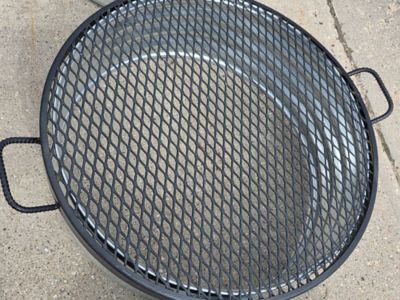
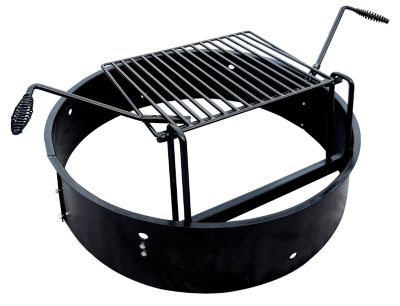
Everyday use and care have a lot to do with how well a fire ring holds up. Split, seasoned firewood sized to fit comfortably inside the ring makes more sense than logs that bridge the rim or extend into the seating area. Trash, treated lumber, and painted wood do not belong in a recreational wood fire. A manageable fire leaves room for tending without stacking fuel above the enclosure, and children and pets still need a clear boundary away from hot metal and drifting embers. A compatible spark screen can help limit escaping sparks, but it does not replace adult supervision or the need to extinguish the fire fully. Cooking calls for its own fit check: a grate needs proper support, and food should never touch painted metal or surfaces not intended for cooking. Likewise, a wood-burning ring is not automatically suitable for a gas burner conversion. After the gathering, extinguishing instructions and local requirements come first, even when that means more cleanup afterward. Ash can hide heat long after the flames disappear. Only completely cold ash should be removed, and a covered metal ash container belongs on a noncombustible surface away from buildings and combustible materials. Clearing out cold ash also reduces the damp buildup that can encourage corrosion along the lower edge. Once the ring is fully cool, routine checks for loose fasteners, cracked joints, sharp rusted areas, or thinning metal can catch trouble before the next fire. Covers should fit the setup and go on only after everything has cooled; drainage and airflow still matter beneath them. For someone setting up a backyard gathering place, a fire ring can make a practical gift when its dimensions and installation needs match the space. The best match leaves room for comfortable chairs, safely contained fuel, and easy care long after the last marshmallow comes off the stick.