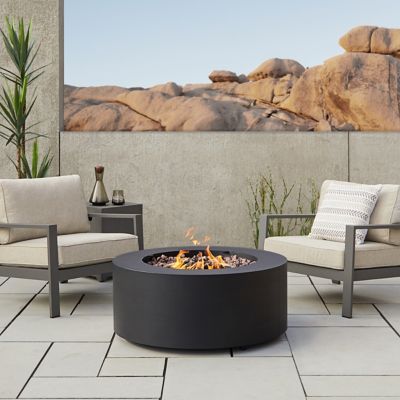
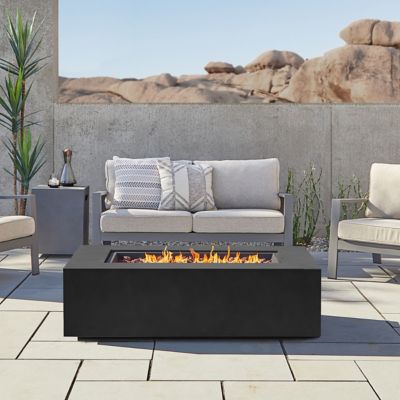
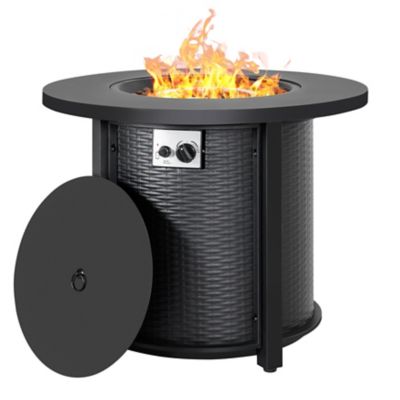
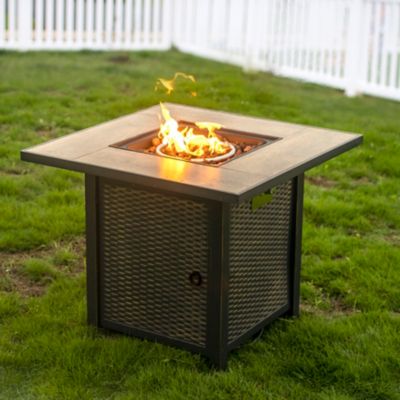
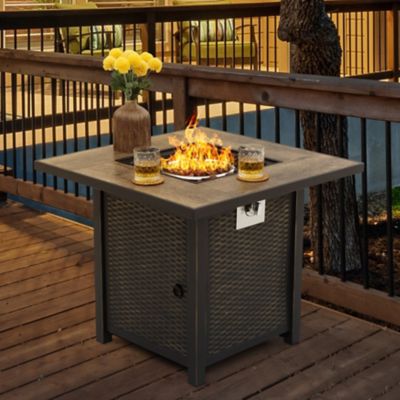
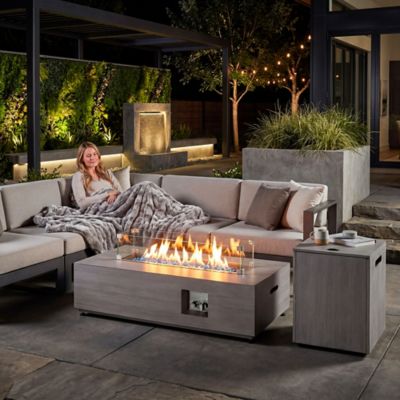
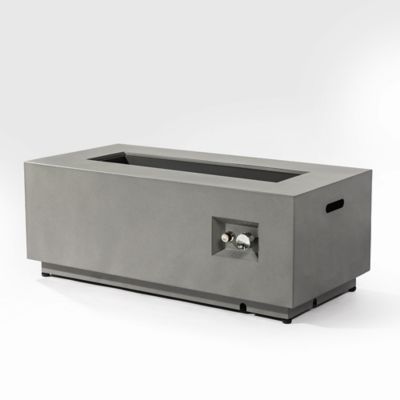
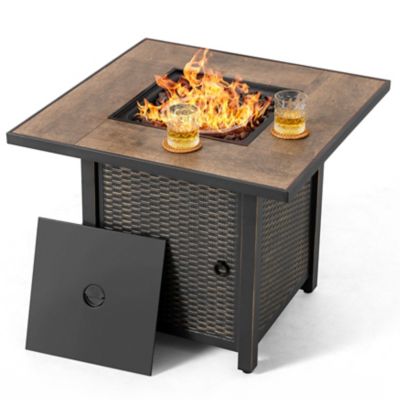
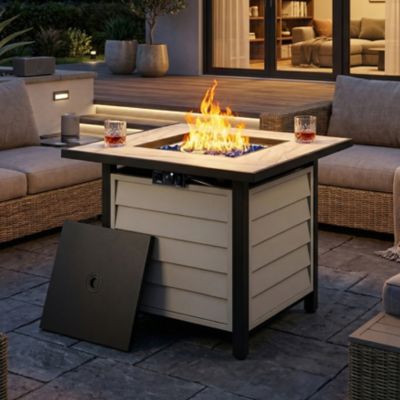
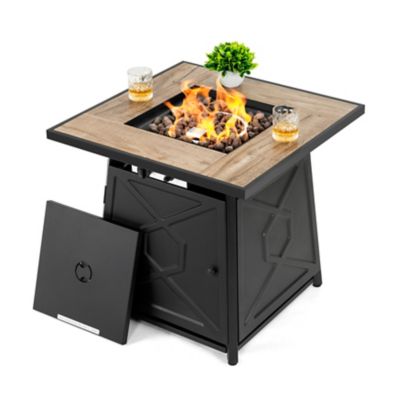
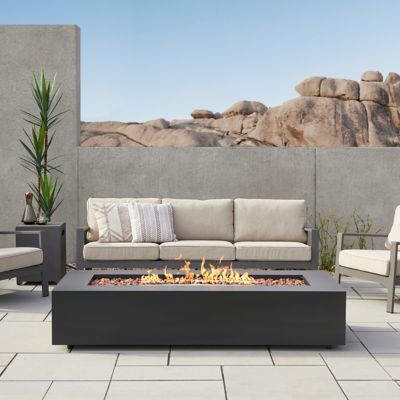
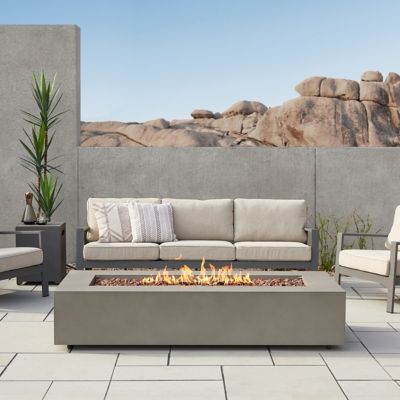
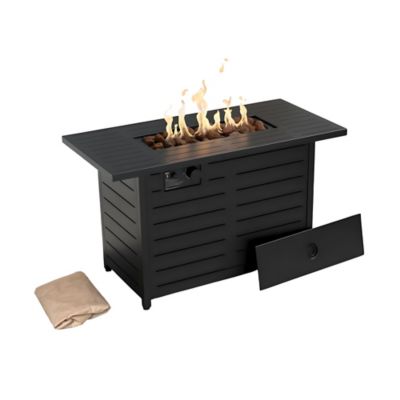
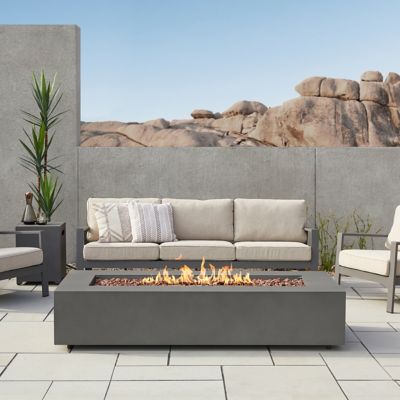
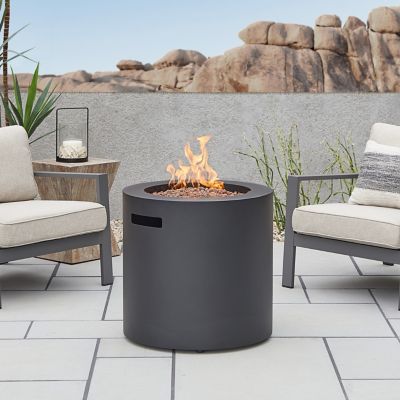
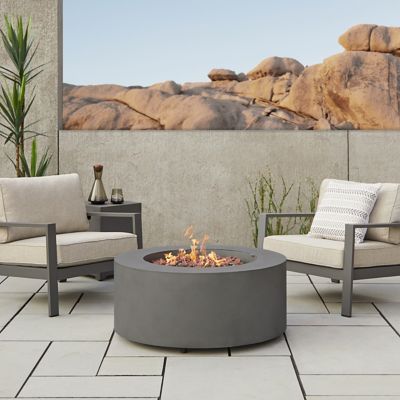
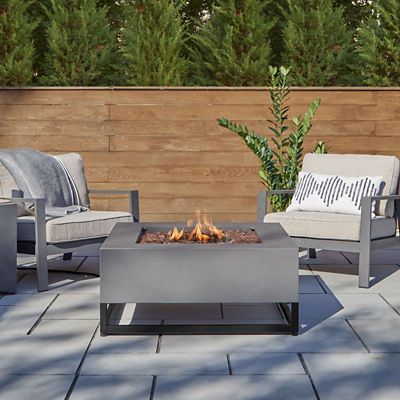
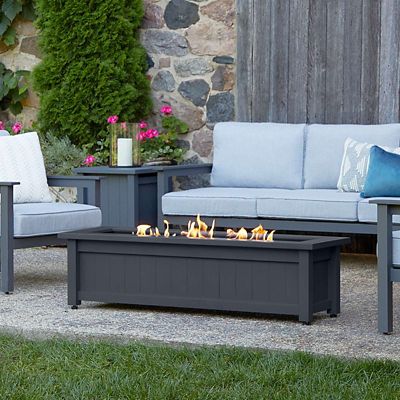
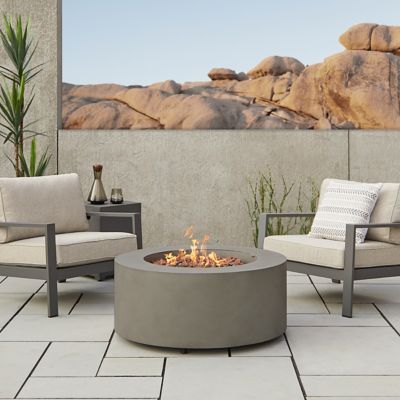
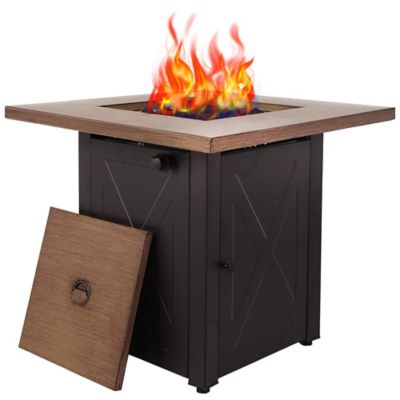
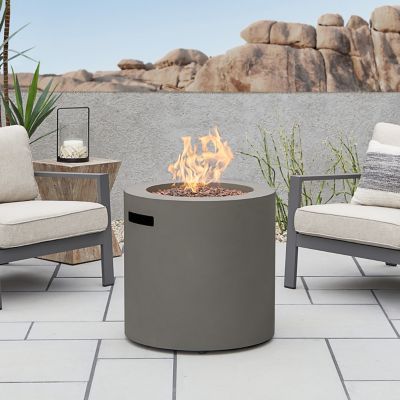
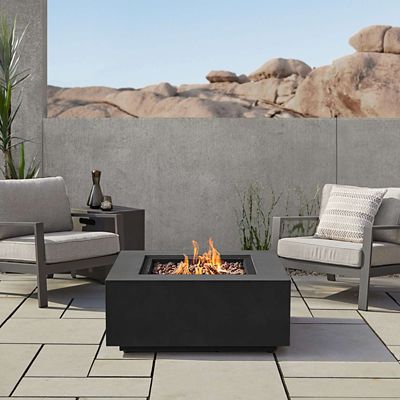
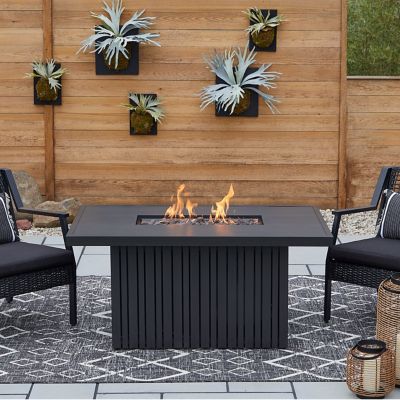
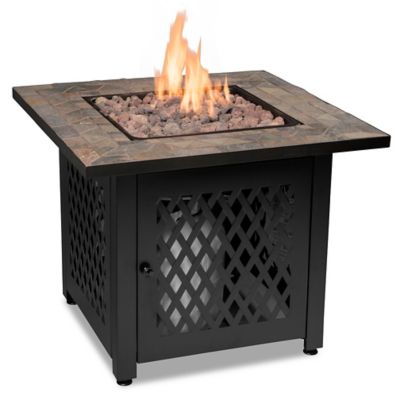
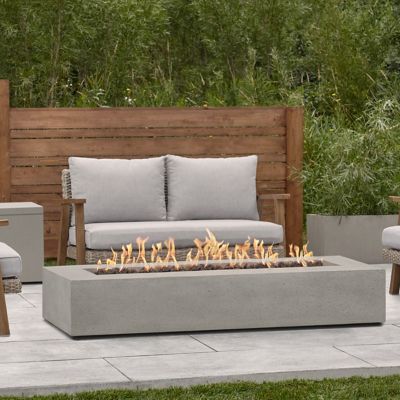
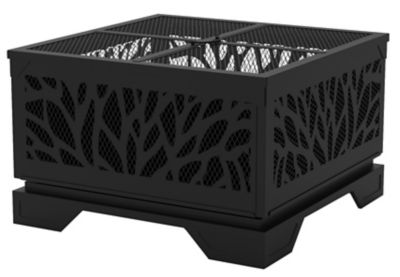
Fire pit coffee tables are low-profile outdoor tables with a built-in fire feature, most often a gas burner, that puts a flame at the center of a lounge seating area. They combine the familiar shape of a coffee table with the warmth and glow of a fire pit, giving folks a place to gather without pulling chairs around a separate fire ring. Compared with taller dining-height fire tables, these designs sit closer to the height of outdoor sofas, sectionals and lounge chairs. That lower profile keeps conversation comfortable and leaves the flame in view while everyone settles in. A broad tabletop border can provide room for a mug or small plate, provided those belongings stay outside the clearance area specified by the manufacturer. Some designs have a matching burner lid that creates more tabletop space when the fire is off and the burner has cooled completely. Rectangular tables often fit neatly alongside a long sofa, while square shapes can suit a sectional or a balanced arrangement of chairs. Round tables soften the layout and eliminate corners along walking paths, though their overall footprint still matters. The right fit depends on more than the open space in the middle of the furniture. Table height, tabletop depth and the distance between the burner and seated guests all affect how the setup feels. A low table paired with tall, upright chairs can be awkward to reach, while an oversized table can crowd the path from the house to the yard. For a backyard sitting area, an open-air patio or a gathering spot overlooking the pasture, the appeal is straightforward: one central piece provides a surface for everyday company and a fire feature for time spent together. It is an especially practical format for people who prefer relaxed seating over a full outdoor dining arrangement, whether the usual company is a couple sharing coffee or family lingering after supper.
Materials give fire pit coffee tables much of their character, but they also shape the care each table needs. Powder-coated steel offers a substantial feel and a finished surface that benefits from gentle cleaning and prompt attention to chips or scratches. Aluminum is generally lighter and resists rust, making it worth considering when a furniture arrangement may need to move occasionally. Even a lighter table should only be moved when completely cool, with its fuel supply shut off and disconnected as directed. Stainless steel often appears in burner assemblies, where the metal grade and the manufacturer's care directions matter. Concrete and concrete-composite bodies bring a solid, grounded look, although their weight, surface treatment and cleaning requirements can vary considerably. A stone-look finish does not necessarily mean a table is solid stone, so construction details are worth a close look. Textured surfaces can blend easily with wood seating and gravel-bordered patios, while smooth metal tops tend to wipe down with less fuss. Beneath that outer shell, the fuel arrangement makes a real difference in everyday use. Propane models may hold a compatible cylinder inside the base or require a separate tank location, depending on the design. An enclosed tank compartment can keep the setup tidy, but its required ventilation openings must remain clear. Natural gas models need a suitable supply connection and installation that follows local requirements; fuel conversions are only appropriate when the manufacturer expressly permits them with the specified components. Ignition style, flame adjustment and access to the controls also deserve attention, especially when the table will sit close to a deep sectional. Burner output alone does not describe the whole experience. Burner shape, seating distance and the table's layout affect how the flame looks and how much warmth reaches nearby guests. Glass or lava rock should always match the type and amount approved for that burner rather than being chosen on appearance alone.
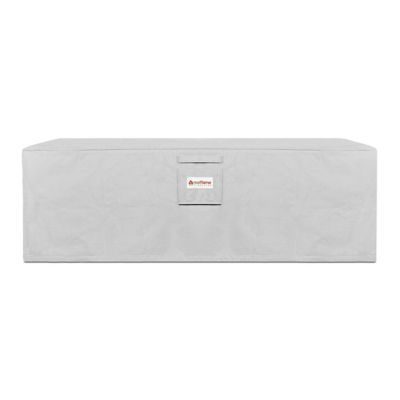
Living with a fire pit coffee table is easiest when the layout leaves room for both gathering and routine upkeep. These tables belong in outdoor locations approved by the manufacturer, with the required clearance from buildings, overhead structures, plants and other combustible materials. An open spot is not automatically a safe spot; the supporting surface, nearby furnishings and route of the fuel hose all need to suit the installation. Gas fire tables are not intended for indoor rooms, garages or other enclosed spaces, and a covered outdoor area is only appropriate when the product's instructions expressly allow it and all clearance and ventilation requirements are met. For families with children or pets, a low flame feature calls for close supervision and enough space to keep curious hands, paws and loose clothing away from hot surfaces. A tabletop edge is not a seat, and the burner area should stay clear of cups, napkins and anything else that might tip or catch fire. Unless a model is specifically rated for cooking, its purpose is gathering and warmth rather than preparing food. After the fire is shut off, the burner, media and surrounding surfaces need time to cool before a lid or cover goes on. Regular care usually means removing loose debris, wiping surfaces with suitable cleaners and checking the burner area and fuel connections according to the owner's manual. Abrasive tools and harsh cleaning chemicals can damage finishes that otherwise need only a soft cloth and mild soap. Properly fitted
Fire Pit Table Covers can help shield a cooled table from dirt and moisture between gatherings, with a fit that accounts for the tabletop shape, base dimensions and any raised components. With sensible placement and care, a fire pit coffee table can make an outdoor seating area feel settled and inviting, ready for quiet conversation or a few extra chairs when company stops by.