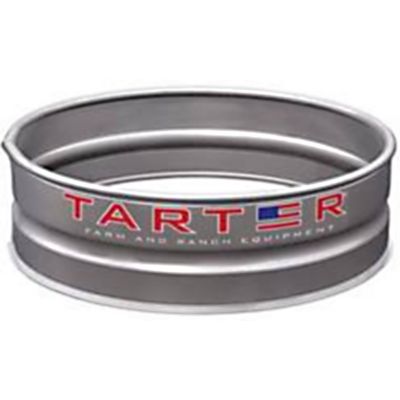
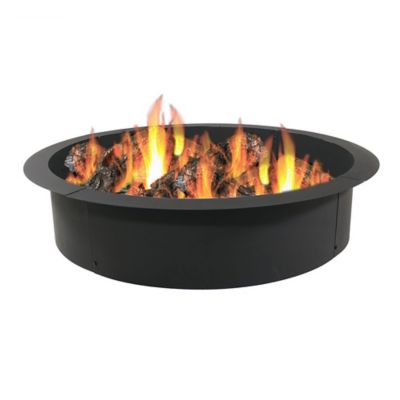
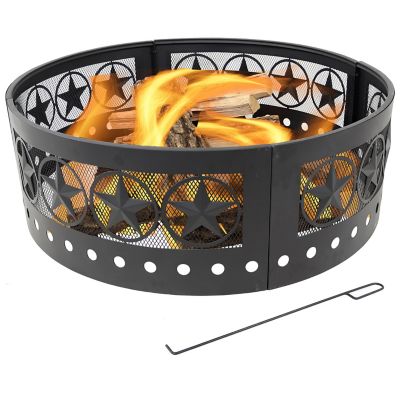
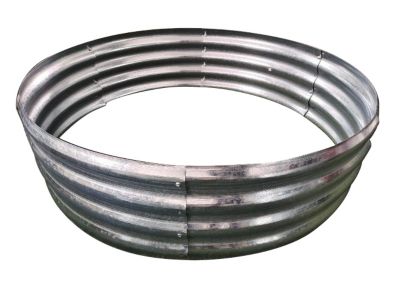
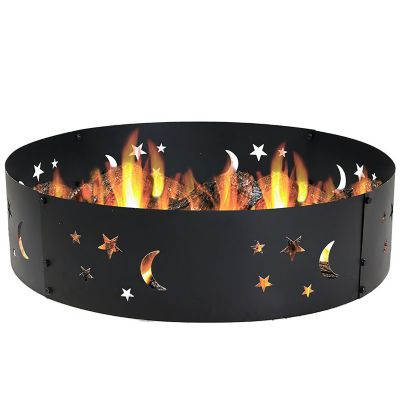
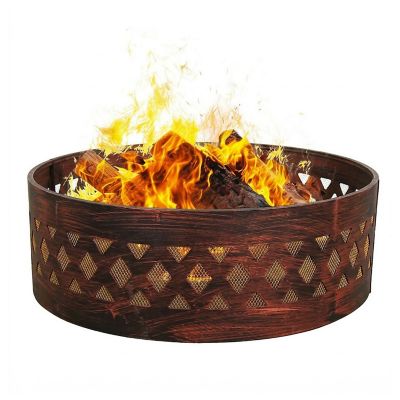
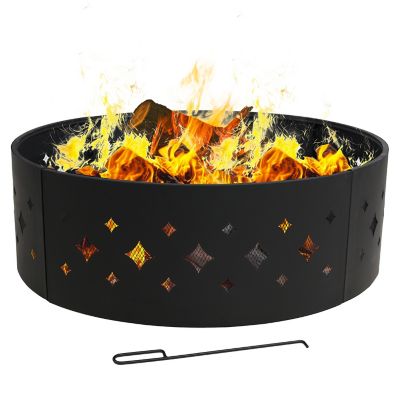
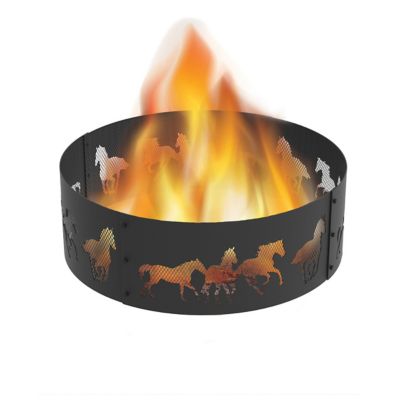
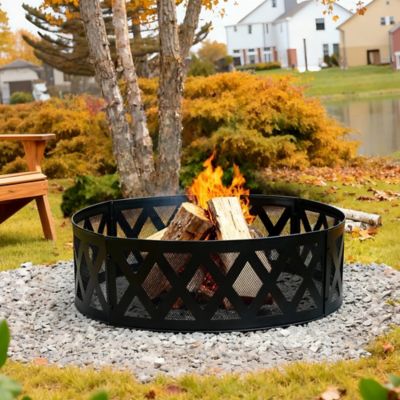
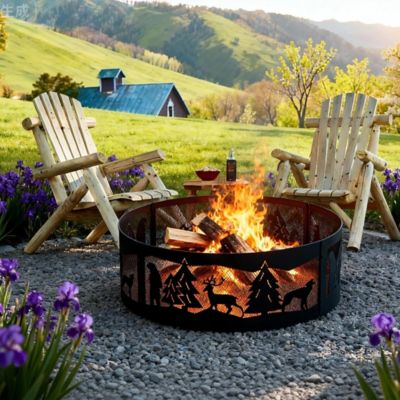
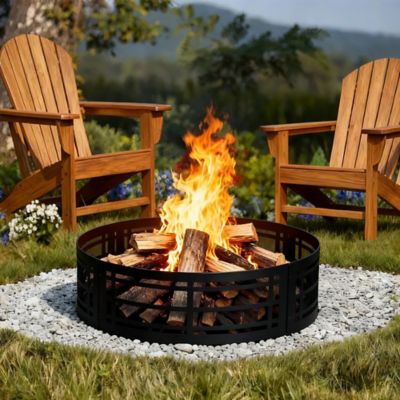
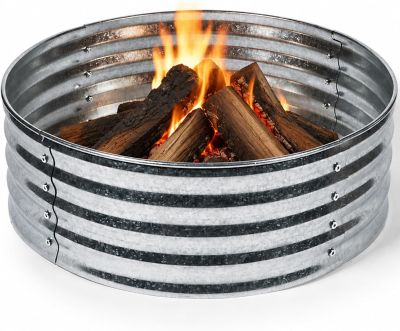
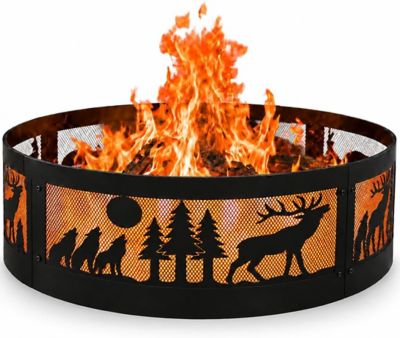
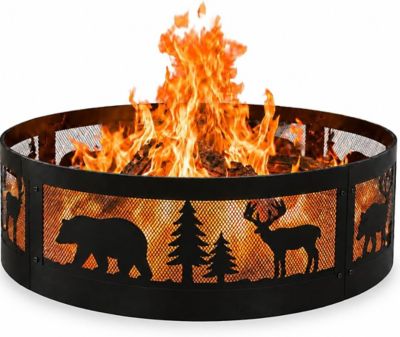
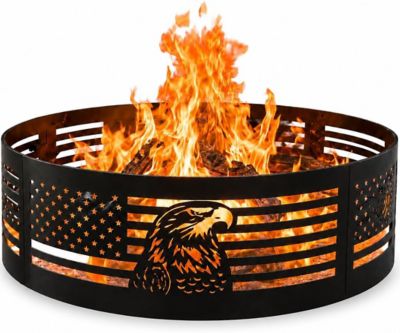
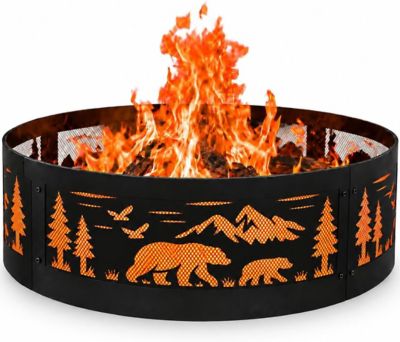
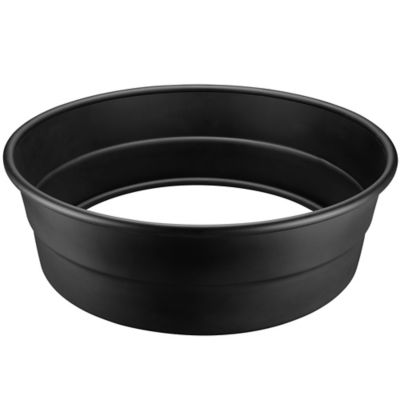
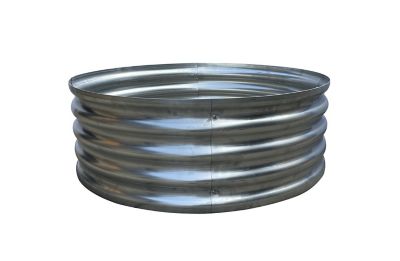
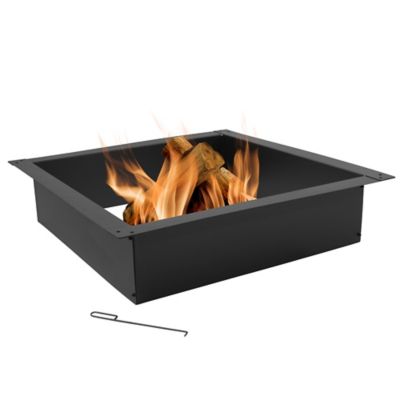
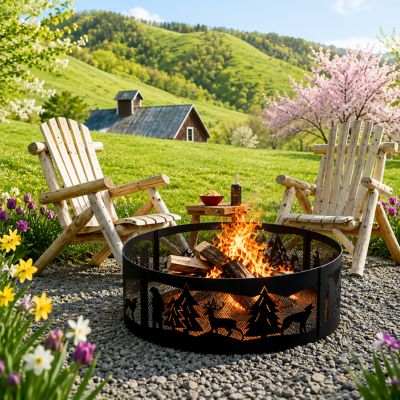
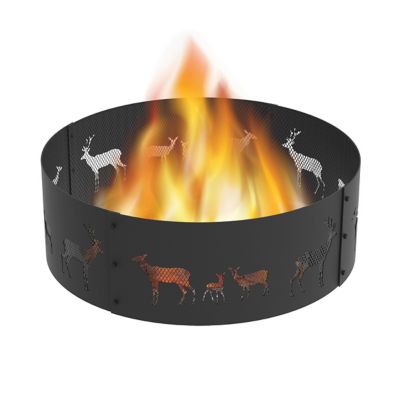
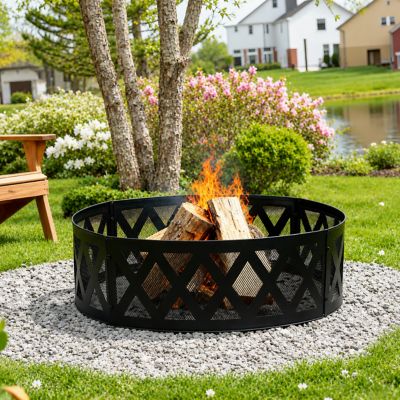
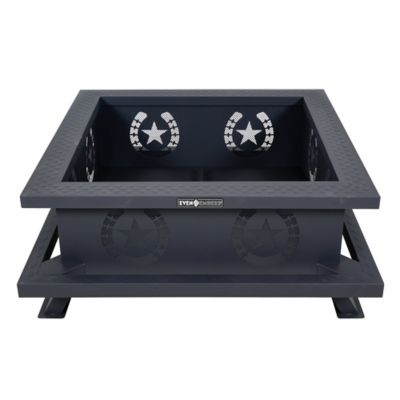
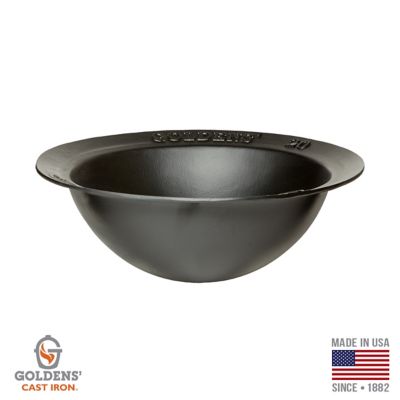
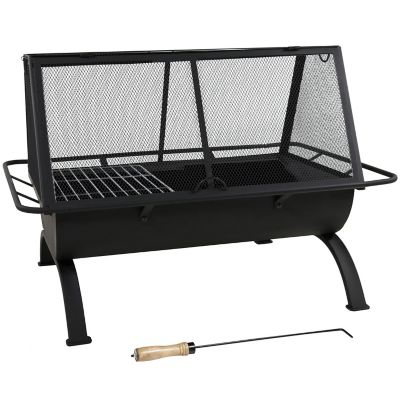
A metal fire pit ring is an open-bottom metal frame that helps keep a wood-burning fire within a defined area. Some rings stand on their own over a suitable noncombustible base, while others fit inside a brick or stone surround as a liner. In a masonry fire pit, the metal creates a barrier between the burning logs and the surrounding structure, reducing direct flame contact without eliminating heat transfer. Designs with ventilation openings can also support airflow to the fire, though the ring’s placement and the surrounding construction affect how well those openings work. That simple setup fits plenty of outdoor gathering spots, from a gravel area behind the house to a designated campsite on the property. There is room for conversation, a few chairs set back from the fire, and the familiar crackle of split wood without needing an elaborate outdoor kitchen. A standalone ring generally leaves more of its metal surface visible, while an insert sits partly or mostly behind masonry. Those differences matter when choosing the overall height and appearance of a fire area. A low ring keeps the flames in view, while a taller wall provides more vertical separation between the logs and the surrounding ground. Neither design prevents sparks from escaping or takes the place of proper clearance. Open-bottom rings also differ from fire pits with an integrated floor, ash pan, or raised legs; the ground beneath them remains part of the setup. For a brick or stone surround,
Steel Fire Pit Inserts are a related option when matching a metal liner to the opening. Whether the gathering spot is beside a farmhouse or at a cabin, the right ring starts with a clear purpose: a permanent place to sit around a fire, a removable frame for an established fire area, or a liner for an appropriately built masonry enclosure.
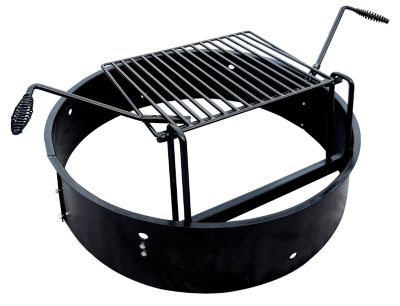
Material, construction, and fit make a noticeable difference in how a fire pit ring handles regular burning. Carbon steel is common, with finishes that vary by design, while stainless steel offers greater resistance to corrosion but can still discolor from heat. Bare steel can develop surface rust, and a painted finish may change appearance as the ring goes through repeated heating and cooling. Metal thickness, panel shape, joints, and reinforcement all contribute to how well a ring holds its form; thickness alone does not tell the whole story. A heavier ring may suit a permanent gathering area, while a lighter sectional design can be easier to move into position or put away after it has cooled completely. Some rings arrive as a continuous wall, and others assemble from curved panels with bolts or interlocking connections. That construction affects handling, assembly, and the finished shape. For a masonry installation, the inside diameter, outside diameter, and wall height deserve separate attention. The inside measurement determines the space for firewood, while the outside measurement determines whether the ring fits within the surrounding opening. A top flange or lip can extend beyond the ring wall, so its full width matters too. A ring that looks right from above may still sit too high, cover ventilation passages, or interfere with the surrounding blocks. The manufacturer’s spacing requirements help account for heat expansion and the intended relationship between metal and masonry. Fire-rated materials and suitable construction remain important because a metal liner does not make ordinary stone, brick, or concrete immune to heat damage. For an open fire area, the ring’s footprint should leave room for clear walking paths and seating set back from hot surfaces. Log size matters as well: pieces should fit within the fire area rather than bridge across the rim. Rings with cooking attachments need attention to compatibility and cooking suitability, since an open top alone does not mean a ring is designed to support a grate or prepare food.
Everyday care is mostly about managing ash, moisture, and the wear that comes with a wood fire. Ash left against steel can hold moisture and encourage corrosion, especially around seams and the lower edge where debris collects. Once the fire is completely out and everything has cooled, clearing the ash according to the manufacturer’s directions helps keep those areas accessible for inspection. Ash can hide hot embers long after the flames disappear, so disposal calls for a suitable metal container and a location away from anything combustible. Loose hardware, distorted panels, thinning metal, and damaged connections are worth addressing before another fire. A cover can help limit debris and moisture between gatherings when the ring’s design allows it, but it belongs only on a fully cooled fire area. Any touch-up coating needs to be appropriate for the material, heat exposure, and location, with the manufacturer’s care directions taking priority. Placement matters just as much as upkeep. A fire pit ring belongs on a suitable noncombustible surface with the required clearance from buildings, fences, vegetation, overhead branches, and other combustible materials. Setting a ring on a wood deck or directly on grass does not make that surface safe from heat. Local rules, burn restrictions, and property requirements also apply, even on acreage. Dry, untreated firewood is the usual fuel for a wood-burning ring; trash, painted lumber, and treated wood do not belong in the fire. A nearby means of extinguishing the fire and an attentive adult help keep a relaxed evening from becoming a problem. For households with children or animals, seating and traffic paths should allow plenty of distance from the metal, which can stay hot after the flames settle. A metal fire pit ring can also make a thoughtful gift for someone planning a backyard gathering area or improving an established campsite, provided its dimensions and intended installation match the space. The best fit is a ring that suits the setting, accommodates manageable fires, and is straightforward to maintain between get-togethers.