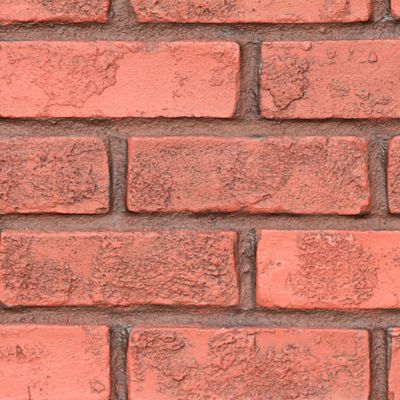
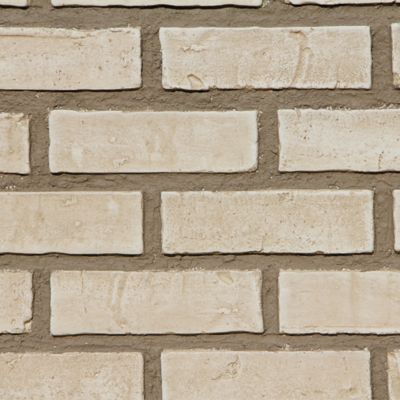
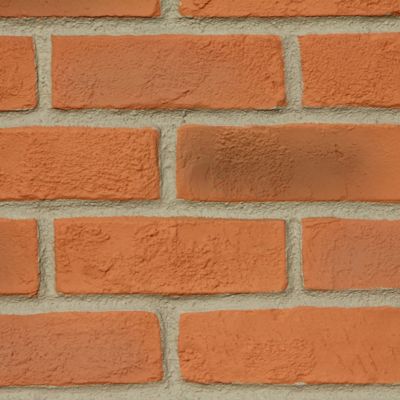
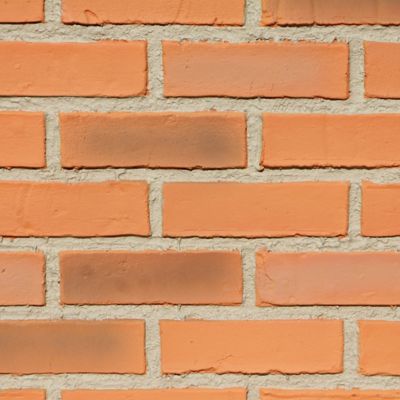
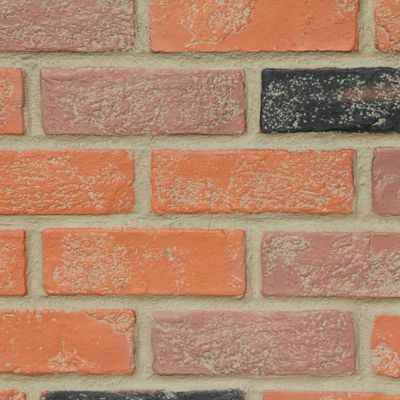
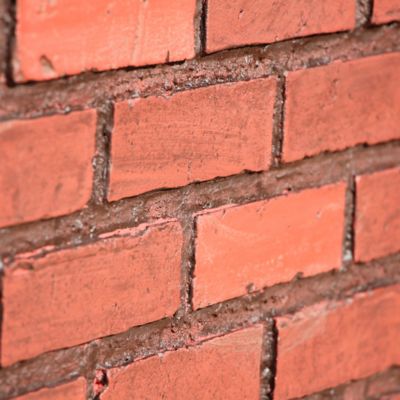
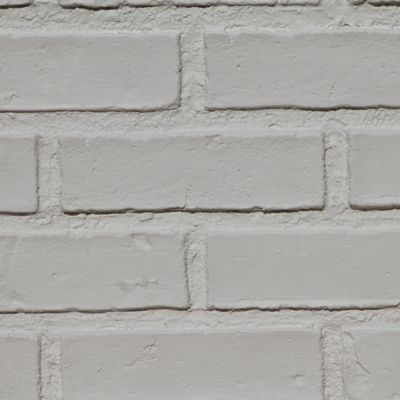
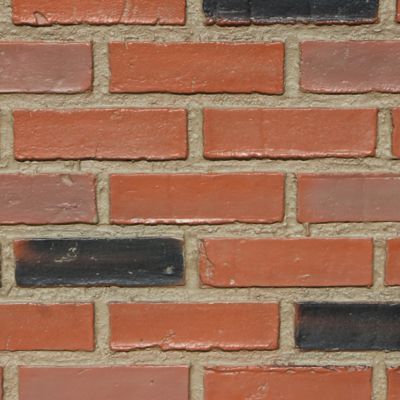
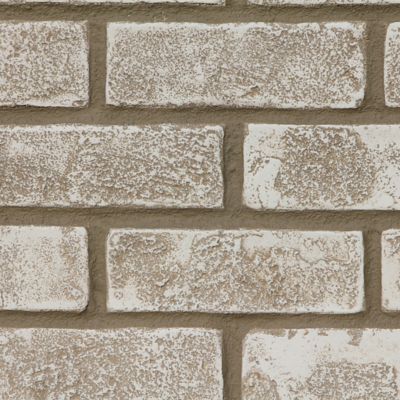
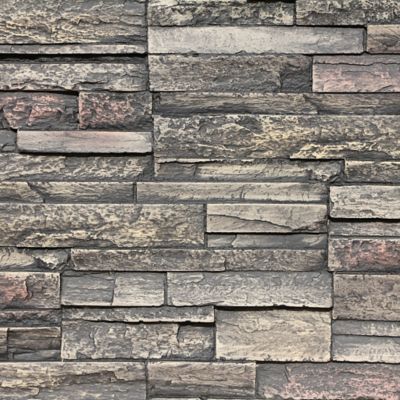
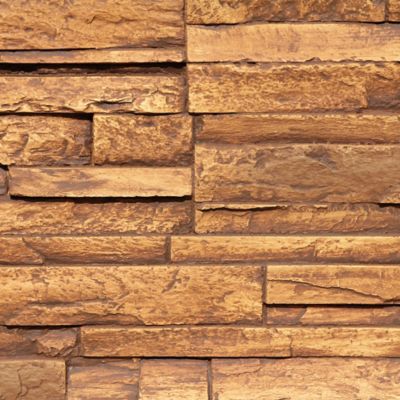
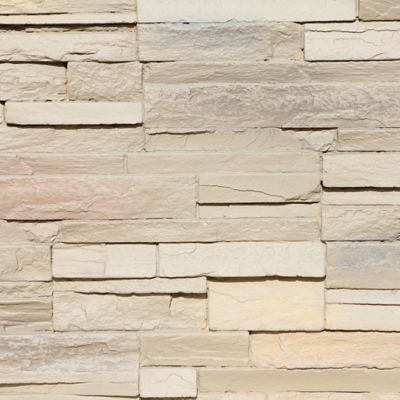
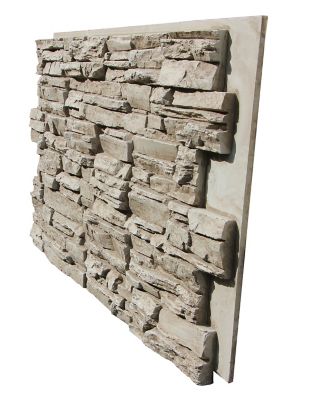
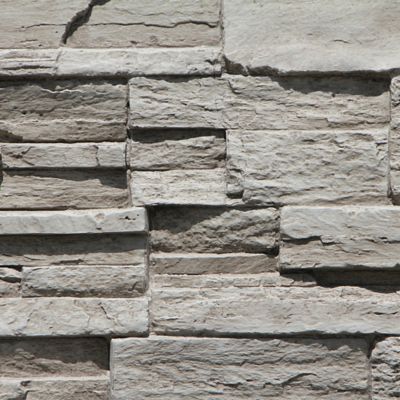
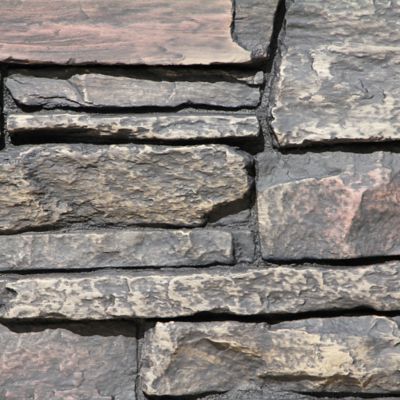
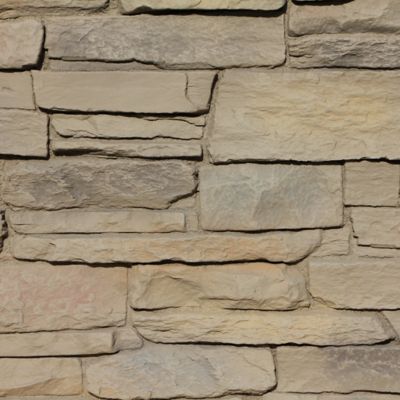
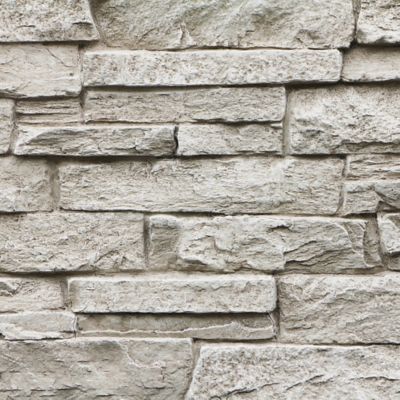
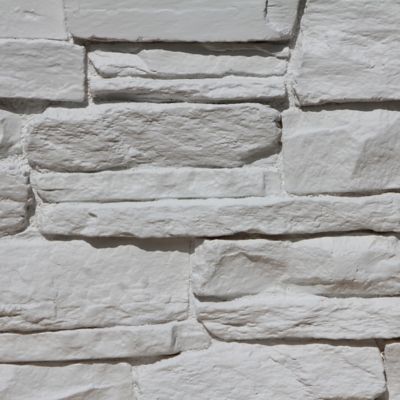
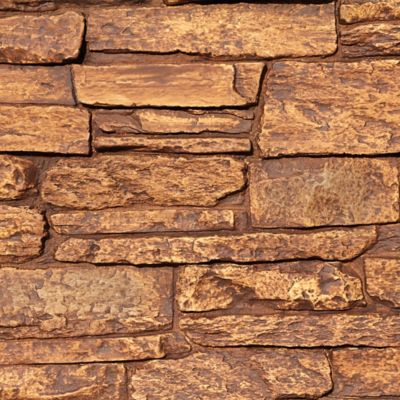
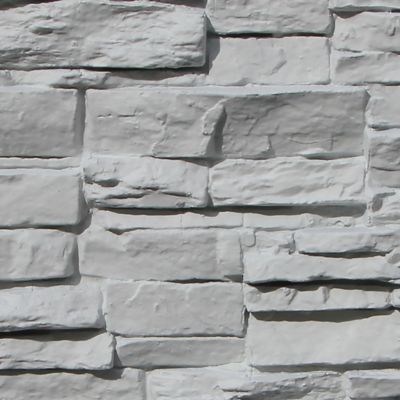
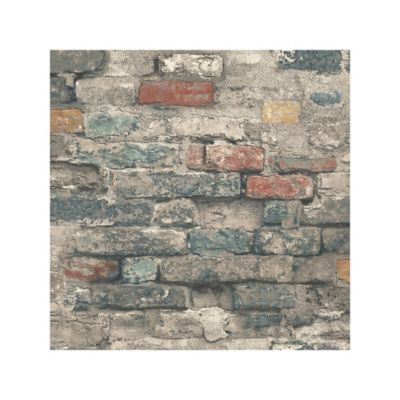
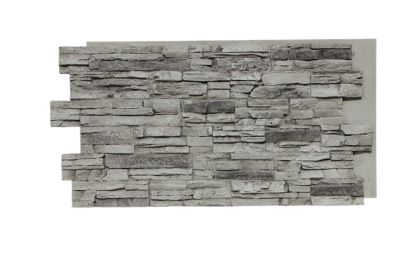
Faux brick siding panels bring the look of laid brick to a wall without the weight and individual placement of full-size masonry. The appeal is easy to picture: a red brick entry beside a plain front door, a soft gray accent across a garage wall, or a brick-look base that gives a small outbuilding a more finished appearance. Molded faces recreate the ridges, shallow pits, and uneven edges that give brick its character, while recessed mortar lines help establish the pattern. Some finishes lean toward clean, evenly colored brick; others have a mottled appearance with darker edges and lighter faces. Those differences matter across a broad wall, where color, joint spacing, and texture become more noticeable than they are on a small sample. A warm red or brown can sit comfortably beside wood posts and metal roofing, while whitewashed and charcoal looks offer a different kind of contrast. Materials vary across this category and can include molded polyurethane, polypropylene, PVC, and other composite constructions. Each has its own weight, rigidity, surface finish, and installation requirements, so the brick appearance alone does not tell the whole story. A lightweight foam-backed panel may handle differently from a thinner molded plastic panel, and neither should be mistaken for structural masonry. Faux brick siding generally serves as a facing over a properly prepared wall rather than taking the place of framing, sheathing, or required water-management layers. That makes intended placement a central part of choosing it. Exterior-rated panels belong in exterior applications, while panels meant only for indoor walls need to stay inside. Resistance to sunlight, moisture, and everyday bumps depends on the material and the manufacturer’s stated ratings. For homeowners freshening up a farmhouse entry, property owners finishing a storefront, or folks adding brick character to a workshop, the best match starts with the wall’s job and ends with a finish that looks at home beside the surrounding materials.
Panel size and edge design make a real difference in how faux brick siding comes together. Larger sections can cover an open stretch of wall with fewer pieces, but a narrow area between a door and a corner may call for more trimming and leave more offcuts. Listed dimensions do not always equal installed coverage because interlocking edges and overlaps take up part of each panel. Coverage per panel, rather than the outer measurements alone, gives a clearer picture of what a project will require. Brick patterns also need room to repeat naturally. Across a long wall, staggered joints and thoughtful placement can keep seams from drawing attention, while small sections need enough visible pattern to read as brick instead of a collection of cut edges. Corners are especially important around porch columns, entry returns, and building bases. Matching corner components, starter strips, cap pieces, and edge trim can help the facing end neatly rather than leaving its construction exposed. Panel thickness matters wherever the siding meets a window casing, door frame, outlet, or another wall finish. A brick-look surface that projects farther than the adjoining trim may require a different transition detail. The supporting wall matters just as much as those visible edges: uneven sheathing, soft spots, or an unsuitable surface can interfere with attachment and leave the finished pattern looking wavy. Fastening methods vary, with some systems calling for screws or nails through designated locations and others specifying an adhesive as part of the assembly. Expansion allowances, fastener placement, joint treatment, and flashing details belong to the individual panel system, not a one-size-fits-all approach. Around exterior openings, the brick facing does not replace proper flashing or drainage provisions. These practical details are worth considering alongside color because a tidy finish depends on how the whole wall fits together, from the first lower edge to the last cut beneath the trim.
Everyday use helps narrow the choice further. A wall along a busy garage walkway may take the occasional brush from a tool handle, while a sheltered entry might mostly collect dust and fingerprints near the door. Surface hardness, scratch resistance, and the ability to replace an individual section can matter more in high-contact spots than on a wall well away from foot traffic. Textured faces bring depth to the brick pattern, but their recessed joints can also catch dirt and cobwebs. Many washable surfaces need only a soft brush or cloth and a cleaner approved for the material; abrasive pads, harsh solvents, and pressure washing may damage certain finishes or force water behind the facing. Painted and factory-colored surfaces can have different care requirements, and not every panel accepts a new coat of paint. Where repainting is permitted, the specified preparation, primer, and coating help protect the appearance and adhesion. Indoor projects have a separate set of considerations, including cleaning needs, room conditions, and applicable fire-performance requirements. For a dining nook, mudroom accent, or wall behind an entry bench,
Interior Faux Brick Wall Panels focus the search on that setting. A brick appearance does not make a panel fireproof or suitable behind a wood stove, next to a cooktop, or inside a fireplace opening; required clearances and approved wall assemblies still apply. Likewise, shelves, hooks, and other wall-mounted loads need suitable support behind the facing rather than relying on the panel itself. Those distinctions leave plenty of room for a good-looking, practical finish. A lower brick-look section beneath painted siding can add visual weight to a building, and a full accent wall can bring texture to a room with simple furnishings. Matching mortar color to nearby trim creates a quieter look, while a stronger contrast makes the brick pattern stand out. With attention to material, coverage, attachment, and care, faux brick siding panels can give hardworking spaces a finished appearance without asking them to look fancy.