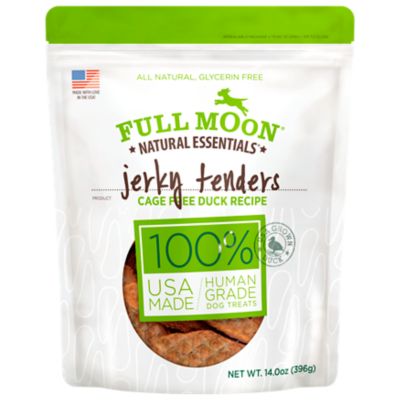
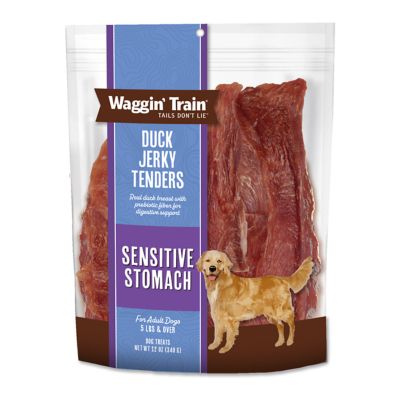
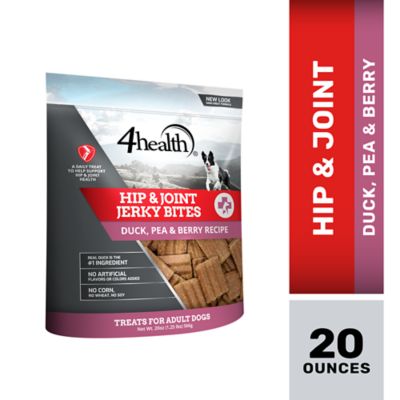
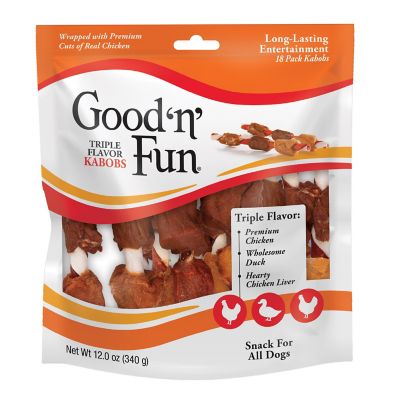
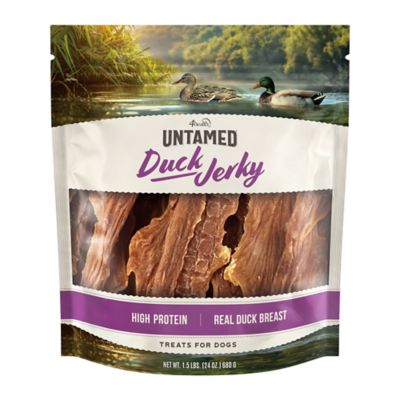
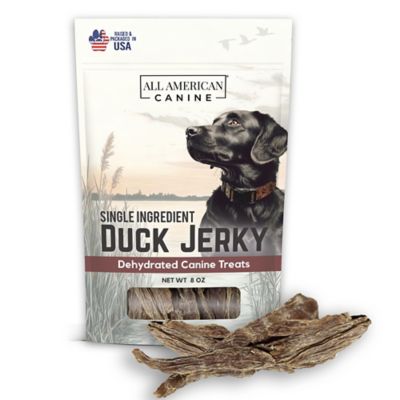
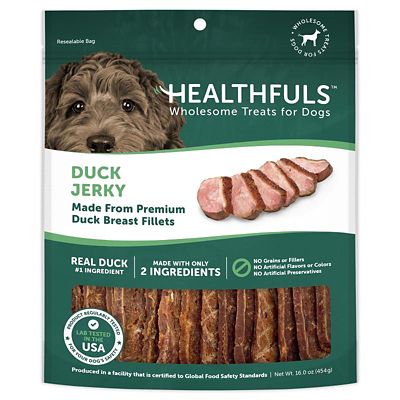
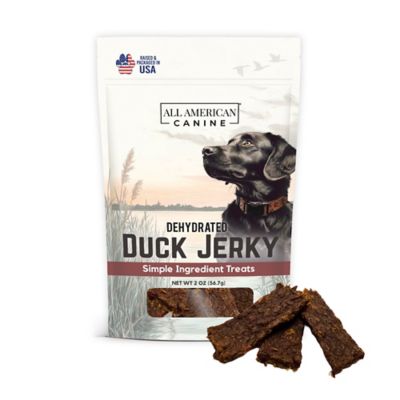
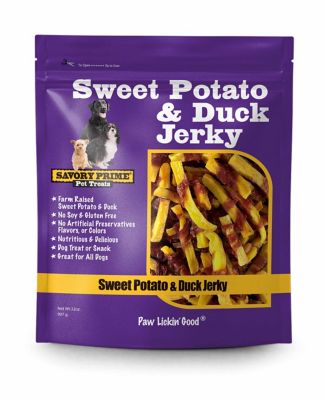
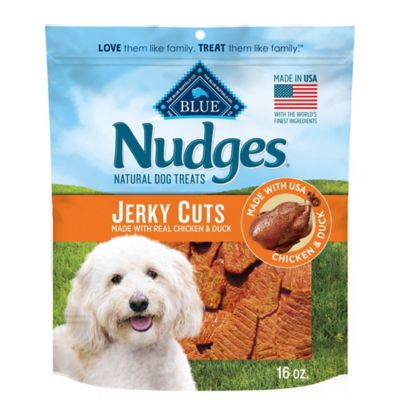
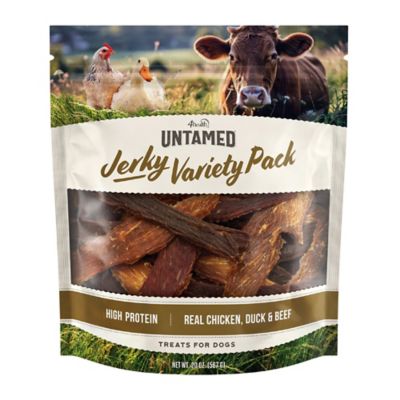
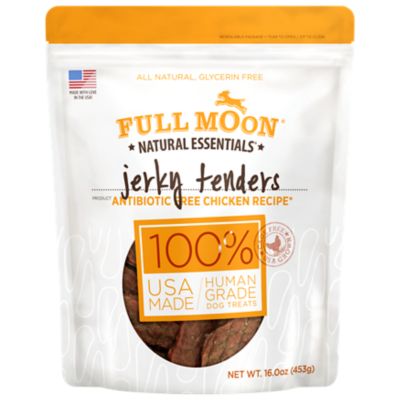
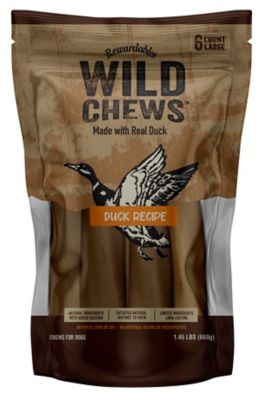
Duck jerky for dogs is a meat-based treat with a savory smell and a chewy bite, making it a good fit for rewarding everyday manners, reinforcing training, or sharing a little something after a walk around the property. It is a treat rather than a complete meal, and its ingredients, texture, and calorie content can vary quite a bit from one recipe to another. Some duck dog treats contain only duck, while others combine duck with additional meats, starches, glycerin, or other ingredients that help shape the treat and maintain its texture. A single-ingredient treat contains one listed ingredient; a single-animal-protein recipe may still include plant ingredients and other additions. That distinction matters when keeping track of what goes into a dog’s bowl and treat pouch. Duck as the first ingredient tells shoppers something about the recipe, but it does not mean the entire strip is duck or that no other animal proteins are present. The full ingredient list gives a clearer picture, especially when chicken, beef, or another ingredient needs to stay off the menu. Duck can be an alternative protein for a dog that has not eaten it before, but it is still poultry and is not automatically suitable for a dog with a chicken allergy. Dogs can react to duck, too, so a veterinarian should help choose treats for a suspected food allergy or a prescribed elimination diet. For dogs without dietary restrictions, the appeal is often simpler: a meaty reward worth paying attention to when there are interesting smells along the fence line. Duck jerky can contribute protein, though its role is to complement a balanced diet rather than meet daily nutritional needs. Comparing the guaranteed analysis, calories, and feeding directions helps put that contribution in perspective. Descriptions such as limited ingredient are a starting point, not a substitute for reading the label and checking whether the recipe suits the dog receiving it.
Texture and portion size make a real difference in how duck jerky fits into a dog’s day. Thin, flexible strips may be easier to divide into small rewards, while thicker pieces can take more chewing and may be better suited to an occasional supervised treat. Drying methods and recipe ingredients affect how firm, bendable, or crumbly the finished jerky feels; not every duck strip will tear neatly by hand. For a little dog learning to settle beside the kitchen table, small, manageable bites keep the reward in proportion to the task. For a bigger dog practicing a calm greeting at the gate, a small piece can still offer plenty of incentive without turning every repetition into a snack break. Bite size should match the dog’s mouth, chewing habits, and ability to swallow safely, not just body weight. A large dog that gulps treats may need more attention than a smaller dog that chews slowly. Puppies, older dogs, and dogs with missing teeth or sore mouths need particular care with firm textures, along with any age restrictions listed on the package. Softer jerky may be easier for some dogs to manage, but softness alone does not remove the risk of choking. Supervise treat time, provide fresh water, and avoid offering pieces that a dog struggles to chew. Jerky is generally an edible reward, not a long-lasting chew toy or a replacement for dental care. For training, pieces that can be eaten promptly help keep attention on the next cue instead of a lengthy chewing session. That can come in handy for recall practice in a fenced yard, standing still for a harness, or settling on a mat while folks come through the door. A treat with a noticeable meat aroma may hold a dog’s interest, although preferences differ. The best fit is something the dog enjoys, tolerates well, and can comfortably eat in portions small enough for the occasion. A resealable pouch that opens easily and keeps crumbs contained can also make repeated rewards less of a fuss.
Feeding amounts and storage deserve as much attention as flavor, particularly in a household where more than one person hands out treats. A strip after breakfast, a few training bites, and a welcome-home snack all count toward the same daily total. A common veterinary recommendation is to keep treats and other extras to no more than 10 percent of a dog’s daily calories, with the rest coming from complete and balanced food appropriate for that dog. Some dogs need a tighter limit, so package directions and veterinary advice should shape the portion. Calories per piece or per serving are more useful than judging by appearance alone, since two similar-looking strips can have different calorie and fat levels. Duck is not necessarily a low-fat choice, and dogs on fat-restricted diets need treats that fit their specific feeding plan. Introducing a small amount first makes it easier to notice digestive upset before offering larger portions. For households considering duck beyond treat time,
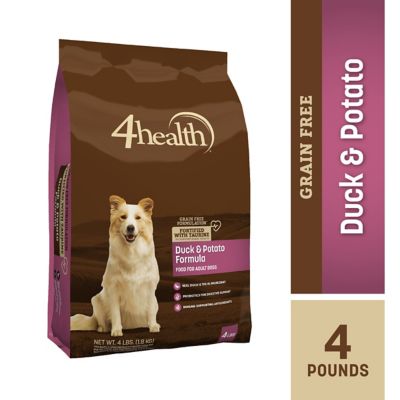
Duck Flavored Dog Food is a related category to explore, while checking each food’s nutritional adequacy statement and full ingredient list separately. A shared flavor name does not mean a food and treat have matching recipes. Keeping jerky fresh also helps preserve the texture and aroma that make it appealing. Follow the package’s storage directions, including any refrigeration requirements after opening, and close the bag securely between servings. If treats go into a separate container, keep the original label, lot information, and best-by date handy. Clean, dry containers and washed hands help keep treat handling tidy, and pieces showing mold or an unexpected change in smell should be discarded. A small portion packed for an outing is easier to manage than leaving an open bag within reach of an eager nose. Whether the recipient is a farm companion, a walking buddy, or a friend’s much-loved pet, duck jerky makes the most sense when its ingredients, chew, and serving size match that individual dog.