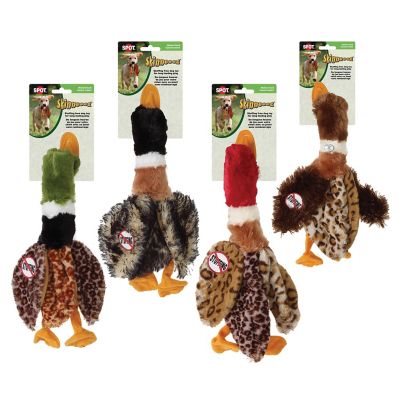
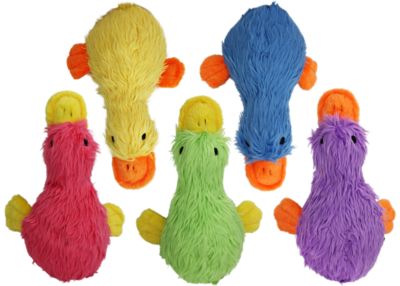
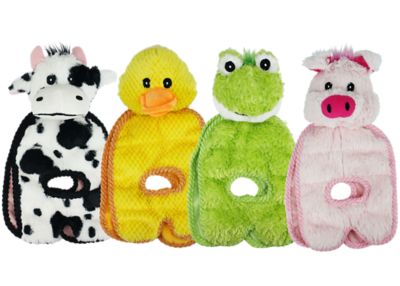
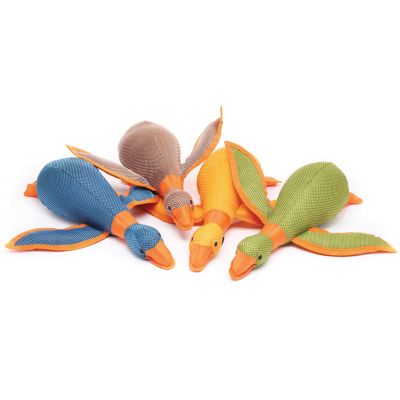
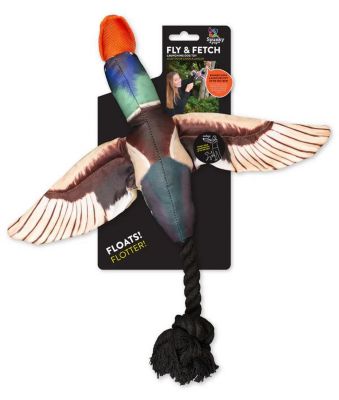
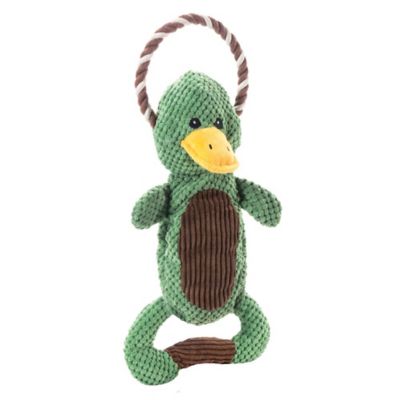
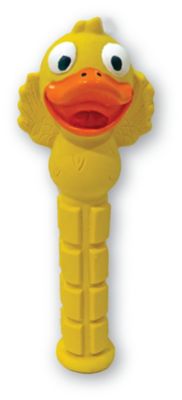
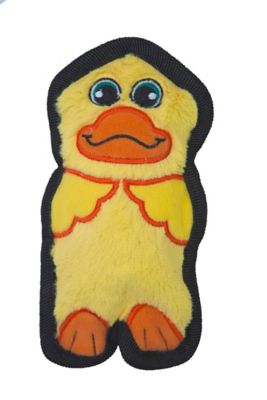
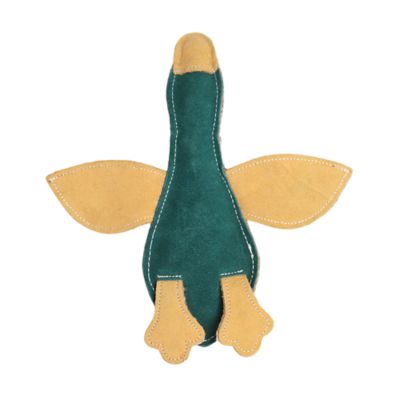
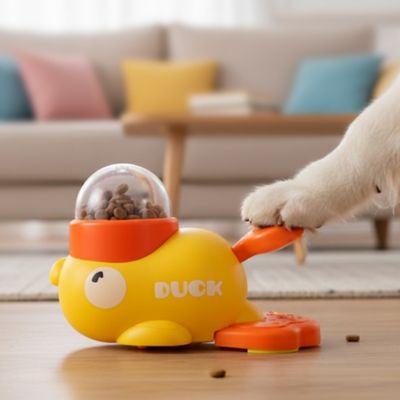
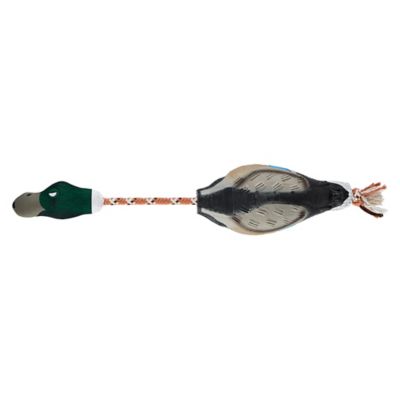
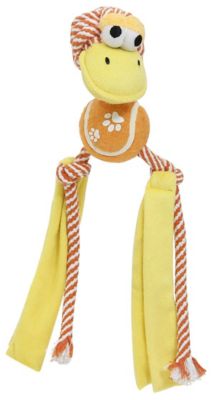
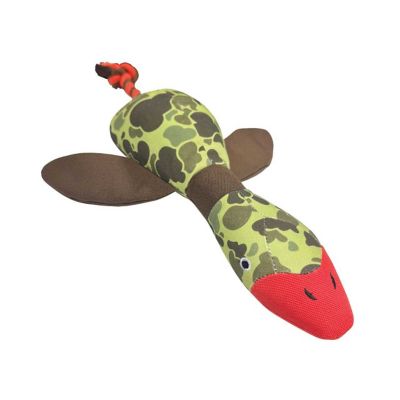
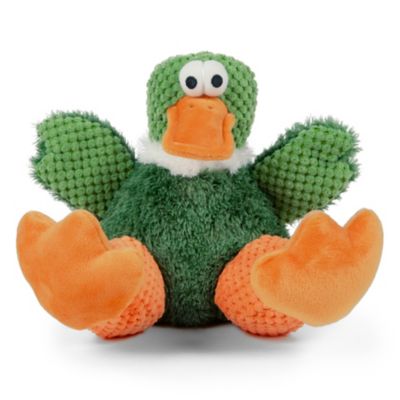
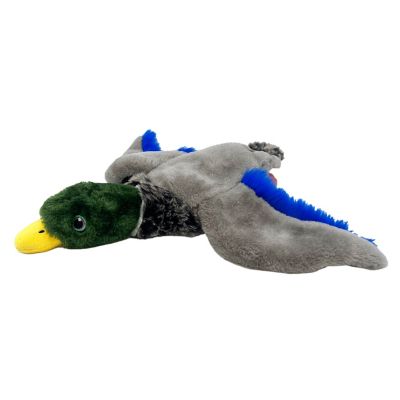
Duck toys for dogs bring a familiar barnyard bird into everyday play, with shapes and textures made for carrying, fetching, shaking, or snuggling. The category can include soft plush ducks, floppy fabric birds, stuffing-free designs, and duck-shaped rubber toys. Some make a high-pitched squeak, while others have a lower quacking sound or crinkly material that rustles when a dog grabs a wing. Those differences matter more than the bird’s color or markings. A dog that likes to parade around the house with a prize may enjoy a lightweight duck with a narrow neck, while a gentle lounger may prefer a soft body to tuck beside a front paw. Long wings and floppy bodies give dogs something to grip during a shake, but those same features can become targets for a determined fabric puller. Plush duck toys generally suit gentle mouthing and supervised play better than prolonged, forceful chewing. Stuffing-free duck toys have less loose filling to scatter if the fabric opens, although fabric pieces and internal sound components still need attention. Size matters, too: a toy should be large enough that the dog cannot swallow it, yet manageable enough to pick up without struggling. A small dog may have trouble getting a grip on a broad, firm body, while a large retriever may need more substance than a tiny plush bird provides. Age, mouth size, and play habits all help narrow the choice. Puppies exploring textures, adult dogs eager for a hallway toss, and older companions that mostly carry their toys may each favor something different. Sound is another part of the fit. An enthusiastic squeaker can keep one dog interested and send another looking for a quiet corner, so a dog’s reaction is worth more than how entertaining the noise sounds to the people nearby.
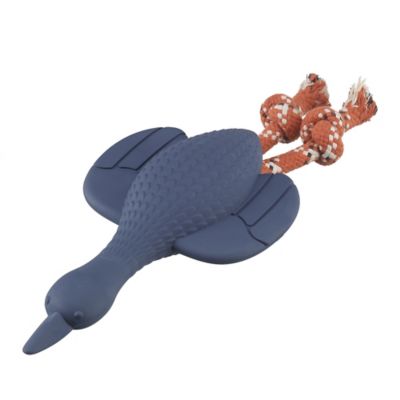
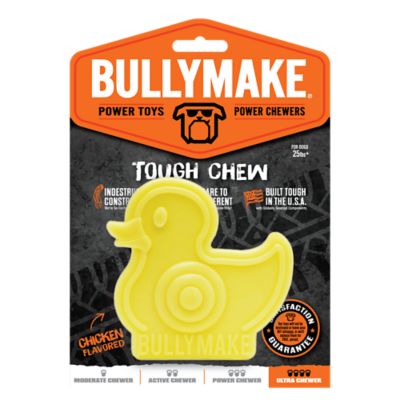
Materials and construction help show where a duck dog toy belongs in the daily routine. Fleece-like surfaces and other soft fabrics feel inviting during quiet time, while tightly woven outer fabrics and reinforced seams may stand up better to repeated grabbing and tossing. Neither extra stitching nor a thick outer layer makes a toy indestructible. A dog that quickly picks apart seams needs closer supervision and a different approach from one that carries the same plush bird from room to room. Rubber duck toys offer a different feel in the mouth, with firmness, flexibility, and surface texture varying by design. A flexible toy may be easier for some dogs to grip, but a powerful chewer can still tear off pieces. Embroidered facial features reduce the number of attached hard parts, though wings, feet, tags, and sound inserts can still become loose. Once a seam opens, filling appears, or pieces start breaking away, the toy belongs out of reach rather than back in the basket. For games outside, a duck shape alone says nothing about whether a toy floats; water play calls for a toy specifically labeled for that purpose and a closely supervised dog. On dry ground, a short toss across a clear patch of yard gives an eager fetcher room to retrieve without sending the toy into fencing, equipment, or another dog’s space. Care requirements deserve the same attention as play features. Some fabric toys allow machine washing, while others call for spot cleaning or hand washing, and rubber designs may have separate cleaning directions. The care label should determine the method, especially when a toy contains a squeaker or other sound component. Thorough drying matters before a washed toy returns to the basket, since a dry surface can hide damp filling underneath. Regular checks around the neck, wing attachments, and belly seams can catch damage where a dog repeatedly grabs or chews.
The best match is often clear in the small details of a dog’s routine. A companion that greets everyone at the door with something in its mouth may appreciate a soft duck that is easy to carry without blocking its view. A fetch-loving farm dog may get more enjoyment from a grippable shape that travels well during short, supervised games. A dog that likes to settle near the kitchen table may favor a quiet fabric bird over one that squeaks at every squeeze. Duck toys can also support simple play habits, such as bringing a toy back, releasing it on cue, or finding it in plain sight around a room. They do not need to resemble a real bird to make those games worthwhile, and a household toy is not automatically suited to field training. Keeping a few different textures in rotation gives a dog choices without leaving every toy scattered underfoot. In homes with more than one dog, separate play spaces can help when a squeaky duck becomes a prized possession; a shared basket does not mean every dog is comfortable sharing every toy. Duck-shaped dog toys also make a thoughtful gift for a pet parent who enjoys watching a dog carry a floppy bird around the yard. Knowing the dog’s size, sound preferences, and chewing habits makes the gift more useful than choosing by appearance alone. Toys made for dogs should stay separate from children’s playthings, and even a familiar favorite benefits from an occasional check before play begins. The duck theme can extend beyond the toy basket for pet parents exploring food ingredients, with
Duck Flavored Dog Food offering a separate category to browse. Feeding choices depend on a dog’s nutritional needs, not its favorite toy. For playtime, the goal stays simple: a duck toy that suits the dog’s mouth, energy, and habits, whether that means a lively round of fetch or a soft companion carried back to bed.