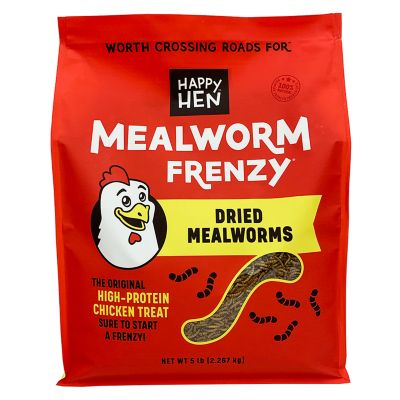
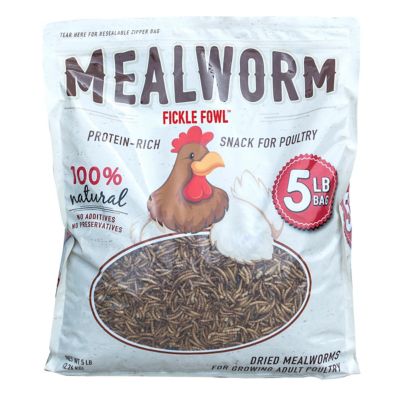
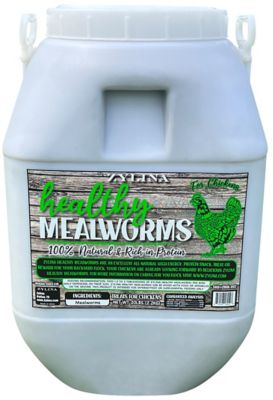
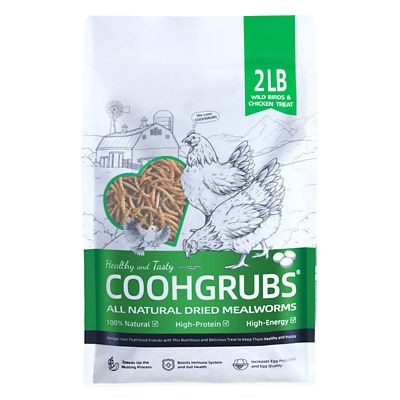
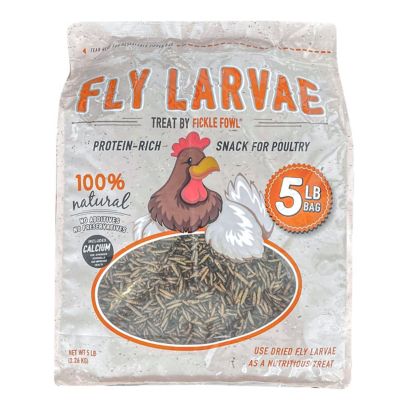
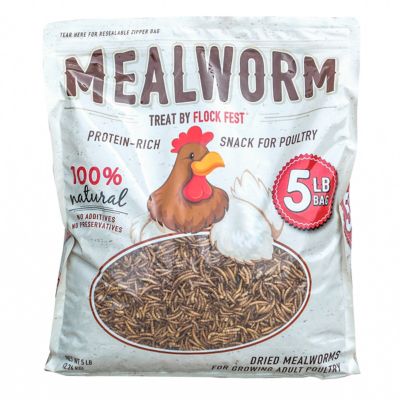
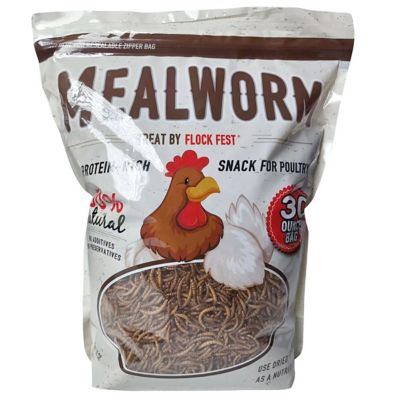
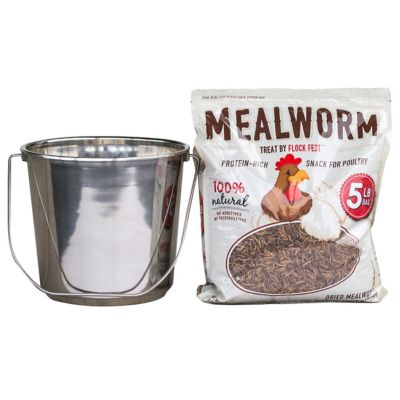
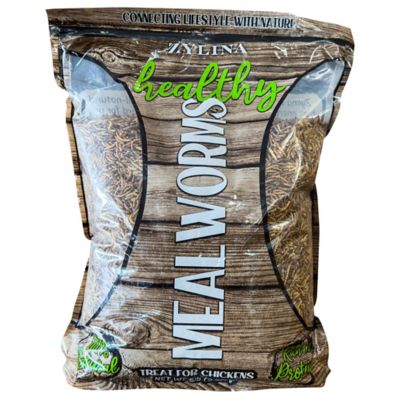
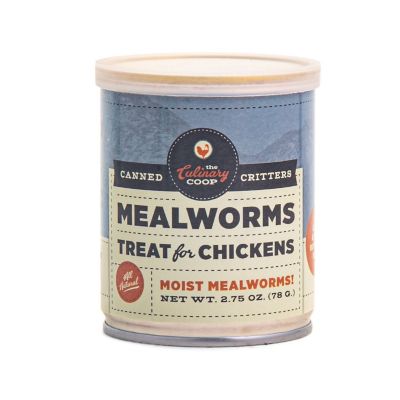
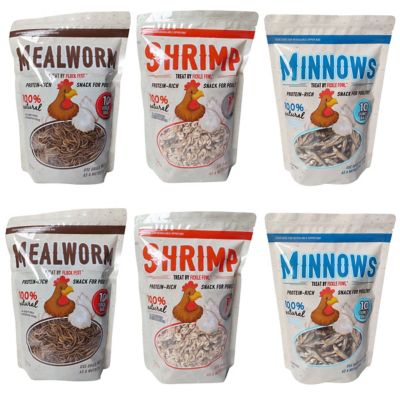
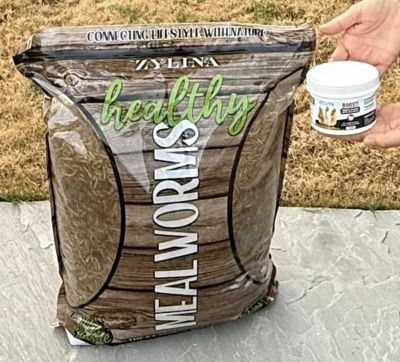
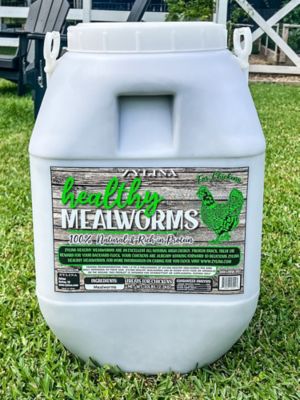
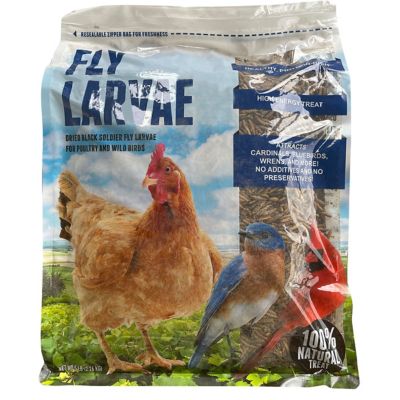
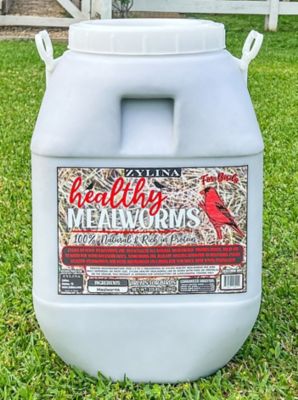
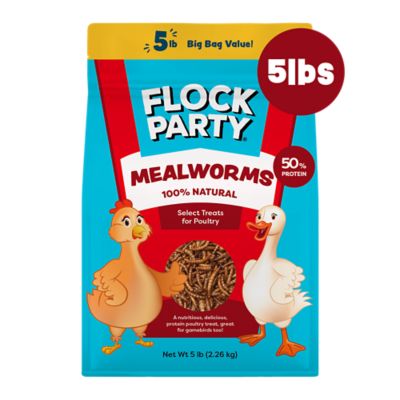
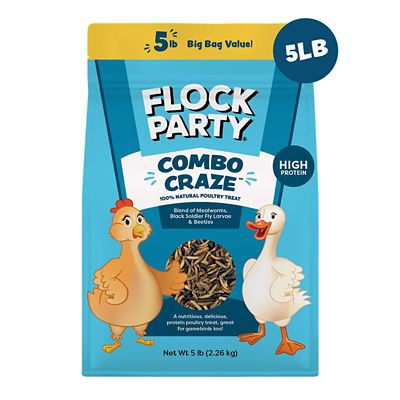
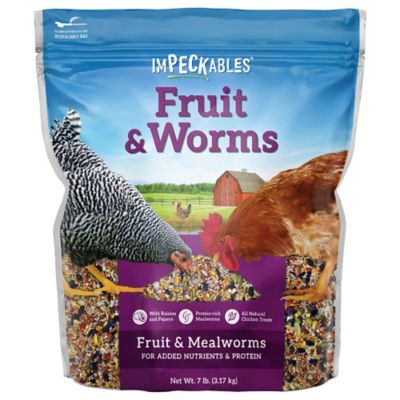
Dried mealworms are protein-rich insect treats offered as a supplement for backyard chickens, ducks, wild birds, and certain reptiles and small pets whose diets include insects. They are the dried larvae of mealworm beetles, commonly the yellow mealworm beetle, and provide protein and fat in a lightweight form that is easy to measure and serve. Drying removes much of their moisture, so they can be stored without maintaining live insects or tending a separate insect colony. For folks feeding a small flock behind the barn or watching songbirds from the porch, that convenience makes them a practical addition to the feed shelf. Their main role is supplemental feeding: they add variety and encourage natural feeding behaviors, but they do not replace a balanced ration formulated for the animal eating them. Nutrient levels vary, making the ingredient list and guaranteed analysis useful points of comparison. Crude protein, crude fat, fiber, and moisture figures help explain what is in the package, while feeding directions identify the intended animals and serving recommendations. A single-ingredient mealworm treat is different from an insect blend or a mix containing grain, seeds, or other ingredients, even when the packages look similar at a glance. Whole dried larvae have a light, crisp texture, and some broken pieces are normal after drying and handling. Those smaller pieces may work well in a shallow feeding dish, while intact larvae are easy to scatter sparingly for a flock. Package size matters, too: a household feeding a few birds needs a different amount than someone caring for several pens of poultry. The best fit is an amount that can be kept properly closed and served within the labeled storage period, rather than a container that sits open through countless rounds of chores. Clear species labeling and straightforward feeding directions matter more than choosing by appearance alone.
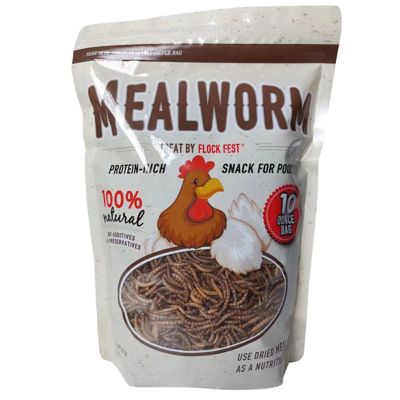
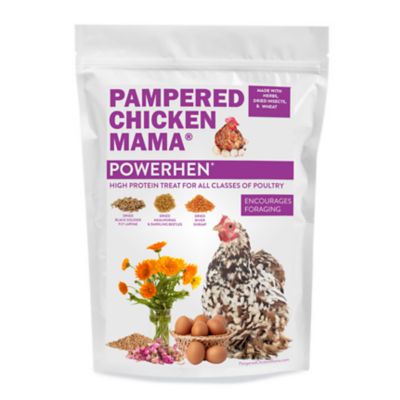
For backyard poultry, dried mealworms offer a small reward that fits easily into everyday flock care. A light scatter across a clean feeding area gives chickens something to scratch and peck for, while a few treats in a familiar dish can help establish a routine around the coop. They can also make supervised handling a little easier when birds learn to approach a feed scoop instead of crowding the gate. The nutritional foundation still needs to be complete poultry feed matched to species and life stage. Chicks, growing birds, laying hens, and ducks do not all have the same requirements, and a treat that appeals to the whole flock does not meet every bird’s daily needs. For chickens, a common guideline is to keep all treats combined to no more than about 10% of daily calories, leaving most nutrition to their complete feed. That allowance includes scratch grains, table scraps, and other extras—not a separate portion for each treat. Mealworms contain phosphorus and are not a balanced calcium source, so they should not take the place of a laying ration or any separate calcium supplement recommended for the flock. Keeping that distinction clear helps prevent an eager handful from becoming too much of the day’s food. Ducks may enjoy mealworms as well, but portions and presentation should follow feeding directions appropriate for waterfowl, with fresh drinking water within reach. Young birds need particular care with treat size and diet balance; enthusiasm at the feed dish is not a sign that a food is suitable without limits. Poultry keepers comparing insect-based treats can also explore
Worms For Chickens with their flock’s regular feeding routine in mind. Whether treats are offered beside the run or during a quiet check of the flock, a measured portion keeps the focus on a little variety rather than a second full meal. Serving from a scoop or dish also makes portions easier to judge than pouring straight from a large bag.
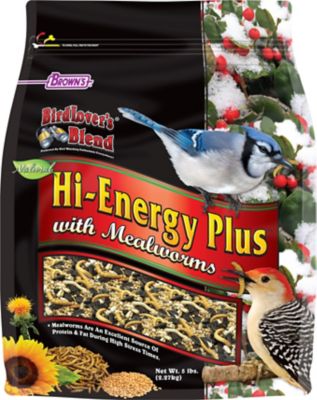
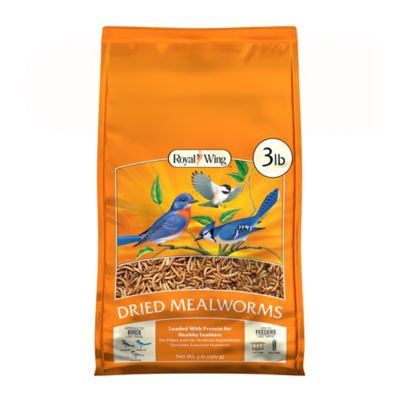
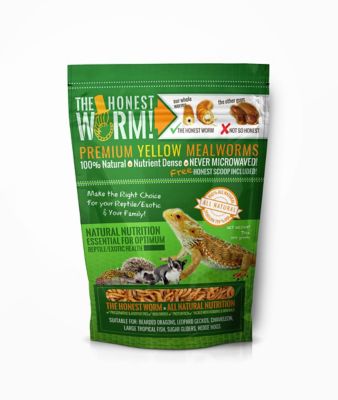
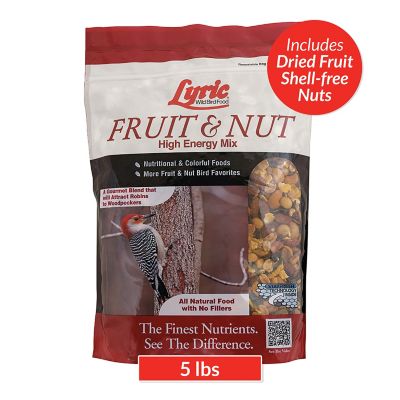
At a backyard bird-feeding station, dried mealworms bring something different from a feeder filled with sunflower seed or millet. Insect-eating visitors such as bluebirds, wrens, chickadees, and some other songbirds may take them, although the birds that stop by depend on local habitat and feeding habits. A shallow, easy-to-clean tray lets birds see the food and gives smaller visitors room to land. Modest servings help keep leftovers from collecting under the feeder, and a clean feeding area matters just as much as the treat itself. If mealworms are moistened before serving, only a small portion should be prepared, with leftovers removed promptly rather than left sitting in the dish. Supplemental food should complement the insects and other foods birds find across the yard, not replace access to natural feeding areas. For reptiles and small pets, suitability is more specific. Not every reptile eats insects, and even insect-eating species differ in their need for live prey, dietary variety, and mineral supplementation. Dried mealworms lack the movement that prompts some animals to feed, and their nutrient balance does not make them a complete diet. The animal’s care requirements and advice from a veterinarian familiar with that species should shape whether they belong in the feeding routine at all. Across these uses, storage and handling are straightforward but important. Resealable bags and lidded containers help protect the contents from moisture and pantry pests when closed securely. A dry storage spot away from direct sunlight, household chemicals, and animal access helps keep feed supplies separate and protected. A clean, dry scoop prevents water from entering the package, and the original label keeps feeding directions and date information close at hand. Any contents showing mold, an off smell, or signs of contamination should be discarded. With the right dietary match, sensible portions, and tidy storage, dried mealworms can be a handy supplemental treat for the animals that benefit from insect foods.