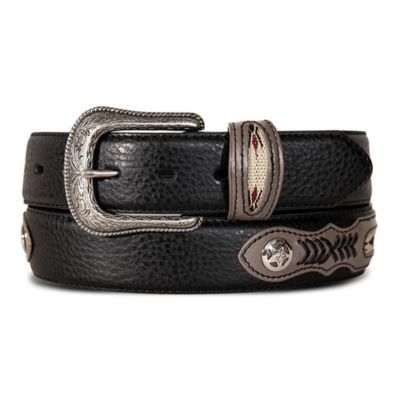
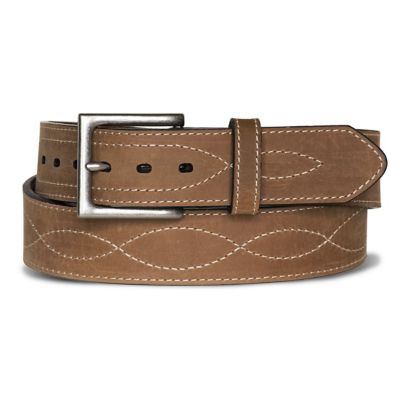
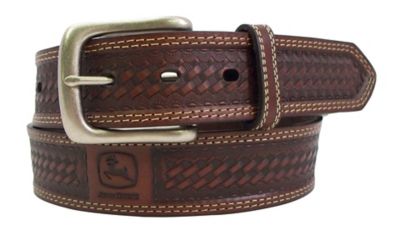
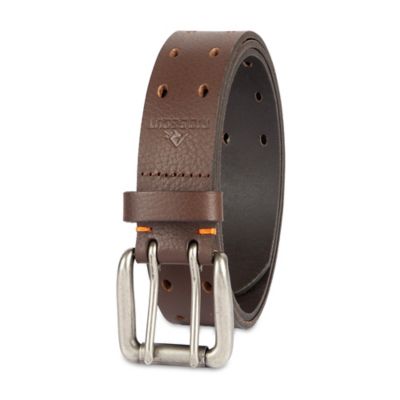
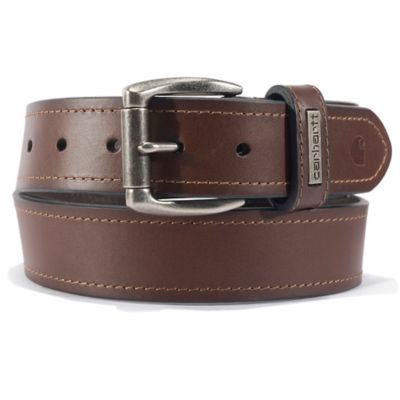
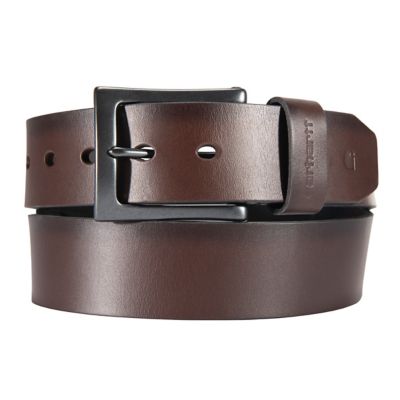
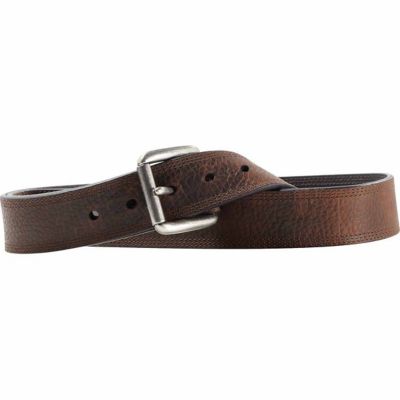
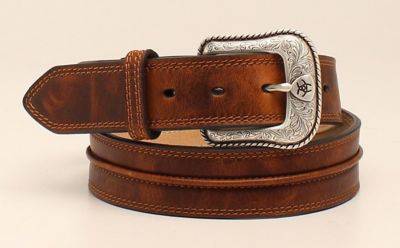
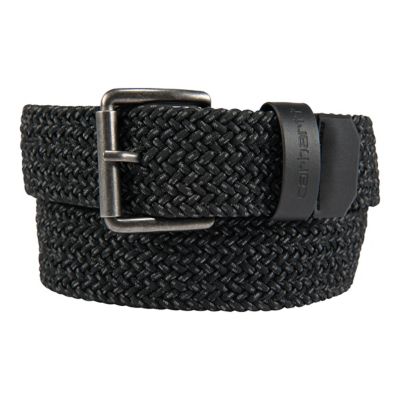
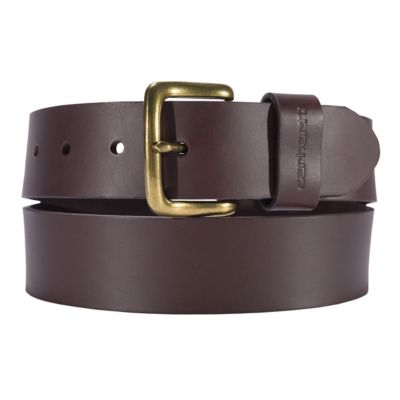
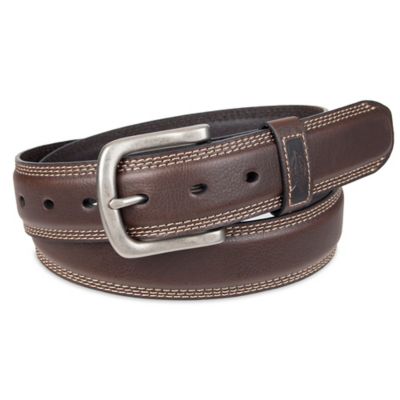
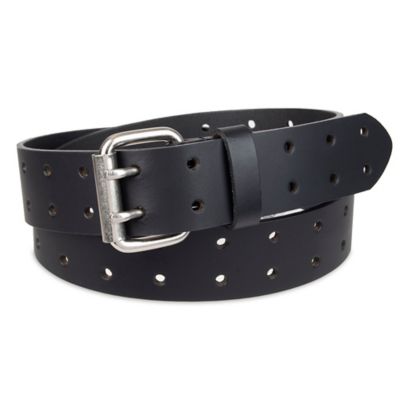
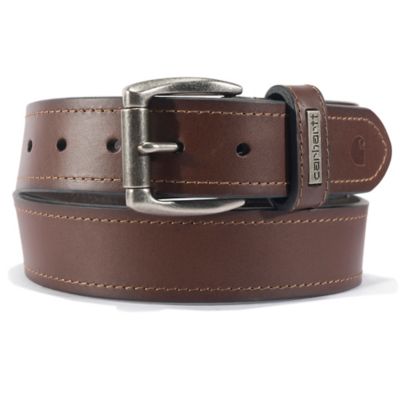
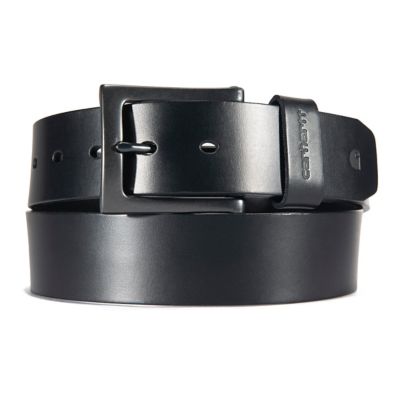
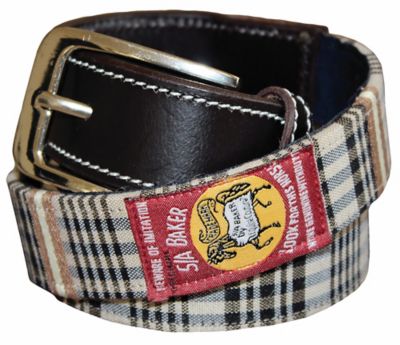
Double-hole belts for jeans typically have two parallel rows of holes and a buckle with two prongs, giving the closure two fastening points instead of one. Both prongs pass through a matching pair of holes to hold the belt at the chosen setting. Some styles have metal eyelets around the openings, while others leave the holes plain for a simpler leather-and-buckle look. That paired pattern gives these belts their recognizable appearance, whether the belt is worn with faded work jeans, dark denim, or a favorite pair of straight-leg jeans. For chores around the property, a day in the shop, or a trip into town, the appeal is straightforward: a secure-feeling fit and hardware that looks right at home with denim. The two-point closure shares tension across a pair of openings when both prongs are seated properly, though the strength of the strap, buckle, and hole construction still matters. Two prongs alone do not make a belt stronger than every single-prong option. A substantial strap can complement heavier denim, while a more flexible belt may feel better with lighter jeans or when sitting for long stretches. Plain leather keeps the look understated; rows of metal eyelets make the hardware more noticeable. Black, brown, and other neutral shades can pair easily with boots, work shoes, flannel shirts, and everyday tees without needing an exact color match. A tucked shirt shows the buckle and paired holes, while an untucked shirt leaves the belt doing its job with less of it on display. These belts can suit anyone who likes a firm closure and a rugged look, from folks tending a few acres to people who simply prefer jeans most days. The best match depends as much on comfort and belt-loop clearance as it does on appearance, especially when the belt will stay on from the first chore through the ride home.
Fit starts with the space the belt actually needs to cover, which is not always the same as the number on a jeans tag. Denim rise, waistband stretch, and where the jeans sit on the body all affect the length that feels right. A belt worn near the natural waist may need a different size than one worn lower on the hips. Measuring a belt that already fits, from the buckle’s measuring point to the fastening hole, can provide a useful comparison, provided the size chart follows that same method. Measuring around the jeans waistband at belt level is another option when the sizing instructions call for it. Enough adjustment on either side of the preferred setting leaves room for differences between pairs of jeans without leaving an overly long tail. With double-prong hardware, both prongs need to line up with the same pair of holes; a twisted strap or uneven fastening can put extra strain on one opening. Width deserves equal attention. A broad strap might look right with substantial denim but still be too wide for narrow loops, while a large buckle can press into the waist when bending to fill a feed pan or settling into a truck seat. Strap thickness also affects how easily the belt threads through loops and whether the tail fits comfortably through its keeper. A belt should help hold jeans in place without pulling the waistband into deep folds or digging in when seated. Denim with plenty of stretch may call for a gentler adjustment than a stiff waistband. For shoppers comparing fits and proportions,
Women's Belts for Jeans offers another way to explore the same everyday wardrobe need. Regardless of the category label, actual measurements, buckle dimensions, and the way a belt works with a particular pair of jeans are more helpful than appearance alone.
Materials and construction shape how a double-hole belt feels on the first wear and how it handles repeated fastening. Leather often begins firmer and becomes more flexible with wear, developing creases and surface marks where it bends. A full-grain leather strap retains the hide’s natural surface, while split leather, coated leather, and layered constructions can have different textures and care needs. A leather label by itself does not explain every part of the belt, so the material description matters when comparing options. Fabric straps can offer a softer feel, and synthetic materials may have their own cleaning requirements. Around the buckle, secure stitching, firmly set rivets, and neatly finished edges are useful details to consider. Metal eyelets can help protect the edges of fastening holes from direct contact with the prongs, but they should sit firmly without sharp edges or movement. Hardware weight matters, too: a hefty buckle may suit the look of substantial jeans but feel less comfortable on lighter denim. Everyday care is usually simple when it follows the material instructions. Dust and surface dirt can often be lifted with a soft cloth, while leather may benefit from a suitable conditioner when the maker recommends it. Soaking, strong cleaners, and direct heat can damage some straps or finishes. Letting a damp belt air-dry before putting it away helps avoid trapping moisture, and hanging it or storing it loosely rolled limits hard folds. Keeping the strap away from rough edges and checking for loose hardware or stretched holes can help catch wear before the closure becomes troublesome. For a gift, a double-hole belt makes sense for someone who reaches for jeans day after day, especially when their preferred width, buckle style, and belt measurement are known. A straightforward design that fits their regular jeans is more likely to earn a place in the daily rotation than a striking buckle that gets in the way.