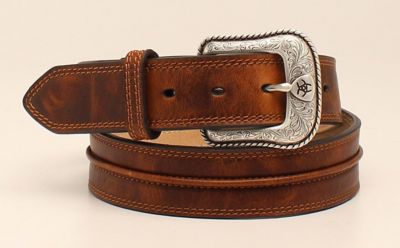
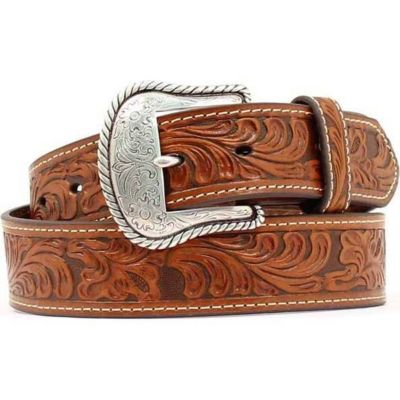
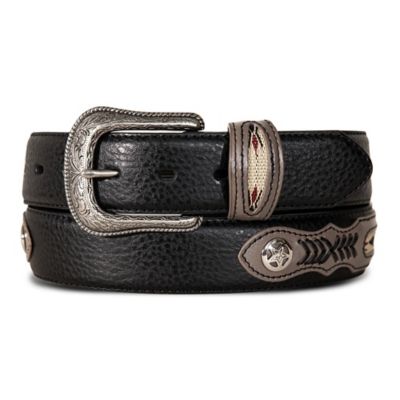
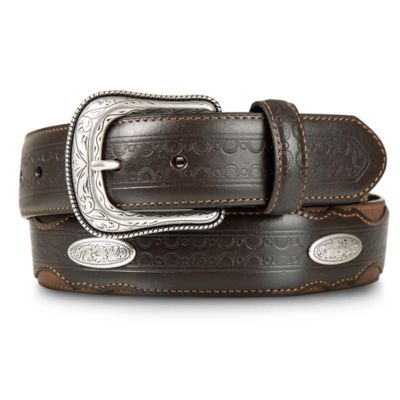
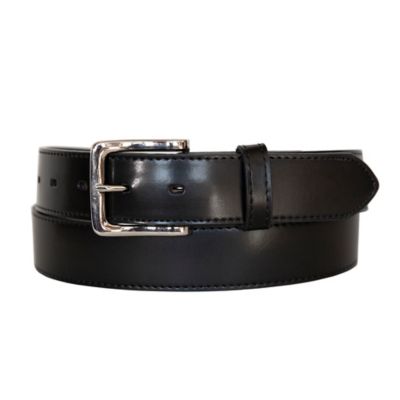
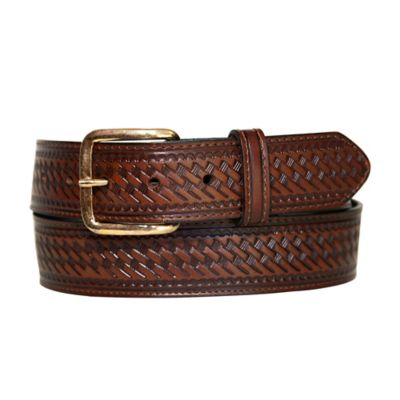
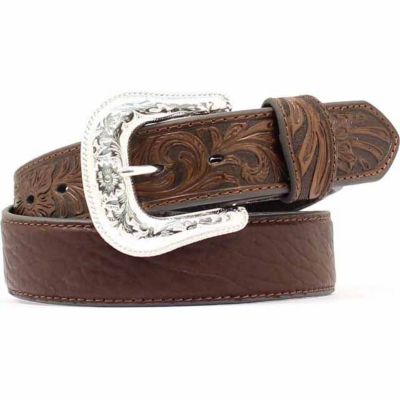
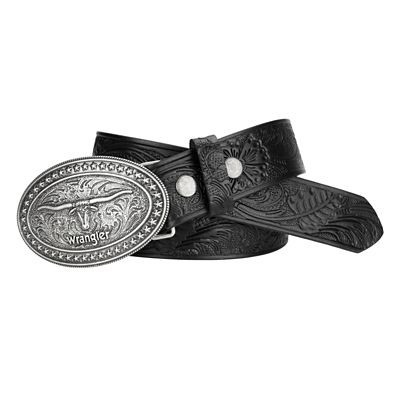
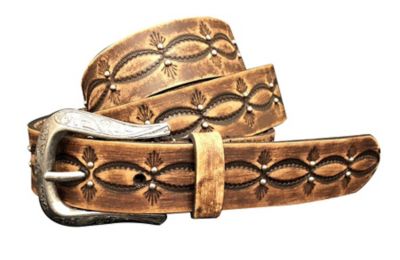
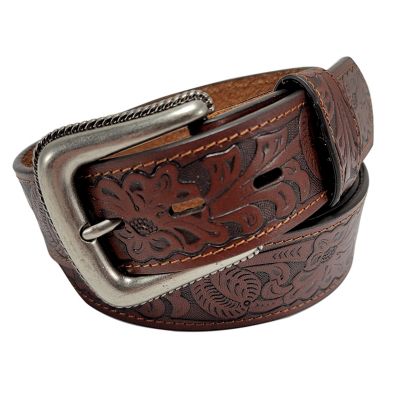
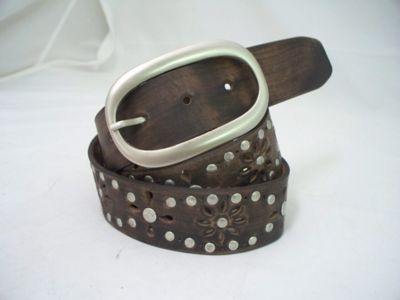
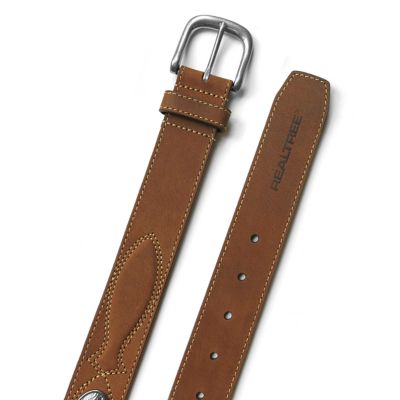
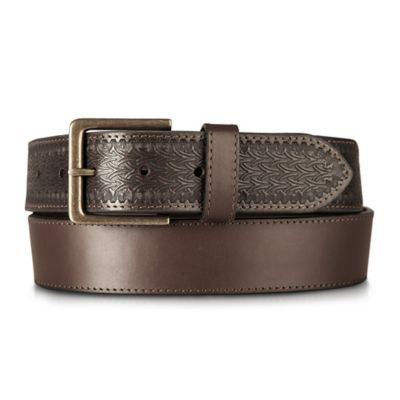
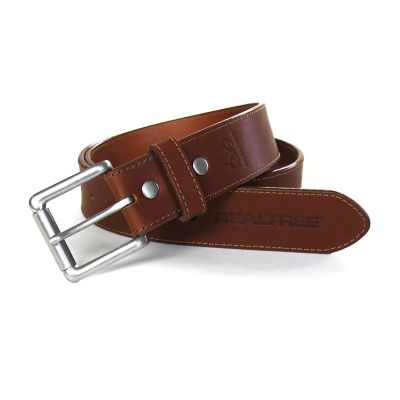
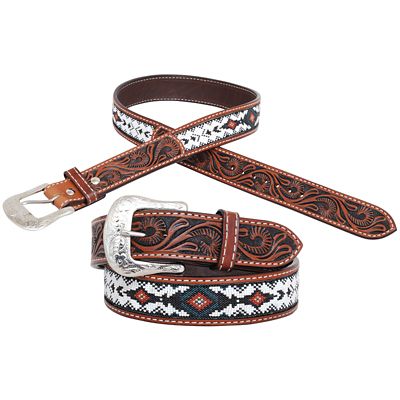
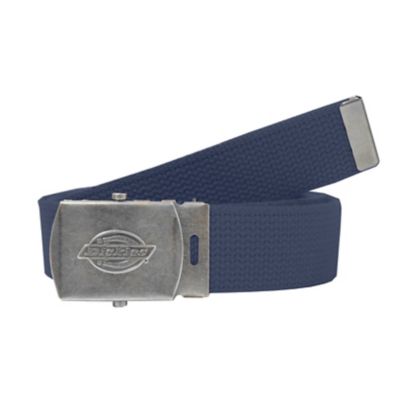
Western leather belts combine the everyday job of holding jeans in place with details rooted in ranch and rodeo style. Tooled floral patterns, basketweave textures, contrast stitching, metal conchos, and shaped buckles give this category its familiar look, though plenty of belts keep things simple with a smooth strap and a modest buckle. That range makes room for a belt that looks right with work jeans, a tucked-in snap shirt, or a cleaner pair of pants for a night at the dance hall. Leather construction matters just as much as the pattern on the surface. Full-grain leather retains the outer grain layer of the hide and can develop a richer appearance with wear. Top-grain leather has a surface that has been sanded or otherwise refined, often creating a more even look. A genuine leather label identifies leather content, but it does not by itself explain the hide layer, strap construction, or finish. Those details help distinguish a solid leather strap from one made with multiple layers, backing, or bonded material. Thickness also deserves attention: a substantial strap can feel steady through denim belt loops, while a thinner, more flexible one may feel easier around the waist when sitting in a pickup or spending a long stretch in the saddle. Neither feel tells the whole story on its own. Smooth edges, sound stitching where present, and a secure buckle attachment all contribute to how a belt holds up over time. Color and finish shape the look, too. Tan and medium brown show tooling clearly, darker brown pairs easily with familiar boots, and black can give Western clothing a more dressed-up edge. Matching belt and boot colors closely creates a pulled-together outfit, but they do not have to be identical. A similar depth of color and a buckle finish that works with the rest of the outfit often do the trick. For folks who prefer less pattern,
Men's Genuine Leather Belts share the same everyday foundation without making elaborate Western detailing the focus.
Fit is where a Western leather belt earns its place in the daily rotation. A common starting point is a belt size about 2 inches larger than the labeled pants waist size, but sizing conventions vary, so the maker’s size chart takes priority. Pants labels do not always match the measurement around the body, and the position of the waistband changes the length needed. A belt worn lower on the hips may need a different size than one worn at the natural waist. Measuring a belt that already fits can help, provided the measurement follows the reference points shown in the size chart. Some charts measure from the buckle fold to a fastening hole, while others start at the buckle prong or another specified point. Total strap length is not the same thing as belt size. A comfortable fit generally leaves adjustment room in both directions, with the prong near the middle holes and enough strap beyond the buckle to pass neatly through the keeper. That room matters when moving between different jeans or sitting down after working on your feet. Belt width is another practical detail, especially with Western styles that have a broad strap or substantial hardware. The strap needs to pass through every belt loop without forcing it, and the buckle should sit comfortably against the front of the waistband. A large buckle can make a strong statement at a rodeo or dance, but its shape and weight may feel different when bending to latch a gate or settling into a truck seat. Rounded edges and a balanced buckle-to-strap proportion can make everyday wear more comfortable. For anyone planning to swap buckles, the attachment matters as much as appearance. Snap closures or certain screw attachments may allow a buckle change, while a stitched attachment generally does not. Compatibility also depends on strap width and buckle design. A trophy buckle needs an attachment suited to its construction; simply choosing a belt in the same color will not establish a proper match.
Leather belts respond well to straightforward care, especially when they see regular wear around chores, travel, and time on horseback. A soft cloth takes care of ordinary surface dust, and a lightly damp cloth may help with dirt when the leather’s care directions allow it. Soaking a belt, scrubbing hard at tooling, or applying a strong household cleaner can damage the finish or leave the strap stiff. Leather cleaner and conditioner should match the leather type and finish, with a small test on an inconspicuous area before treating the whole strap. Suede, hair-on hides, painted surfaces, and certain specialty finishes can call for different treatment than smooth leather. Too much conditioner can darken leather or leave residue, so more is not always better. Metal accents and buckles deserve separate attention, since a polish meant for one metal can affect another finish or touch the leather around it. If a belt becomes damp, letting it dry naturally away from direct heat helps protect its shape. Flat storage or a loose roll avoids sharp bends, while checking the buckle attachment and fastening holes gives an early look at wear. A stretched hole, loose stitch, or shifting screw is worth addressing before the belt becomes uncomfortable or the hardware comes loose. Intended use helps narrow the style as well. For chores and everyday jeans, a manageable buckle and a strap that moves comfortably with the body often matter more than elaborate detail. For rodeo outings, dancing, or gatherings where Western clothing is part of the occasion, tooling and metal accents can carry more of the look. A Western leather belt can also make a thoughtful gift for someone who wears boots and denim most days. Knowing the recipient’s belt measurement, preferred width, usual leather color, and taste in buckles makes that choice more personal without guessing at fit. The belt that gets reached for most often is usually the one that feels right through a full day and looks at home with the clothes already hanging in the closet.