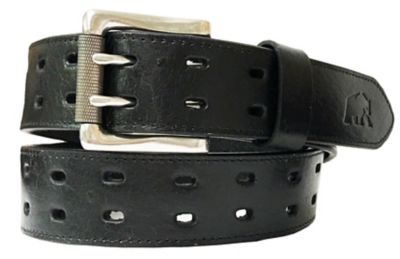
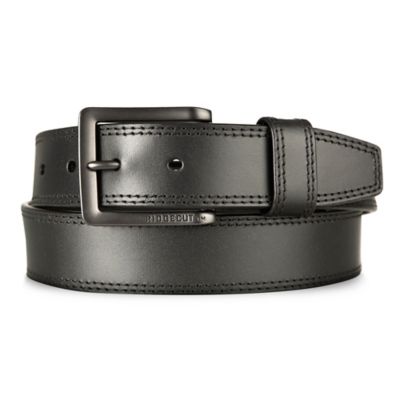
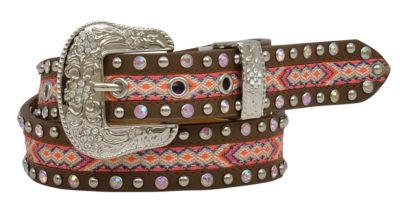
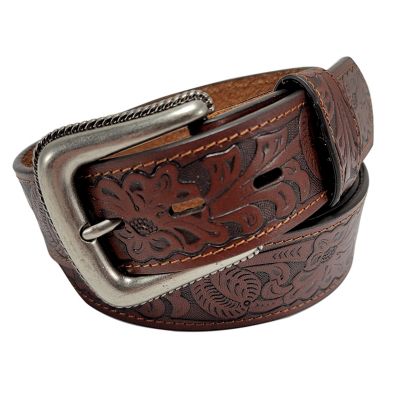
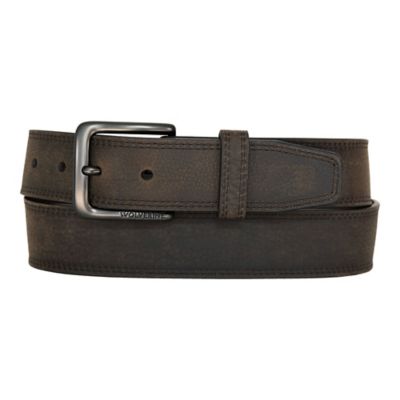
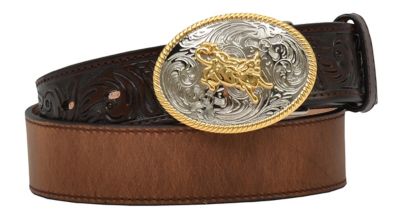
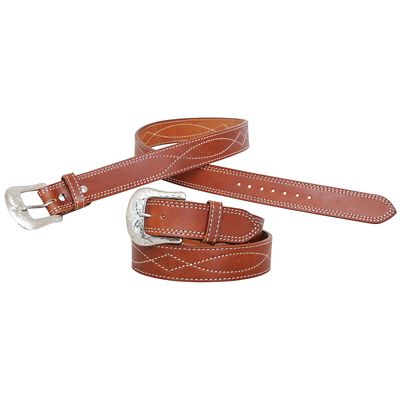
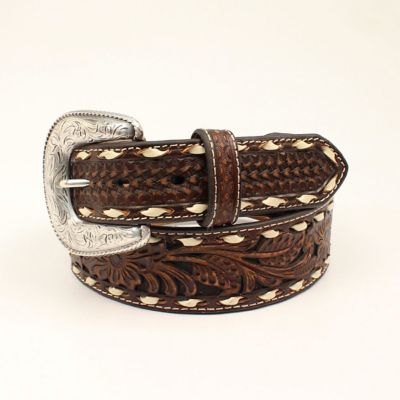
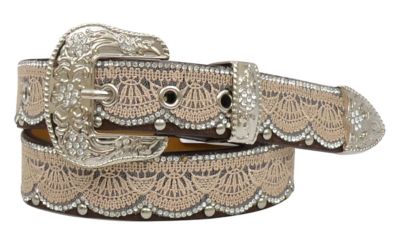
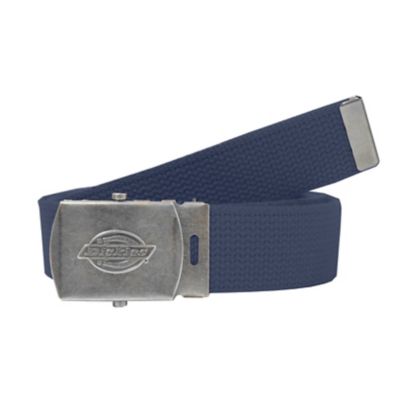
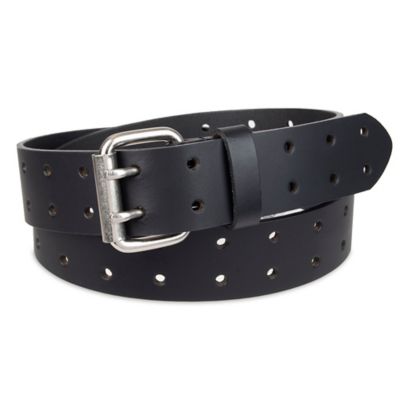
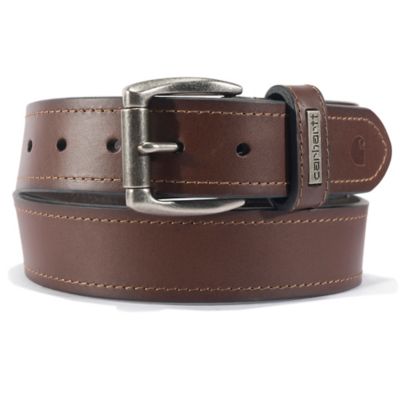
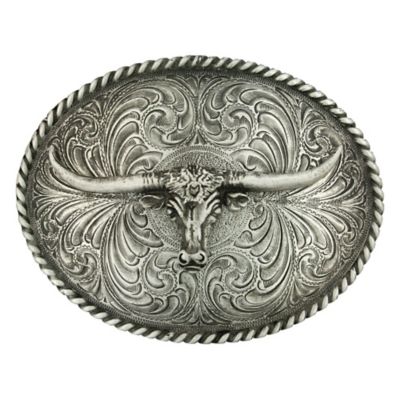
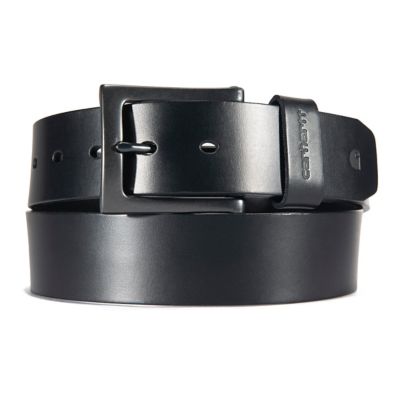
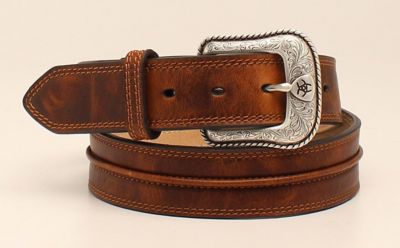
Belts with removable buckles let you change the buckle while keeping the same belt strap. Instead of hardware permanently stitched or riveted in place, these belts have an attachment that opens, such as snaps, Chicago screws or a removable clamp. The buckle end can be released so another compatible buckle can take its place. That makes the same strap useful for different outfits, whether it’s paired with work jeans, ranch clothes or a tucked-in shirt for a night out. A plain frame buckle keeps things simple, while a larger Western buckle gives the belt a different look without replacing the whole thing. The strap still does the everyday job of holding pants comfortably at the waist, so its material and construction matter just as much as the hardware. Leather is a familiar choice for this style of belt because it pairs naturally with denim and boots and develops character through regular wear. Full-grain leather retains the hide’s natural surface, while top-grain leather has a surface that has been refined for a more even appearance. Split leather, layered constructions and synthetic materials have different characteristics, making the material description worth a close look. Woven straps can offer a lighter, more flexible feel, although their buckle attachments may differ from those on leather belts. Thickness, edge finishing and stitching all affect how a strap feels through belt loops and how it handles everyday friction. A firm strap can feel supportive with heavier jeans, while a more flexible one may sit comfortably when bending to fill a feed pan or climbing into a pickup. Neither needs to feel stiff as a board to do its job. For anyone who moves between chores, errands and time in town, a removable buckle adds flexibility to an everyday accessory without making the rest of the outfit complicated.
The connection between the strap and buckle is what makes swapping hardware possible, but not every removable buckle fits every belt. Snap closures usually hold a folded section of the strap around the buckle’s attachment bar. Chicago screws secure that folded section with threaded posts and screws, allowing the connection to come apart without cutting the leather. Some clamp systems grip the strap end directly; whether they can be reopened and paired with another buckle depends on their design. A fixed, stitched-in buckle generally does not offer that same interchangeability. Strap width, attachment style and buckle construction all need to line up. A buckle intended for a narrower strap may pinch a wider belt, while an oversized opening can allow a narrow strap to shift around. Frame buckles commonly have a prong that passes through a belt hole, whereas many Western plate buckles have a hook on the back and a separate attachment loop. Those differences matter when matching new hardware to an existing strap. Browsing
Belt Buckles for Men can help narrow down the look, with the strap dimensions and connection details providing the practical side of the match. Fit deserves the same attention. A belt’s labeled size is not always its full end-to-end length, and sizing methods can vary by maker. Many belts are measured from the buckle attachment area to a designated hole, often near the middle of the adjustment range. Checking the stated measurement method against a belt that already fits well is more useful than guessing from pants size alone. Buckle shape and length can also affect where the belt fastens. Enough adjustment room allows for a tucked-in shirt without leaving an overly long tail. Belt-loop clearance matters, too: a wide strap may look right with substantial jeans but sit poorly in narrower loops. Comfort also comes down to the buckle’s size and position, especially when sitting behind the wheel, leaning over a workbench or spending time in a saddle.
Everyday wear puts the most strain around the adjustment holes, buckle fold and strap edges, so sound stitching, securely seated fasteners and a comfortable fit all contribute to how well a belt holds up. A buckle that rocks loosely against its attachment can rub the leather, while a strap pulled too tight can stretch around the fastening hole. Removable hardware makes it easier to separate the buckle from the strap for care, provided the attachment is designed for repeated opening. Leather generally benefits from having loose dirt brushed away and being wiped with a lightly damp cloth when needed, rather than soaked. Any cleaner or conditioner should suit the leather’s finish, since suede, smooth leather and coated surfaces do not all respond the same way. A small test on a hidden area helps guard against unwanted color changes. Letting a damp strap dry naturally away from direct heat helps protect its shape and feel. Metal buckles need attention suited to their finish as well; a soft cloth is often a sensible starting point, while harsh polish can damage plating, painted details or darkened finishes. Snaps should close fully, and screw attachments deserve an occasional check for loosening. Belts with removable buckles also make thoughtful gifts for someone who already wears a favorite buckle, collects Western hardware or enjoys changing the details of a familiar outfit. A good match depends on knowing both the recipient’s belt size and the buckle’s attachment requirements. For a rancher, horse enthusiast, tradesperson or anyone who lives in jeans, the appeal can be as practical as it is personal: a comfortable strap can stay in rotation while the buckle changes to suit the day. A low-profile buckle may feel better for hands-on chores, while a larger plate can give a plain shirt and jeans more presence at a gathering. Heavy tool pouches call for a belt designed for that load rather than an ordinary pants belt. With the right fit and compatible hardware, a removable-buckle belt keeps its everyday purpose while leaving room for a favorite detail.