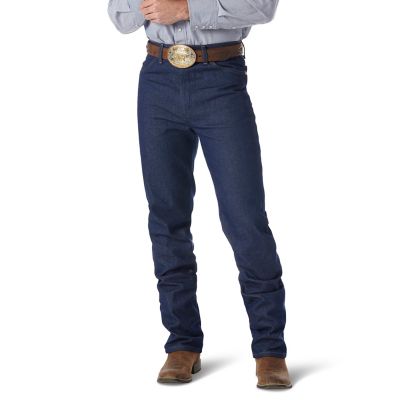
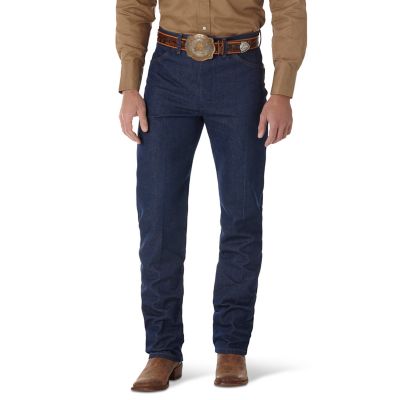
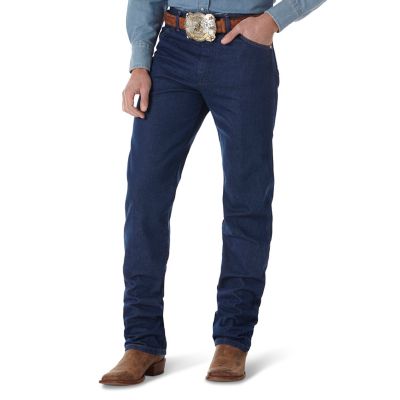
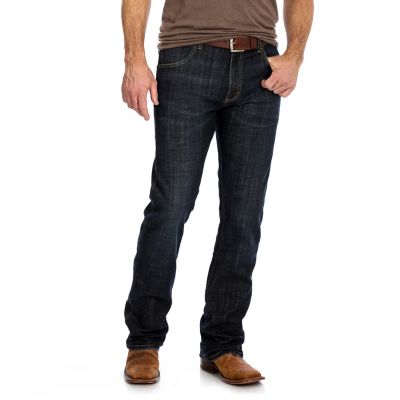
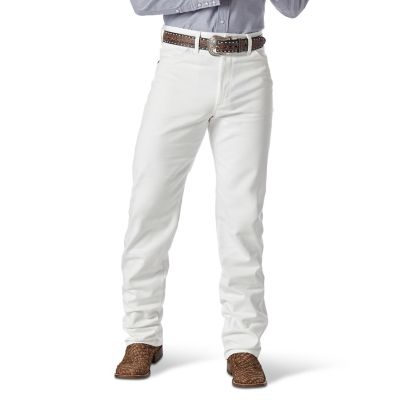
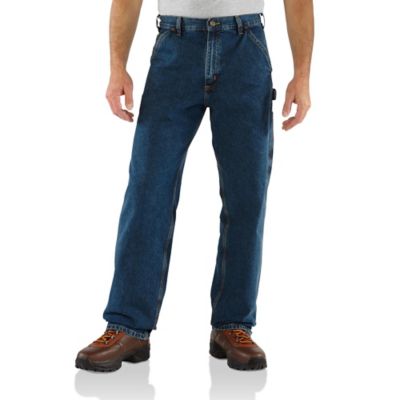
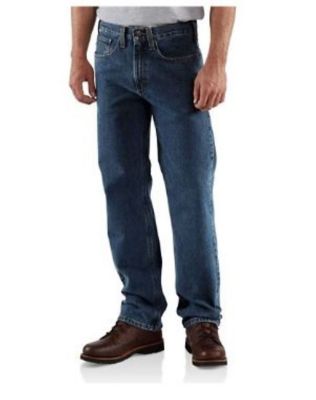
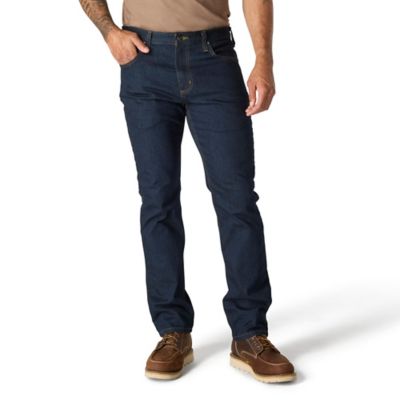
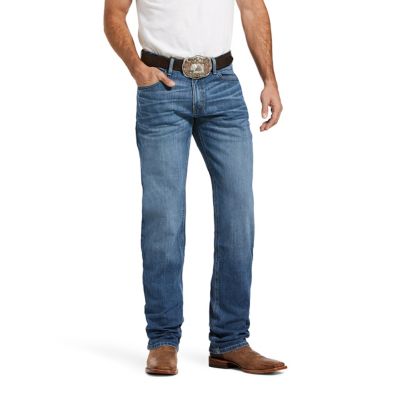
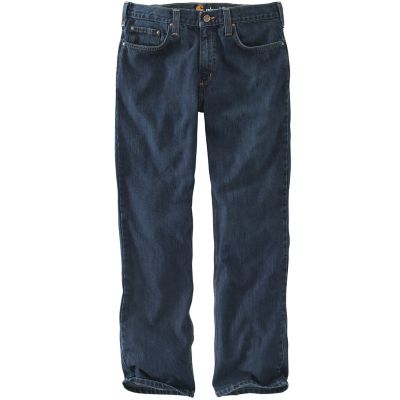
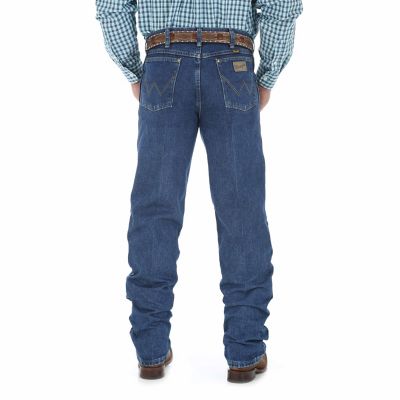
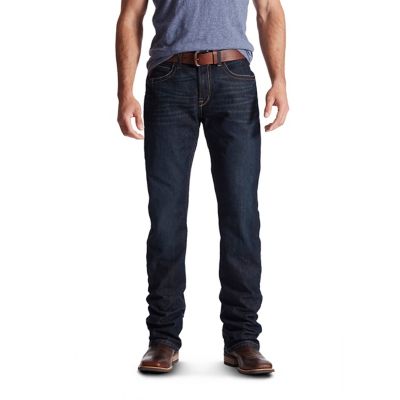
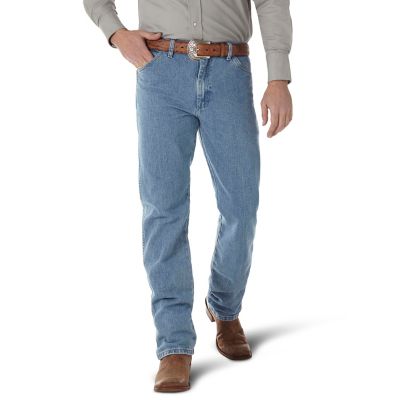
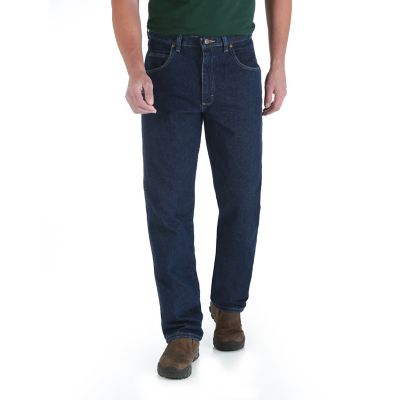
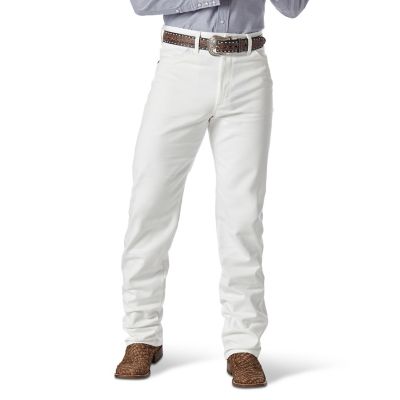
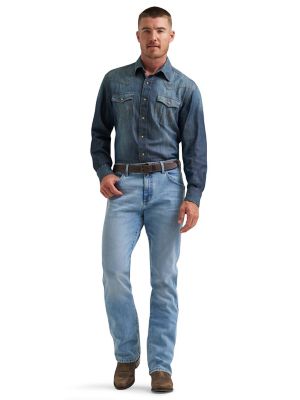
Men's denim jeans earn their place in an everyday wardrobe by working just as well for a trip to the feed store as they do for an afternoon in the shop or dinner in town. The right fit comes down to more than the number on the waistband: room through the seat and thighs, the shape of the leg, and the length over your footwear all affect how a pair feels throughout the day. Slim-fit jeans sit closer through the seat and thighs and generally have a narrower leg opening, making them a good match for men who prefer less extra fabric. Straight-leg jeans maintain a fairly even width from the knee to the hem, offering a familiar shape that pairs easily with work boots or casual shoes. Relaxed-fit jeans provide more room through the seat and thighs, while loose-fit jeans typically carry that extra space farther down the leg. Bootcut jeans widen slightly below the knee to fit over boot shafts without pulling tightly around them. Those differences matter when climbing onto a tractor, kneeling beside a fence post, or settling into a truck seat for a long drive. Rise matters, too. A higher rise places the waistband farther up the torso, while a lower rise sits closer to the hips; either should feel comfortable when sitting and bending, not just standing in front of a mirror. Waist and inseam measurements help narrow the choices, but the cut determines how those measurements wear on the body. A roomy thigh does not necessarily mean a larger waist, and a longer inseam is not a substitute for a leg opening that fits your boots. For everyday wear, a hem that reaches the top of the footwear without dragging keeps the look neat and limits wear at the back edge. Men with a broader build may appreciate extra seat and thigh room, while those who prefer a trimmer silhouette may lean toward slim or straight cuts. Comfort should leave enough space for a full stride without a waistband that slips or fabric that binds behind the knees.
Denim fabric and construction help explain why two pairs with the same size label can feel quite different. Traditional denim is a cotton twill, recognizable by its diagonal weave, and men's jeans may feature all-cotton fabric or a blend with stretch fibers. All-cotton denim often feels firmer at first and gradually softens with wear, developing creases and fading where the fabric bends and rubs. Stretch denim includes fibers such as elastane or spandex to give the cloth some flexibility, which can make reaching, crouching, and getting in and out of equipment more comfortable. The amount of stretch varies, so fiber content and fit both matter; a small amount of stretch does not make every close-fitting pair suitable for every task. Fabric weight also changes the feel. Heavier denim generally has more body and can stand up well to repeated friction, while lighter denim tends to feel less substantial and easier to move in. Neither weight alone nor stiffness tells the whole story about how long jeans will last. Stitching, reinforced stress points, pocket construction, and the amount of strain placed on the fabric all play a part. Rivets or bar-tack stitching may reinforce pocket corners, where reaching for keys or carrying a wallet creates repeated tension. A sound waistband and firmly attached belt loops are practical details for men who wear a belt every day. Wash and finish affect appearance as well as feel: dark indigo has a tidy look for casual outings, medium blue offers an easy everyday option, and lighter washes show more of denim's faded character. Dark denim can transfer color to lighter surfaces, particularly early on, so label guidance deserves attention. For farm chores, garage projects, or time around the property, a comfortable cut and solid construction tend to matter more than elaborate finishing. Jeans are everyday clothing, though, not a replacement for task-specific protective apparel when a job calls for flame resistance, cut protection, or other safety features.
Care helps men's denim jeans keep their shape and extends the life of the fabric, especially at the knees, seat, pocket edges, and hems. The care label is the best starting point because washing and drying needs vary with the fiber blend, finish, and any shrink-control treatment. Turning jeans inside out can reduce surface abrasion during washing, and washing dark denim with similar colors helps limit visible color transfer. Strong bleach can change the shade and weaken fibers, while excessive dryer heat may cause shrinkage or affect stretch fibers. Air-drying or following the label's recommended dryer setting can help preserve the intended fit. All-cotton jeans may shrink more than expected if their treatment and care requirements are overlooked, so the size that feels right before washing needs to be considered alongside the garment's care directions. Dirt gathered around a cuff or pocket seam is worth addressing before it settles deeply into the weave, and a small tear or loose seam is easier to repair before repeated movement makes it larger. Everyday wear also goes more smoothly when pockets are not overloaded with sharp or heavy objects that strain their corners. Beyond chores, men's jeans offer plenty of room for personal style without much fuss. A straight-leg pair with a tucked-in button-front shirt and leather belt looks put together for a family gathering, while relaxed jeans and a simple T-shirt suit errands or a laid-back afternoon. Boots often work well with straight or bootcut legs, and narrower hems can sit neatly over low-profile shoes. For a denim-on-denim outfit,
Men's Denim Shirts pair naturally with jeans in a contrasting wash, giving the shirt and pants some separation rather than making them look like a matched set. Jeans can also make a practical gift for a husband, dad, brother, or grown son when the waist, inseam, and preferred cut are known. Matching the recipient's familiar fit and usual footwear is more useful than guessing from waist size alone. From an early start at the barn to a meal with friends, a well-fitting pair brings together freedom of movement, a familiar feel, and an easygoing look.