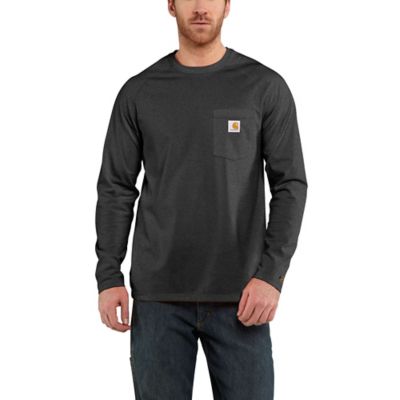
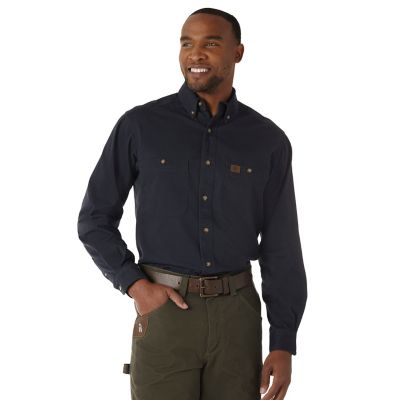
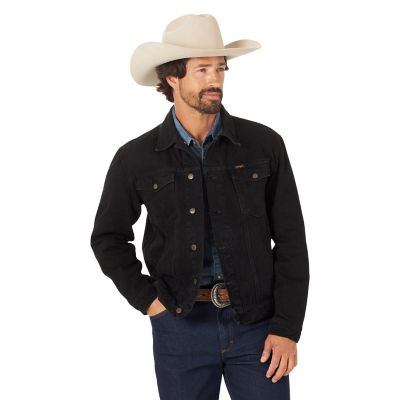
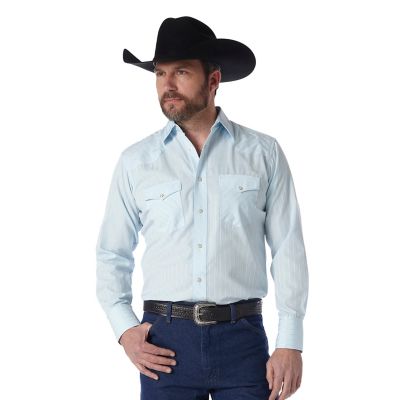
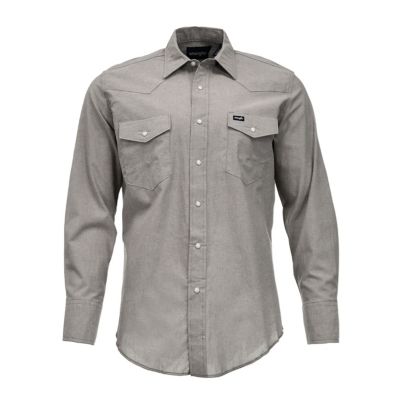
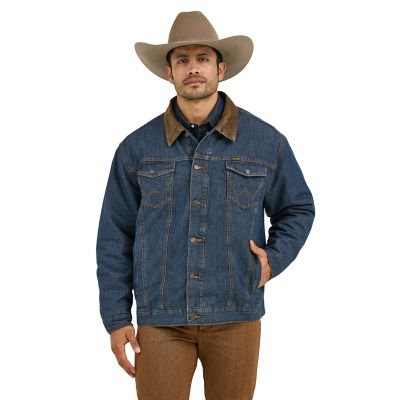
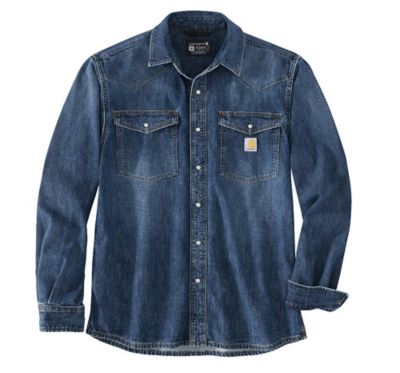
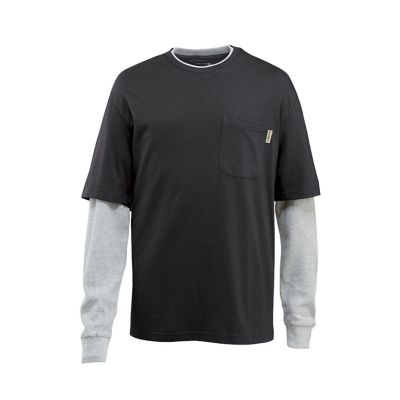
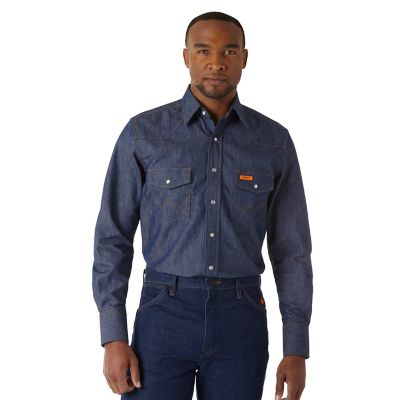
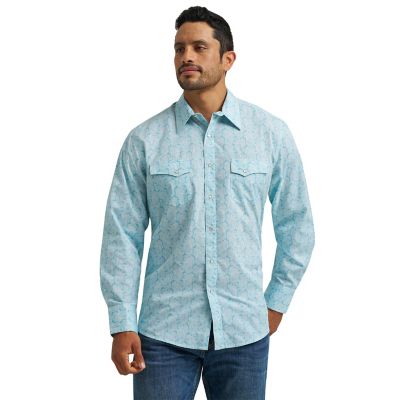
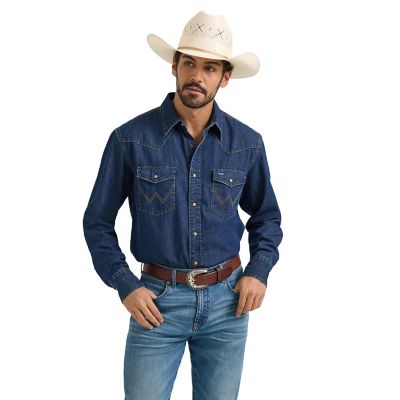
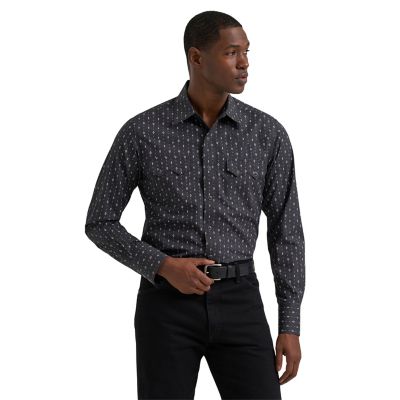
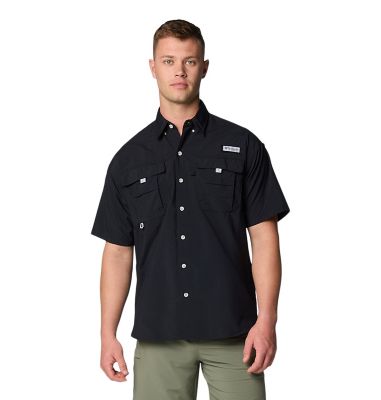
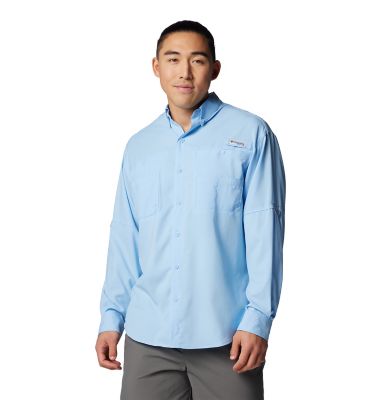
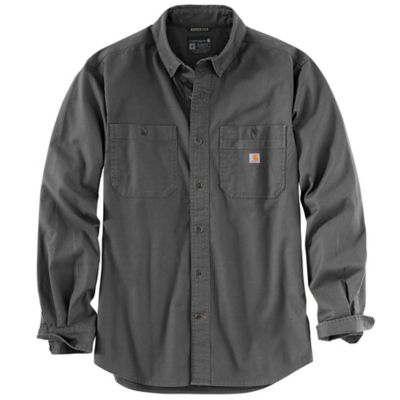
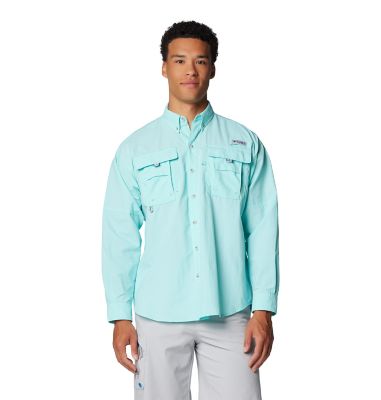
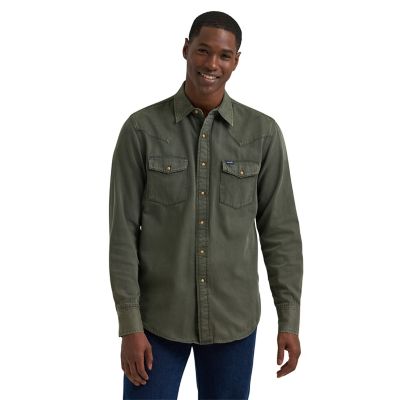
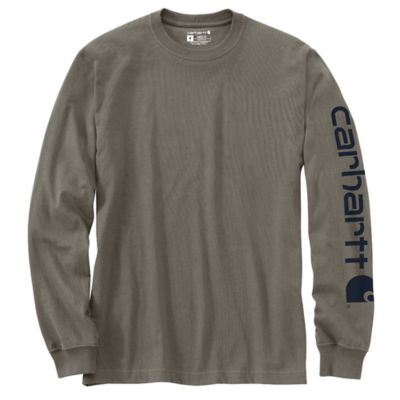
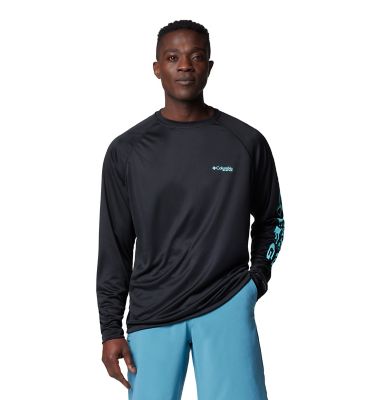
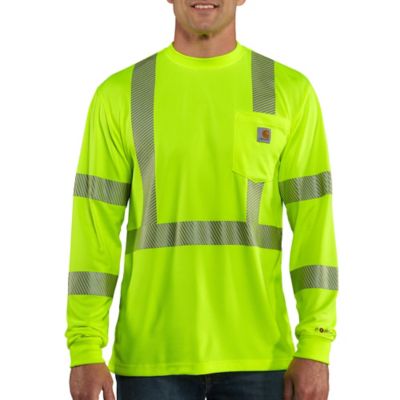
Long sleeve denim shirts for men bring together the familiar feel of cotton denim, full-length sleeve coverage and a look that fits everything from chores around the property to supper in town. Common styles include button-front shirts, Western snap shirts and casual designs with button-down collars. The difference is in the details: Western shirts often have shaped shoulder yokes, pointed pocket flaps and snap closures, while other styles keep things simple with straight seams and an open chest pocket. A button-down collar has small buttons that hold its points in place; it is a separate feature from the buttons down the front. These details help set the tone, whether the shirt is headed to the feed store, a family gathering or a day of light work around the barn. Denim gets its recognizable texture from a twill weave, which creates fine diagonal lines in the fabric. Many denim shirts are made from cotton, while some blends include stretch fibers for added give or other fibers that affect weight, feel and care. Fabric weight matters as much as appearance. A lighter denim can feel less bulky tucked into jeans, while a heavier fabric gives the shirt more structure and substance. Neither weight alone nor a dark finish tells the whole story about how a shirt will hold up; the fabric, stitching and construction all play a part. Indigo, faded blue, black and gray each give denim a different character, and washing treatments can soften the feel before the first wear. A darker, evenly colored shirt tends to look a little more put together, while visible fading gives the fabric a more relaxed appearance. Small details matter here, too, from the shape of a collar to the size of a chest pocket. A pen slot can be handy for jotting down measurements, and a pocket flap helps keep small belongings covered when bending to pick something up.
Fit makes the difference between a denim shirt that hangs well and one that fights every move. Across the shoulders, the seams should sit near the shoulder edges without pulling across the upper back. There should be enough room through the chest to reach forward, lift an arm or lean over a workbench without the front placket spreading between closures. A slim fit follows the body more closely, a regular fit leaves moderate room, and a relaxed fit generally provides more space through the chest and waist, though those labels vary by maker. Measurements are more useful than the fit name alone. Someone planning to wear a T-shirt underneath needs enough space for that extra layer without stretching the seams or crowding the sleeves. Sleeve length deserves the same attention: cuffs should reach the wrist without swallowing the hand, and an adjustable cuff can help keep the opening settled where it belongs. A longer, curved hem is generally easier to keep tucked, especially when reaching overhead or climbing into a truck. A shorter hem with a straighter shape often sits more neatly outside the waistband. For a familiar everyday combination, a denim shirt works with canvas work pants, chinos or jeans in a contrasting wash. Dark jeans with a lighter shirt keep the two pieces from blending together, while a tucked shirt and a plain belt give the outfit a cleaner finish. Worn open over a simple tee, the same shirt takes on a more easygoing feel. Men who spend their days moving between errands, shop tasks and casual get-togethers often appreciate that flexibility. A denim shirt can also make a practical gift for a dad, brother or partner who likes straightforward clothing. Matching the recipient’s usual fit, preferred closure and habit of tucking or untucking shirts is more helpful than choosing by appearance alone.
Everyday wear and care also deserve a close look. Even stitching, neatly finished seams and secure buttons or snaps all contribute to a shirt that stands up to repeated wear. Areas such as the pocket corners, cuffs and armholes take regular strain, so reinforcement and sound construction matter there. Denim can handle plenty of ordinary activity, but a denim shirt is not a substitute for task-specific protective clothing. Work involving flame, sparks, chemicals or other hazards calls for clothing rated for that job, and loose sleeves should stay clear of moving equipment. For routine care, the garment’s label is the best starting point because cotton content, stretch fibers, finishes and trims can call for different treatment. Turning the shirt inside out before washing can help limit surface rubbing, and fastening closures can reduce snagging on other garments. Wash dark denim with similar colors, particularly early on, since indigo dye can transfer to lighter fabrics and upholstery. Excessive dryer heat may cause shrinkage or affect stretch fibers, so follow the stated drying directions rather than treating every denim shirt like a pair of heavy work jeans. Smoothing the collar, cuffs and front placket before hanging can help the shirt dry with fewer creases. If ironing is needed, use the setting recommended for the fabric and take care around snaps, buttons and stitched details. Over time, cotton denim often softens and develops fading at the elbows, seams and other points of movement; that gradual change is part of the fabric’s character. Rotating shirts and tending to a loose button or opening seam early can help keep everyday wear from turning into a bigger repair. For outfits beyond denim,
Casual Long Sleeve Shirts for Men offers a broader category to consider alongside this workwear staple. The right denim shirt comes down to a comfortable cut, fabric that suits the day’s activities and details that earn their place, whether that means easy-to-fasten snaps, useful pockets or a hem that stays tucked through a full day on the move.