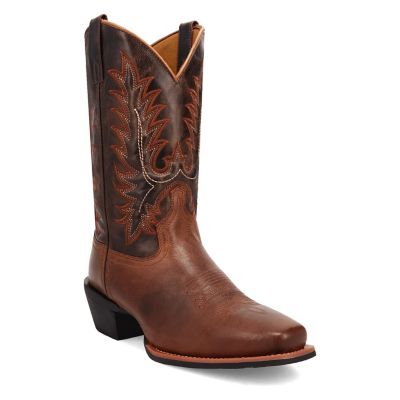
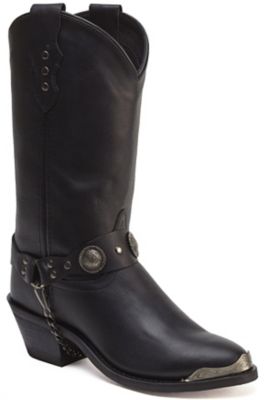
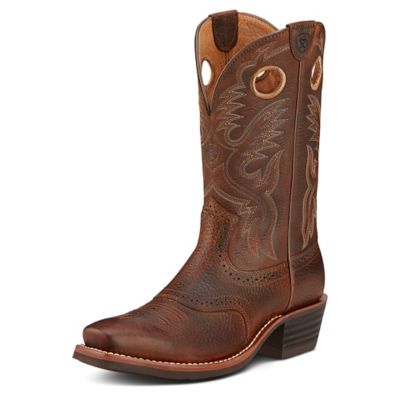
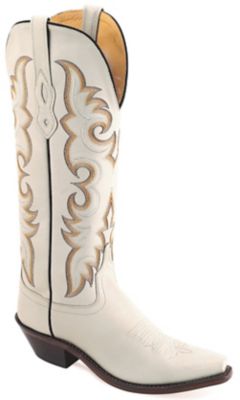
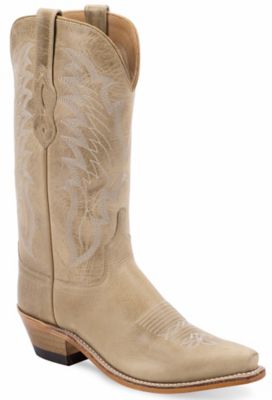
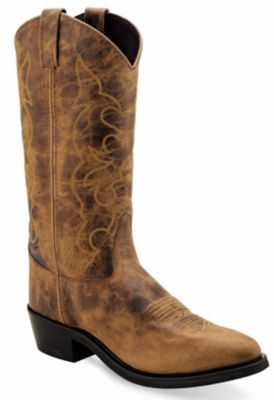
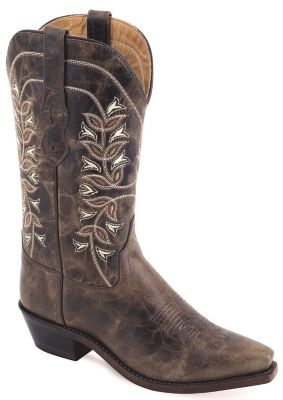
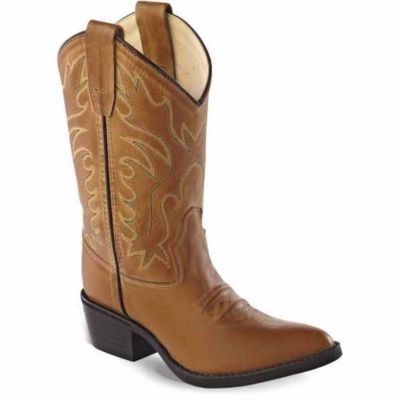
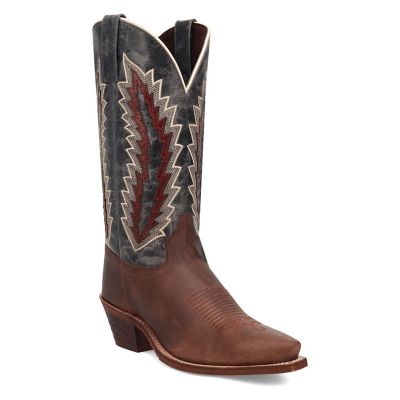
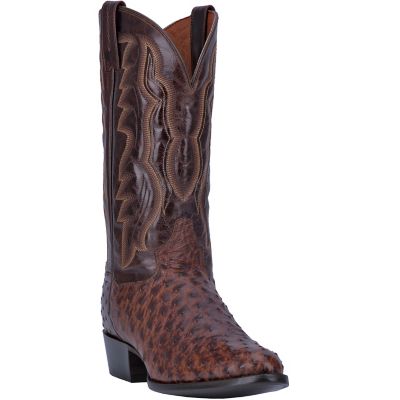
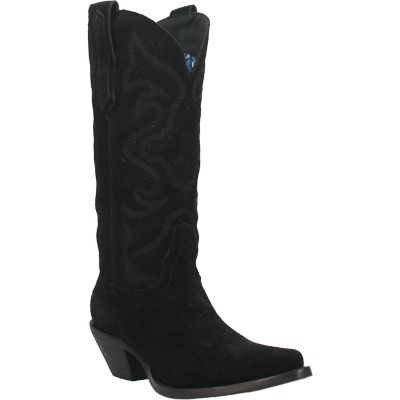
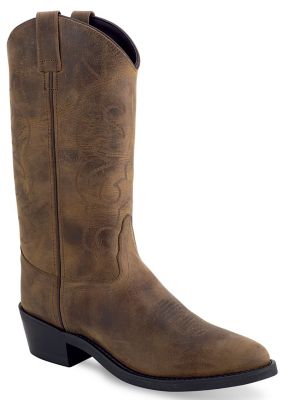
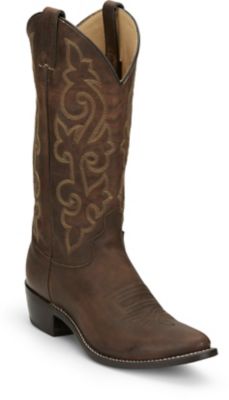
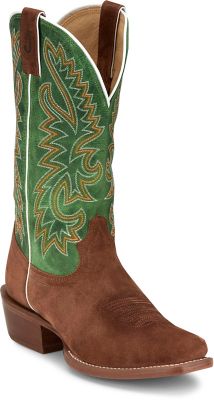
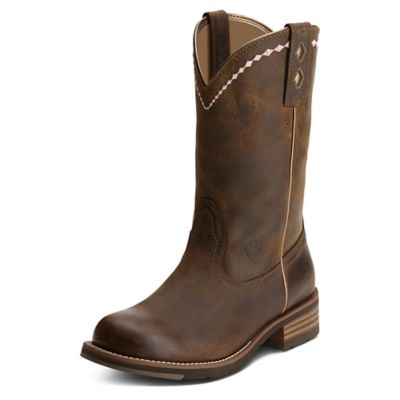
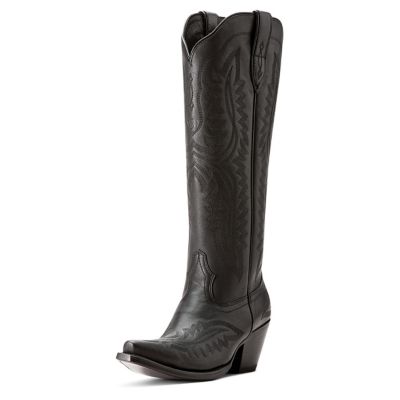
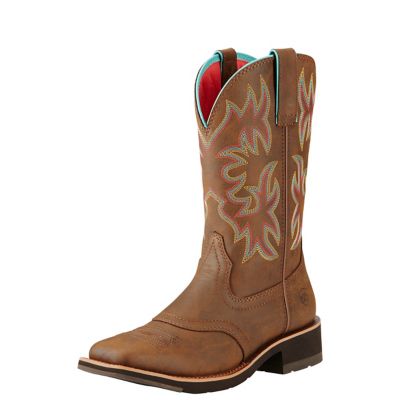
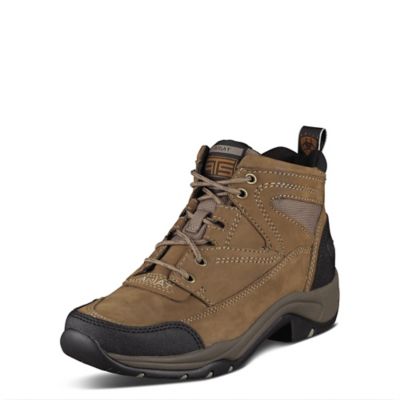
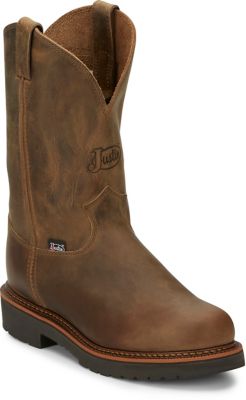
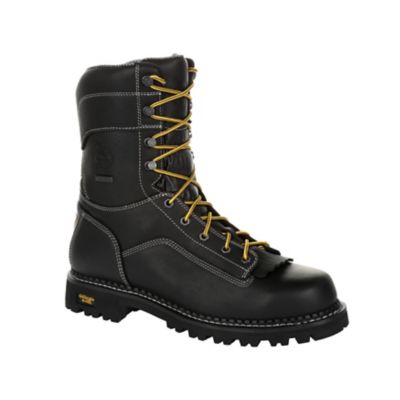
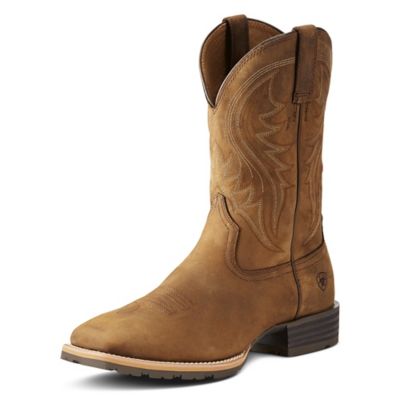
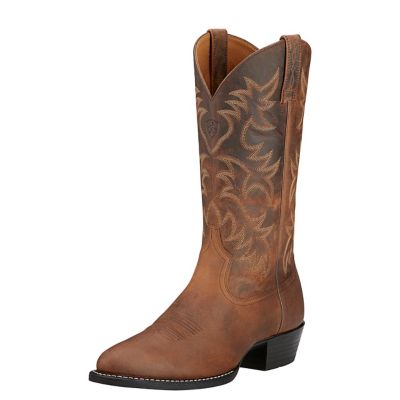
Cowboy heel boots are western boots with a raised heel that gives them their familiar riding-boot profile. A traditional cowboy heel often slopes inward from the back of the boot toward the ground, while block-heel versions have a broader, straighter shape. Many traditional riding heels measure roughly 1½ to 2 inches high, though heel height and shape vary across western footwear. That distinction matters when a pair needs to feel right in the saddle, on foot, or out on the dance floor. A riding heel helps keep the foot from slipping too far through a stirrup, but heel shape alone does not make a boot suitable for riding; outsole shape, tread, fit, and compatibility with the stirrup matter, too. Lower walking heels and roper-style heels generally offer a broader base for time spent standing or moving around on foot. Taller fashion heels put more emphasis on the western silhouette and may feel different over a full day. Across these styles, leather uppers, tall shafts, pull tabs, and stitched patterns give cowboy boots their recognizable character. Full-grain leather keeps its natural surface and develops creases and character with wear, while suede has a softer, textured finish that calls for different care. Synthetic materials offer another look and feel, with cleaning needs that depend on their finish. Heel construction may include stacked leather, molded materials, or a combination, so a layered appearance does not always tell the whole story. Outsoles also change the experience: leather can feel smooth underfoot and needs attention on slick floors, while rubber compounds offer different levels of flexibility and traction depending on their design. For ranch riders, folks headed to a country dance, and anyone who likes western footwear with jeans, the best match comes down to the job and the hours ahead. A boot that looks right beside a saddle may not be the most comfortable choice for walking a fairground all afternoon, and a dressier pair is not automatically built for chores around equipment.
The fit of cowboy heel boots starts with the foot sitting securely in the widest part of the boot, with the ball of the foot lined up near the outsole’s natural flex point. Because most pull-on western boots do not have laces, the instep does much of the work of holding the foot in place. It should feel snug rather than pinched, with enough room for the toes to rest without pressing against the front or sides. A pointed toe can extend beyond the toes as part of its shape, so that extra length is not a reason by itself to size down. Round and square toes change the outline and may change the feel, but neither shape guarantees more room; the width and the form the boot is built around matter just as much. A little heel movement can be normal in a new pull-on boot, especially before the sole begins to flex, but substantial slipping or rubbing deserves another look at the fit. The socks worn with the boots make a difference, too. A smooth boot sock that reaches above the shaft can help reduce rubbing, while extra-thick socks can crowd a fit that already feels close. Shaft height and opening deserve attention when boots sit beneath straight-leg jeans, tuck into a riding outfit, or brush against the calf during a long walk. Inside the boot, cushioning, arch shape, lining, and removable insoles can influence comfort, though soft padding cannot fix a poor fit. For someone moving between a feed room, a gravel lane, and a concrete aisle, heel stability and the way the boot bends may matter more than elaborate stitching. Work around heavy equipment or other hazards may also call for footwear with specific safety ratings; western styling alone does not provide that protection. Good break-in feels like gradual softening and easier flex, not a need to tolerate numb toes, sharp pressure, or a heel that keeps lifting out.
Long service starts with matching cowboy heel boots to their intended use and giving the materials a little attention along the way. Smooth leather generally benefits from dirt being brushed away, followed by cleaning and conditioning with products intended for that leather finish. Too much conditioner can change the feel or color, so a small test in a less noticeable spot makes sense. Suede and roughout leather usually need a suitable brush and finish-specific care rather than the same treatment as polished leather. Synthetic uppers have their own care requirements, and the maker’s directions are the best starting point. After cleaning, boots should dry naturally away from heaters and other direct heat sources. Keeping the shafts upright and letting the inside air out between wears helps maintain their shape and keeps the next wear more pleasant. Outsoles, heel caps, stitching, and the area where the upper meets the sole are worth checking as wear builds up. A heel cap worn unevenly can change how a boot stands, and timely repair may help keep a repairable pair in service longer. Some stitched constructions allow sole replacement, but that depends on the boot and the repair needed, not simply on its western appearance. These practical details also matter when cowboy boots are a gift. A familiar boot size, preferred toe shape, usual sock thickness, and a sense of whether the wearer rides or mostly walks are more useful than guessing from looks alone. For younger family members,
Boys Cowboy Boots call for the same attention to secure footing and comfortable toe room, without so much extra growing space that the foot slides around. Whether the occasion is a country wedding, a day at the arena, or an ordinary trip into town, a well-matched pair should suit the wearer’s routine as naturally as their favorite jeans. The stitching and heel profile catch the eye, but fit, materials, and purpose are what make the boots feel at home.