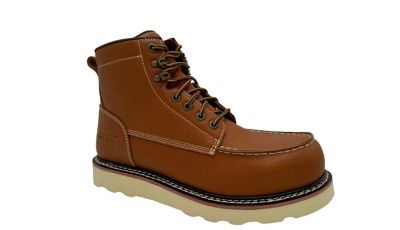
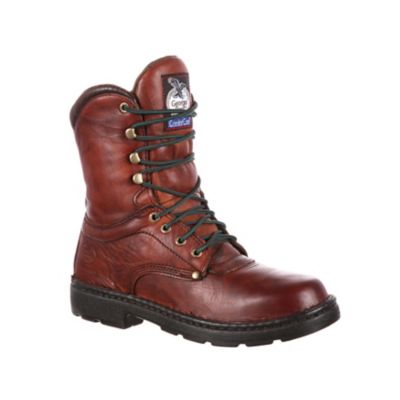
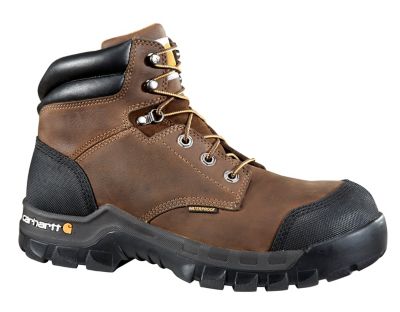
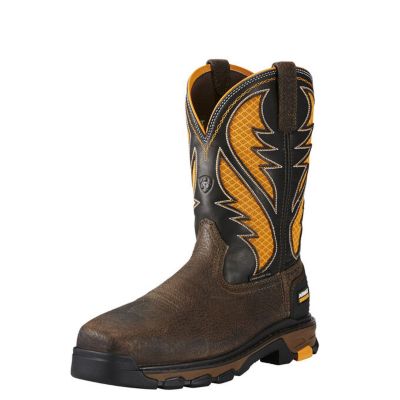
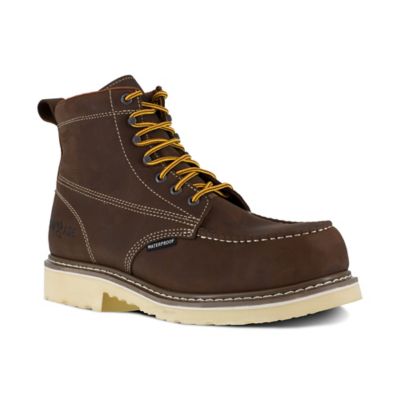
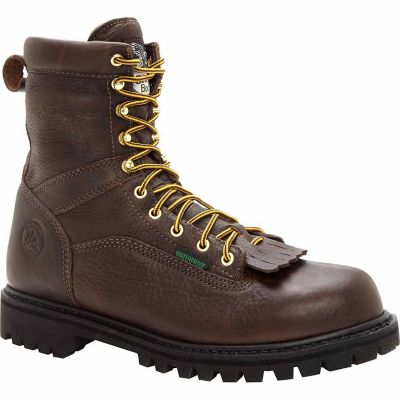
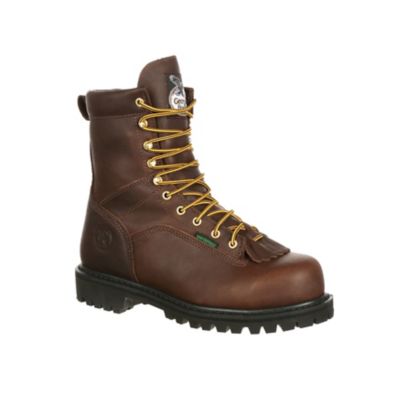
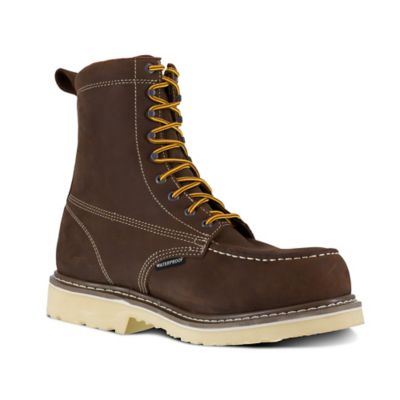
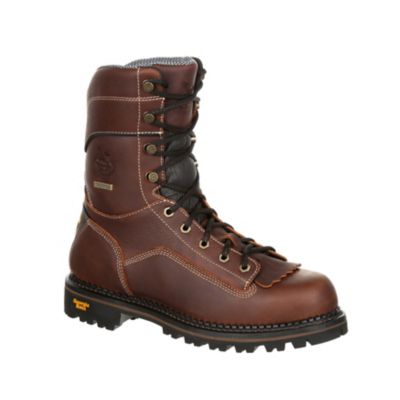
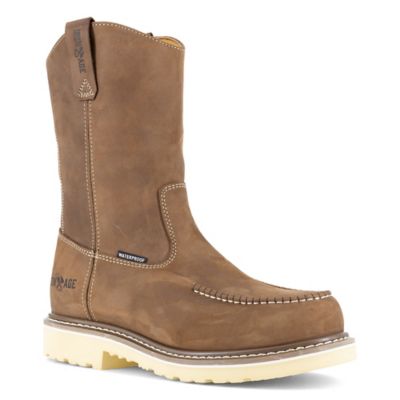
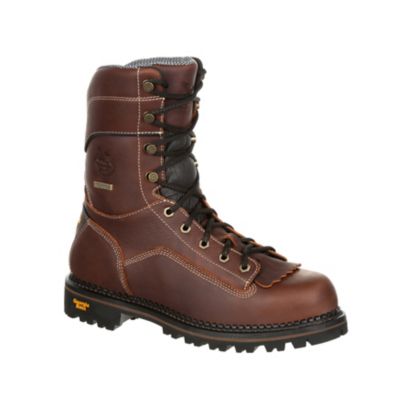
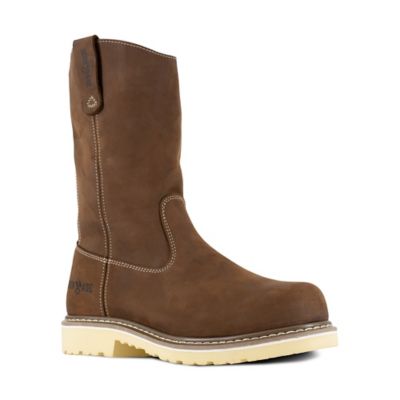
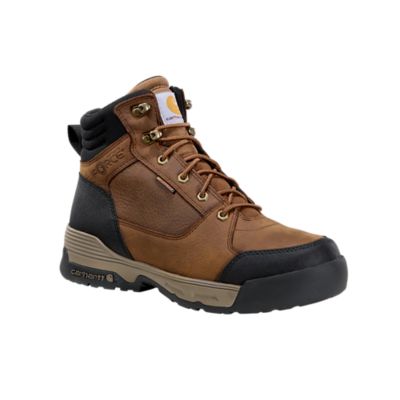
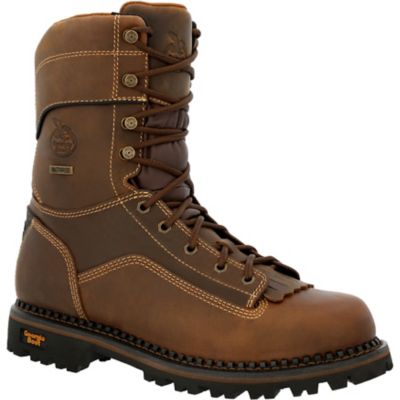
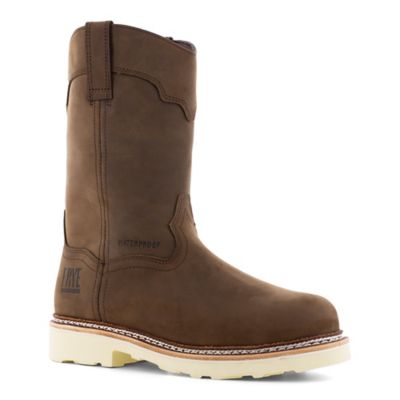
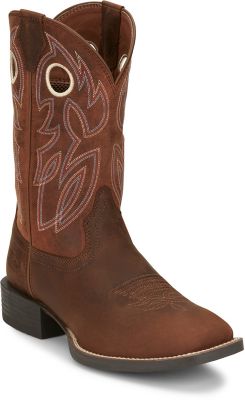
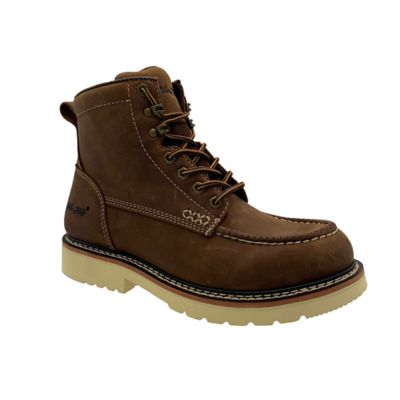
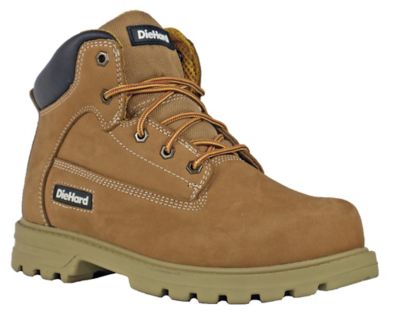
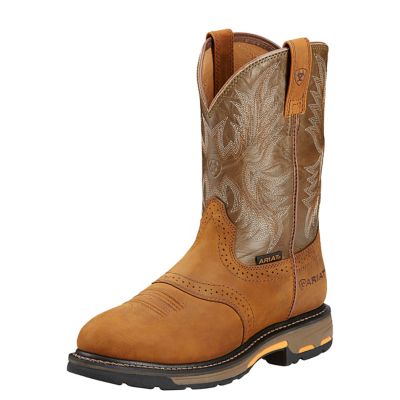
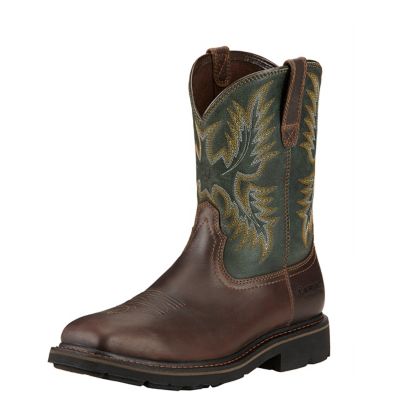
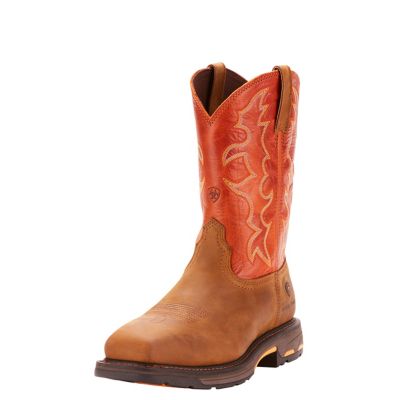
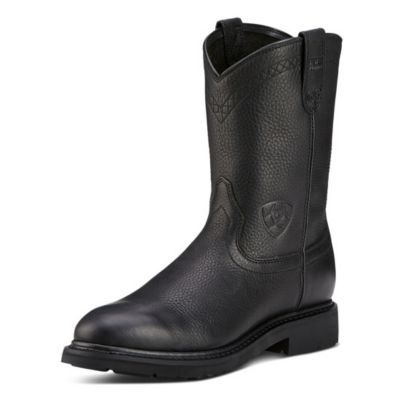
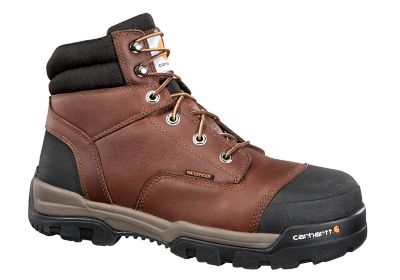
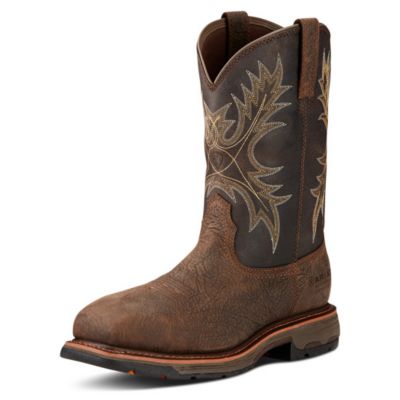
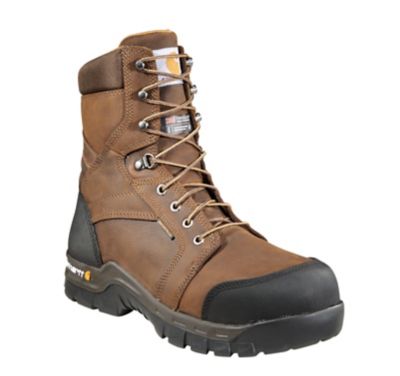
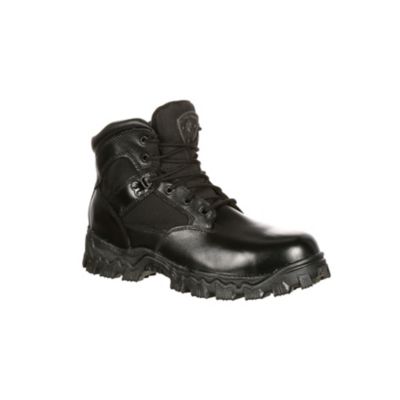
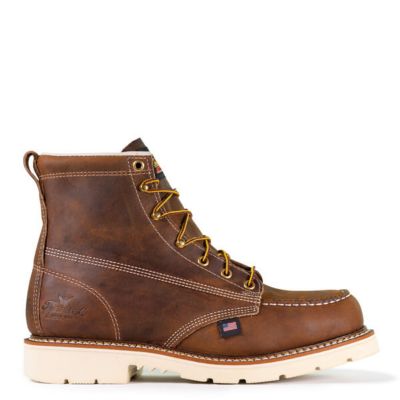
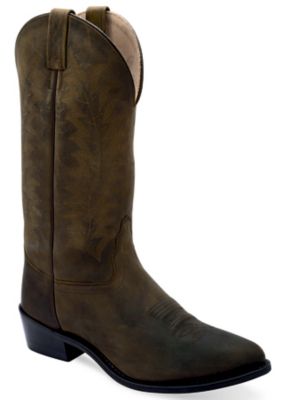
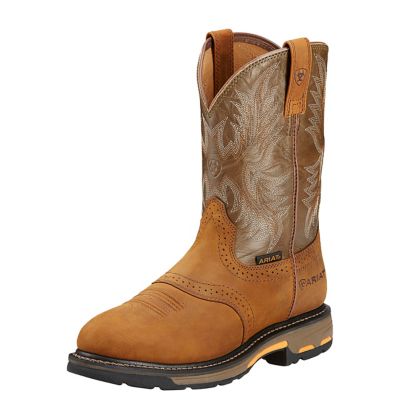
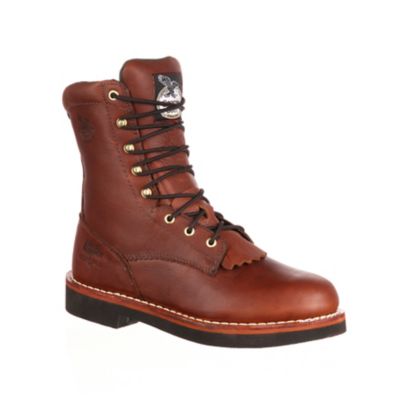
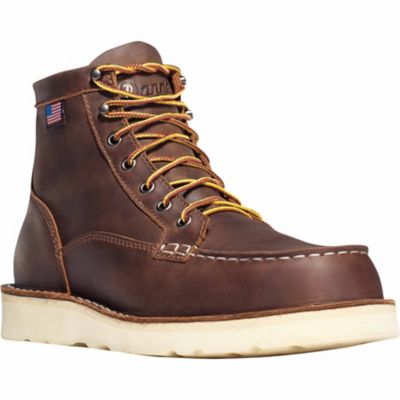
Defined heel work boots have a raised heel block separated from the forefoot by a distinct ledge beneath the arch. Often described as a 90-degree heel, this shape creates a noticeable break in the bottom of the boot rather than the continuous ground contact of a wedge sole. That heel edge can provide a contact point against a ladder rung, but it does not lock the foot in place or replace proper climbing technique. The benefit depends on the boot’s dimensions, the rung shape, and secure foot placement. For farmhands, construction crews, maintenance workers, and others moving between packed dirt, gravel, and equipment steps, a defined heel is one part of a work-ready sole design. Traction also comes from the outsole material, tread pattern, and condition of the walking surface. A pronounced heel paired with well-spaced lugs can help find purchase in loose ground, while no heel shape alone guarantees grip on wet boards, oily shop floors, or ice. Compared with wedge-sole work boots, which generally spread contact across more of the bottom of the foot, defined heel work boots place distinct contact areas under the heel and forefoot. Neither shape is best for every job. A day spent climbing approved access ladders and crossing rutted yards puts different demands on footwear than a shift standing at a concrete workbench. Heel height, heel width, and support beneath the arch all affect how the boot feels through those changes. A broad heel base may feel steadier underfoot than a narrow one, while an excessively high heel can feel awkward during frequent walking. The practical appeal is a clear heel edge without giving up the cushioning, toe room, and flexibility needed for a full day’s work. From opening a stiff pasture gate to carrying supplies across a gravel lot, comfort and footing come from the whole boot working together, not the heel alone.
Materials and construction make a noticeable difference once the chores stretch past breakfast. Leather uppers are common in defined heel work boots because they offer structure and resistance to everyday abrasion, though leather thickness, finish, and stitching affect feel and upkeep. Textile panels can reduce weight and help ventilation, while reinforced toe and heel areas can limit wear where boots scrape against steps or rough ground. Rubber outsoles are common for traction and wear resistance; other sole compounds may emphasize cushioning or lower weight. A shank beneath the arch helps support the space between the heel and forefoot, which can matter when standing on a narrow rung or walking over uneven ground. It should not be mistaken for puncture protection, which requires a separately specified protective feature. Waterproof construction can be useful around wet grass, shallow puddles, and muddy livestock pens, but water can still enter over the top of the shaft. Moisture-managing linings help handle perspiration inside the boot, and insulation adds warmth during the cooler months. More insulation is not always more comfortable, especially for active work or regular trips into a heated shop. Toe protection is another separate consideration. Steel, composite, and other safety-toe designs offer different combinations of weight and feel, and workplace requirements should determine the necessary protection and ratings. A soft toe may suit tasks without an impact or compression hazard, but it is not a substitute where safety footwear is required. Electrical-hazard ratings, slip-resistance claims, and puncture-resistant construction each address different conditions and should be checked individually rather than assumed from the boot’s appearance. An electrical-hazard rating does not make a boot suitable for intentional contact with energized equipment. For someone splitting time between feeding animals, repairing fence, and working around machinery, the right combination depends on the hazards of each task. Clear specifications matter more than a rugged-looking upper or an especially deep heel notch.
Fit is what turns those features into something comfortable enough to wear from the first trip to the barn through the last walk back to the truck. Defined heel work boots should hold the heel securely without pinching, leave room for the toes to move, and support the arch without a hard pressure point. Trying boots with the socks intended for work gives a better sense of space, especially when thicker socks or separate insoles are part of the routine. Feet can swell over the course of a day, so a fit that already feels tight before much walking deserves a second look. Leather may soften with wear, but break-in will not create needed toe length or fix a safety cap that presses against the foot. Lace-up designs allow adjustment through the instep and ankle, while pull-on work boots depend more heavily on the match between foot shape, instep, and shaft opening. Either style should let the foot bend naturally without excessive sliding inside. For ranch work that includes time in the saddle, a distinct heel can help resist the foot passing too far through a stirrup, but not every defined heel work boot is suitable for riding. Toe shape, outsole tread, boot width, and stirrup clearance all matter; deep lugs or a bulky sole can interfere with release. Shoppers comparing riding-oriented heel shapes can also explore
Cowboy Heel Boots, keeping walking and riding needs separate when evaluating fit. After the workday, brushing away packed dirt and clearing debris from the tread helps preserve the sole’s contact edges. Leather benefits from cleaning and conditioning appropriate to its finish, while wet boots should dry with airflow away from direct heat. Regular checks for rounded heel edges, worn tread, loose stitching, and sole separation help reveal when footing or protection may be compromised. Defined heel work boots can also make a practical gift for someone starting a trade or taking on more farm responsibilities, provided their size, preferred fit, and workplace footwear requirements are known.