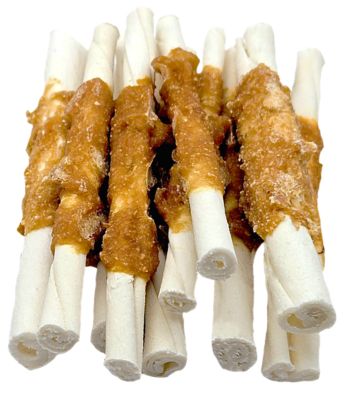
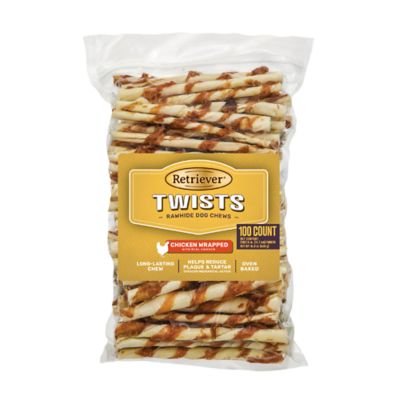
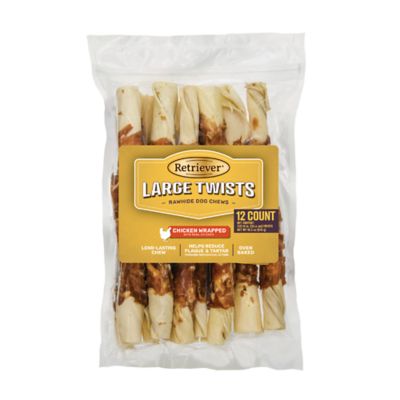
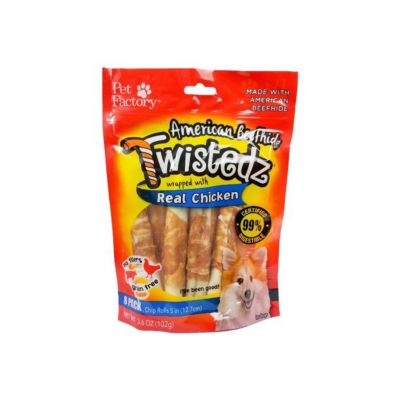
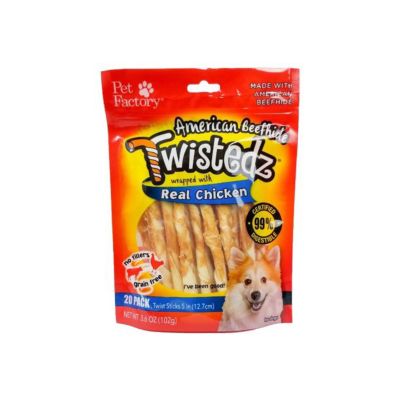
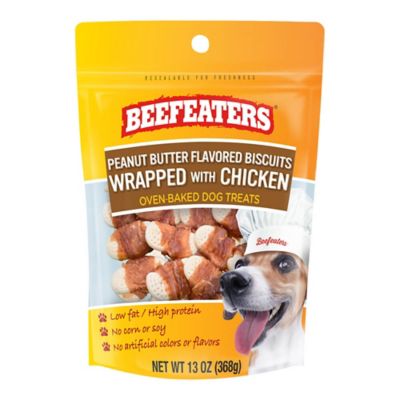
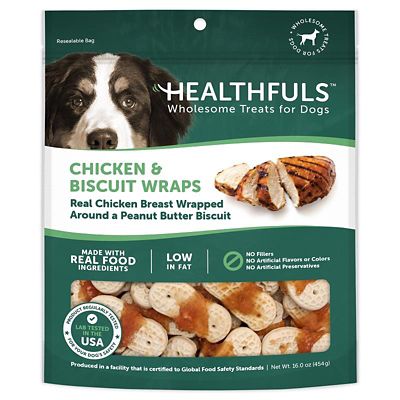
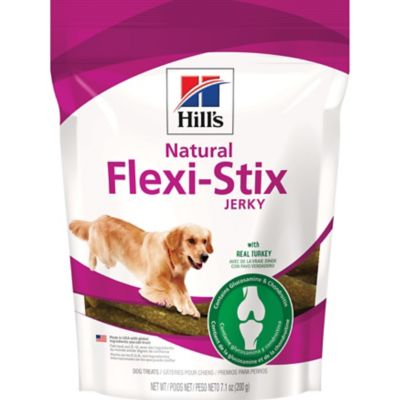
Chicken wrapped dog treats bring together a savory outer layer and a center chew, giving dogs a snack with more texture and flavor than a plain biscuit. Many varieties feature real chicken breast or chicken jerky wrapped around ingredients such as sweet potato, apple, carrot, banana, or a beefhide center. The result may range from a tender, easy-to-break snack to a firm chew that keeps a dog occupied for a longer stretch. When comparing chicken wrapped dog treats, start with your dog’s age, size, chewing habits, and everyday diet. A small dog or older companion may do better with a softer treat that can be torn into smaller portions, while a strong chewer may prefer a thicker stick or firm center. Puppies also need options that match their developing teeth, and treats should be sized so they can be chewed comfortably rather than swallowed whole. Read the package label for the ingredient list, feeding directions, calorie information, and any storage instructions. Chicken should be clearly identified, and a shorter ingredient list can make it easier to keep track of what your dog is eating, especially when your dog has food sensitivities. Some recipes are made without grains, while others include grains or plant-based ingredients; neither choice fits every dog, so select the recipe that works with your veterinarian’s advice and your pet’s regular food. For dogs that have trouble digesting standard rawhide, rawhide-free chicken wraps may be a more suitable option. Other dogs may handle beefhide chews well when supervised, but every dog responds differently, and a chew that works for one household may not suit another.
Supervision is an important part of serving any wrapped chew. Offer the treat on a washable surface where your dog can settle, and watch as your pet works through the outer chicken layer and center. Take it away if it becomes small enough to swallow, if pieces break off in large chunks, or if your dog tries to gulp instead of chew. Fresh water should be available, and treats should remain a small part of the daily feeding plan rather than replacing a balanced meal. For dogs with allergies, check for chicken, beef, poultry byproducts, preservatives, and other ingredients that may not fit their needs. If your dog has a history of digestive upset, introduce a new treat gradually and keep an eye out for changes in stool, appetite, or comfort. A chicken-wrapped sweet potato chew may appeal to a dog that enjoys a mild, slightly sweet center, while an apple, carrot, or banana center can add a different scent and texture. These ingredients are still treats, not a substitute for veterinary care or a complete diet. Firm chews may provide a satisfying outlet for dogs that like to gnaw, but they should not be counted on to prevent dental disease or replace brushing and regular veterinary dental checks. Keep the package sealed between servings so the chicken stays fresh, and store treats where curious pets and children cannot reach them. If you are shopping for a new puppy, a senior dog, or a companion with a sensitive stomach, compare texture and ingredients first instead of choosing by package size alone. More details on simple ingredient options can be found with
Natural Dog Treats.
Chicken wrapped dog treats can fit into plenty of everyday routines. They may help make a crate session more inviting, give a dog something to enjoy after a walk, or serve as a small reward during training when broken into suitable pieces. On a chilly afternoon, a chew can keep a dog content while the family settles in indoors, and during the cooler months it can offer a welcome change of pace after time outside. These treats can also make a thoughtful gift for a dog-owning friend, a new puppy household, or someone welcoming a rescue dog, particularly when the recipient knows the pet’s size, age, and food preferences. A gift basket might pair a few treat textures with a feeding mat or storage container, but it is best to confirm allergy concerns before giving food to another person’s dog. For homes with several dogs, serve each pet separately when needed so a relaxed snack does not turn into a scramble. Keep portions consistent, especially for smaller dogs or pets that are watching their weight, and follow the package serving guidance. Whether your dog prefers a tender wrap that disappears in a few bites or a firmer chew that takes time to work through, the best choice is one that matches the dog in front of you. Consider the center ingredient, the chicken source listed on the label, the texture, the size, and your dog’s chewing style before adding a treat to the cart. With the right fit and sensible supervision, chicken wrapped dog treats can add variety to training, quiet time, and the simple daily moments shared between dogs and their people.