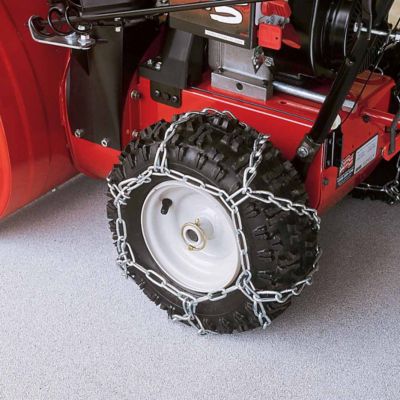
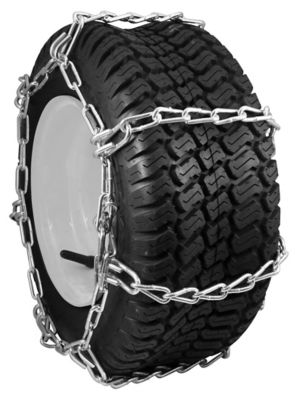
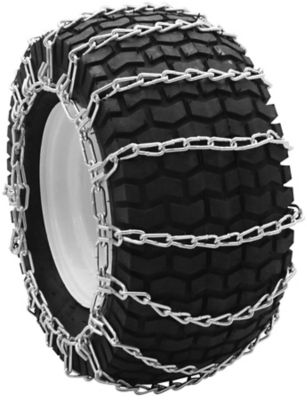
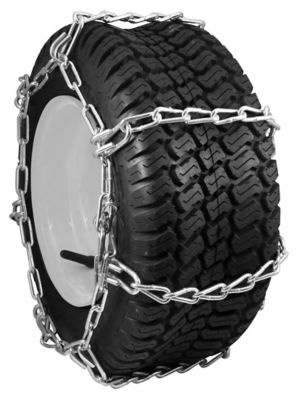
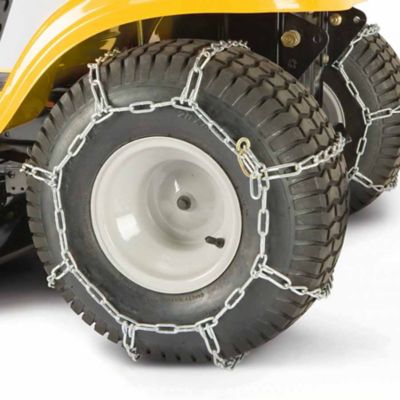
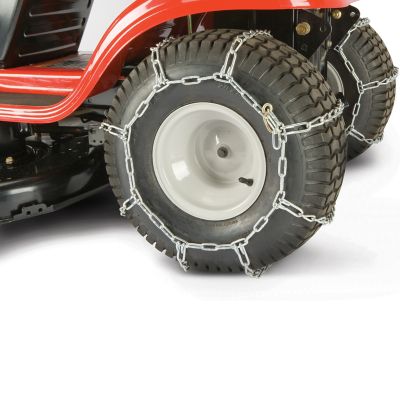
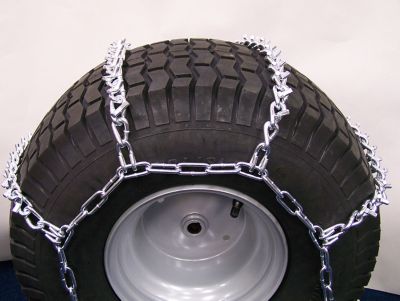
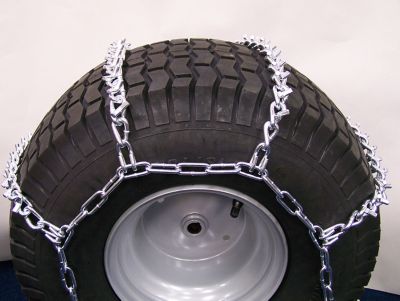
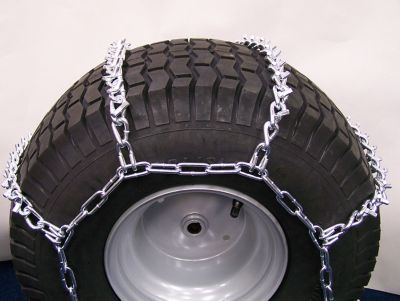
Chains for snow throwers are tire-mounted traction assemblies that help powered wheels grip packed snow and icy ground. Metal cross chains sit across the tire tread, with side chains and fasteners holding the assembly around the wheel. Their job is to help the machine move forward with less wheel spin, especially where tires struggle against a hard-packed driveway or the ridge left behind by a passing snowplow. They do not increase the amount of snow the auger can gather or the distance the chute can throw it. For a homeowner clearing a long lane, a property caretaker opening walkways, or someone keeping a path open between the house and barn, that extra bite can make a difference when the wheels lose their footing. Not every snow thrower needs chains, though. Tire tread, machine weight, surface conditions, and the manufacturer’s recommendations all play a part. Common chain designs include ladder patterns with cross chains running straight across the tread, along with patterns that connect across more of the tire’s surface. On many ladder-style assemblies, 2-link spacing places a cross chain at every second side-chain link, while 4-link spacing places one at every fourth link. Closer spacing generally puts more cross chains around the tire and shortens the gaps between them, but overall grip still depends on the chain design and the ground beneath it. Twist links offer a different contact profile than links with projecting traction bars, which can bite more aggressively and also be harder on finished surfaces. Deep, widely spaced tire lugs can let some cross chains settle between the tread blocks instead of standing above them. A compatible cross-over pattern may help address that mismatch. Chains can improve traction, but they cannot make ice slip-proof or turn a steep grade into a safe operating area. The machine’s slope limits and operating instructions still apply, even when the wheels seem to have a better hold.
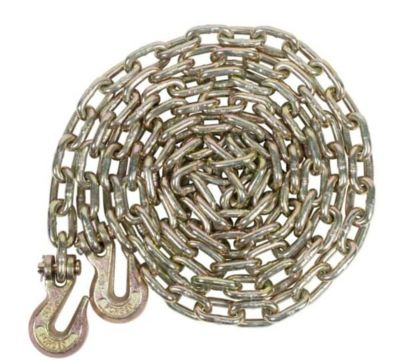
Getting the fit right starts with the tire size molded into the sidewall, rather than the snow thrower’s clearing width or engine size. Tire diameter, section width, and wheel diameter all matter, and similar-looking tires can need different chain assemblies. A chain sizing chart should match the complete tire designation, with the equipment manual confirming that chains are permitted on the machine. Clearance is just as important as tire size. There needs to be enough room between the chain and nearby fenders, axle components, drive parts, and other structures throughout wheel rotation. An assembly that hangs loose can strike those parts, while one pulled excessively tight can put unnecessary pressure on the tire and fasteners. Taller traction bars need additional clearance, so a more aggressive pattern is not automatically a better match. Many snow thrower tire chains feature steel links, sometimes with hardening treatments to resist wear or a plated finish to help limit corrosion. Neither treatment eliminates wear or rust, particularly where driveway salt and damp snow stay against the metal. Link thickness, sound welds, fastener design, and the way the cross chains meet the side chains all contribute to how well an assembly holds up. As with
Heavy Duty Chains for other jobs around the property, the intended application matters as much as the metal itself. Purpose-built tire chains need the correct shape and fastening arrangement; a length of general-purpose chain is not an equivalent replacement. Closure hooks, connecting links, and any specified tensioning hardware should work together as the manufacturer intends. Matching chains on both drive tires generally supports more even traction when the equipment calls for a pair. Tracked snow throwers have a different running system and should not be treated as wheeled machines needing tire chains. For a gift, the machine’s tire size and chain compatibility are worth confirming ahead of time; a well-matched maintenance accessory makes more sense than a guess based on the machine’s appearance.
The surface under the snow deserves a close look, too. A shaded stretch beside a shed may stay slick after the open driveway has softened, while repeated traffic can pack a narrow lane into a hard, polished track. Those are the kinds of conditions where added tire traction may help a compatible snow thrower keep moving. Loose gravel presents a different problem: chains may help the wheels find purchase, but they do not keep the auger from picking up stones. Skid-shoe settings, ground clearance, and the machine’s suitability for gravel remain separate considerations. Exposed asphalt, concrete, pavers, and finished garage floors can also suffer marks or scratches from metal links, particularly from projecting traction bars or a spinning wheel. Reduced wheel spin is a useful goal, not a reason to force the machine through resistance or beyond its operating limits. Chain contact can bring extra vibration, and a sudden change in sound or feel can signal a loose fastener, uneven positioning, or contact with the machine. Inspection and adjustment belong with the engine off, moving parts stopped, and the equipment secured according to its manual. Chains may settle into position after initial operation, making the manufacturer’s fit-check and tension recommendations important. Ongoing care is straightforward: remove packed debris, clean away salt and grit as directed, and let the chains dry before storage. Worn cross links, cracked welds, bent hooks, and damaged connectors need attention before the next clearing job, with replacement parts matched to the assembly. Storing a dry pair together keeps the fasteners from getting separated and makes it easier to spot a missing component. For folks responsible for an early-morning driveway or the stretch out to the shop, properly matched chains are a practical part of snow-clearing equipment. Their value comes from suitable traction, a secure fit, and regular attention—not from expecting metal links to overcome every patch of winter ground.