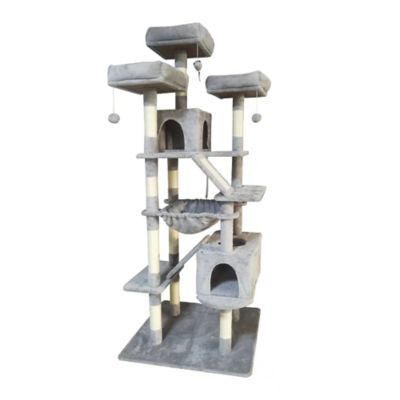
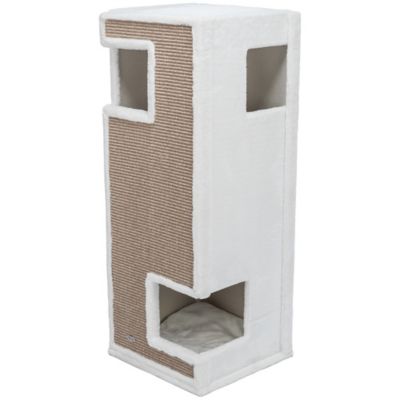
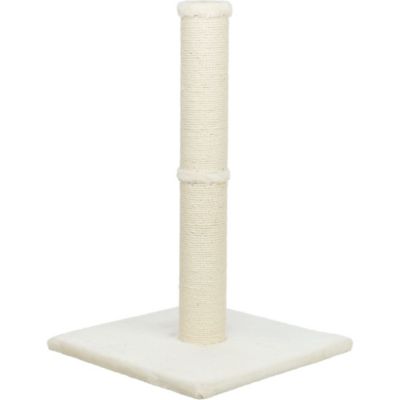
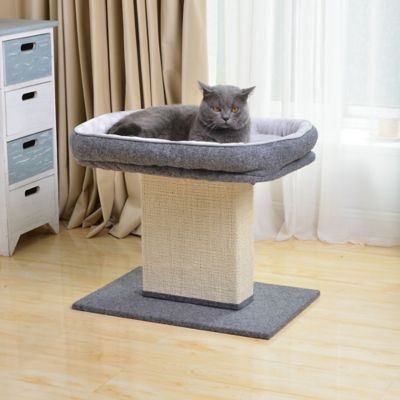
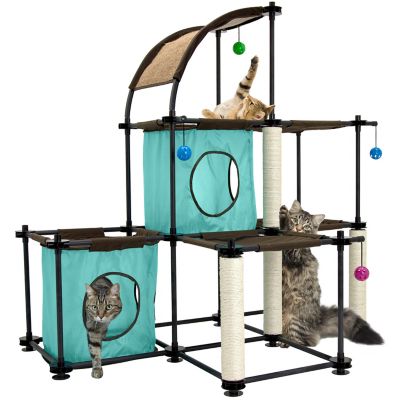
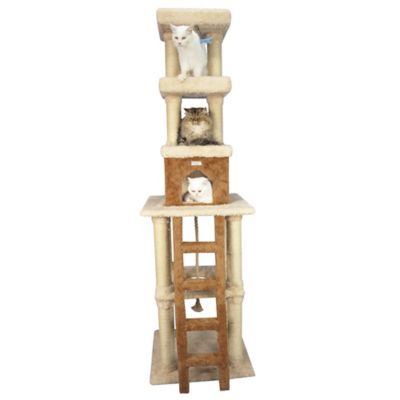
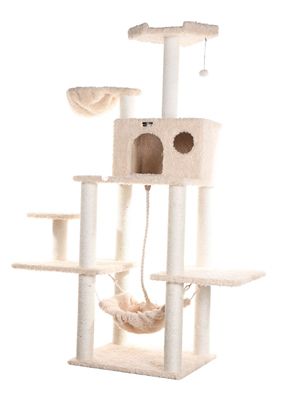
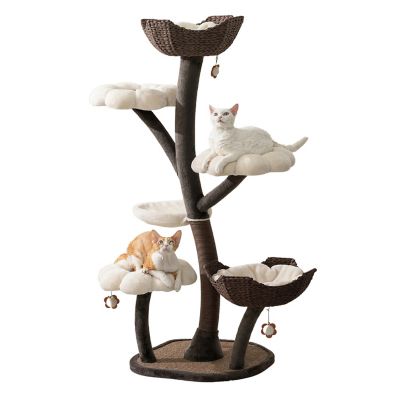
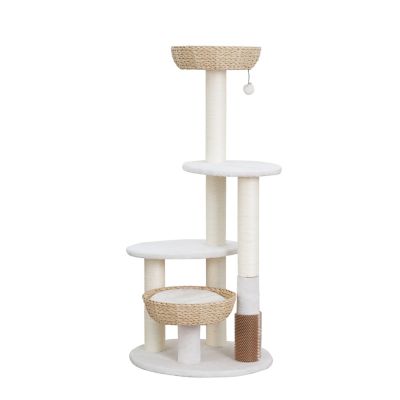
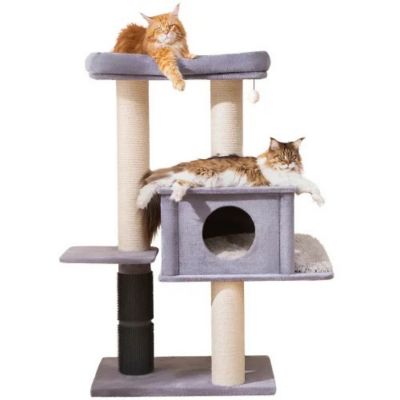
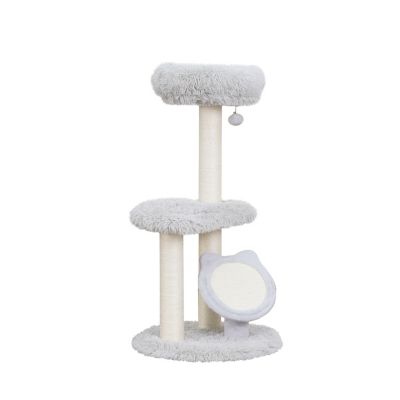
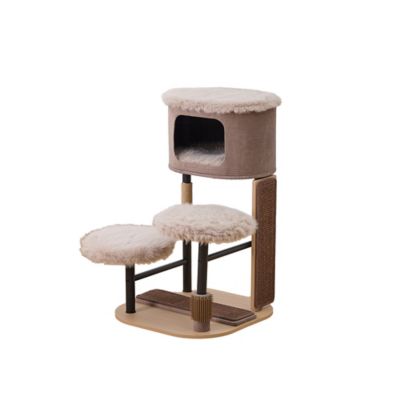
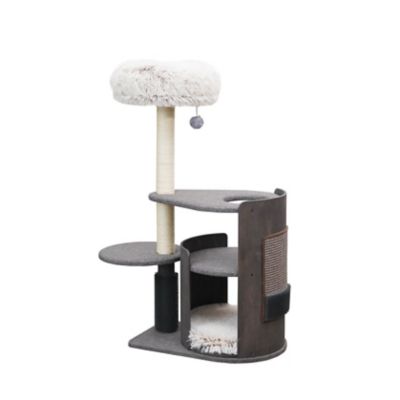
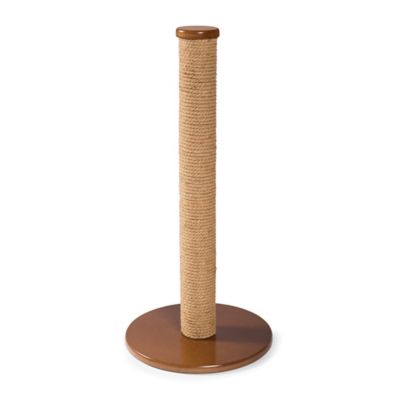
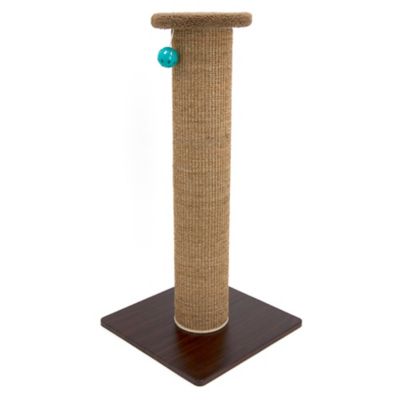
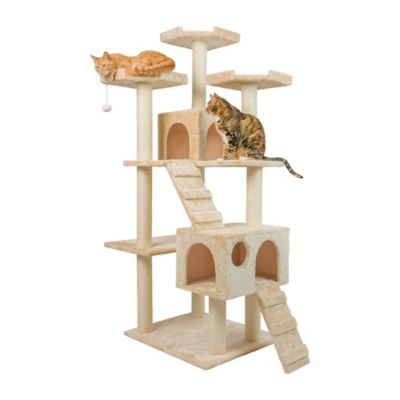
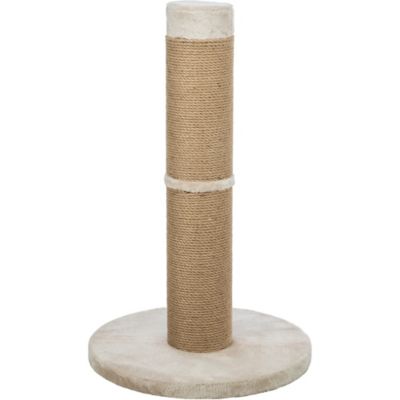
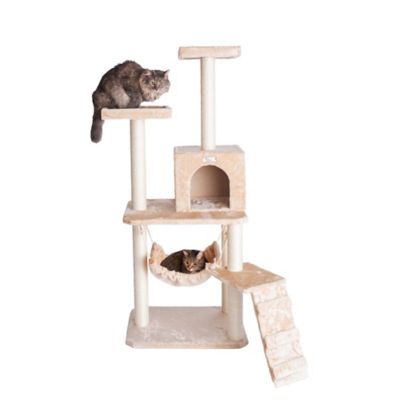
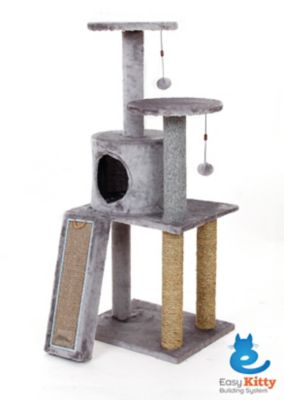
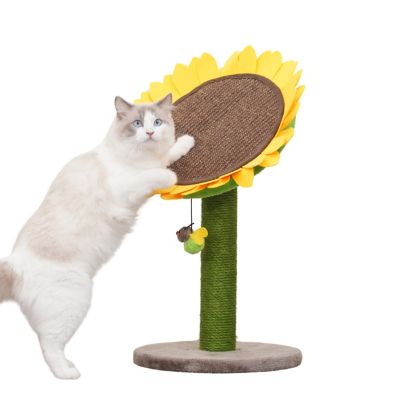
Cat scratchers for large cats give broad shoulders, long bodies, and strong paws room to work. Scratching is normal feline behavior: it helps cats stretch, shed the outer layers of their claws, and leave visual and scent markings in familiar places. A big cat needs more than a little patch of rough material to do all that comfortably. The most important features are enough scratching height or length for a full stretch, a broad base that resists tipping, and a firmly attached surface that holds up to repeated clawing. For an upright scratching post, around 32 inches or taller is a practical starting point, though the right fit depends on the cat’s reach rather than a single measurement. A long-bodied Maine Coon may need more space than a shorter, stockier cat of the same weight. The usable scratching area matters as much as the overall height; a tall cap or raised platform does not add room for claws if the scratching surface stops well below it. Thick posts offer a generous area for a cat to grip, while a wide, substantial base helps counter the pull of a strong backward stretch. That matters when a cat plants both front paws high on the post and leans away with its full body. Horizontal scratchers serve cats that prefer to crouch, reach forward, and rake a surface close to the floor. Their scratching panels should be long and wide enough that a large cat can work without constantly stepping off the edges. Angled scratchers offer another position, combining a forward reach with a raised surface. Across these styles, steady footing helps a cat scratch with confidence instead of backing away from a sliding board or wobbling post. In a farmhouse living room, a quiet bedroom, or a corner beside the couch, a properly sized scratcher gives that everyday routine a place of its own.
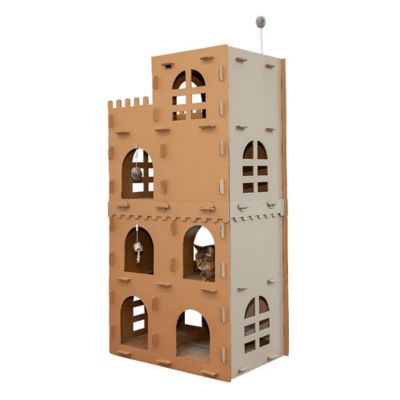
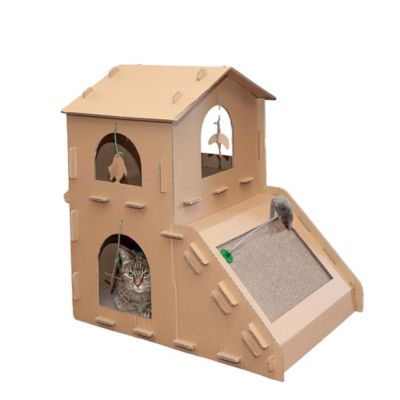
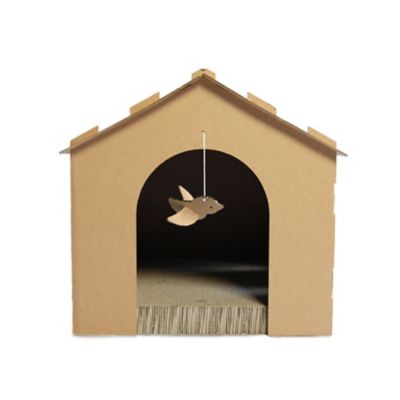
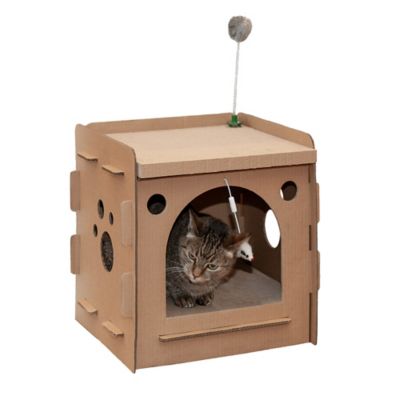
Materials shape both the feel of a cat scratcher and how it handles regular wear. Sisal rope provides a coarse, ridged surface that many cats enjoy gripping, while woven sisal fabric offers a flatter scratching area without the grooves between rope wraps. Tight wrapping, secure edges, and firm attachment help either surface stay in place when a heavy cat pulls hard. Corrugated cardboard has a different appeal: claws catch in the layered paper, and the surface gradually breaks down as the cat scratches. Broad cardboard pads and lounges can suit large cats that favor floor-level scratching, especially when the frame keeps the insert from shifting. Paper crumbs are part of that material’s normal wear, so placement on an easy-to-sweep floor can make cleanup simpler. Carpet-covered sections provide another texture, although loops and loose threads call for regular attention because claws can snag. The structure underneath deserves just as much consideration as the outer covering. A solid support, snug connections, and a flat base all contribute to stability; a hefty-looking post can still move if its joints loosen. For scratchers with perches, beds, or climbing levels, the stated weight limit and the dimensions of each resting area matter. A platform may support a cat’s weight yet leave too little room for its body, and a small opening can make an attached hideaway awkward to enter. Multiple-cat households also need to account for cats sharing the structure at the same time, following the manufacturer’s limits for total weight and individual platforms. Freestanding posts keep the focus on stretching and scratching, while larger activity structures combine those needs with climbing and resting. Wall-mounted scratching panels can save floor space when attached to suitable supports with the specified hardware. For any style, the fit includes the room as well as the cat: enough clearance for a full stretch, a base outside the main walking path, and secure placement where an enthusiastic scratching session will not knock into nearby furniture.
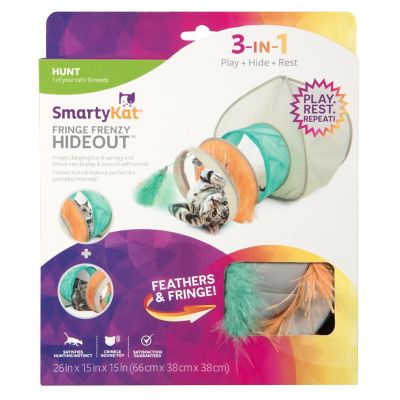
Every cat has its own habits, and a scratcher that matches those habits is more likely to become part of the daily routine. A cat that reaches up a sofa arm may prefer a tall vertical surface near that familiar spot, while one that works its claws across a rug may take more readily to a broad horizontal pad. Keeping a scratcher beside a favorite sleeping place gives a cat somewhere to stretch after a nap, and placing another near a regularly scratched doorway can meet the urge to mark a well-traveled area. In a home with several cats, separate scratching spots can make access easier without requiring every animal to share one corner. Older large cats may appreciate a low board or gentle incline that does not require climbing or balancing, while active adults may enjoy a sturdy post alongside room to run and play. A
Cat Tunnel for Large Cats can complement that space with a separate place for exploring and hiding, leaving the scratching surface clear for stretching. Positive reinforcement helps new scratching furniture feel welcoming: a treat after scratching, a nearby play session, or a little catnip for cats that respond to it can encourage interest without forcing paws onto the surface. Everyday care is straightforward but important. Loose hair and debris can be brushed or vacuumed away, and bases can be wiped according to the material’s care directions. Cardboard and other absorbent surfaces should not be soaked. Regular checks for fraying rope, exposed staples, sharp edges, loose fasteners, or a rocking base help catch wear before it becomes a problem. Replaceable pads or coverings can extend the service life of structures designed for those parts, provided replacements attach securely. Assembly and anchoring directions remain important even when a cat stays below a listed weight limit, since jumping and pulling put different forces on a structure. For anyone choosing a scratcher as a gift for a large-cat household, the cat’s preferred scratching position and the home’s available floor space are more useful than looks alone. A well-matched scratcher earns its place through everyday use, giving a big cat room to dig in, stretch out, and settle back into the household routine.