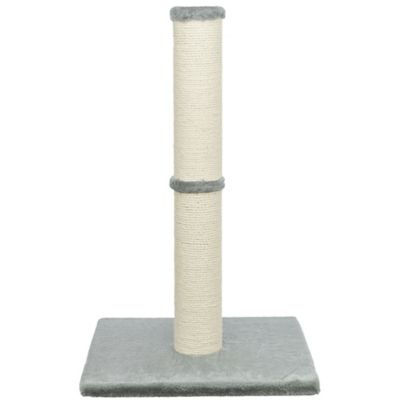
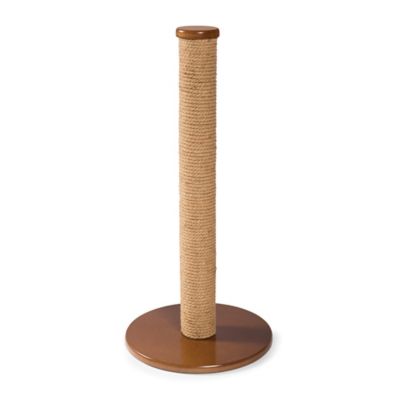
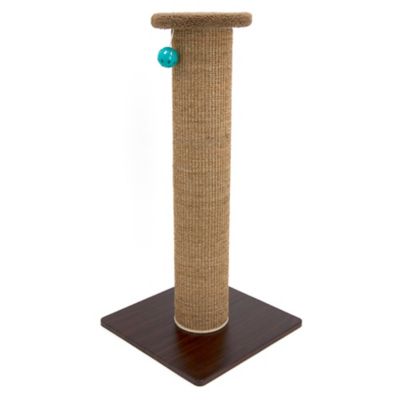
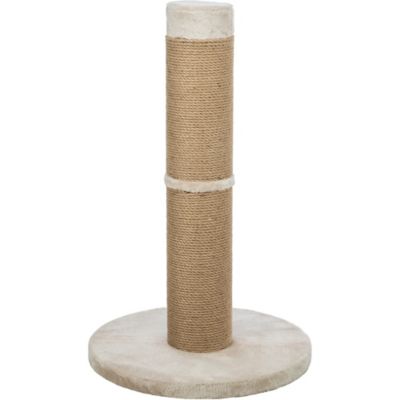
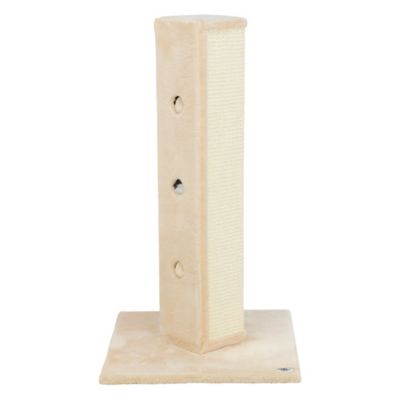
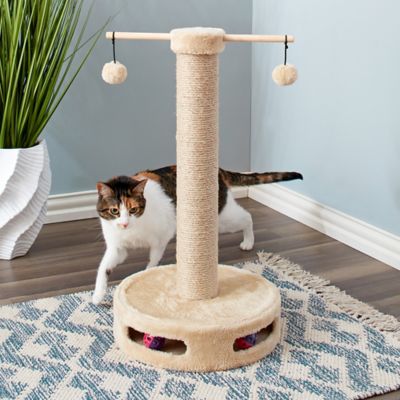
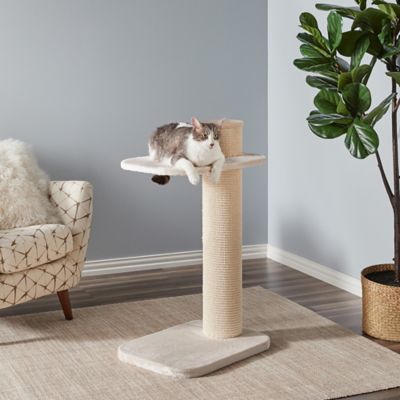
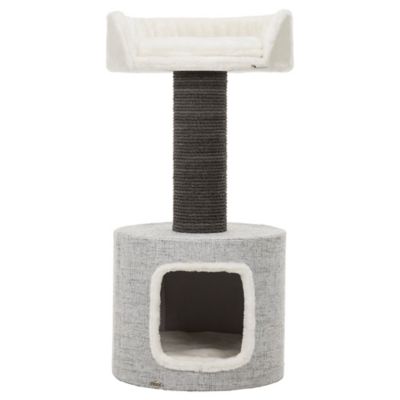
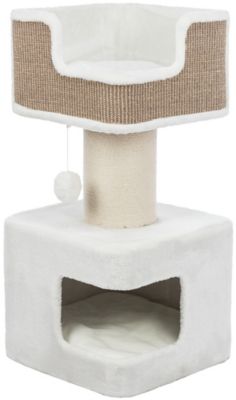
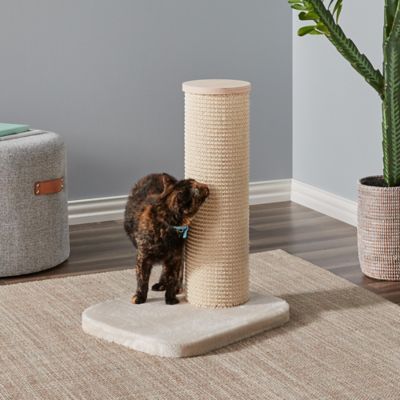
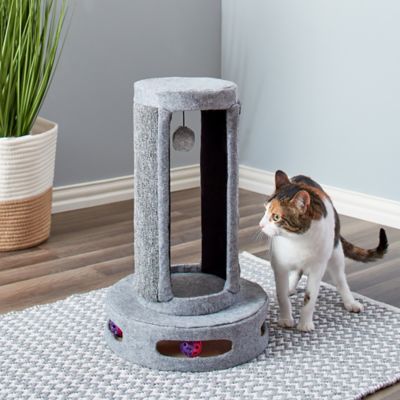
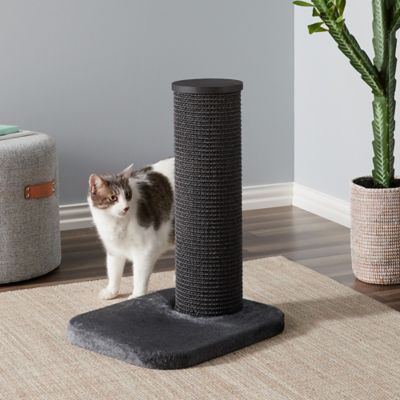
Cat scratching posts for large cats need enough height for a full-body stretch and enough support to stay steady under a strong pull. Many large cats benefit from posts around 32 to 41 inches tall, though an especially long cat may need more room to reach. The better measure is the cat’s own stretch: front paws extended overhead, back lengthened, and hind feet planted comfortably on the floor. A tall post with only a short section of scratching material may not offer that space, so the usable scratching surface matters as much as the overall height. Maine Coons, Ragdolls, and other big cats can put considerable force on a post when they dig in their claws and lean back. A broad, substantial base, a thick upright, and snug connections help the structure handle that motion without rocking. Height alone does not make a post a good match; a narrow, lightweight base can leave even a towering scratcher feeling unsteady. Base dimensions also need to suit the room, with space for the cat to approach, stretch, and step away without bumping furniture. Scratching is normal feline behavior that helps cats stretch their muscles, shed the outer layers of their claws, and leave scent marks through glands in their paws. A dedicated scratching surface gives that behavior a welcome place in the house, whether the cat spends most of the day watching the yard from a window or following folks from room to room. For a big adult cat, a substantial freestanding post can provide a straightforward outlet without taking up the space of a full climbing structure. In homes with several cats, more than one scratching spot can make it easier for each animal to settle into a routine without competing for the same corner. Even a cat that gets along well with its housemates may prefer a separate place to scratch after a nap.
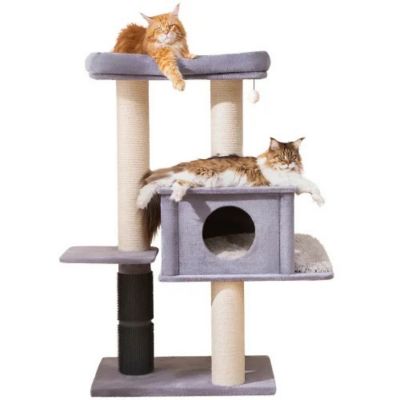
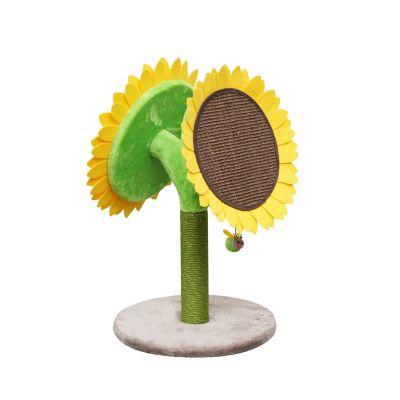
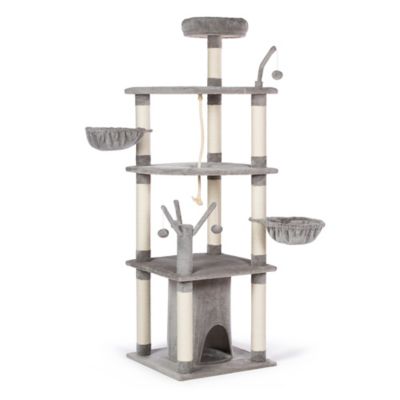
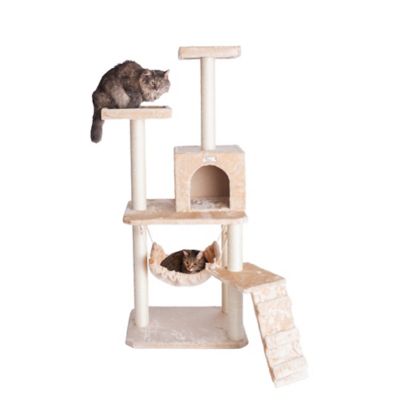
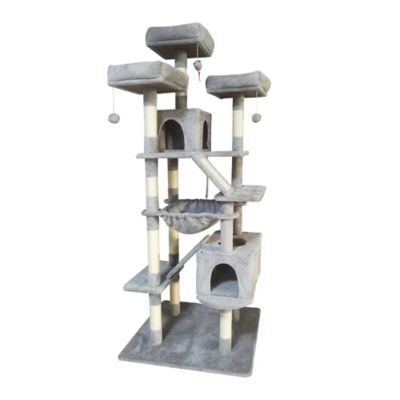
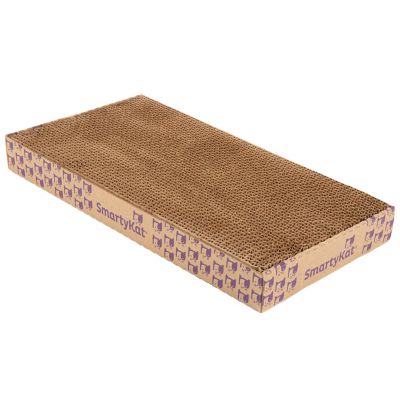
Materials shape how a large cat scratching post feels under the claws and how it holds up to daily attention. Sisal rope has a raised, ridged texture that gives claws something to catch, while woven sisal offers a flatter scratching surface. Either can appeal to cats that enjoy a firm pull, but individual preferences vary. Tightly secured coverings and neatly finished edges matter because loose sections can shift or unravel as a powerful cat works the same spot. Carpet-covered posts provide a softer texture, although some cats may also show interest in household carpeting. Corrugated cardboard offers another scratching feel and often suits cats that prefer to rake forward rather than reach straight up. A horizontal scratcher can complement a vertical post instead of replacing the full-height stretch a large cat enjoys. The structure beneath the covering matters, too: the base, upright, fasteners, and connection points all work together to support repeated pulling. A wide post gives a broad-chested cat more room to place both front paws, while a fully wrapped surface allows scratching from different sides. Plush trim can make a base inviting, but it should not take the place of a firm foundation or leave too little textured surface within reach. Older cats and cats with limited mobility may appreciate an easy-to-reach scratching area that does not require climbing onto a raised platform first. A simple post keeps that activity at floor level. For cats that also enjoy climbing and lounging above the action,
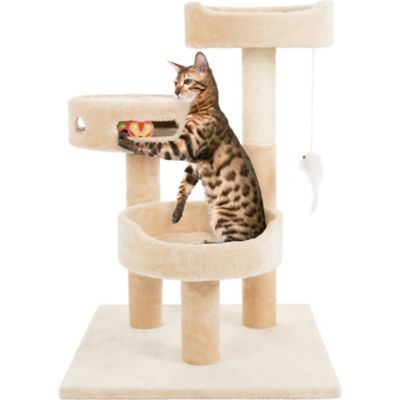
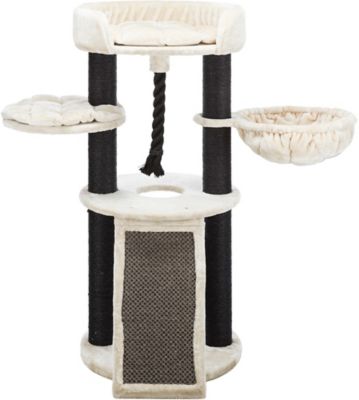
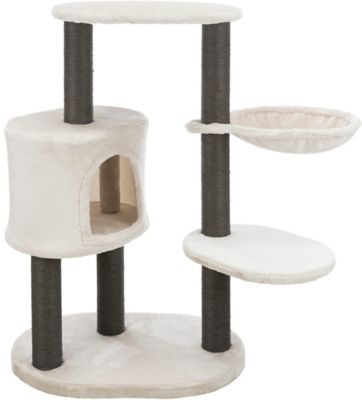
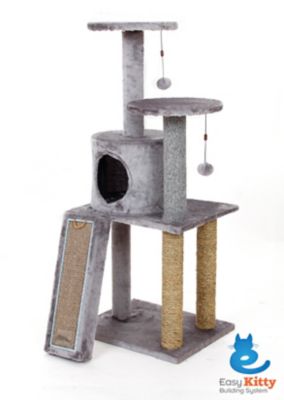
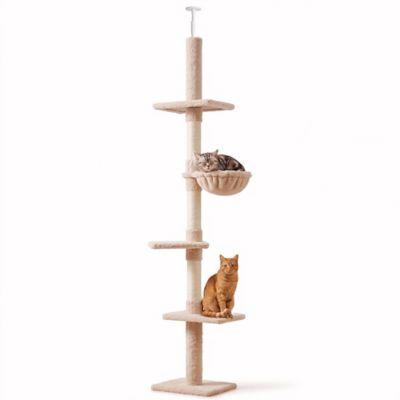
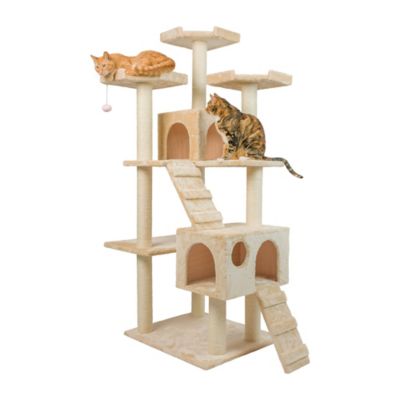
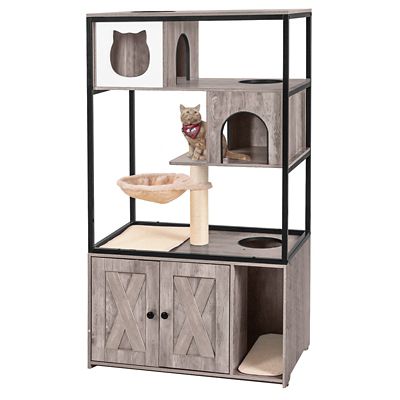
Cat Towers for Large Cats can combine elevated resting spaces with scratching areas. On structures with beds or platforms, platform dimensions and the stated weight limit deserve attention alongside the height and width of the scratching posts. A roomy perch needs to accommodate the cat’s body comfortably, not just leave enough space for four paws.
Everyday placement and care help a scratching post earn its spot in a busy home. Cats often scratch after waking or when passing through a familiar part of their territory, so a post near a favorite sleeping area or beside the couch may draw more attention than one tucked into an out-of-the-way room. A firm, level floor supports a steady base; thick rugs, uneven boards, or a base partly resting on a threshold can create movement that puts a cat off. There should also be clearance around the post for a long body and sweeping tail, especially when a big cat likes to circle before settling in for a stretch. A little play near the base or a treat after scratching can help build a pleasant association without forcing paws against the surface. Catnip may interest some adult cats, but not every cat responds to it, and an appealing texture and sensible location still matter. Routine upkeep is generally simple: loose fur and scratching debris can be brushed or vacuumed away, while spot cleaning should follow the material’s care directions. Saturating rope, fabric, or an absorbent base can leave moisture trapped inside, so cleaning methods need to match the construction. Regular checks around the lower scratching area, attachment points, and underside of the base can catch loose hardware, exposed staples, or long strands before they become a problem. Some fuzzing is part of normal wear, but bare patches, shifting coverings, and a wobbling upright call for attention. Replaceable scratching sections can extend the life of a compatible structure when the frame remains sound. For someone welcoming a large cat home, a well-sized scratching post makes a practical gift, especially when its footprint and texture suit the household. The goal is a solid everyday scratching spot that lets a big cat stretch naturally, get a satisfying grip, and return to the same familiar place day after day.