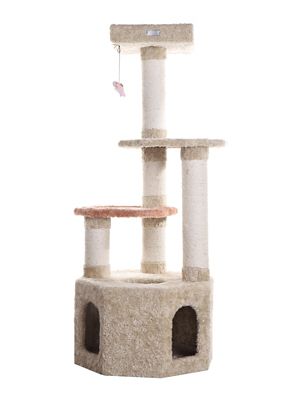
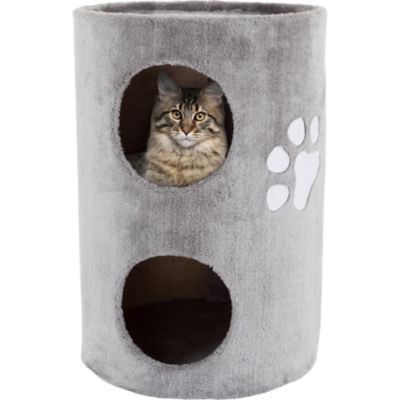
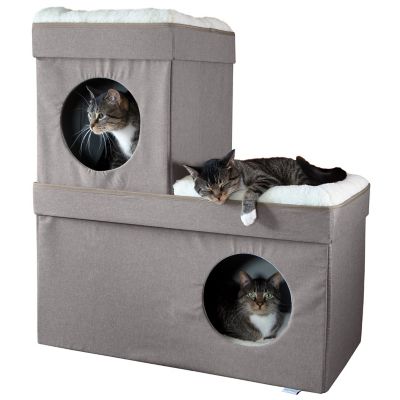
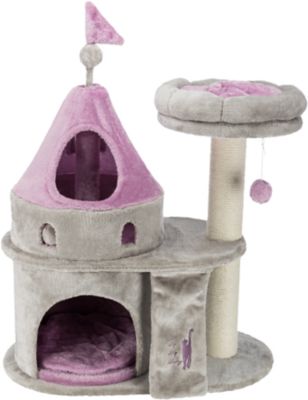
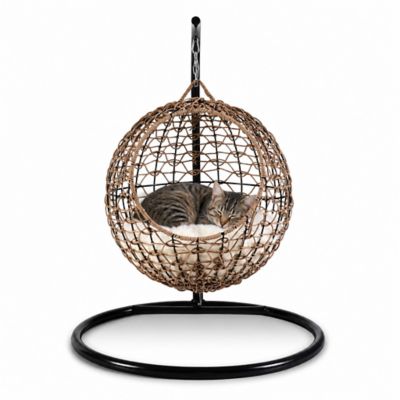
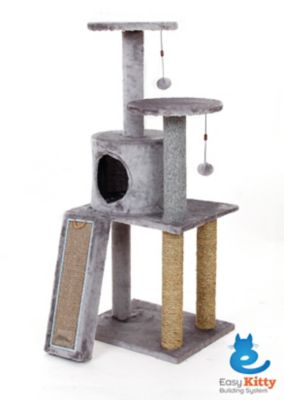
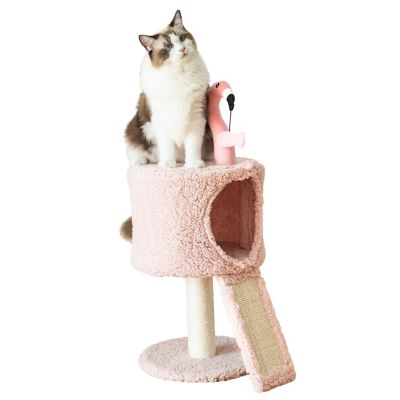
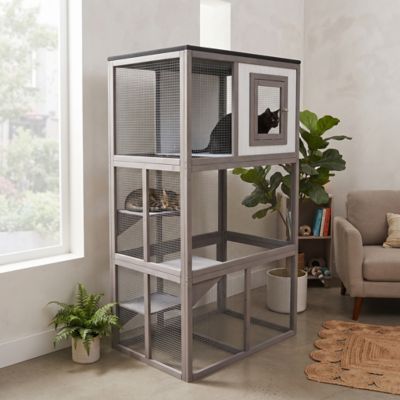
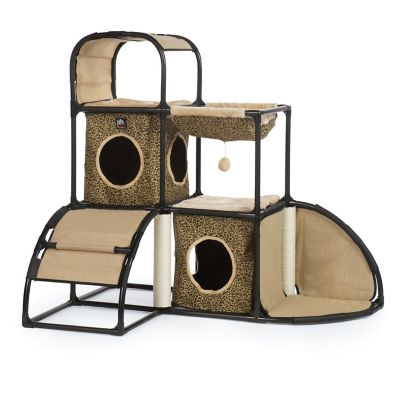
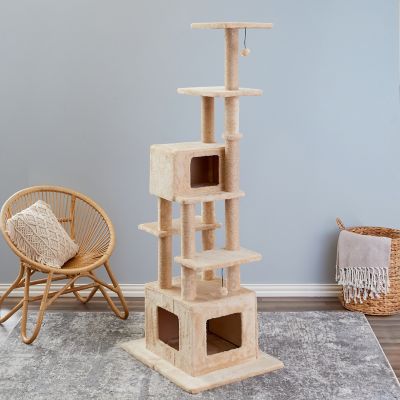
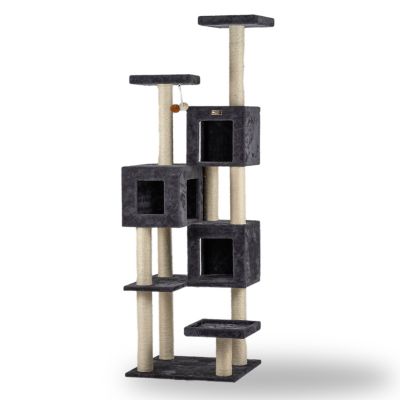
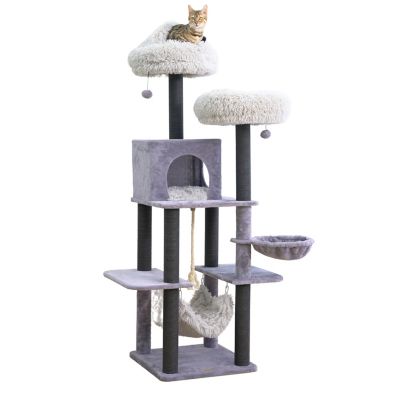
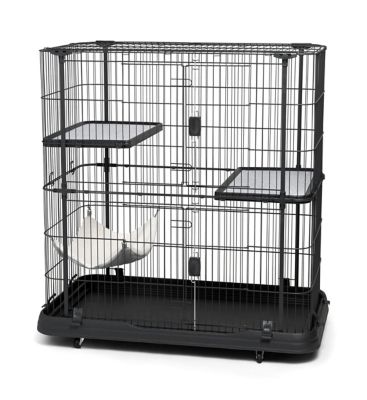
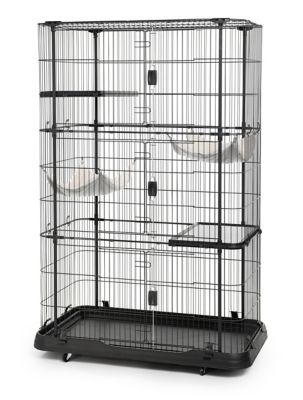
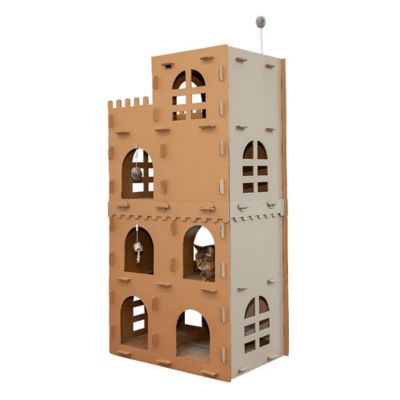
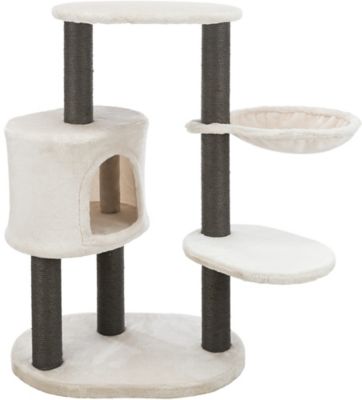
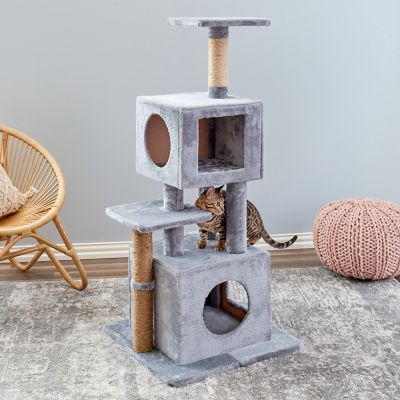
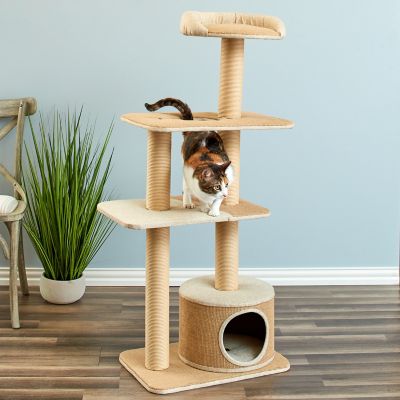
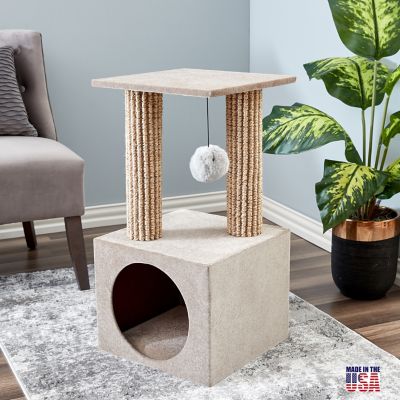
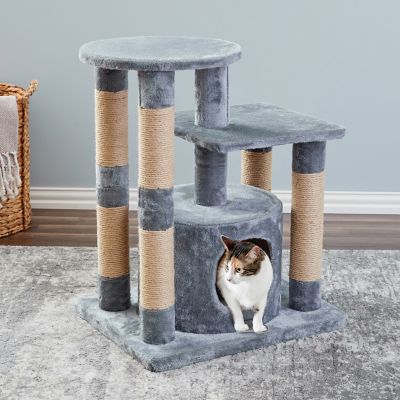
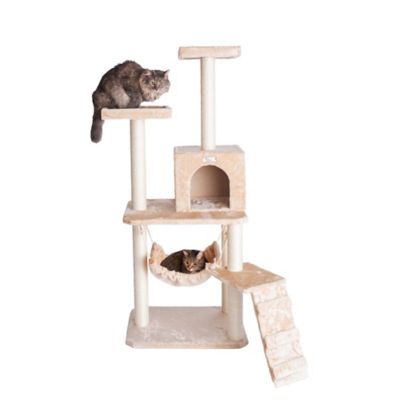
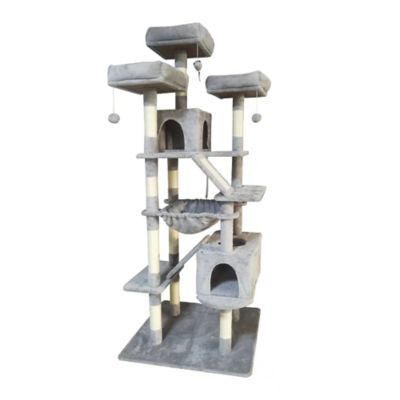
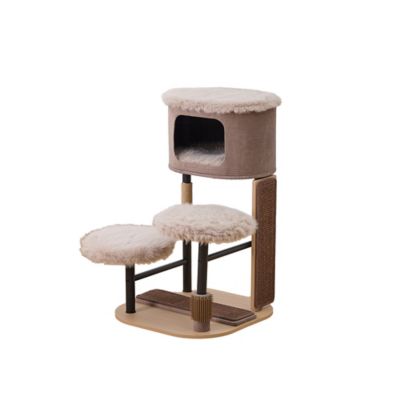
A cat condo for big cats gives a large house cat room to climb, stretch, hide, and settle down without squeezing into a cubby built for a smaller frame. For broad-chested cats, long-bodied breeds such as Maine Coons, and hefty mixed-breed companions, the best fit depends on more than the height of the tower. A wide, substantial base, well-supported platforms, and roomy resting areas all matter when a cat launches from the floor or turns around on an upper perch. A structure that feels steady under a light kitten may move quite differently beneath a full-grown cat, so the stated weight capacity and the way each level connects deserve close attention. Weight ratings may apply to an individual platform, hammock, or the entire structure; those distinctions are especially important when two cats like to pile into the same sleeping spot. Generous interior dimensions help a cat enter an enclosed condo, turn around, and lie down comfortably, while a broad doorway leaves space for shoulders and hips. Outside measurements alone do not tell the whole story, since walls, padding, and support posts take up some of that space. Open beds and top perches should leave room for a relaxed sprawl rather than requiring a tight curl at every nap. Raised edges can offer a place to rest a chin, but they also reduce the flat sleeping area. For a cat that stretches across half the couch, usable platform space often matters more than an extra tier. Tall towers suit confident climbers, while lower condos with broad steps can work better for cats that prefer an easier route. In a household with several cats, separated resting spots and more than one path between levels can make sharing less crowded. The right layout gives each cat somewhere to settle without having to squeeze past another cat guarding the only doorway.
Construction makes a real difference in how a large cat condo handles everyday activity. Solid wood, plywood, and engineered wood appear in cat furniture, with performance depending on panel thickness, joinery, support placement, and the overall design rather than the material name alone. Thick posts and securely fastened connections help carry the load, while a broad base and balanced arrangement of platforms help limit rocking during climbing and play. Tall designs with narrow footprints need particular attention to the manufacturer's placement and anchoring directions. Any supplied restraint belongs in the installation exactly as directed; a heavy base does not make a tower tip-proof. Carpet, plush fabric, and other covered surfaces provide traction and a soft place to rest, though their upkeep differs. Long plush can hold shed hair, while tightly covered platforms may be simpler to vacuum. Exposed wood sections can offer wipe-clean surfaces where the care directions allow, but cats still benefit from secure footing along their climbing route. Sisal rope, woven sisal, and jute give scratching areas a textured surface that many cats enjoy. For a big cat, a scratching post needs enough accessible length for a satisfying reach, with room at its base to stand and stretch. A short section tucked beneath a low shelf may serve as a quick clawing spot without allowing that full-body extension. Integrated scratching posts bring climbing, resting, and scratching into one footprint, while separate
Cat Scratchers for Large Cats can add another outlet near a favorite lounging spot. Hammocks and suspended beds call for their own look at dimensions, attachment points, and stated load limits. A deep fabric sling may appeal to a cat that likes a snug nest, while a firm platform may better suit one that sprawls flat. Replaceable scratching sections and removable cushions can also make ongoing care more manageable, especially in homes where the same perch sees hours of daily napping.
A large cat condo works best when its footprint fits the household as well as the cat. In a farmhouse living room, a small apartment, or a quiet corner beside the home office, the structure needs enough floor space for the base and a clear approach for climbing on and off. Platforms that extend beyond the base count toward that space, too. Placement on a level surface, with all feet or base sections supported, helps the furniture sit as intended. A spot near everyday household activity can appeal to a sociable cat that likes to keep tabs on things, while an enclosed lower cubby offers a retreat from passing feet. Window-side perches can provide a view, provided the setup stays clear of blind cords, unsecured screens, and other hazards. Large cats do not all move alike: a young adult may spring between widely spaced shelves, while an older companion may appreciate closely spaced levels and a resting spot near the floor. Changes in mobility or hesitation about jumping warrant a conversation with a veterinarian rather than simply adding more height. For routine care, vacuuming seams, removing loose hair, and washing removable covers according to their labels help keep favorite sleeping spots pleasant. Fasteners benefit from periodic checks, particularly after the condo has been moved, and loosened joints, frayed coverings, or damaged platforms need attention before climbing continues. A familiar blanket inside a roomy cubby can help a cautious cat investigate at its own pace, as long as it does not crowd the entrance or cover essential footholds. For someone welcoming a large adult cat or making space for a second feline companion, a well-fitting condo can be a thoughtful household gift when the recipient's floor space and the cat's needs are known. Room to stretch, steady footing, accessible scratching surfaces, and a comfortable place to tuck away are what turn a piece of cat furniture into a regular stop in a big cat's daily rounds.