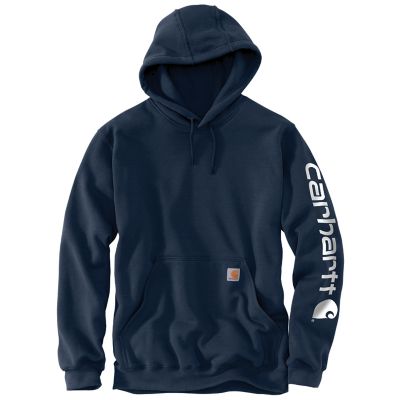
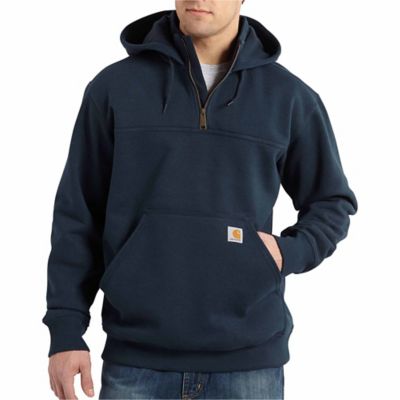
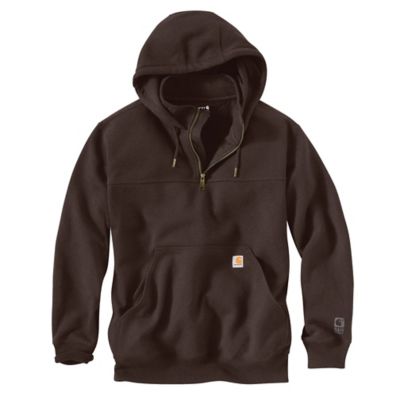
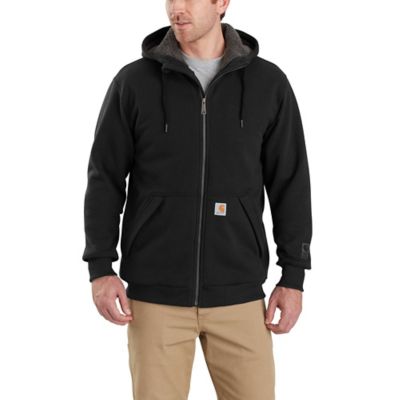
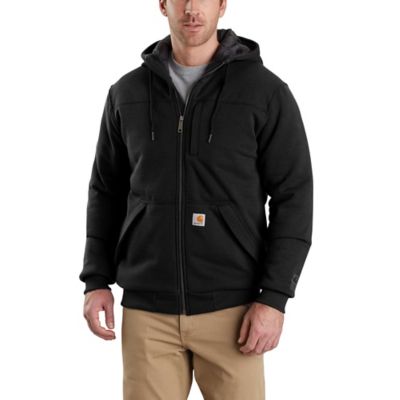
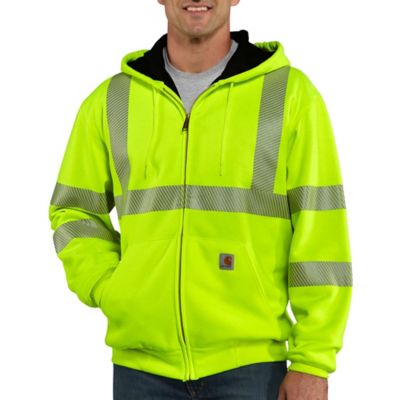
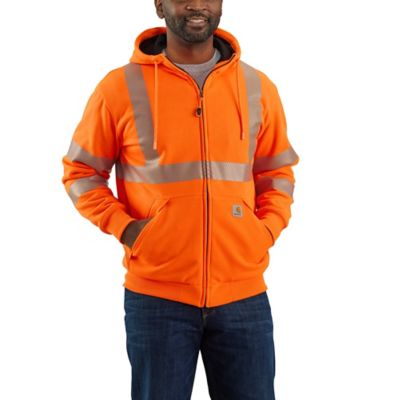
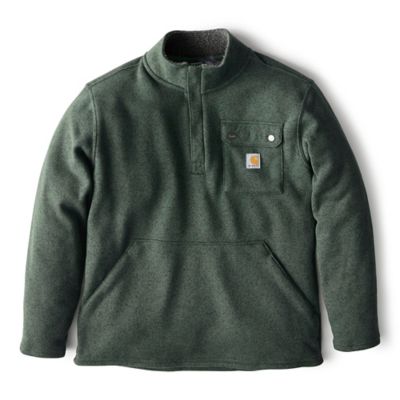
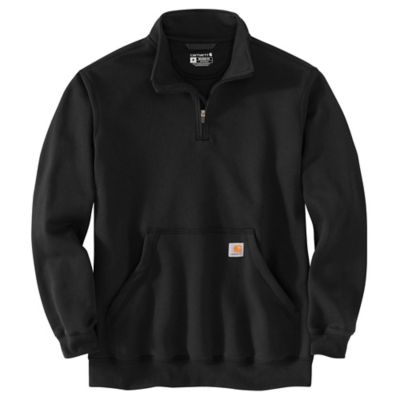
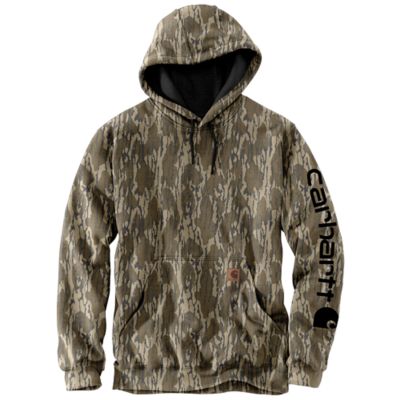
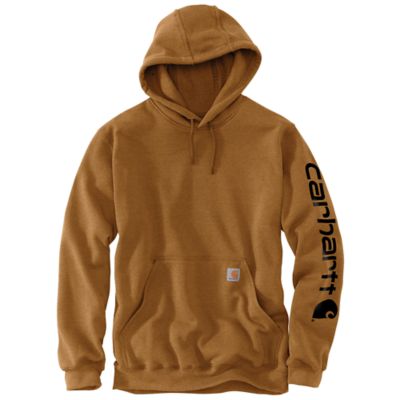
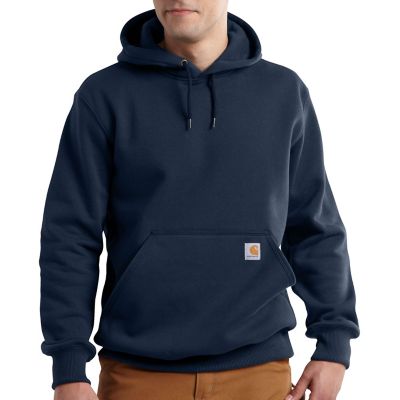
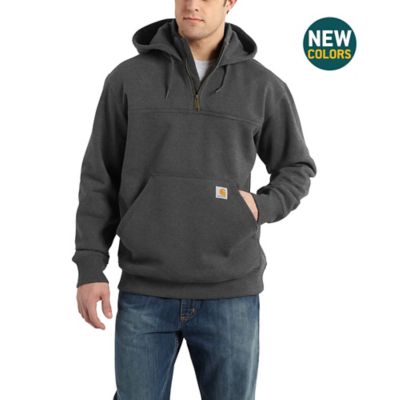
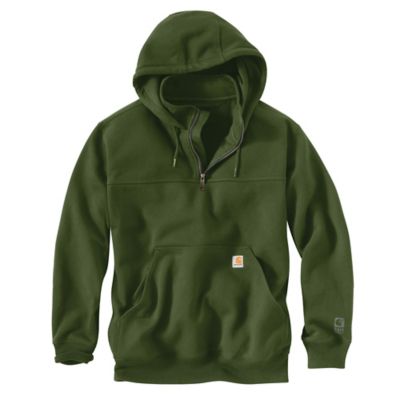
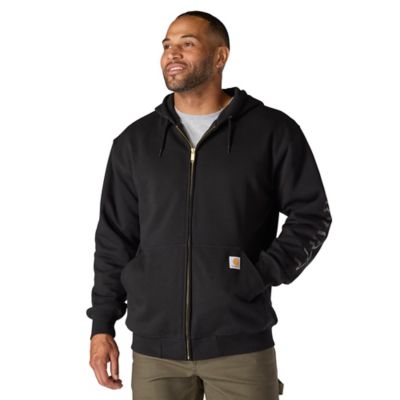
Men's sweatshirts bring an easygoing feel to work clothes, whether the day involves feeding livestock, hauling supplies or heading into town after chores. Common styles include pullover hoodies, full-zip sweatshirts, quarter-zips and crewnecks, each with a different feel through the neck and chest. A pullover hoodie keeps the front simple, often with a pouch pocket that gives hands and small essentials a place to land. A full-zip style opens completely, making it easier to pull on or take off without lifting it over a cap. Quarter-zips offer an adjustable neckline without a zipper running the full length of the body, while crewnecks leave out the hood and cords for a straightforward layer under a vest or jacket. Fabric weight matters just as much as the neckline. Lightweight knits generally feel less substantial, midweight fleece offers a balance of coverage and manageable weight, and heavyweight fabric gives a sweatshirt more heft. Those labels can vary by manufacturer, so fabric composition and garment details tell more of the story than weight descriptions alone. Cotton contributes softness and absorbency, while polyester in a blend can help a garment dry faster and hold its shape. The balance depends on the fiber percentages, knit construction and finish. A brushed fleece interior has a soft, fuzzy surface; a loopback interior has small loops against the skin and a different feel. Neither construction automatically makes a sweatshirt the right choice for every job. Someone carrying feed bags may want a substantial layer with room through the shoulders, while someone moving between a shop bench and a truck cab may prefer less fabric around the middle. For long stretches behind the wheel, a smooth back and a comfortable neckline can matter more than a large front pocket. The best match comes down to how the sweatshirt feels through a full day of reaching, sitting, bending and walking, not just how it looks on a hanger.
Fit affects how a men's work sweatshirt moves and how easily it layers over a shirt. A loose fit generally leaves more space through the chest and body, while a closer cut keeps extra fabric to a minimum. Fit names are not identical across manufacturers, and a familiar size does not guarantee the same shape in every sweatshirt. Garment measurements, the size chart and the intended cut provide a better starting point than automatically moving up or down a size. Shoulder seams should sit comfortably without pulling when arms reach forward, and sleeves should allow movement without swallowing the hands. Raising a feed scoop, lifting a saddle or reaching across a workbench makes sleeve length and body length noticeable in a hurry. Rib-knit cuffs can help sleeves stay near the wrists, and a ribbed hem can help the body stay in place, though the amount of stretch and recovery varies with construction. A longer body may offer more coverage when bending, but too much length can bunch beneath a jacket or interfere with a tool belt. Tall sizing, where specified, may change both sleeve and body measurements rather than simply adding width. Pockets deserve a practical look, too. A front pouch offers easy access from either side, while separate pockets on a zip-front sweatshirt leave the center opening clear. Open pockets are convenient, but they are not secure storage for something that cannot be lost while climbing or leaning over. Zipper operation, seam placement and the feel of the neckline can make a difference during repeated wear. Flat, comfortable seams are especially welcome beneath straps or outer layers. Around rotating equipment, loose sleeves, hood cords and hanging fabric can create snag hazards, so workplace clothing rules take priority. For other tasks, an easy fit that permits movement without constant tugging is often the most useful feature of all.
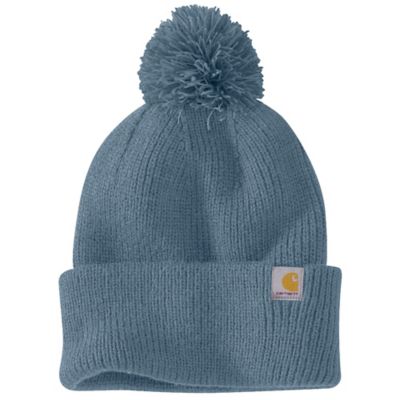
Long service from a sweatshirt depends on the fabric, construction, work it sees and care it receives. Firm stitching, neatly finished seams and ribbing that returns toward its original shape are worth noticing, particularly at cuffs, pocket openings and other spots that get repeated handling. Even substantial fleece can catch on a rough fence board or wear where it rubs against equipment, so matching the garment to the task matters. Sweatshirts are comfortable everyday layers, not substitutes for protective clothing required for welding, chemical handling or other specialized work. Care starts with the sewn-in label because cotton content, finishes, graphics and trim can call for different treatment. Washing with similar colors helps limit color transfer, and turning a printed sweatshirt inside out can reduce rubbing against the design. Following the listed wash temperature and drying directions helps manage shrinkage and changes in shape. High dryer heat can be hard on some fabrics and prints; a lower setting or air drying may be appropriate when the label permits it. Closing zippers before washing can also help reduce snagging against other garments. Loose threads, thinning cuffs and a pocket seam beginning to open are easier to address before another demanding workday puts more strain on them. Beyond chores, a simple sweatshirt fits naturally with jeans, work pants and a
Carhartt Hat for trips to the feed store, time at the fairgrounds or a laid-back afternoon at home. It can also make a practical gift for someone who reaches for workwear long after the job is finished. Their usual neckline, preferred fit and everyday routine are better clues than guessing from size alone. A man who dislikes hoods may get more wear from a crewneck, while someone who likes an adjustable front may favor a zipper. Familiar details often make the difference between a sweatshirt that stays folded in a drawer and one that earns a regular spot by the door.