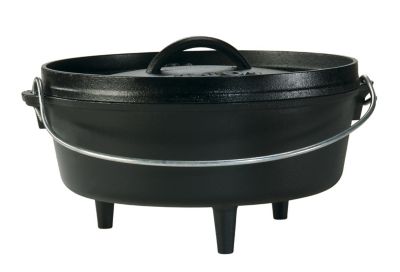
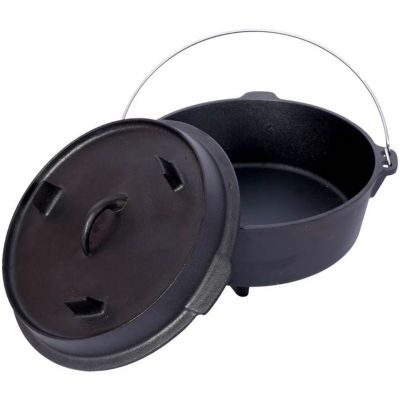
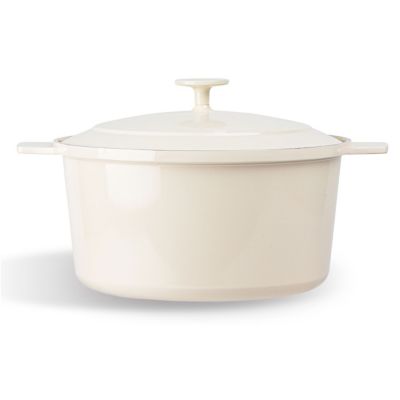
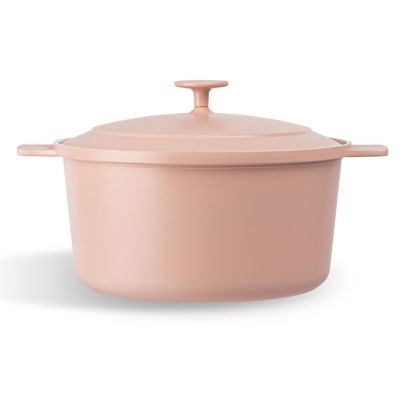
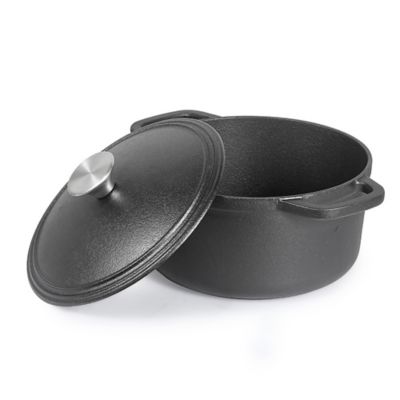
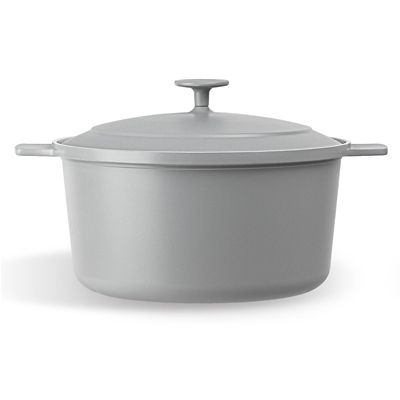
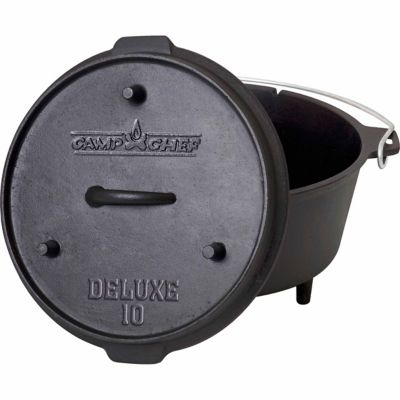
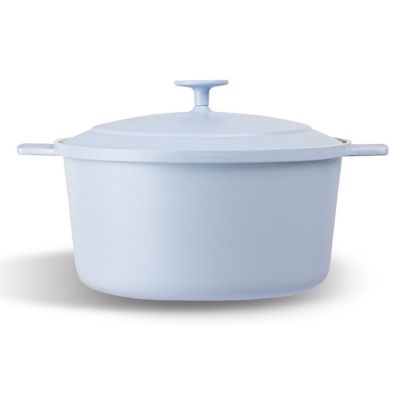
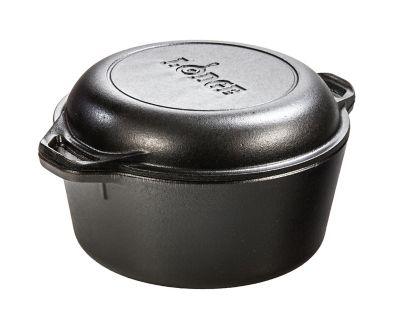
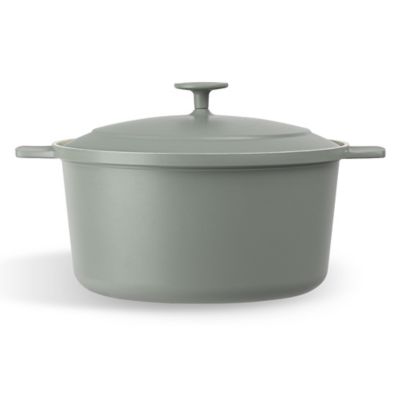
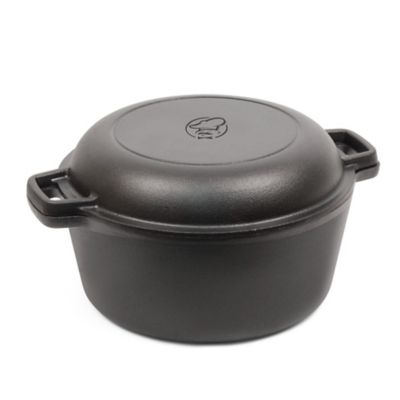
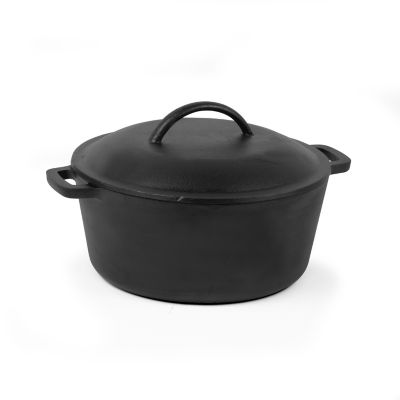
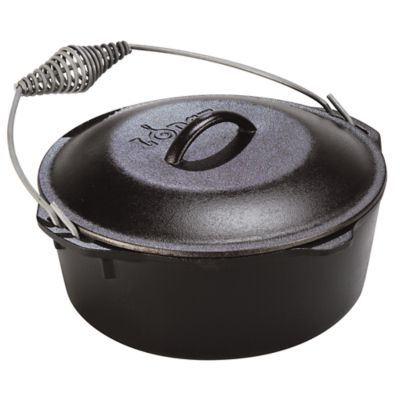
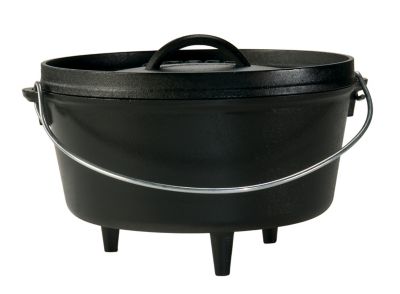
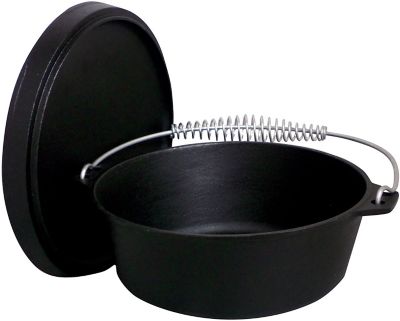
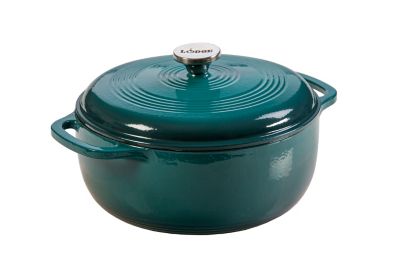
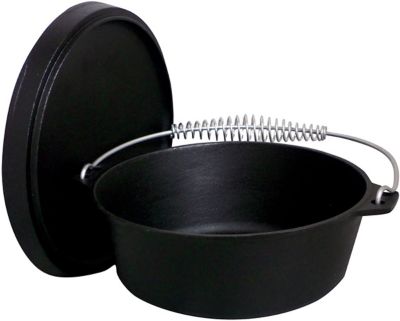
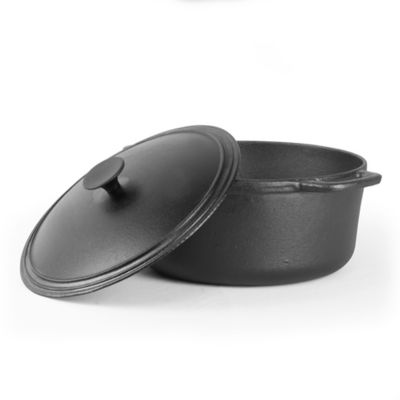
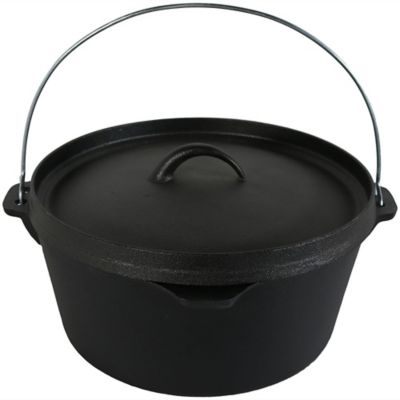
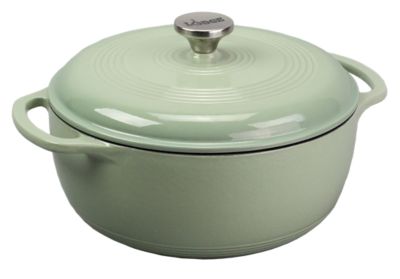
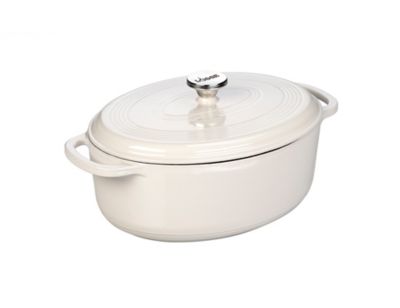
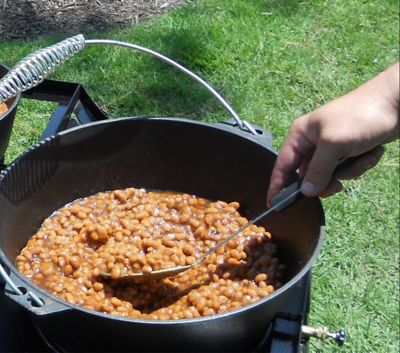
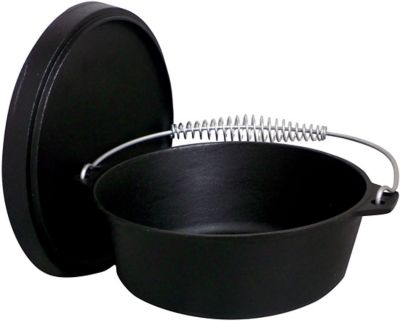
A campfire Dutch oven is a heavy cooking pot built for meals over coals, with a close-fitting lid that helps hold heat and moisture around the food. Traditional camp models have short legs underneath and a flat, rimmed lid on top. The legs leave space for embers beneath the pot, while the raised lid edge helps keep hot coals from sliding off. That arrangement supplies heat from above and below, making the pot useful for much more than a kettle of beans. Biscuits, cornbread, cobblers, braised meat, and a thick beef stew all have a place around the fire ring. Bare, seasoned cast iron is a common choice because its thick walls hold heat and help steady the cooking process once the pot heats through. It takes longer to warm than thinner cookware, but that stored heat suits slow simmering and baking. Seasoning is the baked-on layer of oil that protects the iron and helps food release; it is not an enamel coating. For direct campfire cooking, look for cookware specifically rated for that setting rather than assuming any kitchen Dutch oven belongs over a fire. Enameled cookware can have restrictions on direct flames, extreme heat, and sudden temperature changes. A camp oven’s shape matters, too: a broad base gives meat room to brown, while deeper walls leave space for roasts, broth, and vegetables. Glowing hardwood embers and charcoal briquettes both provide cooking heat, though briquettes make it easier to repeat a setup. A tall flame licking the sides is not the goal for every dish. Steady coal heat gives a cook more control, especially with baked foods that can scorch underneath before the center cooks through. For baking, more heat generally belongs on the lid than beneath the base, with the exact arrangement depending on the pot, recipe, and fuel. A rimmed lid and stable legs make that kind of cooking easier to manage.
Size is about both the meal and the way the oven will travel. A smaller campfire Dutch oven can make sense for a couple sharing a one-pot supper, while a wider pot gives a family more room for servings and side dishes. Ten-inch ovens often suit smaller meals, and twelve-inch ovens are a common starting point for family cooking, but diameter alone does not tell the whole story. Check the stated quart capacity and depth, since two pots with the same lid width can hold different amounts. A shallow oven puts top heat closer to biscuits or a pan of cornbread; a deep oven leaves more room for a roast, a larger batch of chili, or food that needs extra headspace. Filling a pot to the brim makes stirring and carrying harder, so leave room for bubbling liquid and a spoon to move without spilling supper into the ashes. For cooks with bread on the menu,
Dutch ovens for bread baking are worth comparing for interior width, depth, and room for dough to expand. Consider the carrying weight as carefully as the capacity. Cast iron gets heavy before the food goes in, and a full pot is a different load from an empty one lifted off a shelf. A sturdy bail handle, secure attachment points, and a lid handle with room for a lifting tool are practical details when the cooking area is low to the ground. Legs should sit steadily on a suitable fire-safe surface, and the pot needs enough clearance within the cooking space for safe handling. Camp models with legs may not sit properly on a household cooktop, so check cooking-surface compatibility if one pot needs to serve at home and at camp. For a gift, match the oven to the recipient’s usual crew and camping style: a truck-camping family has different carrying limits than someone hauling gear on foot.
Care is part of keeping cast iron ready for the next meal, whether the pot comes along for campground weekends, fishing trips, or supper cooked beside a backyard fire pit. A sound seasoning layer helps, but cast iron still needs cleaning and thorough drying after cooking. Warm water, a brush or scraper suited to the surface, and a little mild dish soap when needed can remove food without requiring a long soak. Leaving the pot submerged or putting it in a dishwasher invites rust and can damage the seasoning. Let hot iron cool enough for safe cleaning rather than pouring cold water into a scorching pot, since a sudden temperature change can crack the metal. After washing, dry the lid, base, legs, and handle connections completely; gentle heat can help drive off lingering moisture. A very thin coat of cooking oil protects the surface during storage, while a thick coat can leave it sticky. Store the oven somewhere dry, with enough ventilation to keep moisture from being trapped under the lid. Acidic meals such as tomato-heavy chili can be harder on a newer seasoning layer during long cooking sessions, and leftovers belong in a separate food-storage container rather than sitting in the iron overnight. Around the fire, long-handled lifting tools and gloves rated for handling hot cookware help keep hands away from hot metal and coals. Clear loose ash from the lid before opening it so it does not tumble into the meal. Every part of the oven, including the bail handle, can become hot, and a clear landing spot for the lid makes serving less of a scramble. For folks who enjoy taking their time over supper, these pots offer a satisfying mix of straightforward construction and broad cooking possibilities. The right capacity, manageable weight, and camp-ready design matter more than an oversized pot that is awkward to lift. With regular care and sensible handling, cast iron can stay part of the camp kitchen for many trips, gathering seasoning along with plenty of good meals.