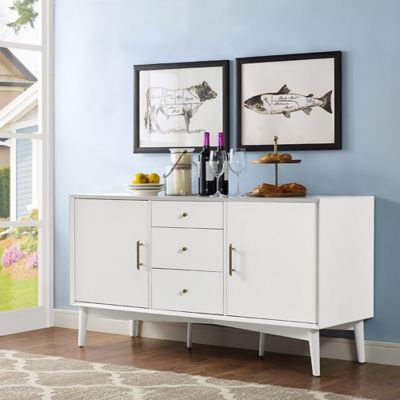
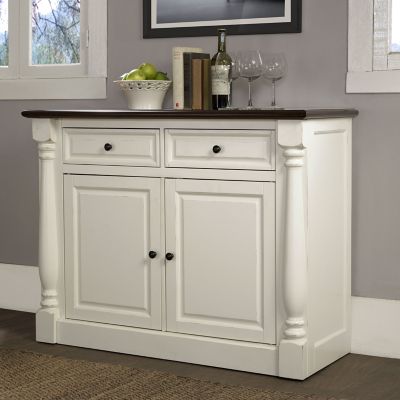
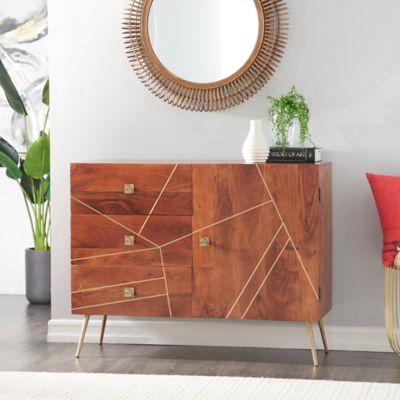
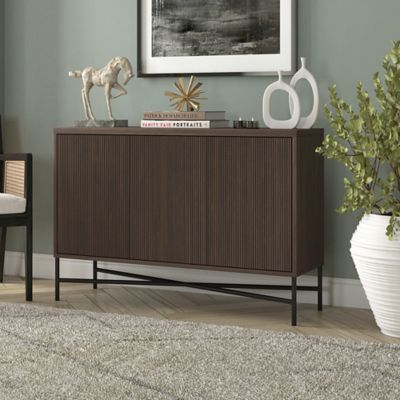
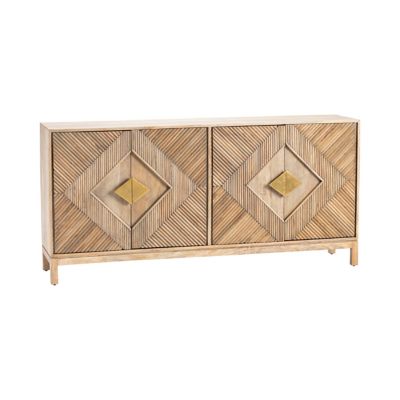
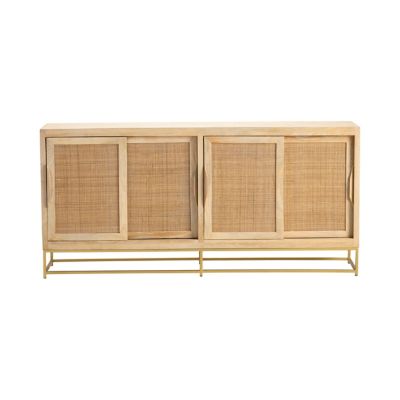
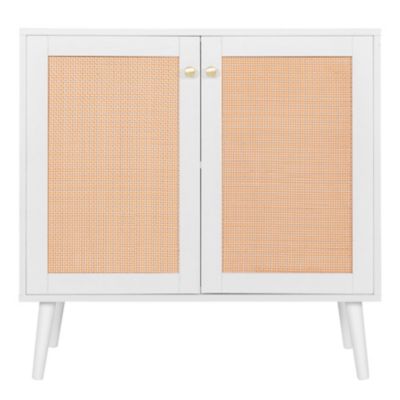
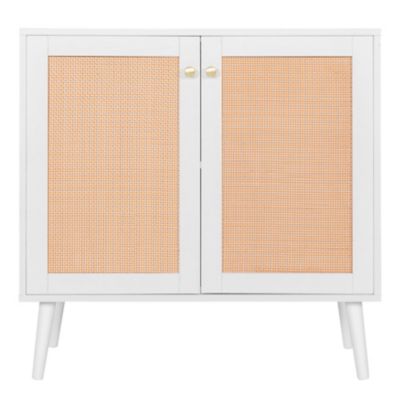
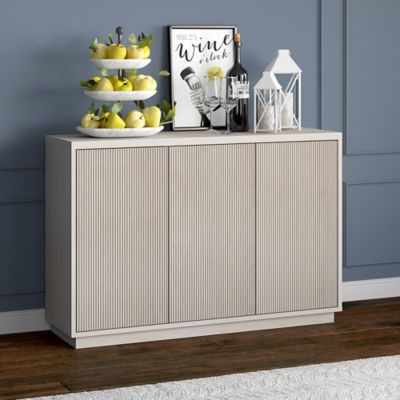
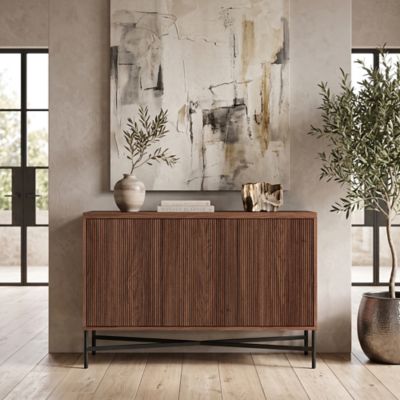
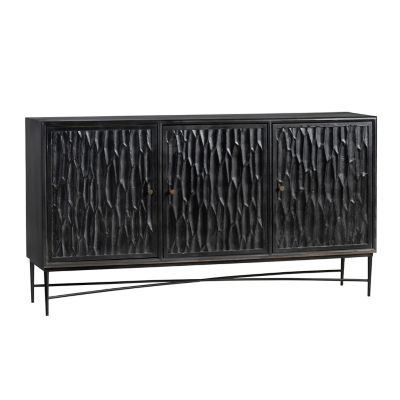
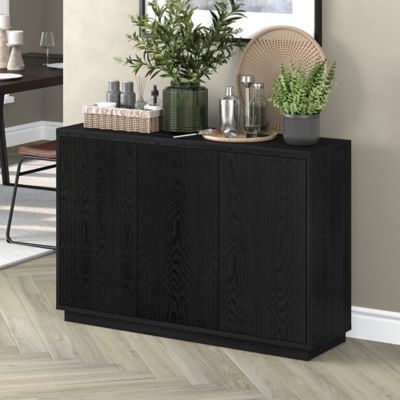
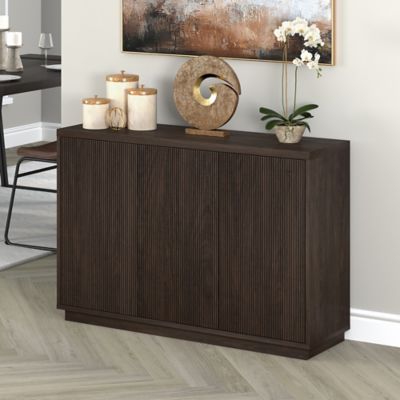
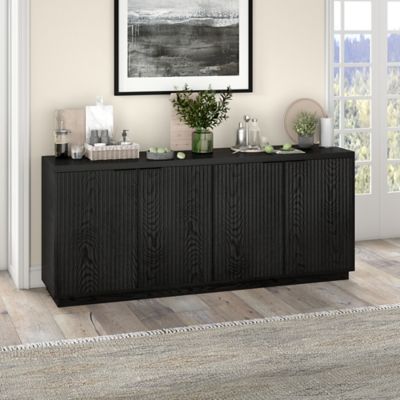
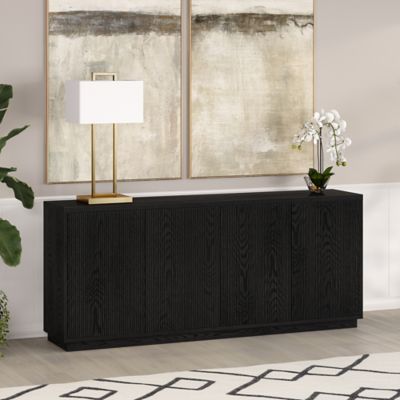
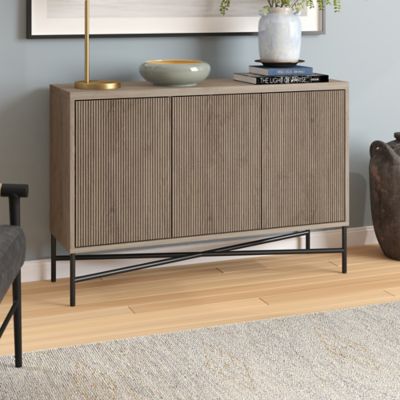
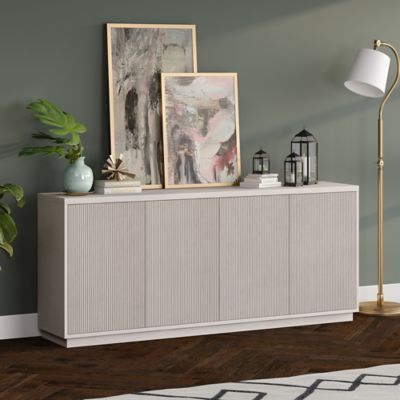
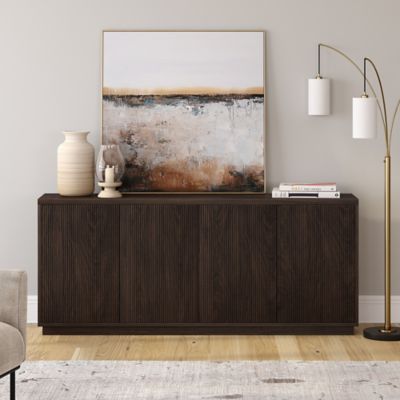
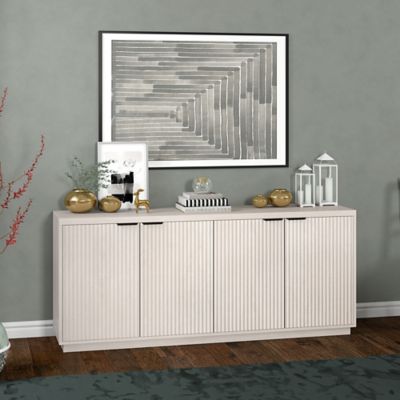
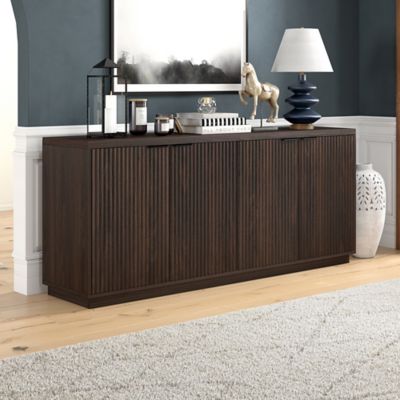
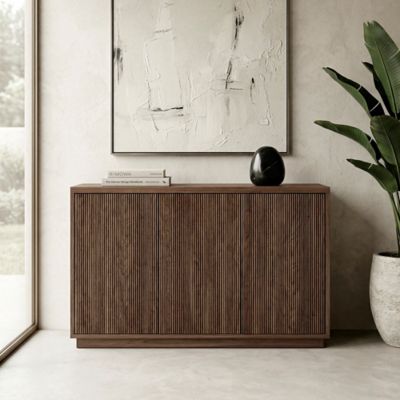
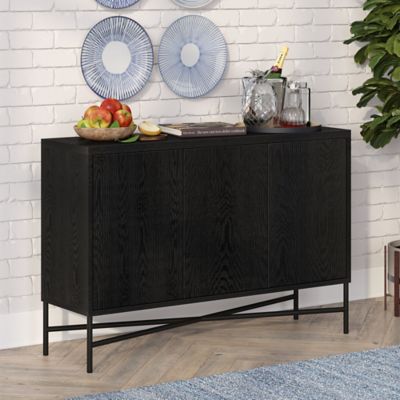
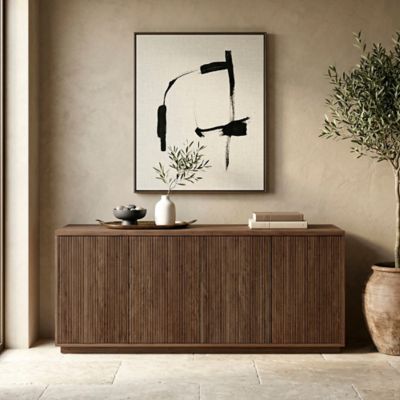
Buffet sideboards are long, low storage cabinets that keep dishes, flatware, serving pieces, and table linens close to the dining table while providing a flat surface for serving food and drinks. They give the things that make a meal run smoothly a home of their own, from everyday plates to the big platter that comes out when company stops by. The names buffet and sideboard often describe the same type of furniture, although individual designs vary in height, depth, storage layout, and style. Behind closed doors, shelves can hold stacks of dinnerware, mixing bowls, or pitchers without leaving everything out in the open. Drawers offer a separate spot for napkins, serving spoons, and placemats, while open compartments keep frequently reached-for pieces within easy reach. Adjustable shelves can make room for a tall stockpot or a stack of serving trays, and glass-front doors let favorite dishes show through while helping keep dust off them. A mix of drawers and cabinets works well for households that need space for both small utensils and larger pieces. The top adds a handy landing spot when the dining table is full, whether supper means a casserole and biscuits or several serving bowls passed around a crowded table. Style matters, too, since a sideboard takes up a fair stretch of wall. Paneled doors, visible wood grain, cross-braced details, and dark metal pulls can fit comfortably into a farmhouse dining room. Flat fronts and simple handles create a quieter look, while woven door panels or glass inserts add texture without making the room feel busy. A finish that picks up a tone from the table, flooring, or nearby shelving can help the room feel pulled together without requiring every piece to match. For a family that eats at the table daily, easy access may matter most; for a household that gathers a larger group, generous serving space and room for extra dishes can carry more weight.
Materials and construction influence a buffet sideboard’s weight, feel, upkeep, and ability to handle everyday household traffic. Solid wood brings natural grain variation and can develop small changes in appearance over time, while wood veneer places a thin layer of real wood over a supporting core. Engineered wood can provide broad, even panels and a consistent surface, with performance depending on the panel construction, finish, joinery, and care. Metal frames and legs add another look and may leave more open space beneath the cabinet. Glass doors make contents easier to see, though fingerprints tend to show more readily than on solid panels. Painted finishes offer a more uniform appearance, while stained finishes let more of the grain remain visible. A sideboard that holds heavy stoneware needs shelves rated for that load, not just enough room to fit the stack. Shelf supports, drawer construction, hinges, and the way the cabinet joins together all play a part in how the furniture handles regular opening, closing, and loading. Weight limits apply to the top as well as the interior, so a heavy appliance or a row of filled beverage dispensers calls for attention to the manufacturer’s specifications. Everyday care is usually straightforward when it follows the directions for the particular finish. A soft cloth lifts dust, and prompt cleanup helps keep a spilled drink from lingering around seams or door edges. Coasters, trays, and protective pads provide a barrier between the cabinet and damp glasses, rough pottery, or hot serving dishes. A hot casserole belongs on a heat-resistant trivet rather than directly on the surface, even when the top looks substantial. Strong cleaners, abrasive pads, and excess water can damage some finishes, so the care label is a better reference than a one-size-fits-all cleaning method. Felt pads beneath serving pieces can also help prevent scratches when dishes slide across the top during a busy meal.
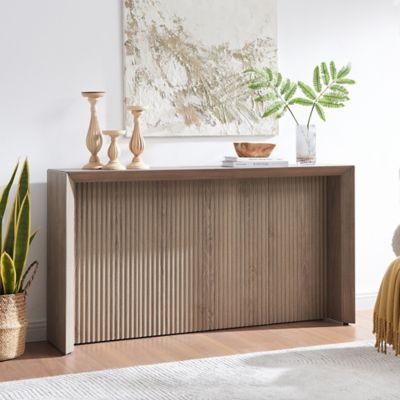
The right fit depends on more than the length of an empty wall. A buffet sideboard needs enough space for doors and drawers to open without bumping a chair, blocking a doorway, or crowding the path around the table. Depth deserves particular attention in a narrow dining room, where even a few inches can affect how comfortably people move behind seated guests. Height affects serving, too: a top that feels comfortable for setting down a platter makes a more practical serving station than one that requires an awkward reach. Nearby windows, light switches, outlets, floor vents, and baseboards can influence placement, especially when the cabinet has a closed back or sits close to the wall. Inside, usable shelf depth and the width of the door opening matter as much as exterior measurements; a wide serving platter still needs to pass through the opening. Assembly details are worth checking, including the finished dimensions, hardware requirements, and any wall-anchoring instructions. A level position helps doors line up and drawers travel properly, and manufacturer-recommended anchors are especially important in homes with children. Beyond the dining room, a sideboard can hold mugs and coffee supplies, organize board games in a family room, or keep household odds and ends behind closed doors. Any appliance needs the ventilation, clearance, and surface protection its instructions require. Furniture serving as a media cabinet also needs suitable weight support and a practical route for cords. Where the main need is a narrower surface for keys, a lamp, or a spot behind the sofa,
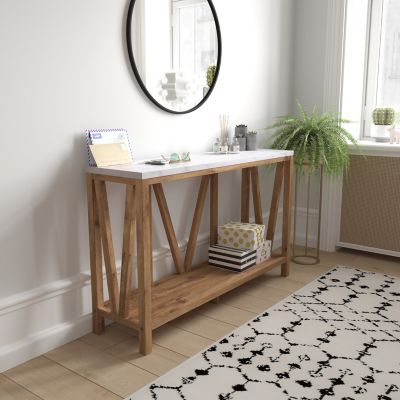
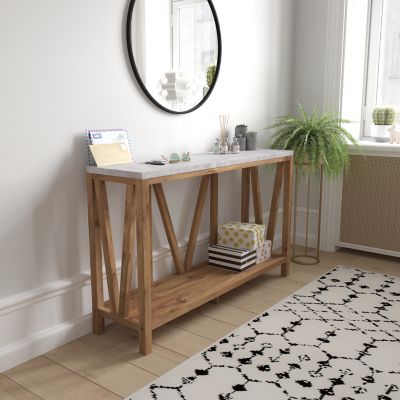
Console Tables offer another furniture category to consider. A buffet sideboard earns its place when its storage matches the household’s routines: plates near the table, serving pieces easy to reach, and a clear top ready to lend a hand when there is more food than table space.