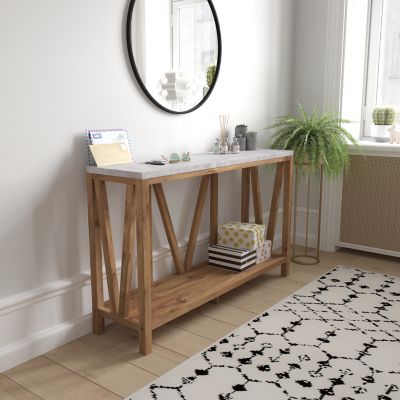
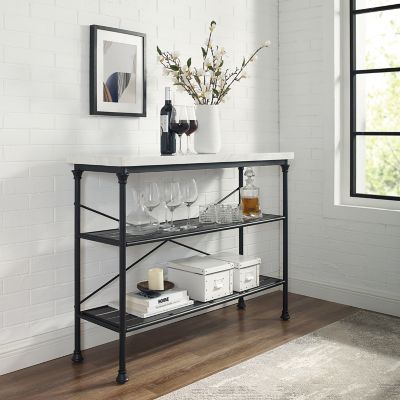
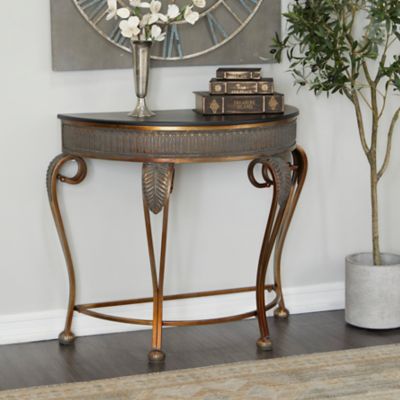
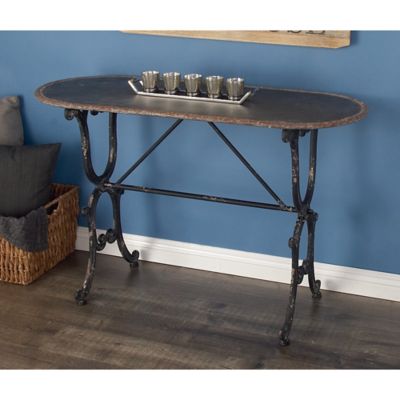
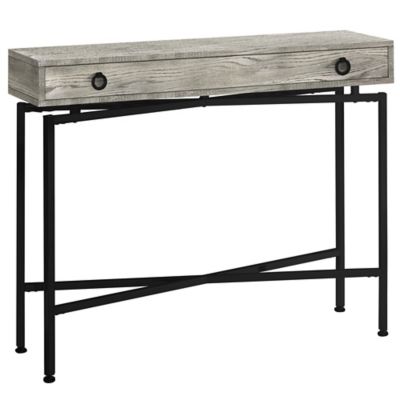
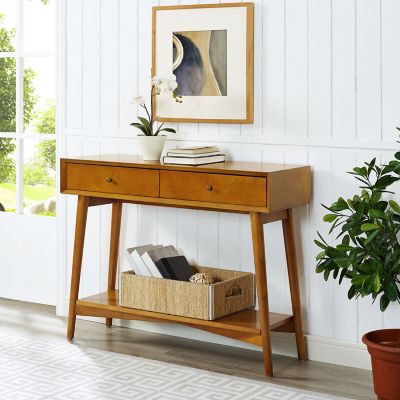
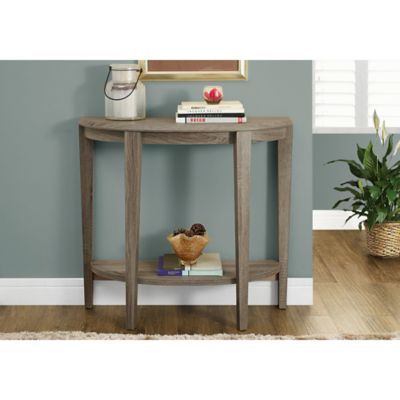
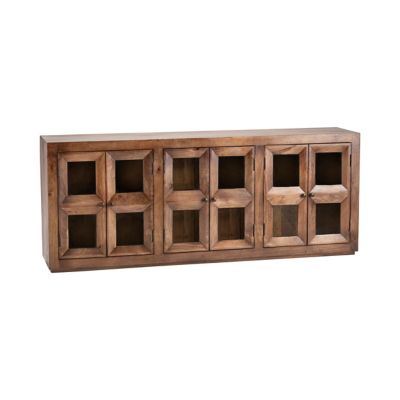
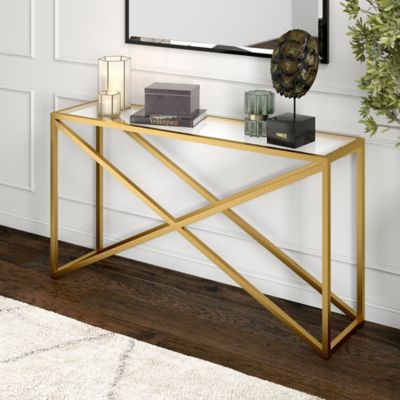
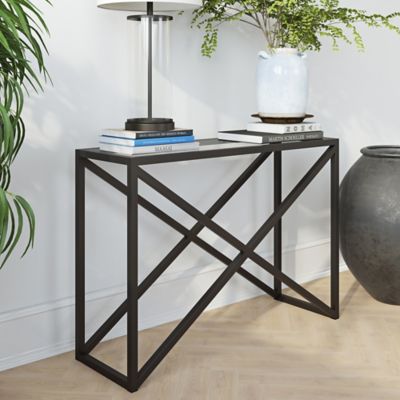
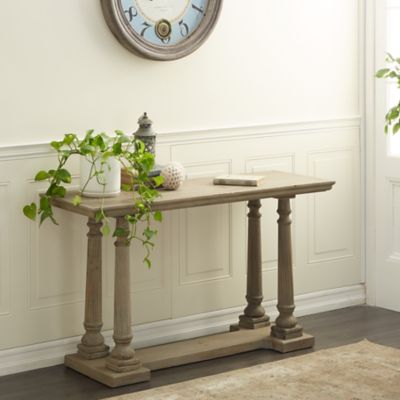
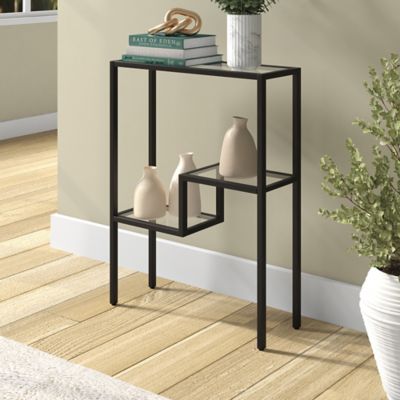
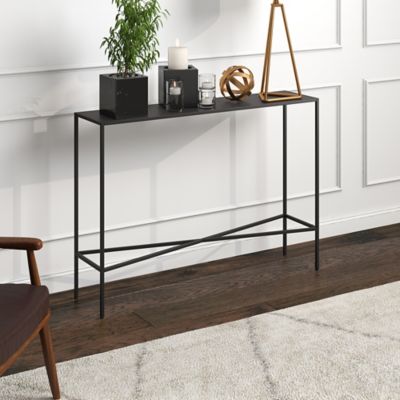
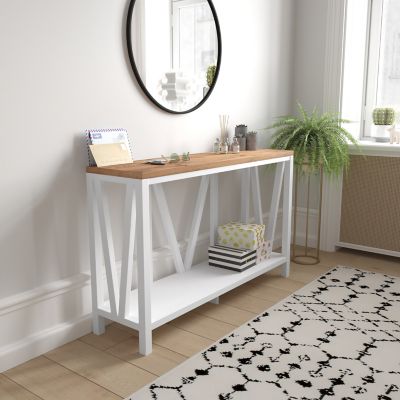
Console tables give the little stretches of space around a home a practical job without taking over the room. Their long, relatively shallow shape works along an entryway wall, behind a sofa, beside a dining area or in a hallway with room to spare. Near the front door, a console table can hold a tray for keys, a spot for the mail and a lamp that makes coming home feel welcoming. Behind a couch, it puts a reading light or a cup within reach without adding another end table beside the seating. In a dining room, the surface can hold serving pieces between meals, while drawers keep napkins and smaller household odds and ends out of sight. The best fit depends on more than the open stretch of wall. Table depth affects how comfortably people can pass, especially where someone might carry a laundry basket or bring groceries through the door. Length matters around nearby doorways, floor vents and light switches, and height changes how the table sits alongside a sofa back or beneath a mirror. A console behind seating generally looks more settled when its top does not tower over the back cushions. Along a wall, the right proportions leave some breathing room rather than filling every inch. Open bases keep the floor visible and can help a small room feel less crowded, while lower shelves offer another place for baskets, books or folded throws. Drawers are handy where little things tend to collect, though they need enough clearance to open without blocking a walkway. For a farmhouse entry, a compact apartment or a family room that does several jobs, console tables offer a useful middle ground between a bare wall and a full-size storage cabinet. Some layouts benefit from a simple surface and open legs; others call for enclosed storage that keeps everyday clutter tucked away. A little room around the base also makes sweeping easier, which matters in an entry where grit tends to gather.
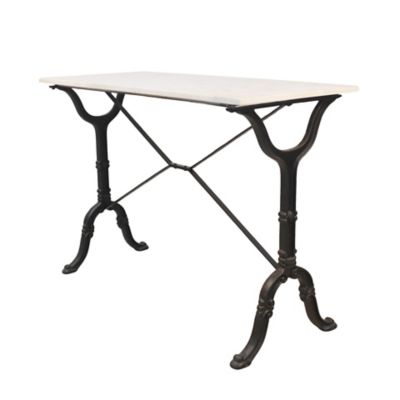
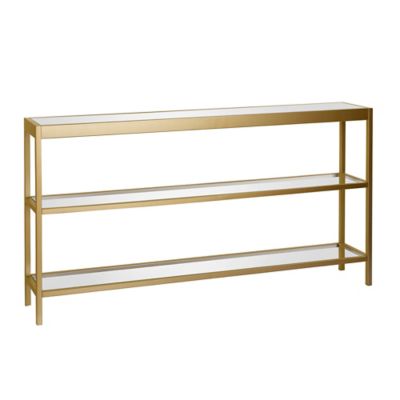
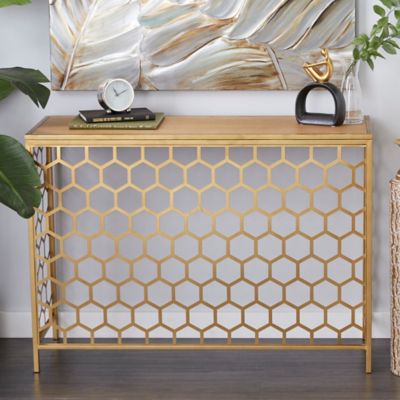
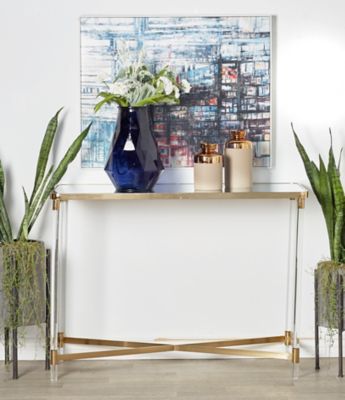
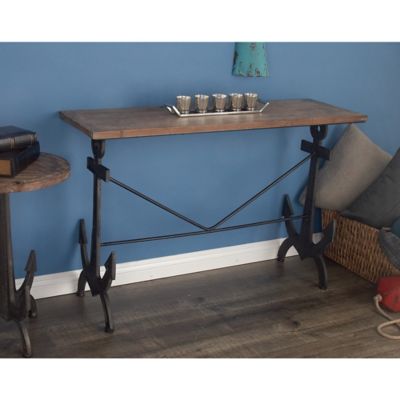
Materials and construction shape both the look of a console table and the attention it needs over time. Solid wood brings visible grain and natural variation, with finishes that can range from pale and understated to deep brown or painted. Knots, grain direction and small differences in color give wood surfaces character, especially beside plank floors, woven baskets and familiar furniture gathered over the years. Wood veneer offers a real wood surface over a supporting core, while engineered wood construction can provide a smooth base for painted or wood-look finishes. Care needs depend on the surface coating as well as the material underneath, so the maker’s directions matter more than a one-size-fits-all cleaning routine. Metal frames bring a different feel, with slender legs, cross braces or substantial square profiles that suit anything from a simple country room to a cleaner, more modern space. A wood top paired with a metal base can bridge those looks without making the room feel overly matched. Glass tops keep sightlines open, although fingerprints show readily and the edges deserve consideration in a busy household. Stone and stone-look tops can add visual weight, but their stain resistance and cleaning needs vary by material. Across all these styles, well-supported tops, secure joints and a steady stance matter when the table will hold lamps, books or serving pieces. A lower shelf is useful only within its stated weight limit, and a narrow table should never stand in for a bench or step stool. Everyday care is usually straightforward: lift objects rather than dragging them, catch spills promptly and keep hot dishes or damp plant pots off an unprotected surface. Coasters and trays help separate daily activity from the finish, but they should have backings that will not scratch or react with it. Soft cleaning cloths and cleaners approved for the material help preserve the surface without unnecessary scrubbing. On uneven floors, adjustable feet, where provided, can help the table sit level; floor protectors suited to the flooring help prevent marks when furniture shifts.
The way a console table works with the rest of the room often matters more than an exact furniture match. Repeating one detail, such as a warm wood tone, dark metal legs or a painted finish, can connect the table to nearby seating and storage while still leaving the room relaxed. In a living area,
Coffee Tables serve the seating group from the center, while a console table makes better use of the wall or the space behind the sofa. Those different jobs are worth keeping in mind when balancing surface space with open walking room. A home with a deep couch and several chairs may need only a slim console for lighting; a smaller room may benefit more from drawers that take the place of another storage piece. For a reading lamp, the tabletop needs enough depth to support the entire base, with a cord route that stays clear of feet and moving furniture. For framed photos or pottery, a few well-spaced pieces leave room for the surface to handle everyday tasks instead of becoming crowded. A basket underneath can give dog leashes or reusable shopping bags a home, provided it does not interfere with feet or drawer access. Households with children or pets have another practical consideration: narrow furniture can tip when climbed on, pulled or bumped. Follow the manufacturer’s anchoring instructions, use hardware suited to the wall and keep tempting objects away from edges. Heavy objects belong only where the table’s construction and weight rating allow them, not wherever they happen to fit. Console tables can also make thoughtful housewarming or wedding gifts when the recipients’ measurements and preferences are known, particularly for a first home that needs a landing place by the door. The most useful choice suits the people living there: enough storage for their daily routine, a surface they can comfortably care for and proportions that leave the house easy to move through. That is what turns a narrow piece of furniture into a hardworking part of home.