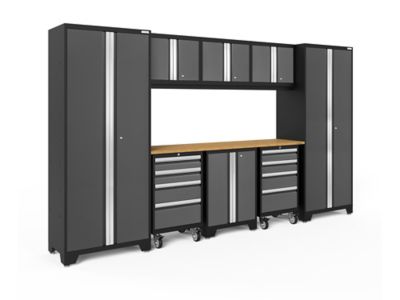
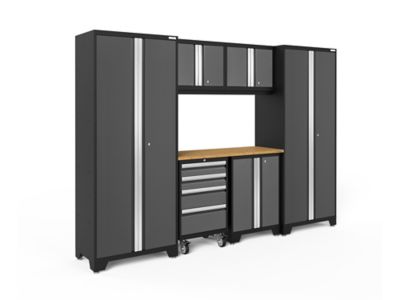
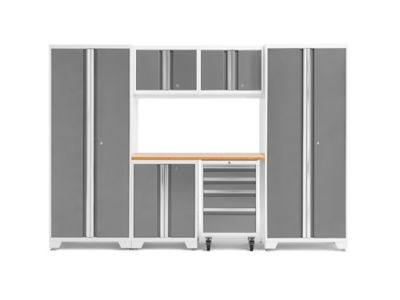
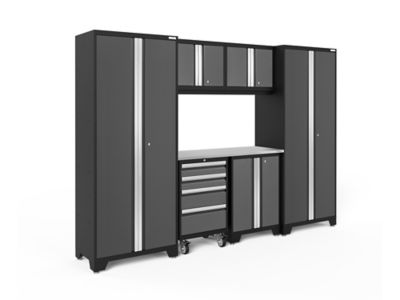
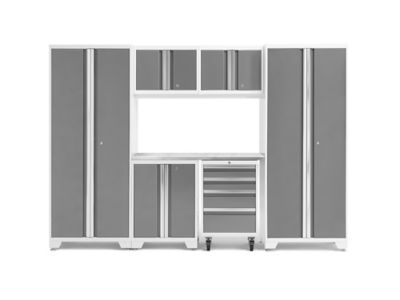
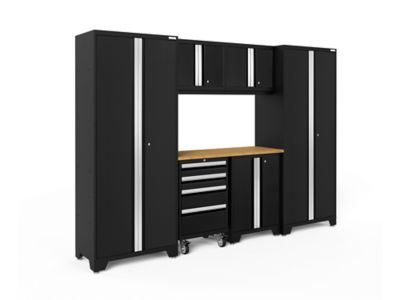
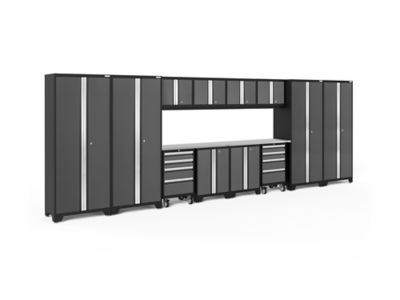
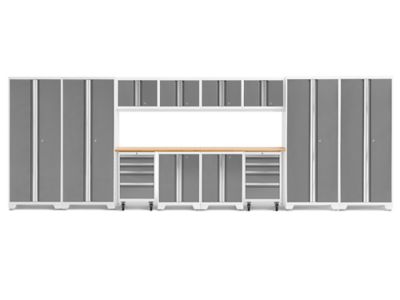
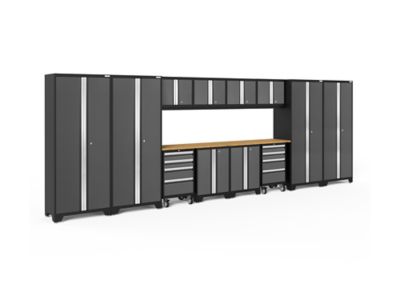
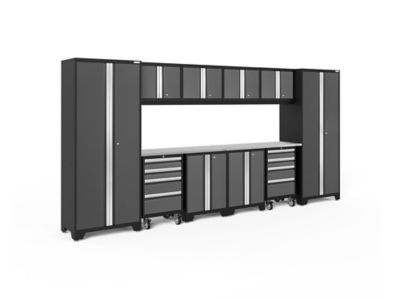
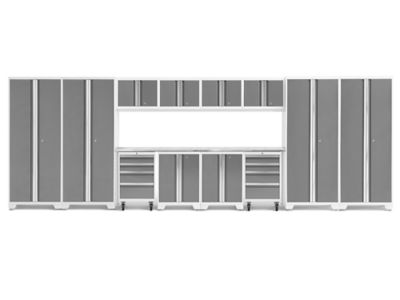
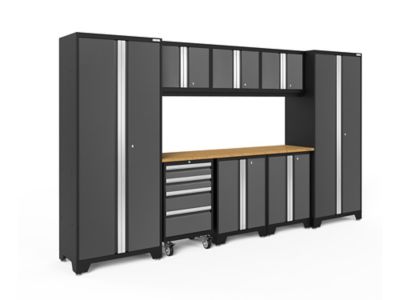
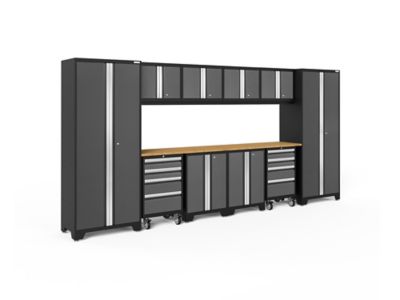
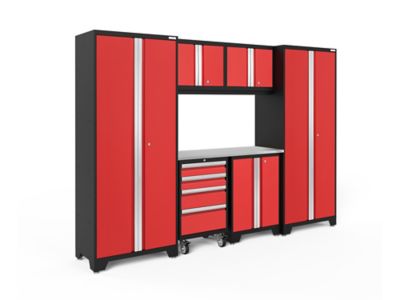
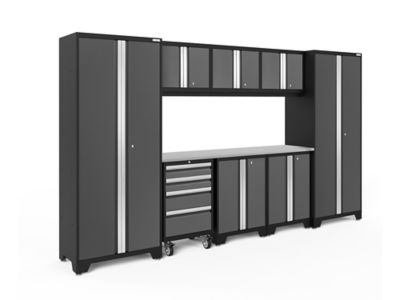
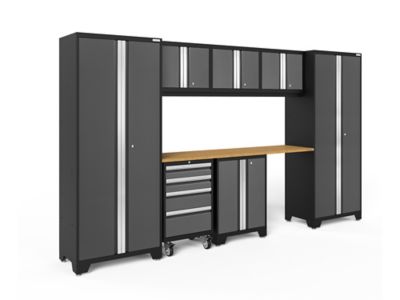
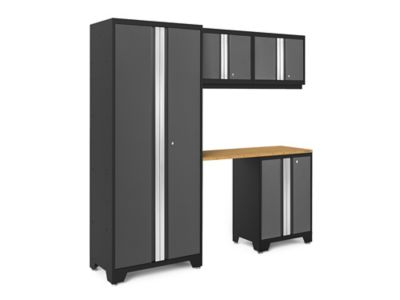
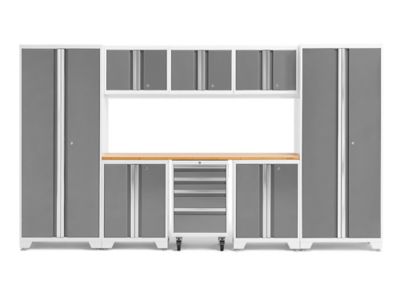
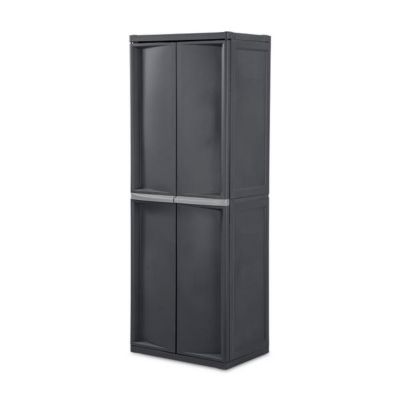
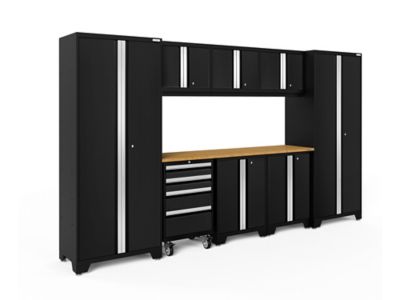
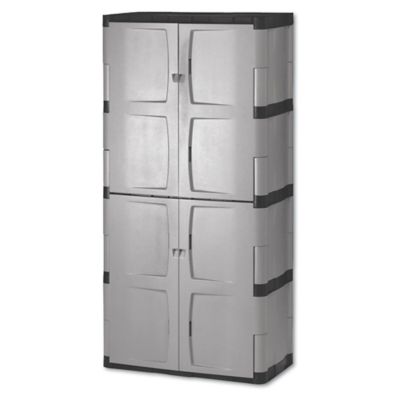
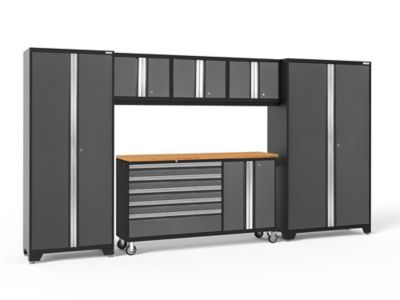
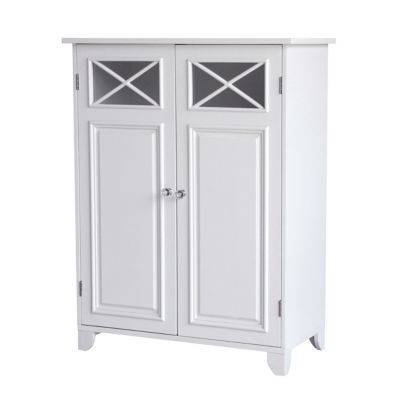
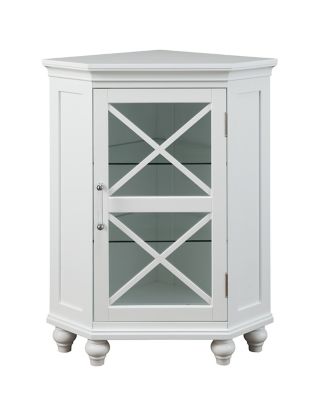
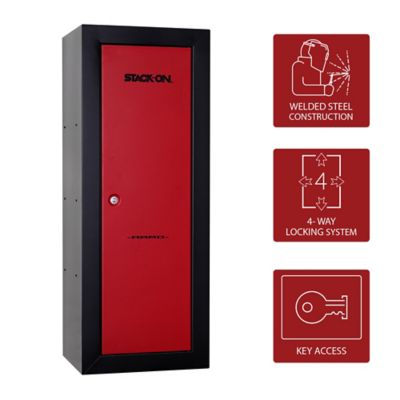
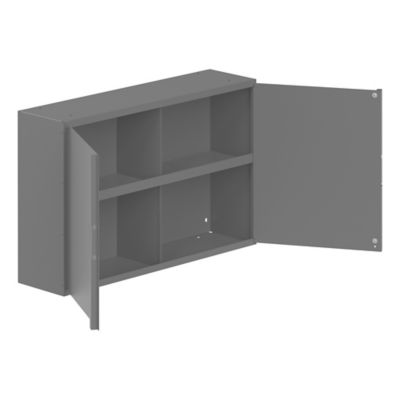
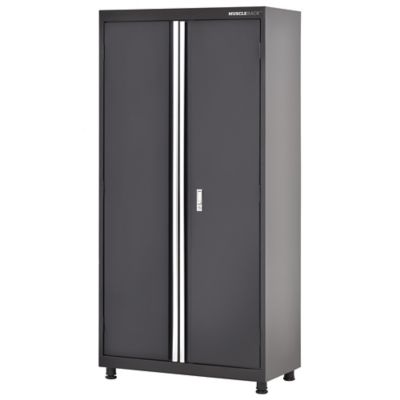
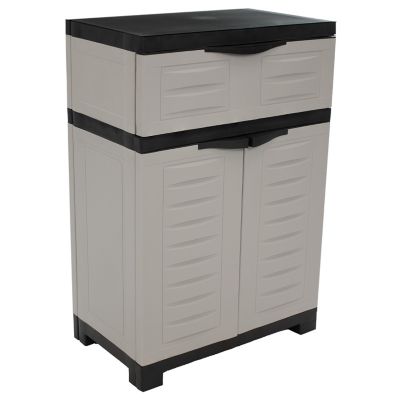
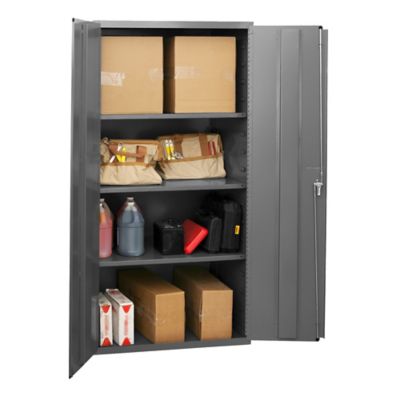
Storage cabinets give tools, supplies, and everyday gear a place behind closed doors, helping garages, workshops, utility rooms, and farm offices stay ready for the next job. Unlike open shelving, a cabinet keeps its contents out of sight and helps limit dust settling directly on stored belongings, though ordinary cabinet doors do not create an airtight seal. The right layout depends on what needs a home: tall compartments leave room for long-handled equipment, smaller shelf spaces keep loose supplies together, and drawers put frequently reached-for gear close at hand. Freestanding storage cabinets provide enclosed storage without requiring an entire wall of built-in cabinetry. Wall-mounted cabinets leave floor space open beneath them, while shorter floor cabinets can fit beside a workbench or beneath an existing counter when their dimensions allow. A cabinet top should serve as a work surface only when it is designed and rated for that purpose. Width, depth, and height all matter, but the space around the cabinet matters just as much. A deep cabinet may hold plenty yet crowd the path between a parked truck and a bench. Hinged doors need enough clearance to swing open, and drawers need room to extend without blocking a doorway. Sliding doors reduce the space needed in front, although they generally provide access to only part of the interior at a time. Inside dimensions can be smaller than the outside measurements suggest because of hinges, door frames, and shelf supports. That difference matters when a storage tote needs to slide in flat or a taller container needs to stand upright. Adjustable shelves make it easier to arrange space around changing needs, while fixed shelves offer a straightforward layout for supplies that stay about the same size. For a busy shop or a hardworking laundry room, a good fit means more than filling an empty corner; it means being able to reach what is needed without moving half the room.
Cabinet materials influence how a unit handles its surroundings, how much it weighs, and what kind of upkeep it needs. Steel storage cabinets are common in garages and work areas because their rigid construction suits tools, hardware, and shop supplies. A painted or powder-coated finish helps protect the metal surface, but chips and deep scratches deserve attention according to the maker’s care directions, especially where bare metal is exposed. Metal thickness, shelf reinforcement, hinge construction, and the way the cabinet body is joined all affect how it handles a load; the material name alone does not tell the whole story. Resin and other plastic cabinets offer wipe-clean surfaces and do not rust, making them practical for some utility spaces. Their shelf capacities and placement requirements still vary, and indoor construction should not be assumed suitable for an outdoor location. Wood and engineered-wood cabinets bring another option for enclosed household storage, offices, and lighter-duty work areas. Finished panels can be easy to wipe down, while exposed edges and prolonged moisture contact may lead to swelling or surface damage, depending on the construction. Leveling feet can help a cabinet sit properly on an uneven floor when included, but they do not replace required anchoring. Raised bases can also provide clearance for cleaning beneath the cabinet. Shelf load ratings deserve a close look, particularly when storing dense hardware or heavy tools. A stated shelf capacity may depend on an evenly distributed load rather than one heavy object concentrated in the middle. Total cabinet capacity can differ from the sum of individual shelf ratings, so both figures matter. Placing heavier belongings low in the cabinet helps lower its center of gravity and reduces the need to lift weight down from overhead. Wall-mounted cabinets also depend on suitable wall construction, correctly placed fasteners, and installation that follows the manufacturer’s directions. A cabinet’s useful working strength comes from the whole setup, not just its doors and shelves.
The details inside and around storage cabinets often make the biggest difference in daily use. In a farm workshop, separate spaces for measuring tools, spare parts, and work gloves can keep a quick repair from turning into a long search. Near a laundry area, shelves arranged around bottles, folded towels, and cleaning equipment help keep the room workable without piling everything on top of the machines. In a garage shared by several people, clearly labeled bins inside the cabinet make it easier to put belongings back where they belong. Shallow shelves keep small containers visible, while deeper shelves work better when their contents can be pulled forward without reaching behind a row of loose pieces. Drawers can keep small hardware from disappearing at the back of a shelf, and door-mounted storage may add room for lighter supplies when the cabinet is designed to support it. Locks can help control access, but a standard locking cabinet is not automatically suitable for firearms, pesticides, or flammable liquids. Those materials require storage that meets their specific safety requirements, label directions, and applicable rules. Tall freestanding cabinets may require anti-tip anchoring, and heavy contents should stay within the stated limits even after the cabinet is secured. Mobile cabinets add flexibility around a work area, provided their casters, brakes, and load ratings suit the job; moving a loaded unit calls for the precautions in its instructions. Everyday care is usually straightforward: wipe up spills promptly, keep shelf surfaces clear of grit, and check hinges, handles, and fasteners for looseness. Doors that close properly and shelves seated fully on their supports help keep the cabinet working as intended. Explore
Shop Cabinets for a broader look at cabinet styles for work and household spaces. Whether the goal is a tidier tack-room office, a clear garage aisle, or a workshop where the next repair can start without a search, well-planned enclosed storage helps make room for the work at hand.