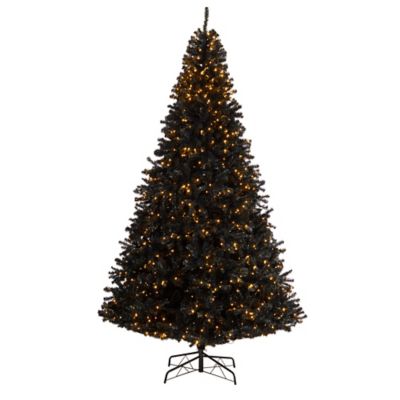
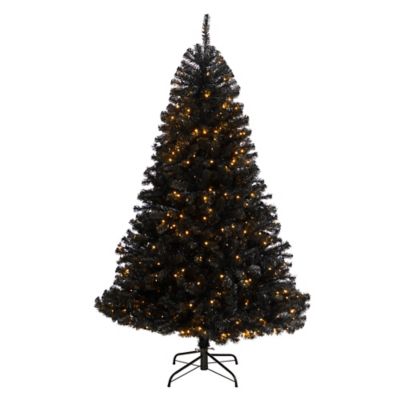
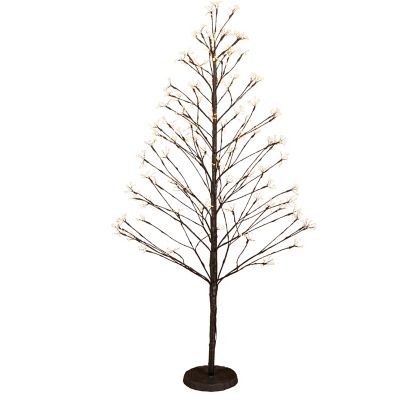
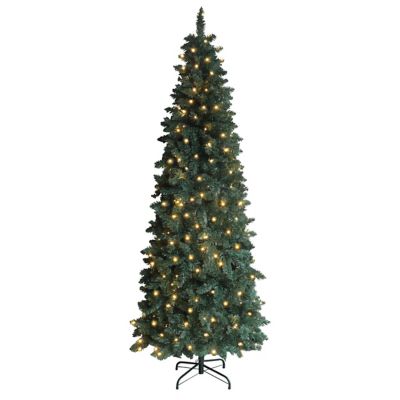
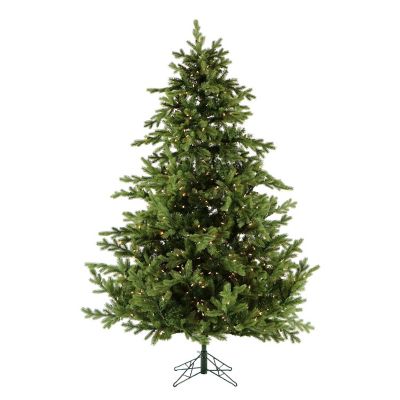
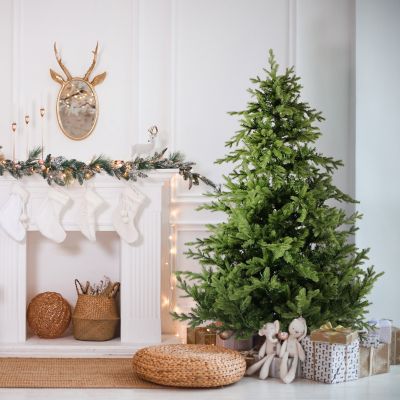
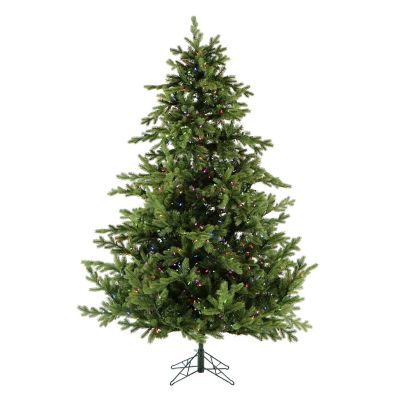
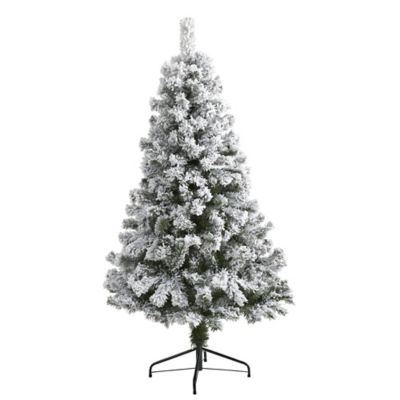
Black Christmas trees are artificial holiday trees with dark foliage that offers a bold, modern alternative to traditional green branches. Their deep color gives lights and ornaments a strong backdrop, whether the finished look leans toward a simple farmhouse Christmas, a dressy holiday gathering, or a playful display with plenty of color. Black branches can blend into a dim corner when unlit, then take on a different character once the lights come on. White snowflakes, red ribbon, silver bells, and wood ornaments all stand out against the dark needles, so even a lightly trimmed tree can have plenty of presence. The shape matters just as much as the color. A full tree brings a broad, familiar Christmas silhouette to a living room, while a slim or pencil profile leaves more walking room beside a sofa, in a dining area, or near an entryway. Tabletop sizes suit smaller spaces, including apartments, offices, and guest rooms where a floor-standing tree would be a tight squeeze. For fit, the listed height needs to leave room for a topper and some clearance below the ceiling, while the widest branch spread helps show how much floor space the tree will occupy. That spread deserves extra attention in a busy household where folks carry laundry baskets, firewood, or holiday packages through the room. Artificial foliage may feature PVC needles, molded polyethylene branch tips, or a combination of materials. PVC often creates a familiar flat-needle look, while molded tips can add more defined branch shapes. With black foliage, the silhouette and fullness tend to draw more attention than a lifelike green color would. Branch density affects how much of the center pole shows, how easily light travels through the tree, and how much room there is between ornaments. A more open shape gives large hanging pieces room to swing, while closely spaced tips create a fuller backdrop for small ornaments and ribbon tucked among the branches.
Lighting has a big say in the character of a black Christmas tree. Warm white lights give dark foliage a soft glow that works nicely with wood furniture, woven baskets, and red or cream accents. Cool white lights create a sharper contrast with silver, clear glass, and snowy white ornaments. Multicolor lights bring a cheerful, familiar feel, especially in a family room where the tree holds a mix of school keepsakes, favorite characters, and ornaments collected over the years. For a setup with lighting already built in,
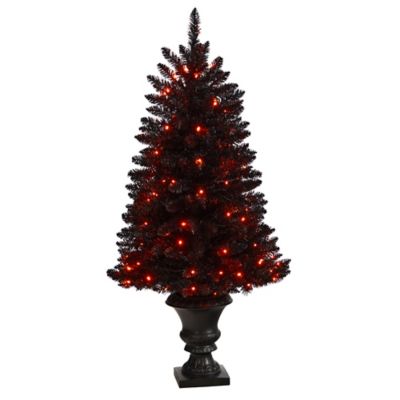
Black Christmas Trees With Lights combine dark branches with illumination arranged throughout the tree. An unlit tree leaves the choice of light color, strand spacing, and lighting pattern open, which can suit households that change their Christmas look from year to year. Details such as light type, power connections, controls, and whether individual bulbs can be replaced depend on the tree’s design. Those details are worth checking alongside the overall size, particularly when the nearest outlet sits behind furniture or across the room. Black branches can make a light strand’s wire more noticeable, so wire color and careful placement affect the finished appearance. Ornaments bring another layer of contrast. Large white balls read clearly from across the room, metallic finishes catch small points of light, and natural wood pieces soften the dark outline without disappearing into it. Plaid ribbon and simple red accents can make the look feel right at home in a country living room rather than overly formal. For households that celebrate both Halloween and Christmas, a black tree can also carry orange lights and spooky ornaments before taking on its Christmas trimmings. Its dark color works for both occasions without requiring the same arrangement each time. Around pets and young children, lighter, shatter-resistant ornaments on lower branches can make more sense than heavy glass pieces. Delicate keepsakes generally belong farther up the tree, securely fastened and clear of the main walking path.
Construction and care help determine how well a black artificial Christmas tree holds its shape through repeated holiday setups. Hinged branches fold down from the center pole, while other designs have separate branches that attach during assembly; the assembly method affects both setup time and how the sections pack away. A stand sized for the tree, firm pole connections, and evenly opened branches all contribute to a steady display. Heavier ornaments need support closer to the main branch rather than hanging from a thin outer tip, and a large topper may need a firmer upper branch than a lightweight bow. Artificial branches often need gentle shaping after unpacking so compressed tips spread out and cover gaps. On dark foliage, those gaps can be especially noticeable against a pale wall or bright window. A little space between the tree and nearby furniture also helps keep outer branches from getting bent whenever someone sits down or passes by. Placement should follow the tree’s indoor or outdoor rating; a sheltered porch is still exposed to moisture and changing conditions, so an indoor tree does not belong there unless its labeling permits it. Indoors, a spot away from fireplaces, woodstoves, heaters, and exits keeps the display clear of heat and household traffic. Care is usually straightforward, with the manufacturer’s directions setting the limits for cleaning and handling. A soft, dry cloth or gentle duster can lift dust from branches, and lights should be disconnected before cleaning or taking the tree apart. Storage that keeps sections dry, covered, and protected from crushing helps preserve the branch shape and finish between celebrations. Black Christmas trees can suit a first apartment, a family gathering space, or a second holiday display in a dining room. As a gift, a tree makes the most sense when the recipient’s available space, preferred lighting, and storage room are already known. With the right proportions and a look that fits the household, dark foliage offers a fresh backdrop for familiar Christmas traditions.