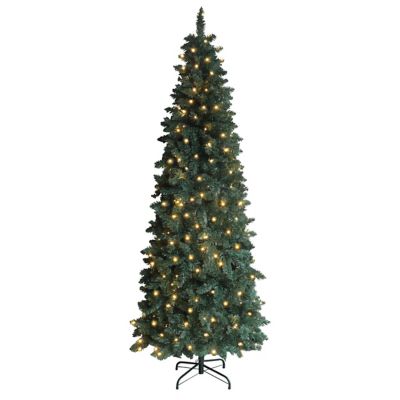
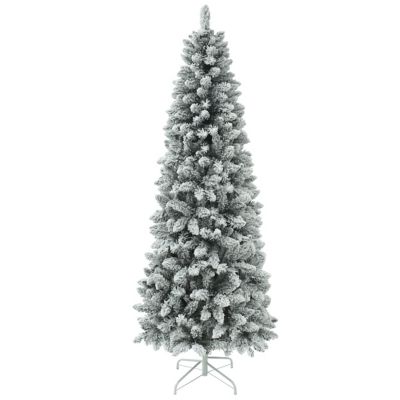
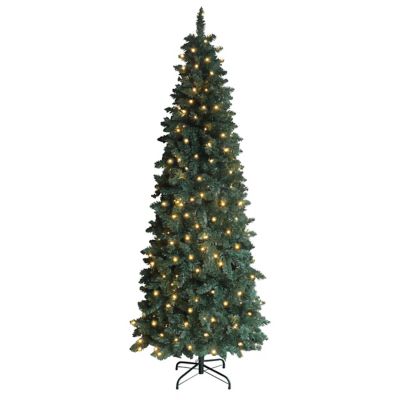
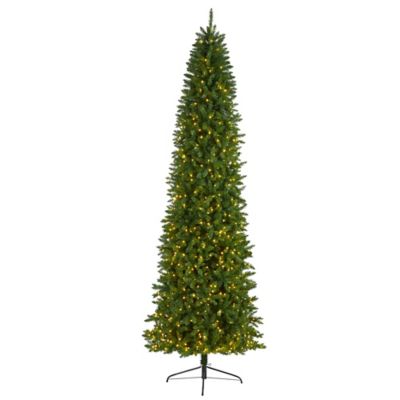
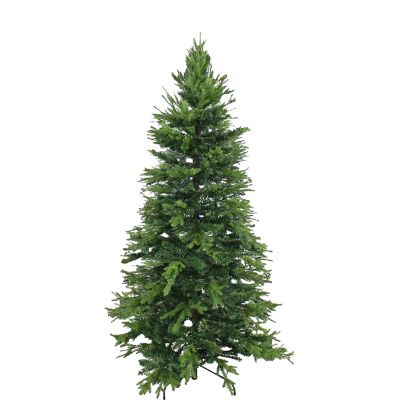
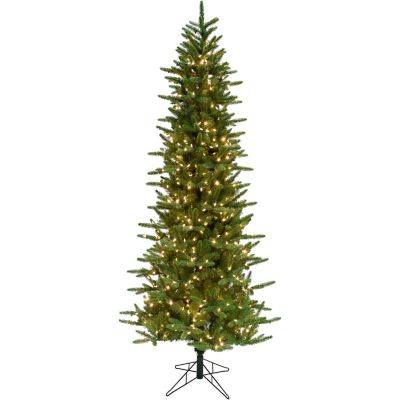
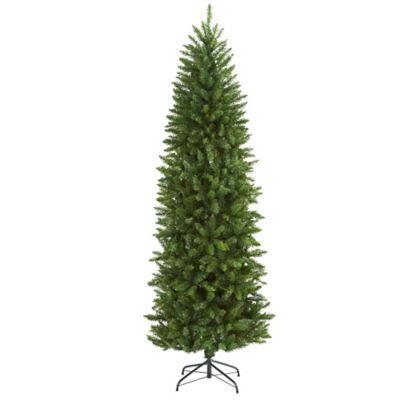
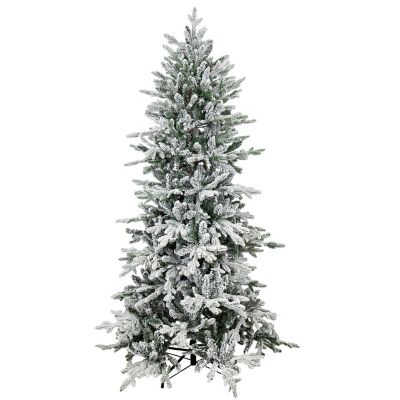
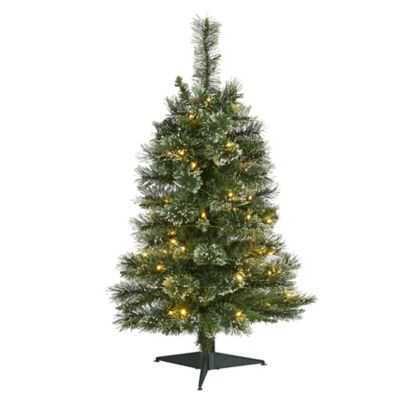
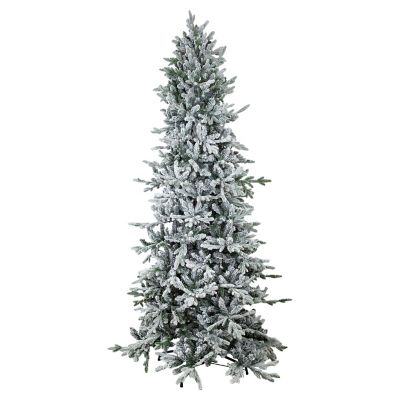
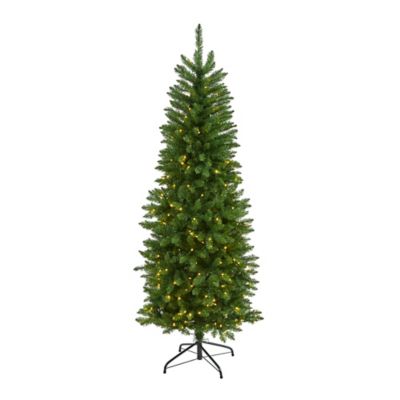
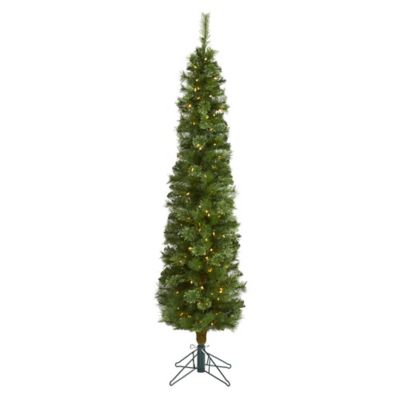
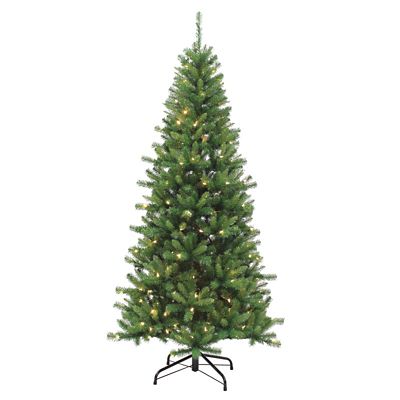
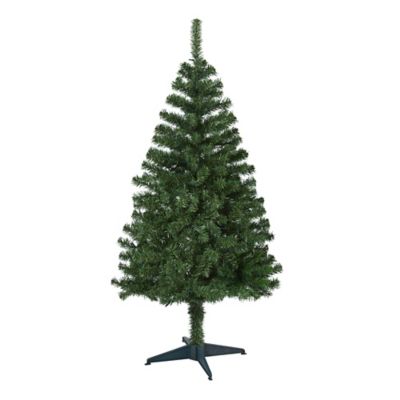
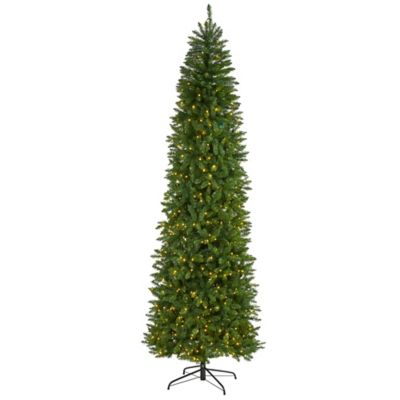
Slim Christmas trees bring the familiar shape of a holiday tree to rooms where a broad base would crowd the furniture. Often called skinny Christmas trees, these narrow-profile trees keep their branches closer to the trunk, leaving more floor space for everyday life. Many measure roughly 18 to 36 inches across, although width varies with the tree’s height and design. Pencil Christmas trees generally have an especially narrow outline, while other slim styles carry a little more fullness through the lower branches. That difference matters beside a farmhouse sideboard, in a small living room, or near a dining nook where chairs still need room to pull out. A tall, narrow tree can give a room a strong Christmas focal point without taking over the spot where everyone gathers after supper. Shorter versions suit rooms with lower ceilings or smaller spaces that call for a modest display. The listed height and widest branch span are useful starting points, but the stand’s footprint, nearby furniture, and the space needed for a topper all count toward the final fit. A tree that fits beneath the ceiling may still leave too little room for a star, and a narrow branch outline does not always mean an equally narrow stand. Once the branches are spread and ornaments are hanging, the display needs breathing room around it. Slim trees work well in corners, but they can also stand beside a window or at the end of a long room, provided doors, walkways, and exits stay clear. Their upright shape offers a festive backdrop for family gatherings without demanding that the whole room be rearranged. For apartment dwellers, folks settling into a first home, or anyone keeping a smaller household, that balance of height and floor space is often the main appeal. They also make sense as a second tree in a bedroom or sitting room, letting a smaller display carry its own colors and keepsake ornaments apart from the main family tree.
Artificial slim Christmas trees vary in branch material, needle shape, color, and fullness, and those details do much of the work in creating the finished look. Molded polyethylene tips can give individual needles a more dimensional shape, while PVC foliage often supplies fullness closer to the center. Some designs combine both materials, so the outer tips carry the more lifelike detail and the inner branches help soften the view of the trunk. A natural-looking outline is a main draw of
Realistic Slim Christmas Trees, especially in rooms where the tree will be seen up close from a favorite chair or the supper table. Green shades, brown branch accents, and irregular tip lengths can all affect how closely an artificial tree resembles an evergreen. Flocked finishes bring a snowy appearance, though some loose flocking may fall during setup and handling. Branch density matters for more than appearance: closely spaced tips help fill the narrow silhouette, while more open spacing gives hanging ornaments room to show. Small glass balls, wooden shapes, ribbon, and family keepsakes can suit a slim tree without hiding its outline. Heavier ornaments need branch support, since a full-looking tip is not necessarily a stiff one. A metal center pole and a well-fitted stand provide the tree’s underlying support, while hinged or individually attached branches affect assembly and how the tree packs away. Pre-lit slim Christmas trees have lights arranged along the branches, reducing the need to wind separate strands through a tight shape. Unlit trees leave the lighting color, spacing, and strand arrangement up to the household. Warm white lights give a softer glow, while multicolor lights bring a livelier look. Bulb type, connection style, cord length, and any lighting controls are worth comparing, along with the manufacturer’s directions for replacing bulbs or handling a section that does not light.
The everyday setting helps determine which slim tree will be easiest to live with through Christmas gatherings and quiet evenings alike. In a busy home, a stable base and a spot away from foot traffic matter as much as the tree’s height. A narrow tree still needs protection from a wagging tail, a curious cat, or a child reaching for a low-hanging ornament. Breakable keepsakes sit better beyond easy reach, and cords should stay out of walking paths and away from pets that chew. Most artificial trees belong indoors unless their labeling specifically allows outdoor placement; a covered porch can still expose lights, branch materials, and metal parts to moisture. Fireplaces, woodstoves, heaters, and candles also need plenty of separation from the display, following the clearance directions for both the tree and the heat source. Setup is usually easier when there is room to assemble the sections and spread each layer before adding ornaments. Taking time with the inner branches helps cover gaps around the pole, which can be especially noticeable on a slender tree viewed from several sides. After the holidays, gentle handling helps preserve the branch shape and lighting connections for another Christmas. Ornaments and separate light strands come off before the tree is taken apart, and electrical connections should be unplugged rather than pulled apart by the wires. For routine care, a soft, dry cloth or gentle dusting may be suitable, depending on the manufacturer’s instructions; flocked branches and built-in lights may need different handling. A tree should be dry before storage, with branch sections folded without forcing hinges or crushing tips. A protective bag or properly sized box helps keep dust off the foliage in a dry storage space. For someone furnishing a first apartment or downsizing to a smaller home, a slim Christmas tree can also be a thoughtful gift when the room measurements and lighting preferences are already known. Its appeal is straightforward: a familiar Christmas centerpiece with enough space left around it for people, pets, and the daily comings and goings of home.