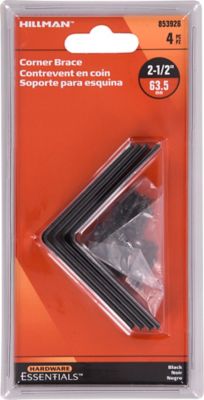
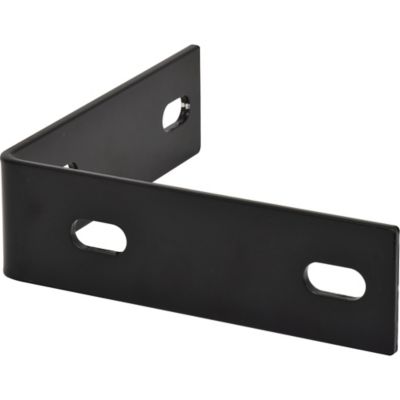
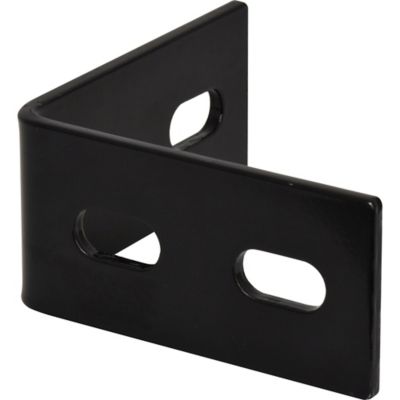
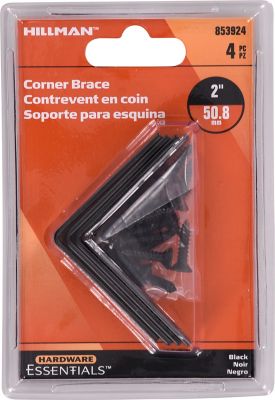
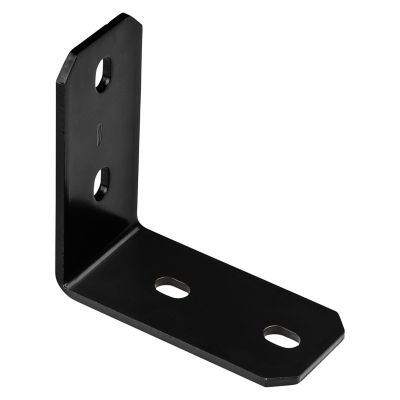
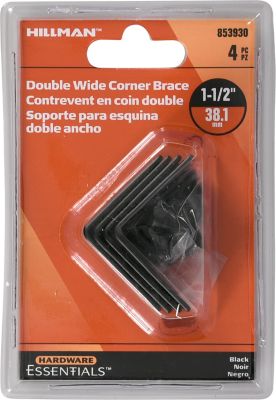
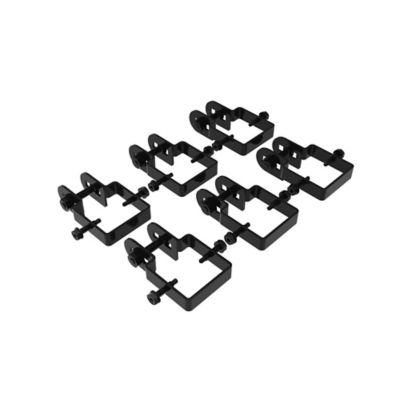
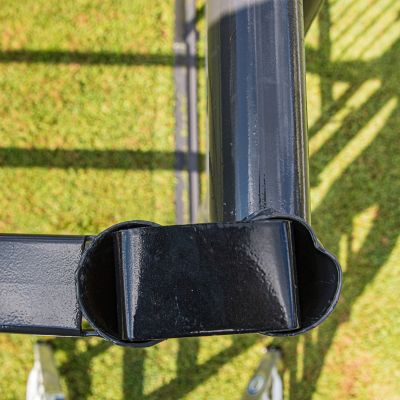
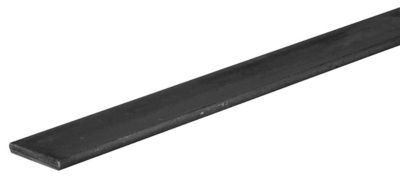
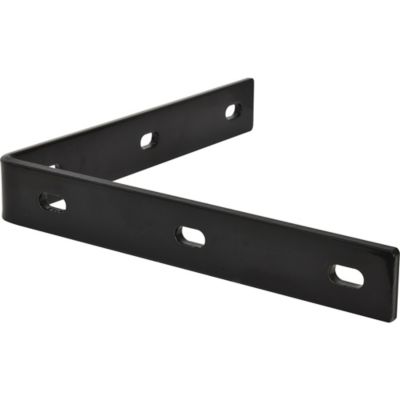
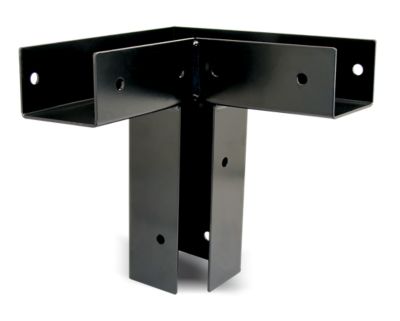
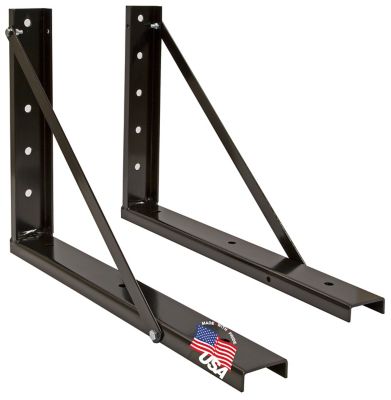
Black braces are support hardware that helps reinforce joints, steady framed assemblies, and limit unwanted movement where parts meet. In farm, home, and workshop settings, the term often refers to metal corner braces, flat joining braces, angled supports, and diagonal members with a black finish. Their purpose depends on their shape: an angle brace connects surfaces that meet at a corner, a flat brace joins pieces along the same plane, and a diagonal brace helps keep a rectangular frame from leaning out of square. That makes this hardware relevant to projects ranging from a small storage frame to a gate or workbench assembly, provided the brace is rated and sized for the job. A dark finish also gives exposed connections a simple, consistent look alongside black hinges, latches, handles, and other hardware. Against natural wood, the contrast makes the connection stand out; against a dark frame, it can blend into the assembly. For someone keeping a barn organized or fixing up a shop, appearance matters, but the connection itself comes first. A brace needs enough reach to secure both adjoining pieces, with mounting holes positioned where the fasteners can get a sound grip. A short corner support and a long diagonal member may share the same color without serving the same purpose. Likewise, hardware intended for light furniture reinforcement should not be treated as a substitute for a structural connector. Black describes the finish, not a load rating, metal thickness, or level of corrosion protection. Understanding those differences helps separate a good visual match from a good working match. The right choice fits the dimensions, materials, and movement of the assembly rather than simply covering a loose joint. On a frequently opened gate or a bench that sees steady activity, those details matter long after the last fastener goes in.
Materials and construction shape how black braces perform over time. Steel is a common choice for reinforcement hardware because it provides stiffness in a relatively compact profile, though thickness, bends, welds, and overall geometry all affect performance. A broad mounting plate spreads the connection across a larger area, while a formed angle or gusset can help resist bending in a particular direction. None of those features establishes capacity on its own; the manufacturer's specifications and the complete fastening arrangement still govern the application. For a closer look at braces grouped by their underlying material,
Steel Braces provides a related category to consider alongside finish and shape. Black surfaces may be painted, powder coated, or treated through another finishing process, and those finishes are not interchangeable. A coating can help protect the metal underneath, but a black appearance alone does not establish suitability for outdoor exposure, damp locations, or contact with treated lumber. Those settings call for hardware and fasteners specifically approved for the materials and exposure involved. Fit includes more than overall length, too. Leg dimensions, plate width, hole diameter, hole spacing, and the angle between mounting faces all affect whether a brace sits flush and fastens properly. A raised bolt head can interfere with a moving gate, while an overly long screw can break through the opposite face of a narrow board. On shelving or furniture, mounting clearance matters wherever drawers, doors, or stored equipment pass close to the connection. Fastener head style also needs to match the hole design so the hardware seats as intended. The strongest-looking brace cannot make up for split wood, stripped threads, or a weak mounting surface. Sound material beneath the connection, compatible fasteners, and an appropriate installation work together as a system. For load-bearing construction or overhead installations, rated connectors and the applicable building requirements take priority over color coordination.
Black braces suit the practical details that landowners, maintenance crews, woodworkers, and folks tackling repairs notice every day: a frame that rocks when a tool is set down, a joint that loosens with repeated movement, or an exposed connection that needs to match the rest of the hardware. Each situation puts different demands on the support. A stationary storage assembly may need reinforcement against side-to-side sway, while a gate requires attention to its weight, hinge arrangement, and bracing direction. A diagonal compression member and a tension cable do not work the same way, even when both are described as gate bracing. Hardware intended to reinforce a joint also cannot correct every cause of sagging; loose hinges, a leaning post, or damaged framing may need attention elsewhere in the assembly. That is why intended use is such an important part of choosing reinforcement hardware. Good long-term performance also depends on routine care. Dust and grit can collect around mounting points, and chips in a finish can expose the base metal. Cleaning methods should follow the finish manufacturer's directions, with gentle cleaning generally preferable to abrasive scrubbing that can remove the protective surface. Periodic checks for loose fasteners, widening holes, cracks in surrounding wood, rust, and changes in alignment can reveal trouble before an assembly develops more movement. Any touch-up coating should be compatible with the original finish and appropriate for the setting. Bent or cracked hardware calls for an assessment of the connection rather than another coat of paint, and repeatedly tightening a fastener into damaged material does not restore its holding strength. For visible work around a house, shed, or shop, coordinating the brace finish with nearby hardware keeps the completed project looking tidy without drawing attention away from the wood or frame. For working connections, proper dimensions, sound mounting surfaces, and the right support pattern remain the priorities. Black braces bring those practical needs together with a straightforward finish that fits comfortably into hardworking spaces.