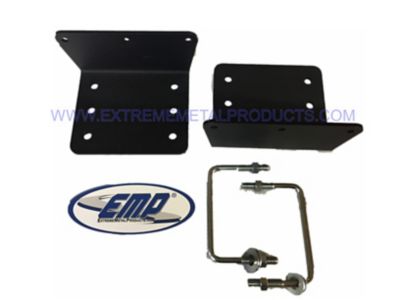
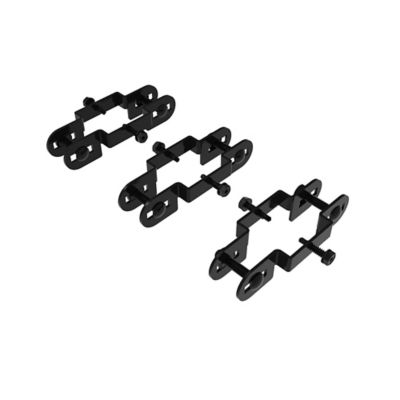
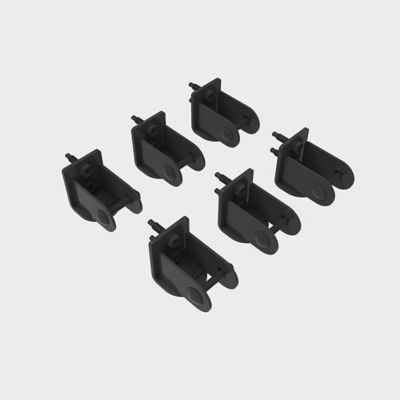
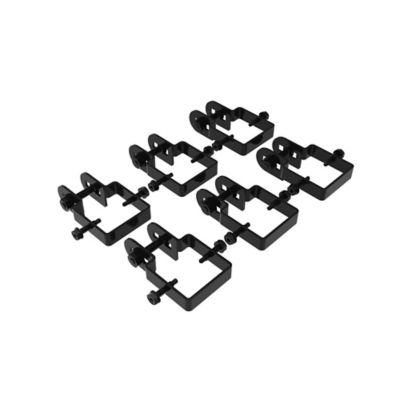
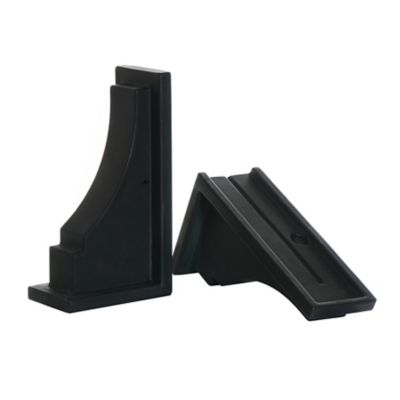
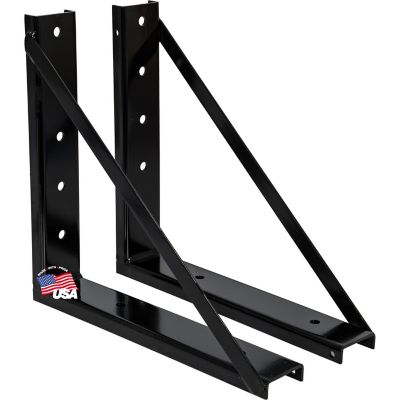
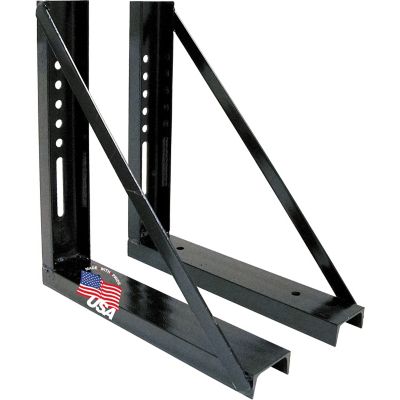
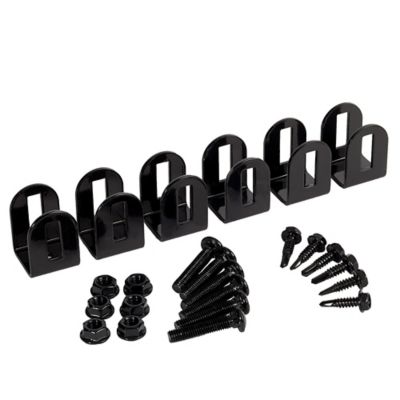
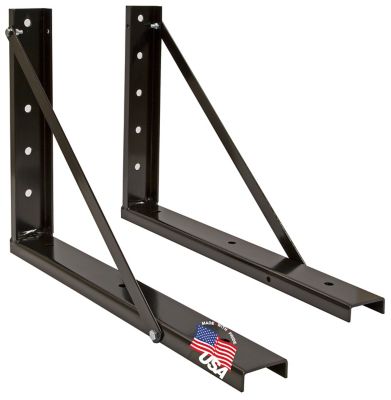
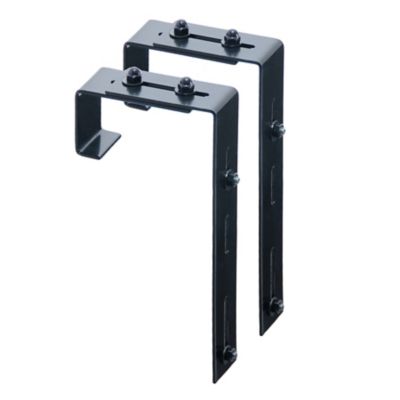
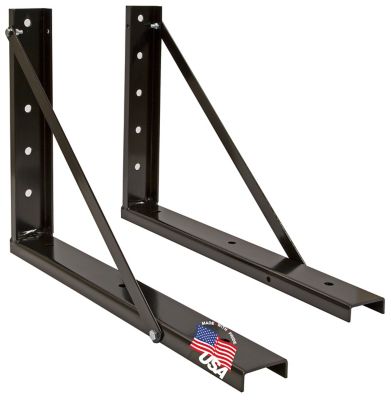
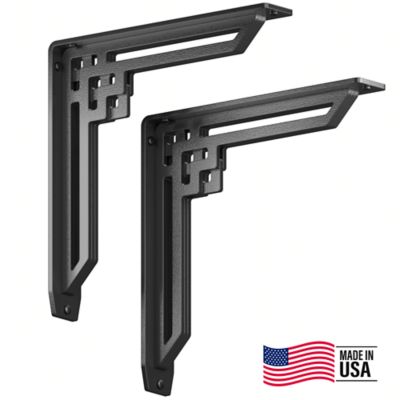
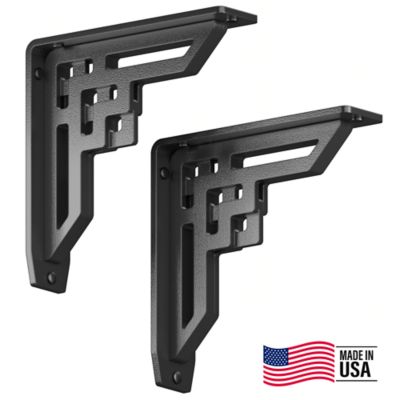
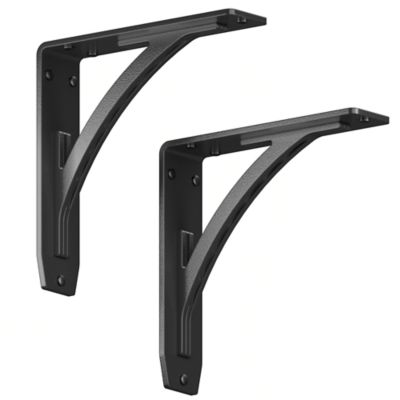
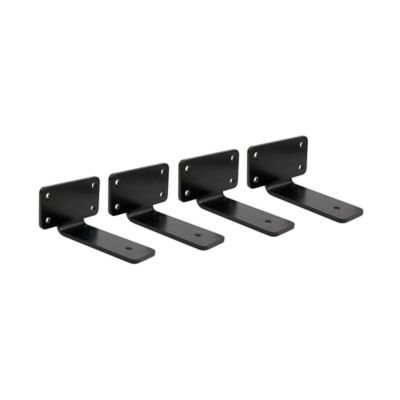
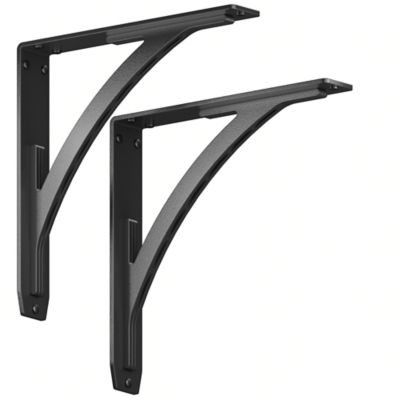
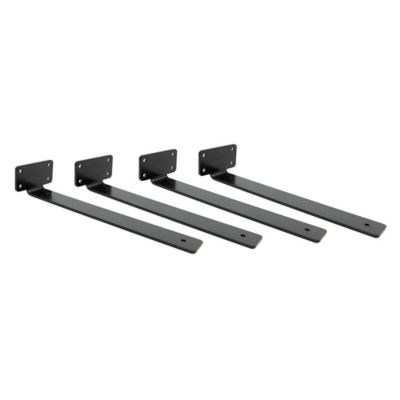
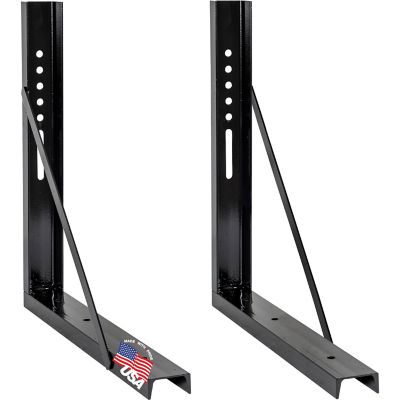
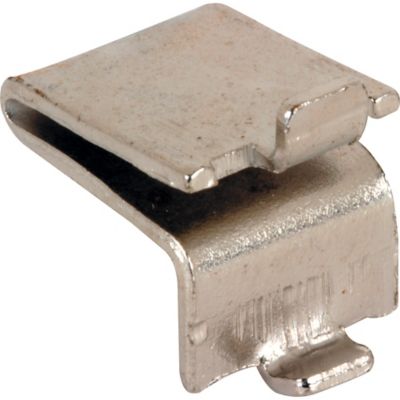
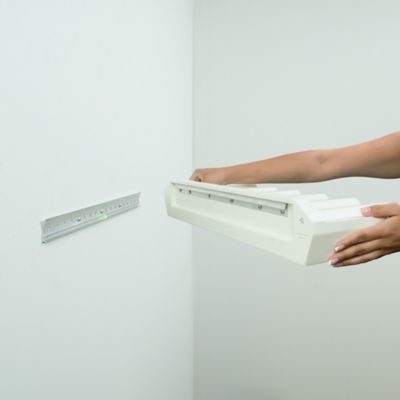
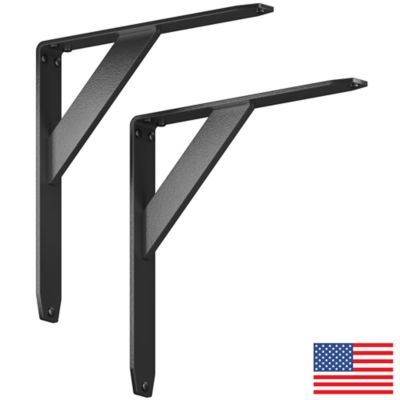
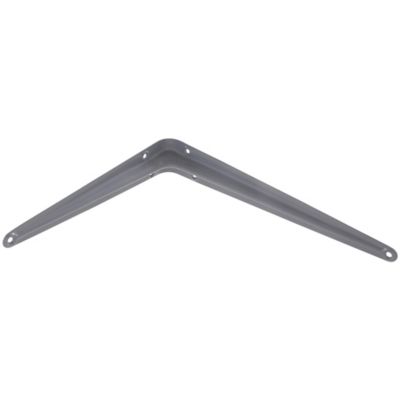
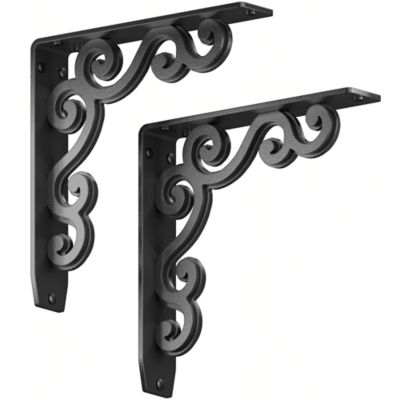
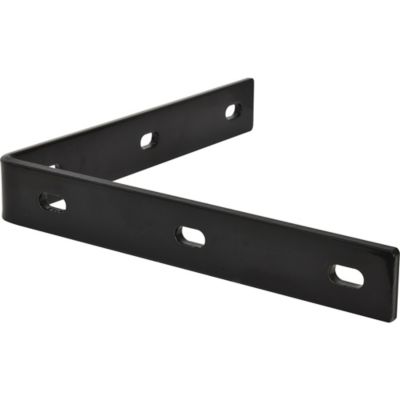
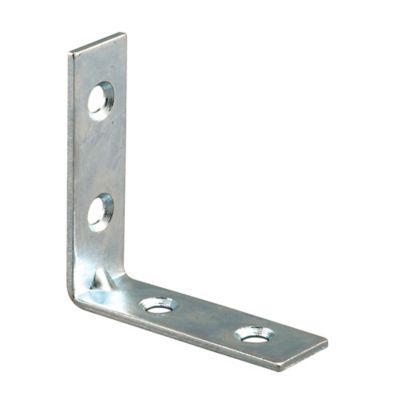
Black metal brackets are hardware supports that connect surfaces, brace corners, or carry shelves, combining a practical job with a dark finish that looks at home around wood, masonry, and painted walls. In a workshop, they can hold a shelf above a bench; in a pantry, they can support extra storage without making the space feel crowded. The category includes right-angle shelf supports, compact corner braces, flat joining plates, and concealed mounting hardware, with each shape serving a different purpose. L-shaped brackets connect perpendicular surfaces, while flat plates join pieces that sit in the same plane. Triangular braces reinforce the space between a bracket’s arms, and concealed supports tuck much of the metal inside or behind the shelf. These differences matter more than looks alone, since a small furniture brace and a wall-mounted shelf support are not interchangeable. Steel is common for its strength and range of formed shapes, while iron brackets may have heavier profiles or more pronounced surface texture. Black finishes range from smooth and low-sheen to lightly textured, giving shoppers options that blend into dark shelving or stand out against pale boards. A straightforward angle suits a working garage, while a curved profile brings a softer touch to open kitchen shelving. For wood frames, furniture corners, and similar right-angle connections,
Black Metal Corner Braces narrow the focus to hardware intended for those joints. Farmers, homeowners, woodworkers, and folks fixing up a shop may need different bracket styles, even when they want the same black finish. Matching that finish to nearby hinges, handles, or shelf standards can give a space a pulled-together look without making the hardware the center of attention. Against a thick pine shelf or a painted cabinet frame, the dark metal adds a clear outline while keeping the connection itself easy to see and inspect.
Fit starts with the connection a bracket needs to make: the depth of a shelf, the width of a frame member, the angle of a joint, and the mounting surface behind it. A long support arm is not automatically a better match, especially if it projects past the shelf edge or crowds the space below. Short arms can leave too much unsupported overhang when paired with deep shelving. Manufacturer specifications help establish the intended shelf dimensions, bracket spacing, fastening pattern, and load limits for a particular design. Weight ratings also need context, because some apply to one bracket and others to a pair or a complete installation under stated conditions. The shelf’s own weight counts toward that load, along with everything sitting on it. A row of empty baskets puts a different demand on hardware than a shelf lined with full paint cans, metal tools, or sacks of supplies. Loads near the front edge also create more leverage than loads close to the wall. Metal thickness, bends, welds, and reinforcing ribs all contribute to how a bracket handles force, so appearance alone cannot establish capacity. The mounting surface matters just as much: wood framing, concrete, masonry, and hollow walls call for different fastening approaches, and the connection is only as strong as the supporting material and fasteners allow. Drywall alone should not be treated like solid framing. Hole diameter, screw-head clearance, and access for a driver can affect how neatly the bracket seats against a surface. Countersunk holes generally accommodate a matching flat-head fastener, while other hole shapes may call for different hardware. For shelf supports, the underside of the board needs enough thickness to accept the specified screws without their points breaking through the top. Concealed brackets have additional fit requirements involving shelf thickness, depth, and internal clearance. Countertops, overhead installations, and other demanding applications call for hardware expressly rated for that purpose, rather than an assumption that any heavy-looking angle will do the job. Clear measurements and stated installation requirements make comparisons more useful than finish or overall size by themselves.
The black surface is more than a color choice, but its protective value depends on the coating and the conditions it is rated to handle. Powder coating forms a baked-on layer over the metal, while painted finishes vary in composition and application. Neither a black appearance nor a thick-looking coating automatically means a bracket belongs in a damp barn, wash area, or other moisture-prone space. An indoor shelf bracket and hardware rated for exterior exposure may look much alike while offering different protection against corrosion. Finish specifications matter wherever splashes, cleaning chemicals, or persistent humidity are part of the setting. Smooth surfaces generally wipe down easily, while textured finishes can hold fine dust around bends and welded joints. Routine care is usually straightforward: a soft cloth, mild cleaner suited to the finish, and attention to trapped moisture around fasteners. Abrasive pads and harsh chemicals can scratch or dull some coatings. Scrapes, exposed edges, loose screws, and signs of rust deserve attention before they turn into larger problems, with any touch-up treatment matched to the manufacturer’s recommendations. In a busy shop, enough clearance around a bracket also makes it easier to sweep away sawdust and check the connection. Shape affects everyday convenience, too. A broad diagonal brace can provide reinforcement but occupy space where a tall toolbox needs to slide underneath; a low-profile support may leave that area open when its rating suits the load. Rounded edges and neatly finished corners are worth considering near walkways, work surfaces, or places where hands regularly reach. For a laundry room shelf, a feed-room organizer, or storage above a workbench, the right match balances usable space, sound attachment, and a finish suited to the setting. Black metal brackets work best as part of a complete assembly, with the shelf or frame, fasteners, and supporting structure all suited to the same task. That practical match keeps the focus where it belongs: storage that fits the space and connections that serve their intended purpose.