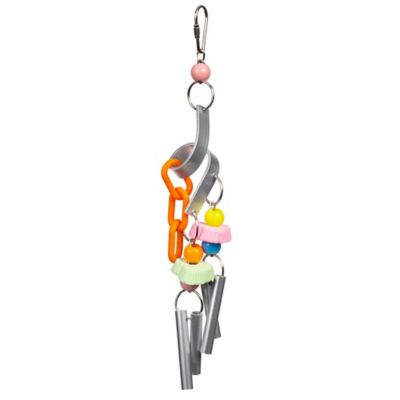
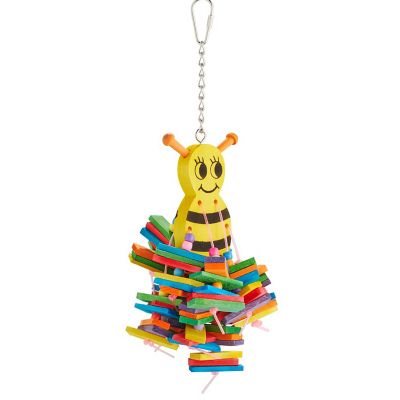
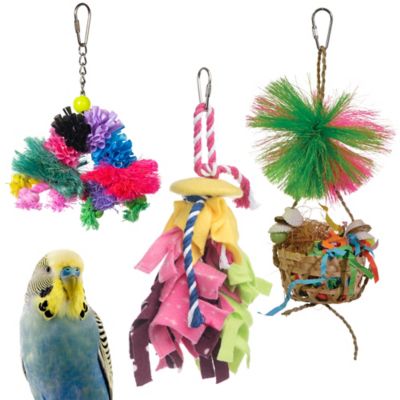
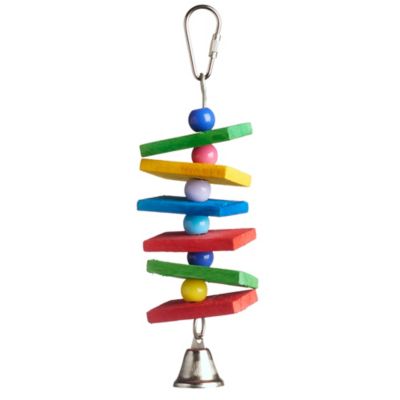
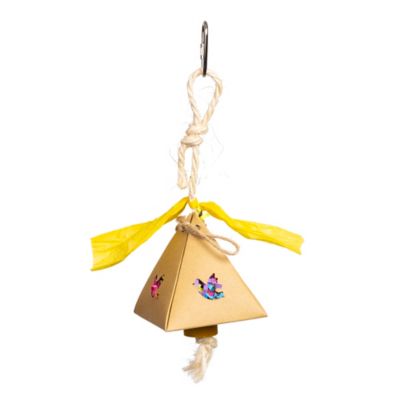
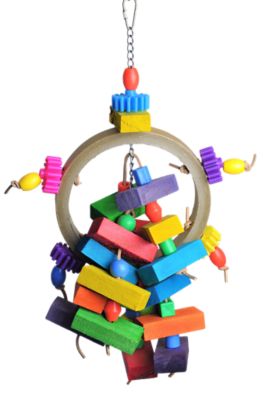
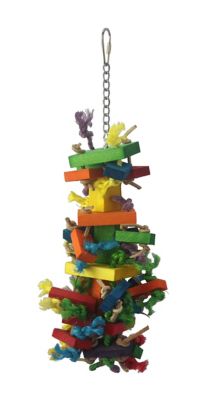
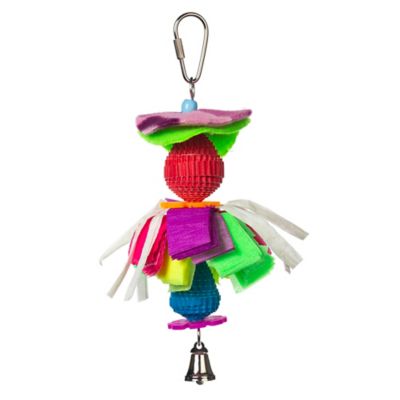
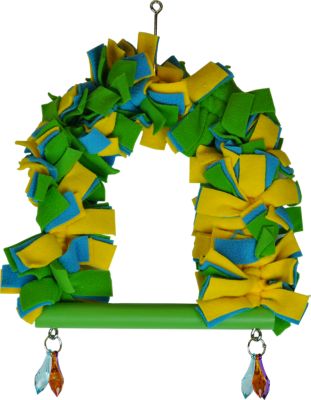
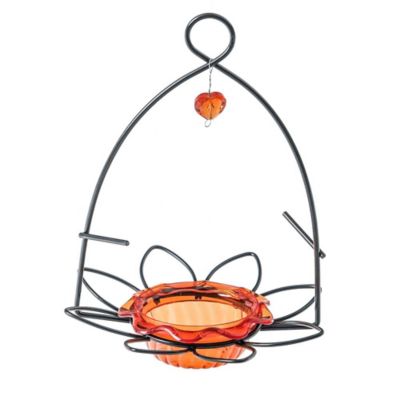
Valentine's Day pet bird toys bring together heart shapes, red and pink accents, and activities that give feathered companions something to chew, shred, explore, or forage through. The holiday look adds a little cheer to a bird's space, while the real value comes from matching the toy to how that bird likes to play. Shreddable paper and plain cardboard offer satisfying textures for birds that enjoy pulling things apart, while bird-safe wood gives busy beaks something firmer to work on. Foraging toys add another kind of challenge, with spaces that can hold a small portion of the bird's regular food or an appropriate treat. A cockatiel that likes picking at paper edges may enjoy a different texture than a parrot that works steadily through wooden pieces. Even birds of the same species can have very different preferences, so familiar play habits are a better starting point than color alone. Lightweight hanging toys can suit budgies and other small birds, provided their parts and openings fit the bird safely. Larger parrots generally need more substantial components that match their reach and chewing strength, though soft shredding materials can still be part of their playtime. Natural plant materials, paper fringe, and chewable wood offer different levels of resistance, making it possible to choose a gentle activity or a more demanding project. Heart-shaped details make these toys a fitting Valentine's Day gift for a pet bird or a thoughtful pick for someone who shares the house with one. For a bird owner, a gift that reflects the pet's favorite activity often means more than a holiday color scheme by itself. A bird that spends its afternoons peeling cardboard layers may get more enjoyment from something it can dismantle than from a toy meant mainly for climbing. Valentine's Day bird toys work best when the festive touches support everyday enrichment rather than getting in the way of it.
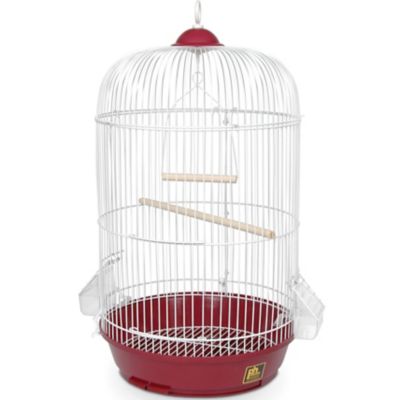
Materials and fit matter just as much as the play style, especially with a pet that examines things beak-first. Bird-safe materials and clearly identified coloring are important considerations for paper, wood, and other chewable parts. Smooth surfaces, secure connections, and hardware appropriate for birds help limit avoidable hazards. Stainless steel attachment hardware is a practical option, while metal of unknown composition deserves caution because birds can be harmed by certain metals, including lead and zinc. A toy's overall length tells only part of the story: the size of its individual pieces, the shape of its openings, and the strength of its attachments also matter. Openings should not create places where a head, foot, or beak could become trapped. Small pieces that a powerful chewer can break free and swallow are a poor match, even if the whole toy appears large enough. Bells and other sound-making parts need particular attention to accessible clappers and detachable pieces. Rope and fiber components also call for close inspection, since loose strands can wrap around toes or present a swallowing hazard. No toy is safe for every bird, and supervised play helps reveal whether a new choice fits the way a particular bird handles it. Cage placement makes a difference, too. A hanging toy should leave room for comfortable movement without crowding food and water dishes, blocking a favored perch, or creating a tangle of nearby attachments. Its full hanging length includes the connector, not just the play section. For a small bird, an oversized toy can feel like an obstacle; for a strong chewer, a lightly built toy may come apart too quickly. Something sturdy enough for the intended bird still needs regular checks. Shredding toys are meant to lose material during play, but a split attachment, exposed sharp edge, cracked component, or unraveling strand is a reason to take the toy out. The holiday theme should never take priority over a safe fit or sound construction.
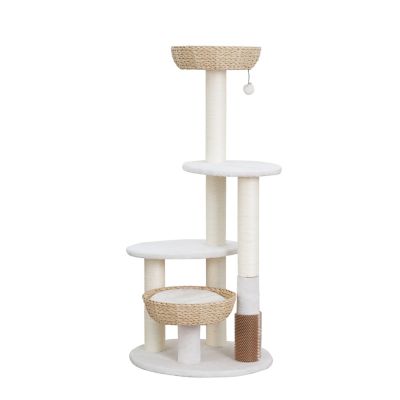
Care and rotation help keep Valentine's Day pet bird toys useful beyond their festive appearance. Paper and cardboard components are generally better treated as replaceable chewing materials than as washable surfaces. Once they become wet, heavily soiled, or contaminated with food, replacing them is often the practical choice. Wood and washable components need care suited to their construction, following the maker's cleaning directions and allowing them to dry completely before returning them to the bird's space. Foraging areas need extra attention so hidden food does not linger and spoil. A little of the bird's regular ration can provide a rewarding search without turning playtime into a pile of extra treats. Everyday observation is valuable here: fresh chew marks suggest engagement, while a toy left untouched may have the wrong texture, position, or level of challenge. Some birds investigate a new hanging toy right away; others prefer seeing it from a comfortable distance before it joins their familiar setup. A gradual introduction gives a cautious bird room to settle in without having a large, unfamiliar object suddenly beside its favorite perch. Rotating a few suitable toys can offer variety while preserving familiar places to rest, eat, and move around. For someone choosing a Valentine's Day gift, knowing the bird's species, approximate size, preferred textures, and cage setup helps narrow the choice considerably. A gift for a busy conure might center on chewing and exploration, while a paper-loving budgie may appreciate lighter materials it can easily manipulate. Households with several kinds of pets can also explore
Cat Toys For Valentine's Day for a separate gift suited to a feline companion. Bird toys and cat toys serve different purposes and should stay with their intended pets, with birds kept safely away from cats during play. Thoughtfully chosen toys add interest to daily routines, giving a pet bird a fitting Valentine's Day treat through textures, movement, and beak-busy activities.