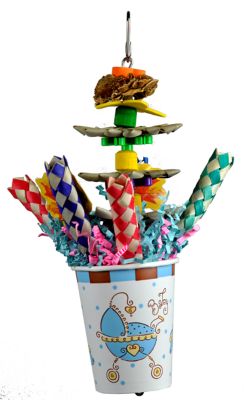
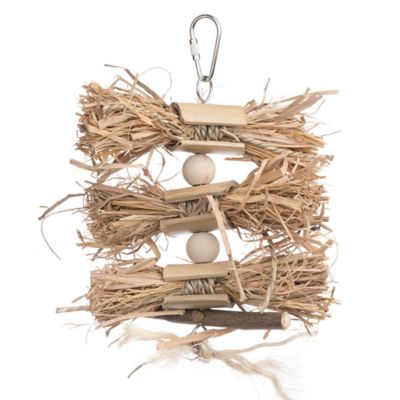
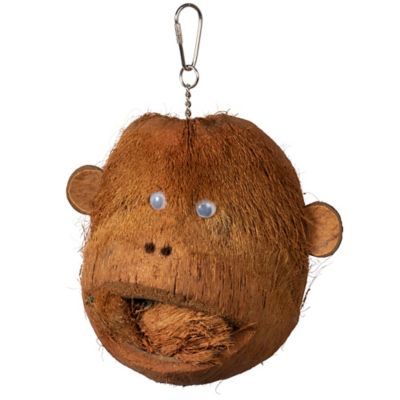
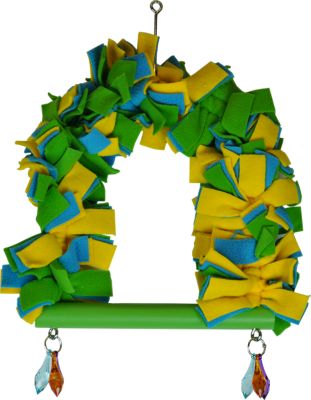
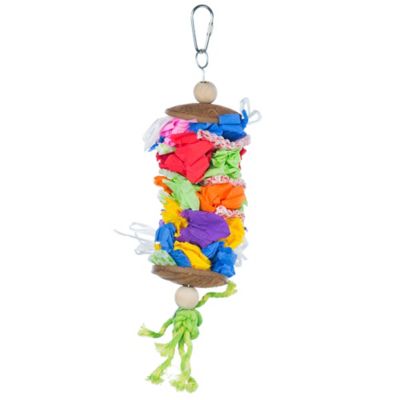
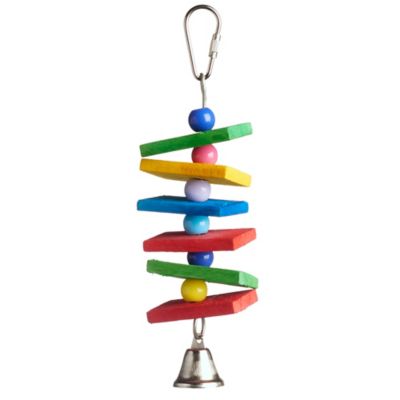
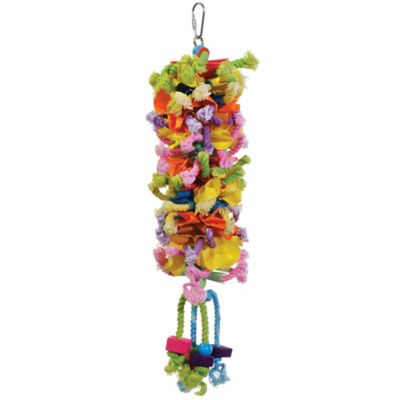
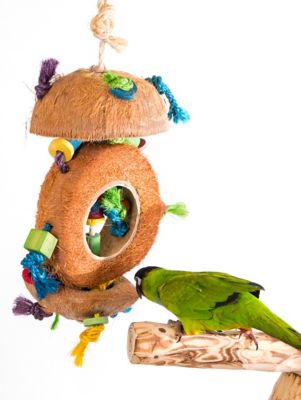
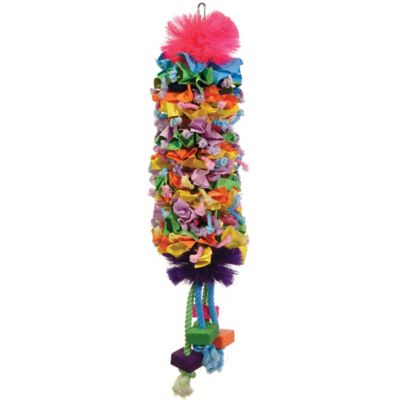
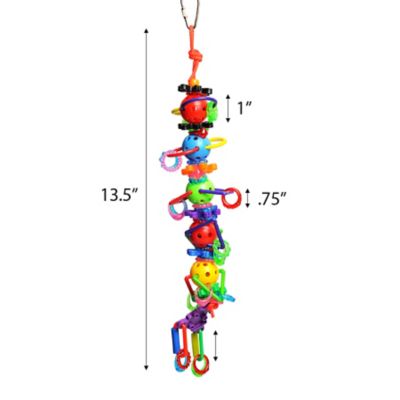
Bird toys give pet birds ways to climb, chew, shred, explore and work for a treat, bringing more activity and variety to everyday life in an enclosure. Those activities matter because birds naturally spend time investigating their surroundings and handling food rather than sitting in one spot all day. A mix of foraging toys, chew toys, swings and climbing toys can help keep a bird engaged while providing outlets for normal behavior. Foraging toys encourage searching and problem-solving, whether that means pulling aside bird-safe paper to reach a portion of the daily ration or moving a simple part to uncover food. Chew and shred toys give busy beaks something appropriate to take apart, while swings add movement and opportunities to practice balance. Foot toys suit parrots that like to hold and turn objects with their feet; other birds prefer working on something attached securely near a perch. The best match depends on the bird’s species, size, strength and habits, not just how colorful a toy looks. A budgie may spend a good stretch of time nibbling thin, soft pieces that a large parrot could dismantle in minutes. Finches and canaries generally need lighter accessories and room to move, rather than a cage packed with heavy chewing blocks. Cockatiels may take readily to shredding, while some conures enjoy manipulating several textures with their beaks and feet. Individual preferences still matter: two birds of the same species may play in completely different ways. For smaller companions,
parakeet toys offer a more focused place to consider appropriately sized play options. Watch how a bird approaches an activity before adding more of the same. One that carefully peels layers from a hanging toy may appreciate shredding materials, while one that investigates food cups may enjoy a simple foraging challenge. Toys support a full daily routine, but they do not replace social interaction, suitable exercise, restful sleep or time spent with attentive caretakers.
Materials and construction make a real difference in how a bird toy fits into that routine. Untreated wood from bird-safe species, bird-safe paper and suitable woven plant materials offer different textures for chewing and pulling apart. “Natural” alone does not establish that a material is safe; the wood species, finishes, dyes, adhesives and hardware all deserve a closer look. Choose toys intended for birds and follow the maker’s species and size recommendations. Softer wood can give a smaller beak a satisfying task, while thicker pieces may better suit a stronger chewer. Even then, a toy meant for shredding is supposed to come apart over time, so a longer lifespan is not always the goal. The important distinction is between normal wear and damage that creates a hazard. Sharp splinters, exposed wire, cracked plastic and loose parts call for removal. Metal components should be suitable for bird contact, with stainless steel often a practical choice for connectors and other hardware. Avoid lead, zinc exposure, rust and unknown metal finishes. Bells need particular attention because a bird may loosen a clapper or catch a beak or toe in an opening. Rope requires close watching, too: loose strands can wrap around toes, and swallowed fibers can cause serious trouble. Remove fraying rope rather than leaving it in place for another play session. Size includes more than the toy’s overall length. Openings, links and gaps should not trap the head, beak, feet or toes, and detachable pieces should not present a swallowing risk. A swing needs enough room for the bird to sit comfortably without pressing its head or tail against surrounding surfaces. Check the attachment as carefully as the play portion, choosing secure closures that the bird cannot easily work open. No material or construction makes a toy suitable for every bird, especially one that persistently breaks off and swallows pieces. Supervised observation helps show whether a particular design belongs in that bird’s enclosure.
Placement, cleaning and rotation help bird toys stay useful without turning the cage into an obstacle course. Leave clear paths between perches, feeding areas and resting spots, and preserve room for normal movement and wing stretching. Hang an activity where the bird can reach it from a steady perch, rather than making every interaction depend on an awkward stretch. Keep toys out of positions where droppings repeatedly land on them or where they block access to food and water. A new addition may need a slow introduction, especially for a cautious bird. Letting the bird see it from outside the enclosure before moving it closer can make the change less startling; never force contact or take away essential food to make a bird investigate. Start foraging activities with an easy, visible reward, then increase the challenge only as the bird shows it understands the task. Count treats toward the daily diet, and remove leftover fresh food promptly. During everyday cage care, check attachments, chewing surfaces and small parts, then follow the maker’s cleaning directions. Washable components need thorough rinsing and drying, while porous materials may need replacement when soiled or difficult to clean. Rotate a few suitable toys at a time instead of filling every available space. Keeping a familiar favorite nearby can help a cautious bird settle into the change, and a little open space often makes play easier. For households sharing bird care, keeping track of what gets chewed, ignored or dismantled can help everyone choose sensible replacements. Bird toys can also make a thoughtful gift for someone with a feathered companion, provided the bird’s species, enclosure size and chewing habits are known. A gift chosen around those everyday needs is more helpful than something selected for appearance alone. With sensible sizing, regular checks and attention to the bird’s own preferences, playthings become part of a comfortable, active routine, giving that busy beak something worthwhile to get into.