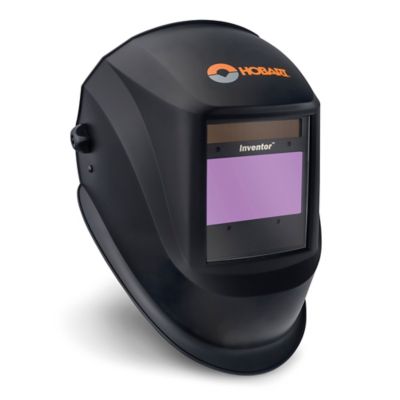
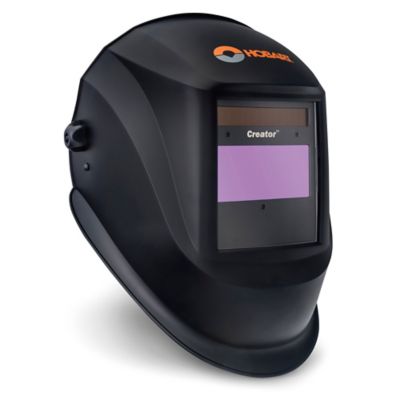
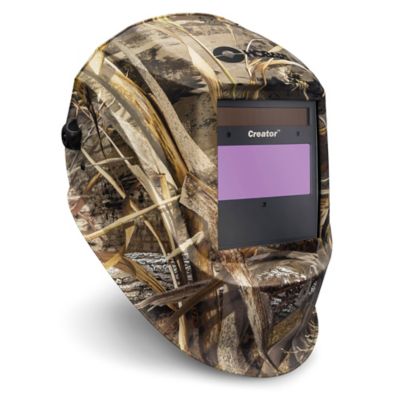
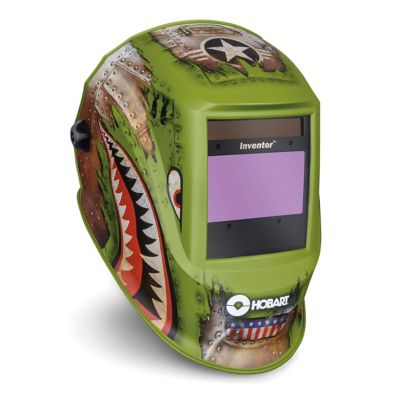
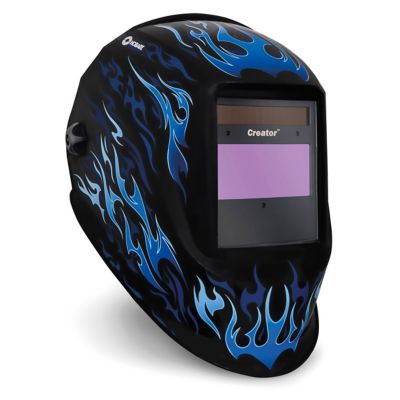
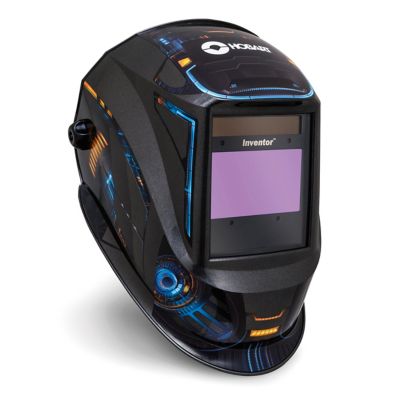
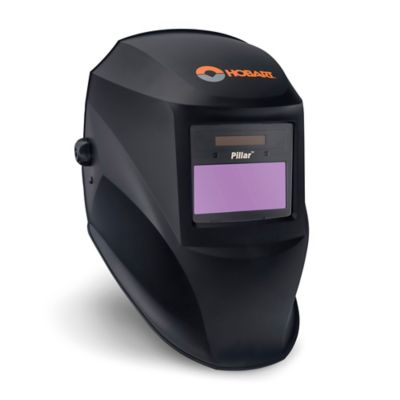
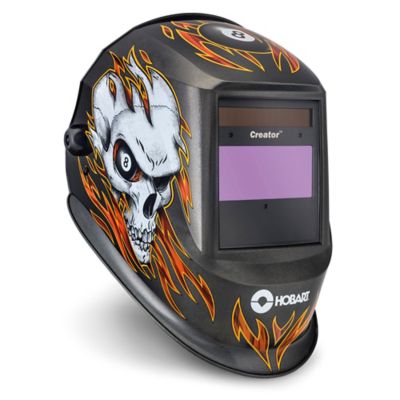
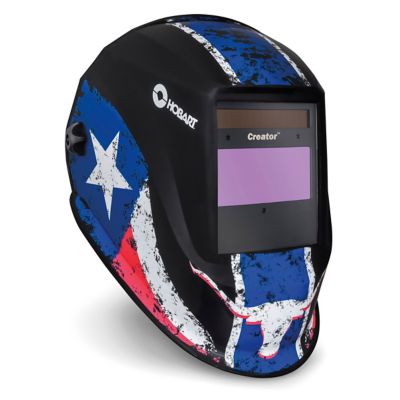
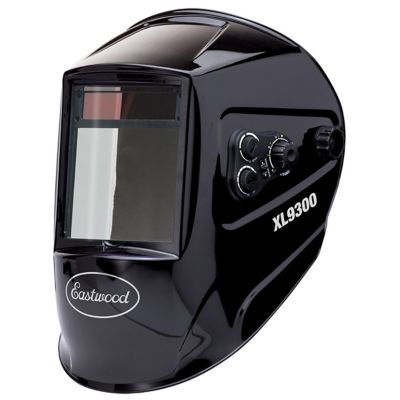
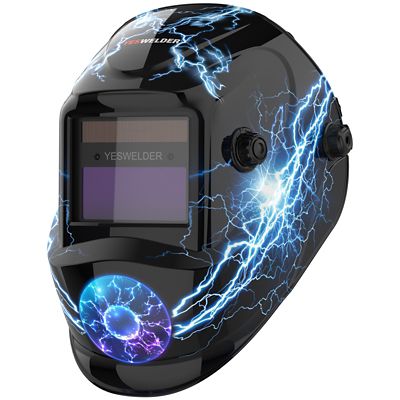
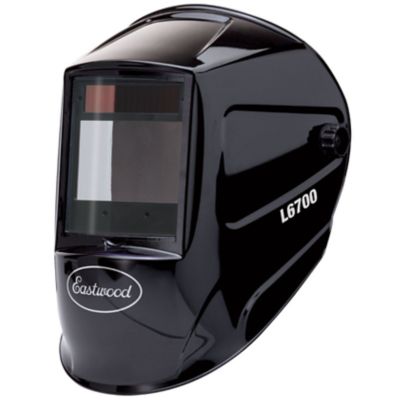
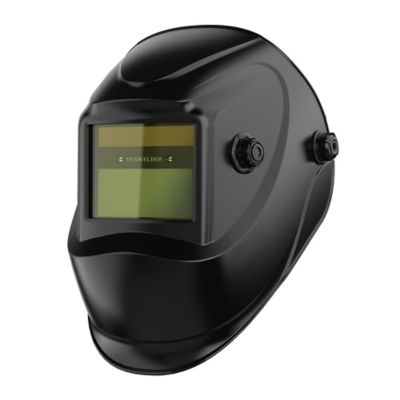
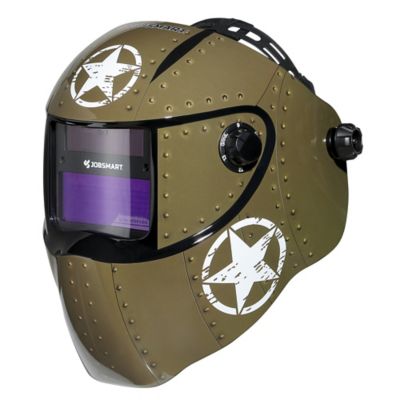
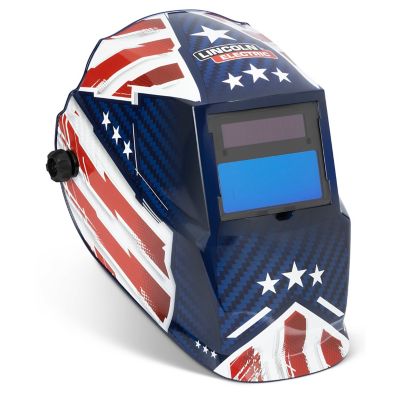
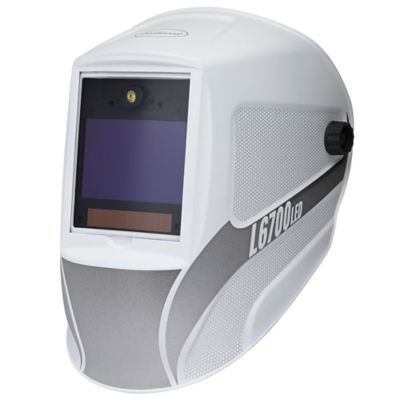
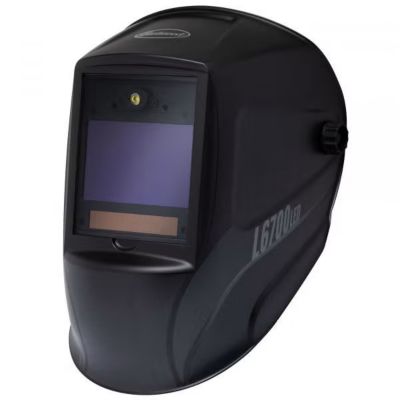
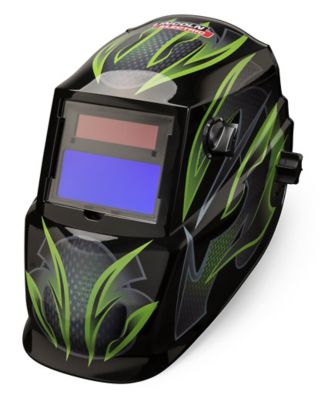
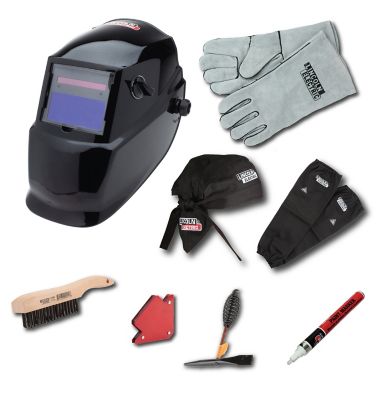
Auto-darkening welding helmets let welders position a joint with the hood down, then automatically darken the viewing filter when sensors detect the welding arc. That means less repeated lifting between checking a fit and making the next weld, whether the job involves a gate hinge, a workbench frame, or an equipment bracket. The lens typically rests in a lighter shade that makes it easier to see the electrode, gun, and workpiece before striking an arc. Once welding begins, the filter switches to the selected dark shade, often in a fraction of a millisecond; the exact switching speed depends on the helmet. Shade range, sensor placement, viewing area, and process compatibility all matter more than appearance alone. Many welding filters offer adjustable shades within the 9–13 range, while others include additional settings for different applications. The right shade depends on the welding process and amperage, with the helmet instructions and applicable safety guidance providing the reference. MIG, stick, flux-core, and TIG welding place different demands on a filter, and low-amperage TIG performance deserves particular attention because not every helmet detects those arcs within the same operating range. Multiple arc sensors can help maintain detection when a hand or part of the workpiece blocks one sensor, but they still need a clear path to the arc. A larger viewing window offers more room to watch the puddle and surrounding joint without moving the head as much. Color-enhancing lens technology can make differences between the puddle, joint edges, and nearby material easier to distinguish, although visibility also depends on lighting and clean cover lenses. Sensitivity controls determine how readily the sensors respond, while delay settings control how long the lens stays dark after the arc stops. These are separate from switching speed. Together, those features help match an auto-darkening welding helmet to the work rather than expecting one setting to suit every weld.
Fit becomes especially noticeable when a project calls for repeated tacks, long beads, or several hours at the fabrication table. Adjustable headgear, a balanced shell, and enough clearance around the face help keep the viewing window where it belongs without excessive pressure across the forehead. Crown straps and rear adjustments affect how the helmet sits, while tilt and lens-distance settings help establish a comfortable sightline. A hood that slips forward every time the welder leans over a joint can turn a straightforward repair into an interruption-filled job. Helmet weight matters, too, but balance and headgear support can be just as important as the number on a specification sheet. Anyone wearing prescription glasses or safety glasses needs room for them without pushing the filter too far from the eyes. Compatibility with magnifying lenses may also matter for close work, especially when following a narrow joint or checking electrode placement. Shells commonly feature heat-resistant thermoplastic materials intended to shield the face from welding exposure and spatter, with coverage varying by design. Narrow shells can offer clearance around tight spaces, while broader profiles provide different face and neck coverage. Neither shape replaces the protective clothing required for the job. Long service life also depends on keeping the helmet in working order. Replaceable outer cover lenses take the brunt of scratches and spatter, helping protect the filter assembly underneath. Inner cover lenses, headbands, and sweatbands may also be replaceable, depending on the design. Cleaning methods vary, so the manufacturer’s directions matter more than a general shop-cleaning routine; harsh solvents and abrasive wiping can damage lenses or shell materials. Clean sensor windows support arc detection, and a protected storage spot helps keep dust, grinding debris, and accidental impacts away from the hood. Battery-powered and solar-assisted designs have different maintenance needs. A solar panel does not necessarily mean battery-free operation, making battery access, low-power indicators, and specified replacement requirements worth considering.
For farm repairs, ranch work, fabrication, and home-shop projects, the best match is a helmet suited to the welding process, working position, and length of time behind the hood. Someone making occasional repairs to steel brackets may value straightforward controls and easy-to-replace cover lenses, while a frequent fabricator may put more emphasis on viewing area, headgear adjustments, and controls that are easy to reach with gloves. External controls can make setting changes convenient, while internal controls keep adjustments inside the shell; either arrangement needs clear markings and settings that are easy to confirm. A grind mode can provide a lighter view for tasks the manufacturer permits, but it must be switched back to welding mode before an arc is struck. Grinding protection also depends on the helmet’s stated ratings and coverage, not simply the presence of that setting. ANSI/ISEA Z87.1 markings and manufacturer documentation help identify applicable eye and face protection ratings. Properly rated safety glasses with side shields belong beneath the helmet, and welding protection does not replace ventilation, respiratory protection when required, hearing protection, or protection for nearby people. In a properly functioning, compliant welding filter, ultraviolet and infrared protection is provided by the filter construction rather than darkening alone; that does not make a damaged or malfunctioning helmet safe to weld with. Pre-use checks should follow the manufacturer’s specified procedure, and a cracked shell, damaged filter, or inconsistent response calls for taking the helmet out of service. For a gift, process compatibility and fit are more useful starting points than shell graphics. A collection of
Father's Day Welding Helmets can be a starting point for a dad who spends time repairing implements or building projects in the shop, with the final choice grounded in his equipment and preferences. For any welder, clear visibility, a secure fit, suitable protection, and manageable upkeep make an auto-darkening hood a practical part of the welding setup.