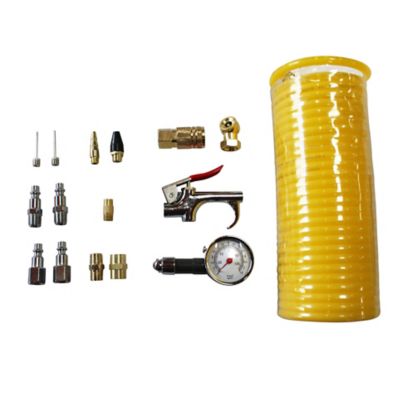
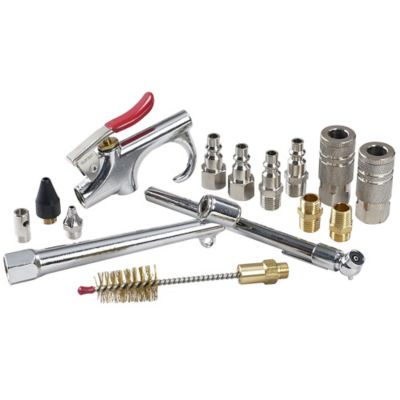
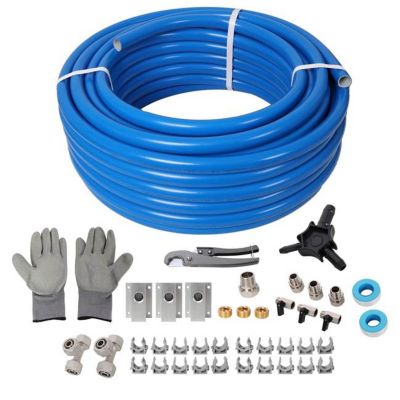
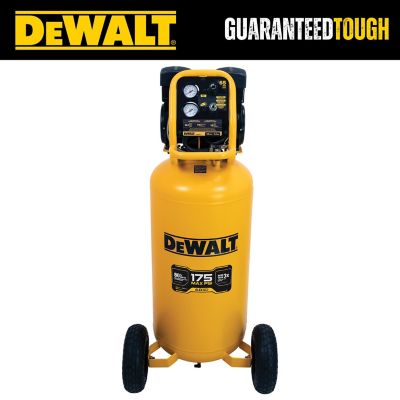
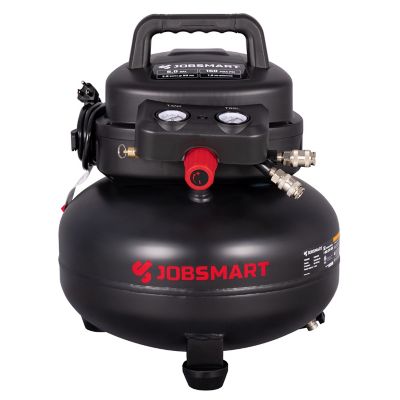
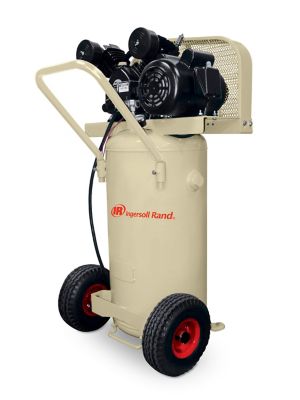
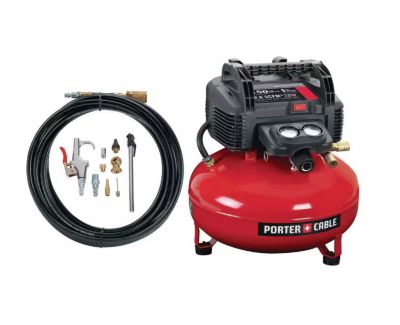
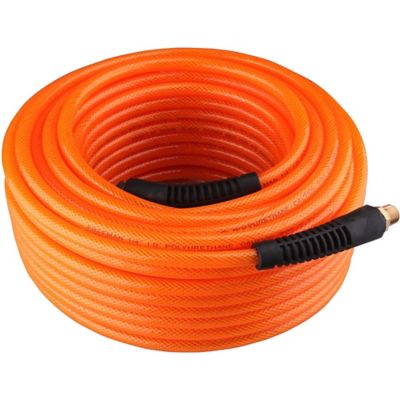
Air compressor hose kits combine an air hose with connection hardware that carries compressed air from a compressor to pneumatic tools and accessories. Depending on the kit, that hardware may include quick-connect couplers, matching plugs, threaded adapters, or inflation accessories; some kits also include a blow gun or tire inflator. The exact contents matter because a hose-and-fitting set serves a different purpose than a broader accessory assortment. For a farm shop, home garage, or woodworking bench, a coordinated kit can bring the main pieces of an air connection together without piecing together every fitting separately. A tire chuck handles inflation work, a blow gun directs a controlled stream of air, and a coupler allows compatible tools to connect to the same hose. Not every kit includes each attachment, so the component list is worth a close look. Someone topping off mower tires needs a different setup than someone running a framing nailer or removing wheel fasteners with an impact wrench. A compact kit can suit occasional garage chores, while a setup that moves between a workbench, equipment bay, and trailer calls for more attention to hose reach and airflow. The compressor remains part of that equation: an accessory kit does not increase the amount of air the compressor can deliver. Tools have their own pressure and airflow requirements, usually expressed in pounds per square inch and cubic feet per minute. Matching those requirements to the compressor and hose helps keep an air-hungry tool from feeling sluggish halfway through a job. For mechanics, fence builders, woodworkers, and folks maintaining equipment around the property, the appeal is straightforward: a practical connection between the air supply and the work at hand. The best-fitting assortment is the one whose hose, fittings, and attachments line up with the equipment already in the shop and the jobs it needs to handle.
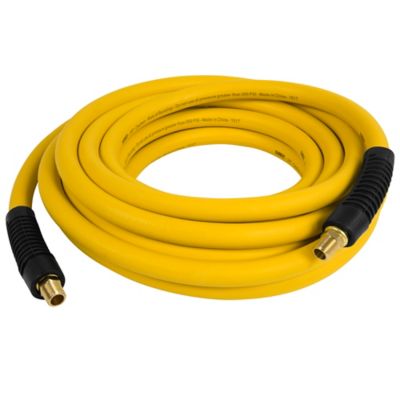
Hose construction makes a noticeable difference when a line gets pulled around a tractor tire, dragged past a bench leg, or carried across the garage. Rubber hoses often have a substantial feel and good flexibility, though they can weigh more than other options. Polyurethane hoses tend to be lighter and can offer strong resistance to scuffing, making them worth considering where carrying weight and frequent movement matter. PVC hoses provide another option, with flexibility and handling that vary by formulation. Hybrid polymer hoses combine material characteristics to balance flexibility, weight, and resistance to kinking. Material alone does not tell the whole story; reinforcement, wall construction, outer-jacket ratings, and the design of the end connections all affect how a hose stands up to everyday handling. Oil resistance is especially relevant near lubricated equipment, while abrasion resistance matters where the line regularly contacts concrete or rough surfaces. The
air compressor hose in a kit also needs enough reach for the work area without leaving a tangle of extra line underfoot. A shorter hose can keep a bench setup tidy, while a longer one can reach around a parked truck or across an equipment bay without moving the compressor. Extra length adds weight and can contribute to pressure loss, especially when paired with a narrow inside diameter and a tool that draws substantial airflow. Inside diameter describes the air passage, not the outside thickness of the hose. A larger passage generally offers less restriction at the same length and flow, but the couplers and fittings must support that airflow, too. Coiled hoses can help keep excess line gathered near a work area, though their usable reach is not the same as a straight hose’s overall length. Straight hoses allow more freedom across open floor space. Bend restrictors near the ends can help limit sharp bends where the hose meets its fittings, a common stress point during repeated tool changes.
Connection fit deserves just as much attention as hose length or material. Thread size, thread type, and quick-connect interchange style describe different parts of the connection, and one matching measurement does not guarantee that everything will fit. A nominal pipe-thread size is not the hose’s inside diameter, and plugs with similar appearances may belong to different coupling profiles. Kit descriptions that identify both the threaded connections and the coupler style make it easier to match an existing compressor outlet and tool inlet. Pressure ratings also belong in that comparison: the entire assembly must stay within the working-pressure limit of its lowest-rated component. A burst-pressure figure is not an operating-pressure allowance. For tire work, an inflator’s pressure range and valve connection should suit the tires being serviced; for pneumatic tools, airflow through the fittings can matter as much as the hose itself. Everyday care helps protect those connections and keeps small problems from interrupting a job. A hose routed away from sharp edges, moving machinery, and vehicle traffic faces less wear than one left across a busy path. Loose loops or a suitable reel can keep a straight hose from developing tight folds during storage. Dirt on a plug can travel into a coupler, so clean connection surfaces matter in a shop where sawdust, grit, and metal filings collect. Cracking, cuts, bulges, damaged threads, or persistent leaks are signs that a component needs attention rather than another turn of the regulator. Depressurizing the line according to the equipment instructions before maintenance helps prevent a loose hose from whipping, and eye protection belongs with compressed-air work. With the right fit and sensible handling, an air compressor hose kit can support everything from routine tire checks to steady work at the bench, giving a small garage or busy farm shop a more organized way to connect its air-powered equipment.