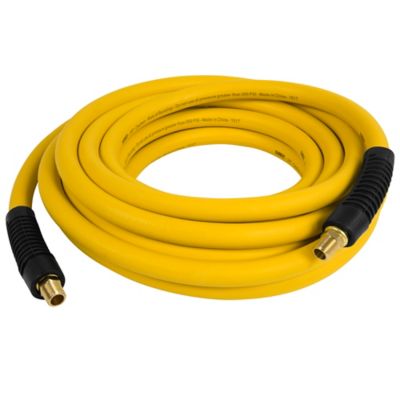
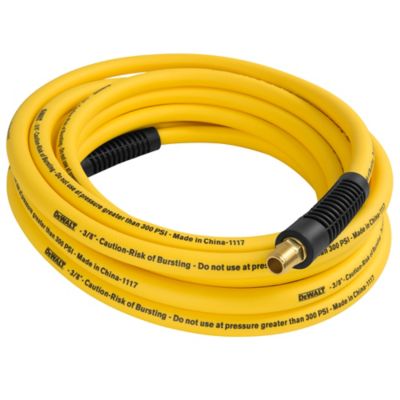
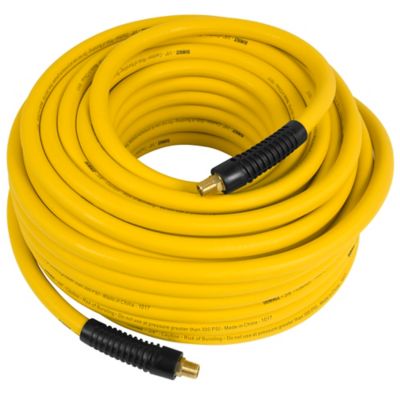
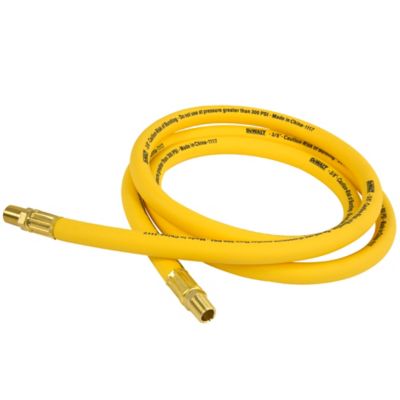
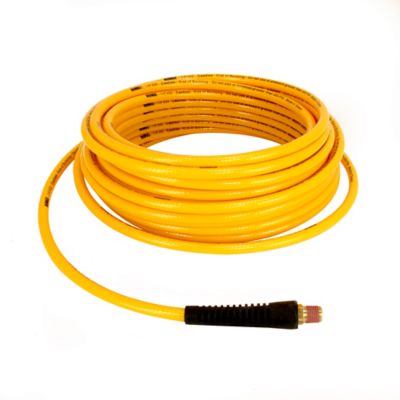
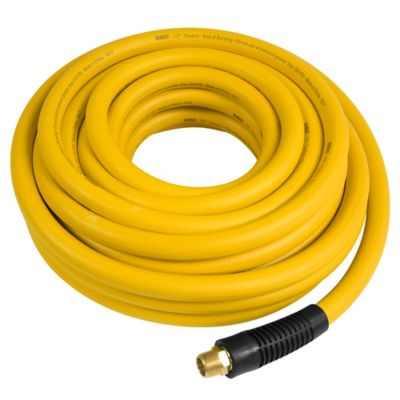
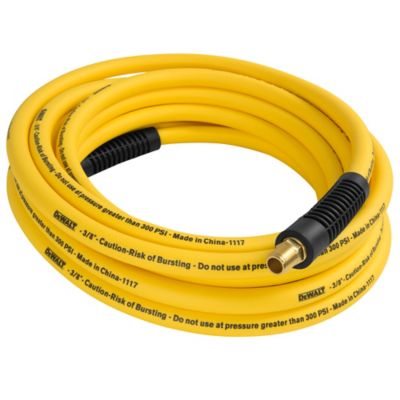
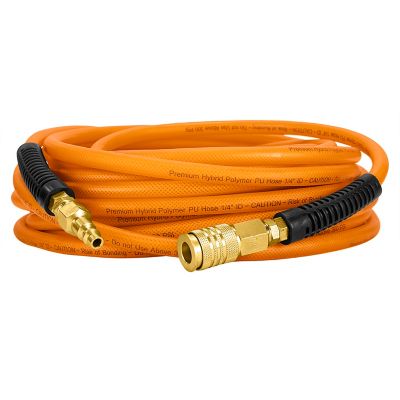
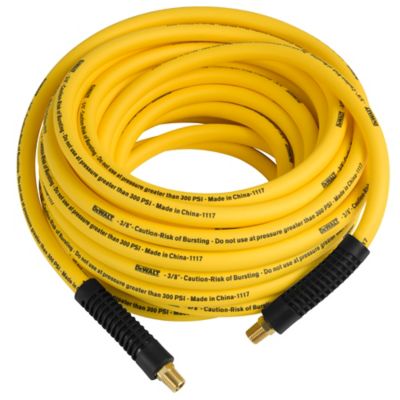
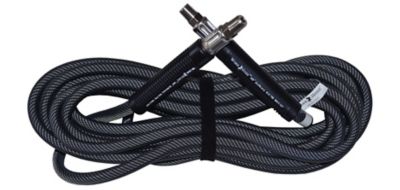
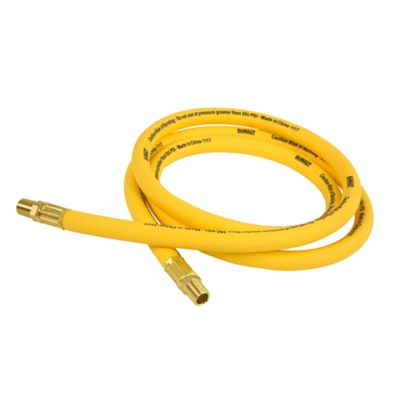
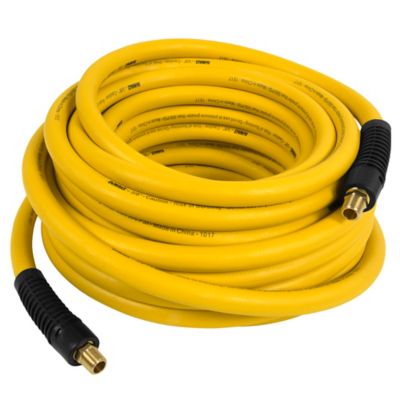
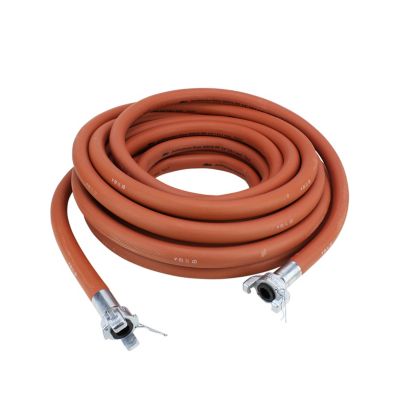
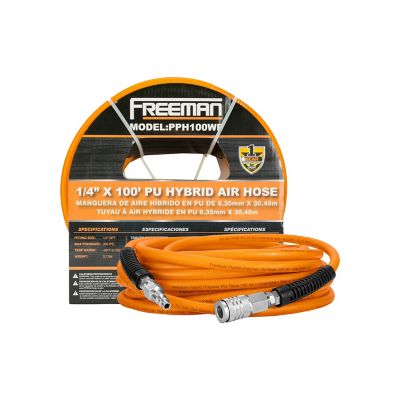
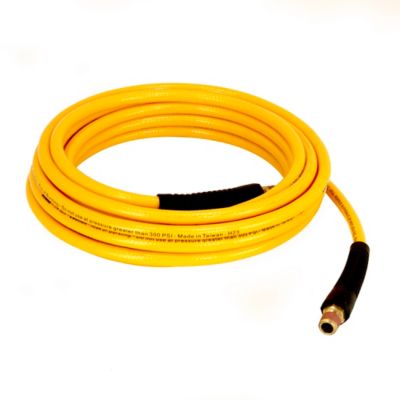
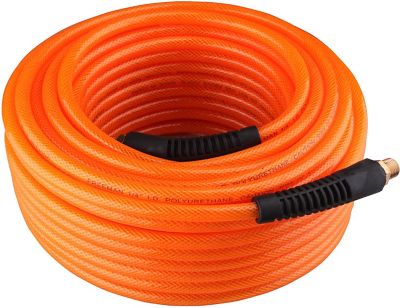
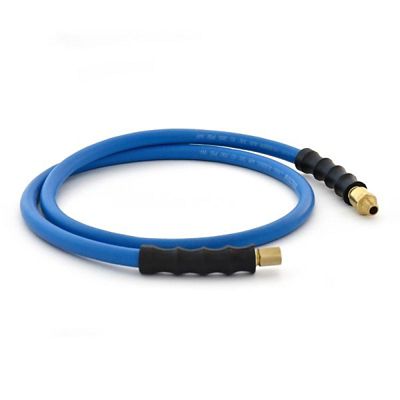
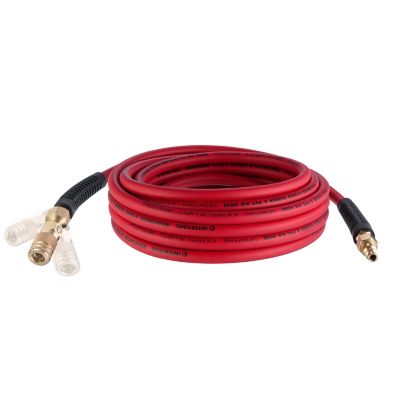
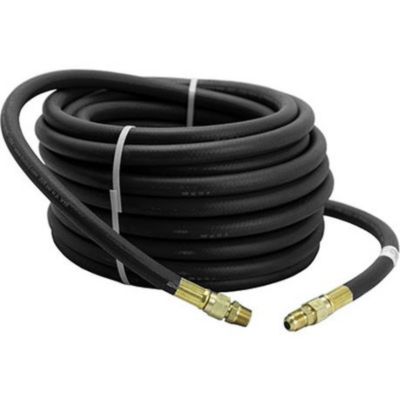
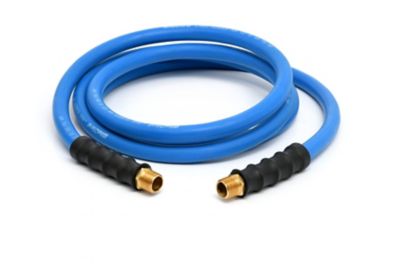
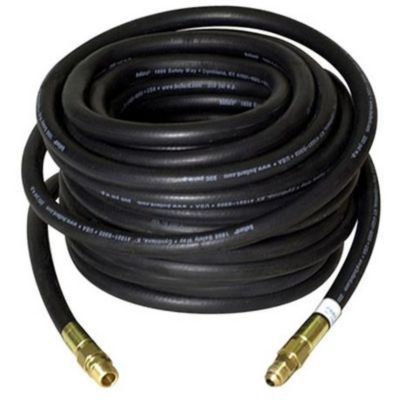
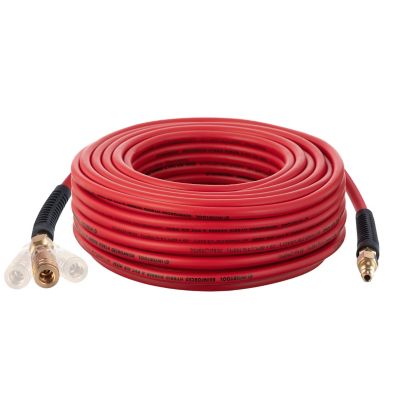
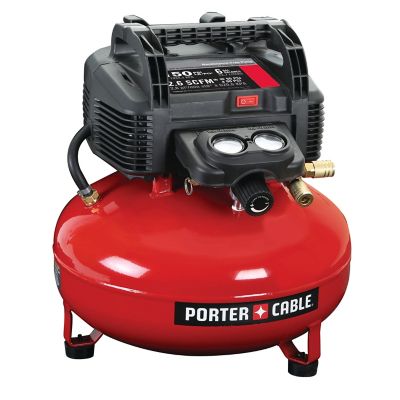
For many garage and workshop jobs, an air compressor hose with a 3/8-inch inside diameter and rubber or hybrid construction offers a practical balance of airflow, flexibility and handling. A 1/4-inch hose can suit lighter-demand work, such as tire inflation or running a small brad nailer, while tools that draw more air may need a larger passage. The right size depends on the tool’s air consumption, the compressor’s output and the distance between them—not simply the size of the connector. An impact wrench loosening tractor wheel hardware has different airflow needs than a nailer fastening trim in the barn. Hose diameter refers to the inside opening that carries air, and a wider opening generally reduces resistance as air moves toward the tool. A 25-foot or 50-foot air hose provides practical reach for many workspaces, but the shortest length that comfortably reaches the job helps limit pressure loss and keeps extra hose off the floor. Longer runs, narrow passages and restrictive fittings can all reduce pressure at the tool while it is running. That matters when a wrench feels sluggish or a spray pattern becomes uneven even though the compressor gauge shows adequate pressure. Hose size cannot make up for a compressor that delivers less air than a tool requires; the compressor’s cubic-feet-per-minute output at the required pressure remains part of the match. For a home garage, a hose may need to reach both sides of a pickup without pulling tight against the compressor. Around a farm shop, it may travel from a wall connection to a mower deck, utility trailer or equipment service bay. Enough slack makes those jobs easier, while excessive length adds weight and clutter. A hose that suits the workspace lets the operator move around equipment without dragging the air source along, and its diameter helps the available airflow reach the tool with less restriction.
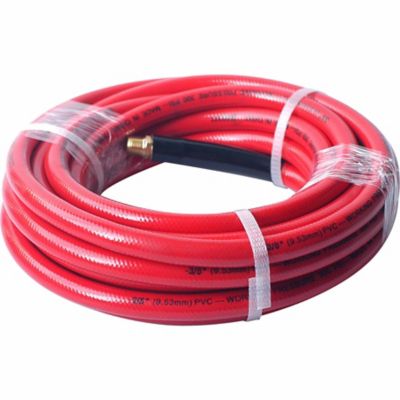
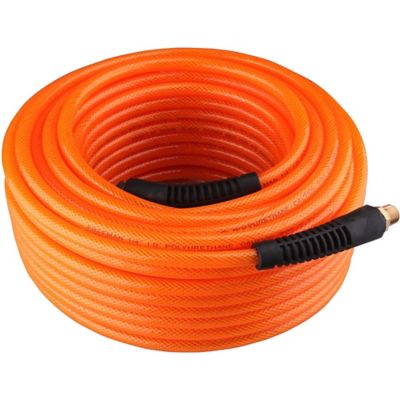
Air hose materials affect how the line feels in the hand, how readily it bends around equipment and how it stands up to everyday contact with shop floors. Rubber air hoses are often flexible and have a heavier feel, which can help them settle onto the floor rather than spring back into tight loops. That extra weight is worth considering when the hose travels between several work areas. Hybrid hoses combine polymers to balance flexibility and manageable weight, making them a practical option for general garage and farm-shop tasks. Polyurethane hoses are typically light and can offer good abrasion resistance, especially where a compact line is easier to handle. PVC hoses often have a firmer feel and may hold their coiled shape more noticeably. Oil resistance, resistance to cuts and resistance to abrasion depend on the hose’s construction and stated specifications, so the material name alone does not tell the whole story. Reinforcement, outer-cover thickness and the design of the hose ends also contribute to service life. Across the range of
Compressed Air Hoses, connection details deserve just as much attention as the hose body. Thread size is not the same measurement as hose inside diameter, and a matching thread size does not necessarily mean two quick-connect parts share the same connection profile. Industrial-style and automotive-style plugs, for example, need matching couplers unless the coupler is expressly designed to accept both. Restricted couplers can become airflow bottlenecks even on a generously sized hose. Brass or steel fittings provide connection points, while strain relief near the ends helps reduce sharp bending where the hose meets the fitting. Swivel connections can make a moving tool easier to handle without twisting the entire line. The maximum working-pressure rating must cover the highest pressure the hose may receive; a burst-pressure figure is not an operating limit. Compatible hoses, fittings and tools make a better-matched system than any one component considered by itself.
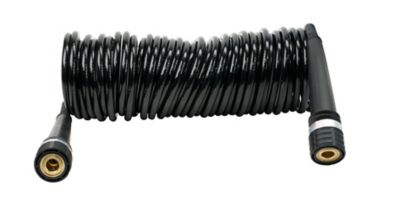
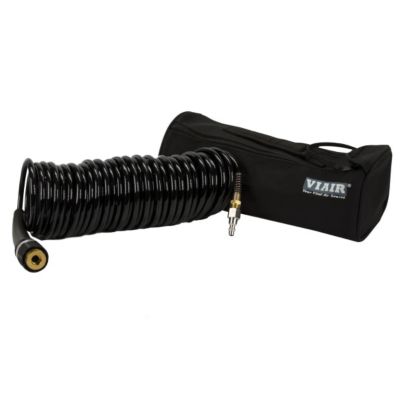
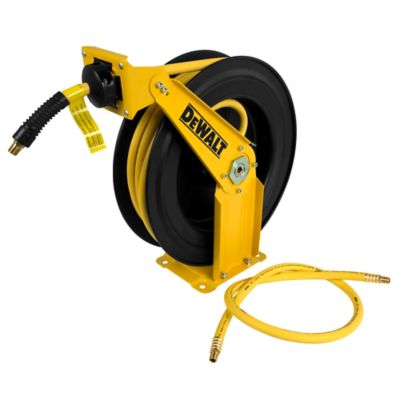
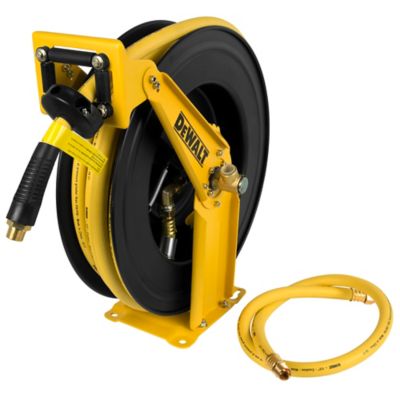
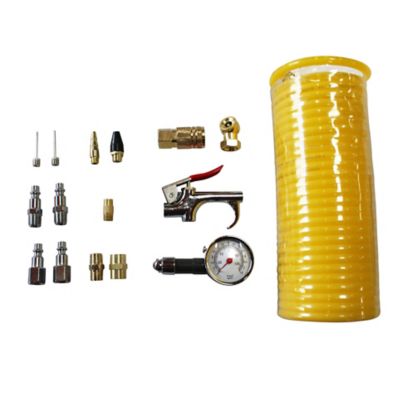
Straight air hoses, self-coiling hoses and reel-mounted setups suit different ways of working. A straight hose offers reach across a service bay or along a workbench, with fewer spring-like coils tugging at the tool. A self-coiling hose keeps a shorter connection gathered near a bench or inflation station, though its practical working reach may be less than its fully stretched length. A hose reel gives a longer line a place to rest between jobs and can keep loose loops out of walkways. Reel capacity, hose diameter and the connection at the reel all need to work together. These differences matter to mechanics, woodworkers, livestock owners and property owners who move between small repairs and equipment maintenance. For someone setting up a garage or farm workshop, a hose can also be a useful gift when the compressor connections and usual tasks are known. Day-to-day care is mostly about protecting the line from damage that shortens its working life. Sharp edges on a trailer frame, repeated rubbing against concrete and wheels rolling over the same section can wear down the outer cover. A hose is not a lifting strap, and pulling equipment by it puts strain on both the line and its fittings. Kinks near the connector can interrupt airflow and stress the hose wall. Loose coils stored away from cutting edges and moving machinery help preserve the hose’s shape without forcing tight bends. A clean outer surface makes cracks, bulges, exposed reinforcement or other damage easier to spot. Leaks at a connection can waste compressed air and make the compressor cycle more often, while damage to the hose body calls for removal from service rather than a patch wrapped around the outside. Disconnecting and releasing trapped pressure before service keeps maintenance safer. With suitable sizing, compatible ends and sensible care, an air compressor hose becomes a straightforward working connection between the compressor and the jobs waiting around the shop.