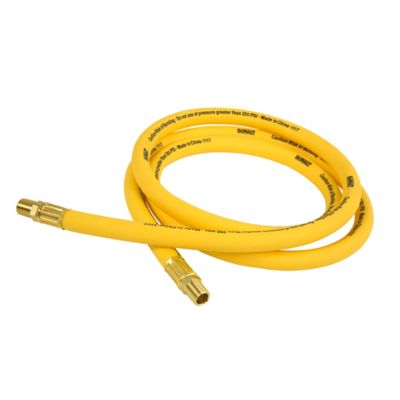
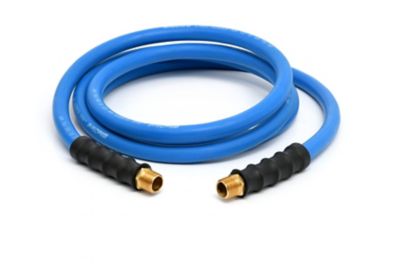
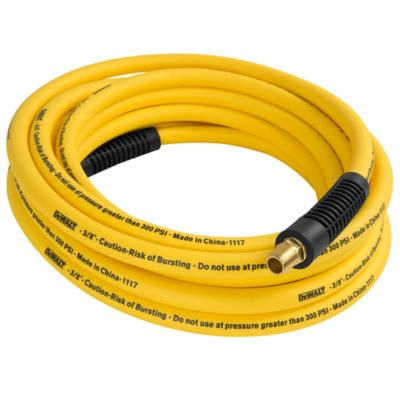
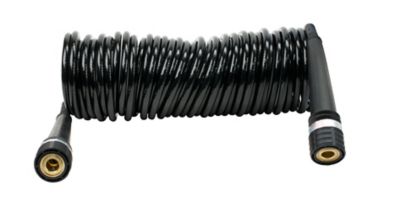
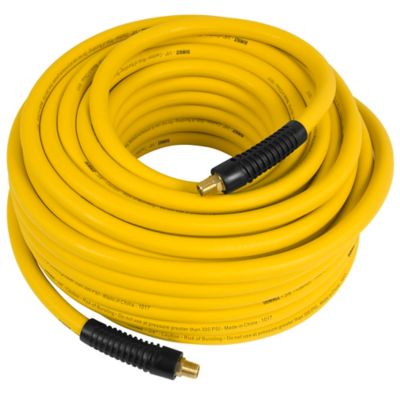
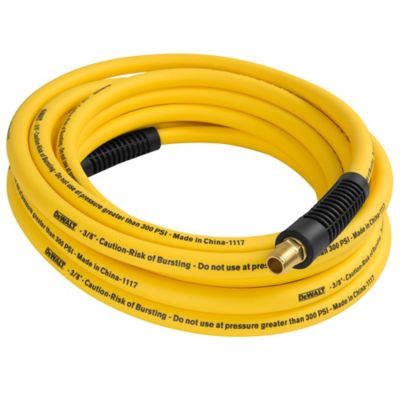
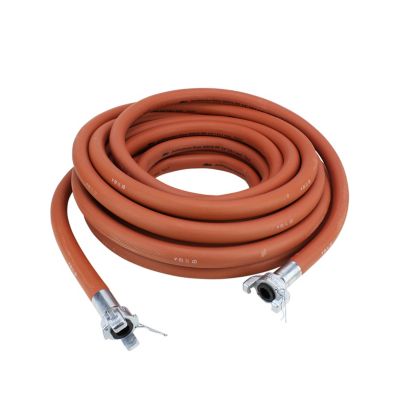
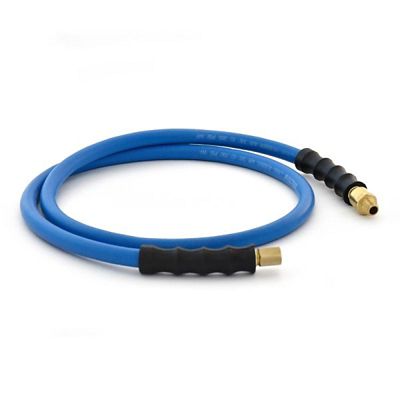
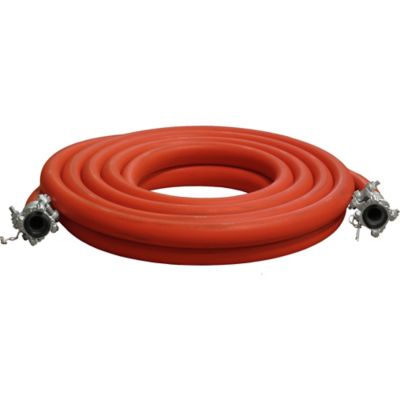
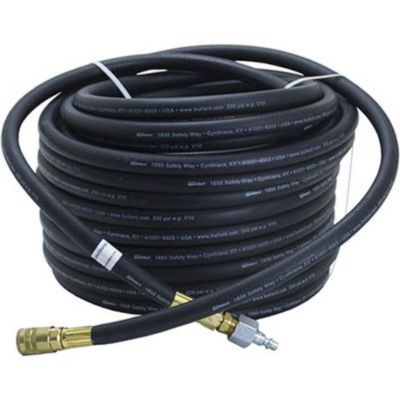
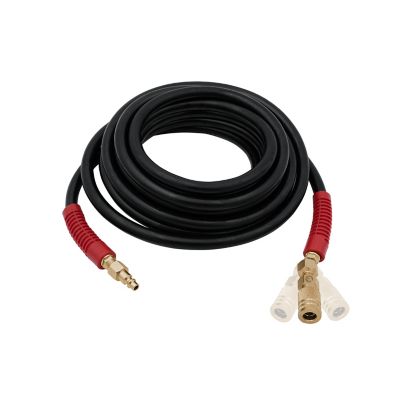
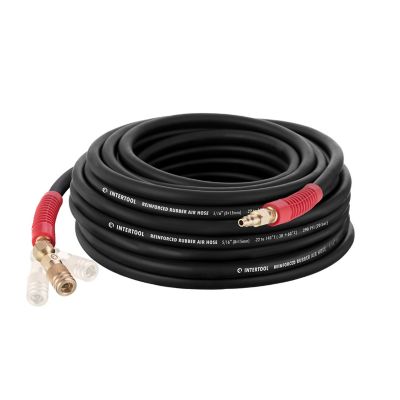
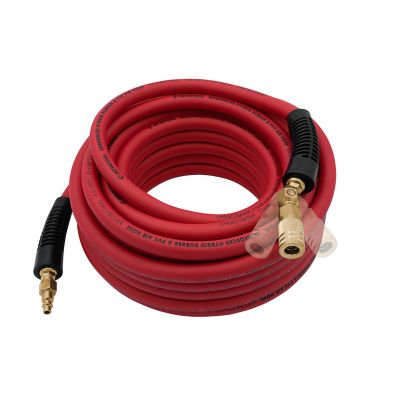
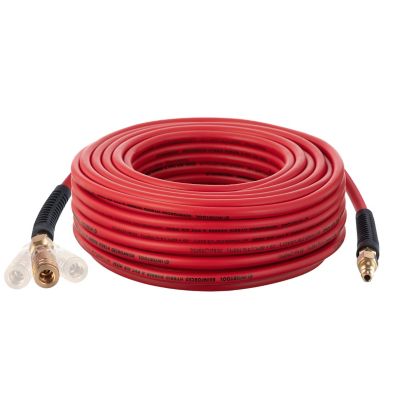
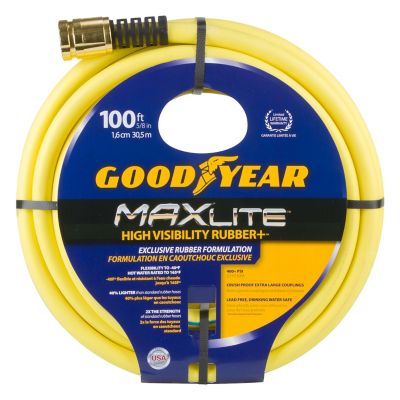
Rubber air compressor hoses give compressed air a flexible path from the compressor to the tool in your hand. They fit right in at a farm shop, garage, barn, construction area, or home workspace where air tools need room to move. A hose may connect to an impact wrench for tire work, a blow gun for clearing sawdust, an air ratchet for equipment repairs, a brad nailer for building projects, or an inflator for topping off tires and sporting equipment. Compared with a short rigid connection, a longer hose lets you work around a tractor, trailer, workbench, or vehicle without hauling the compressor along each time. Browse the full selection of
Rubber Hoses to compare hose lengths, diameters, fittings, and other features that can help match a line to your shop setup. Rubber is often chosen for air service because it can bend and flex while standing up to the everyday scuffs that come with working around concrete floors, gravel drives, tool carts, and equipment. Reinforced construction, commonly made with several rubber layers and a polyester braid, helps the hose handle pressure while resisting abrasion, oil exposure, sunlight, and temperature swings. Many lines remain flexible during cold weather and hold their shape in warm work areas, though the exact temperature range depends on the hose design. This matters during the cooler months, when a stiff line can be harder to route around a tractor or trailer, and during warmer stretches when a hose may sit across a driveway or shop floor. A rubber air hose can be a practical addition for anyone who maintains farm equipment, repairs vehicles, works with pneumatic tools, or keeps a busy home garage. It can also make a thoughtful present for a farmer, mechanic, builder, or handy family member who spends Saturdays turning wrenches and keeping equipment ready for the next job.
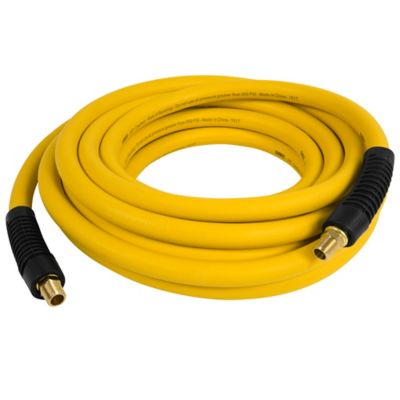
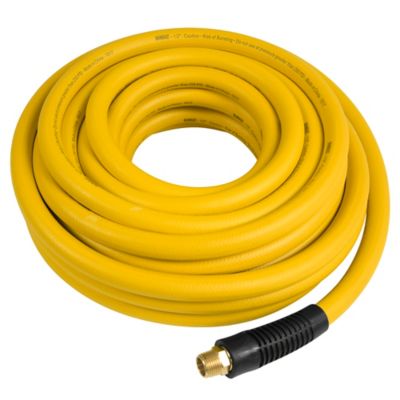
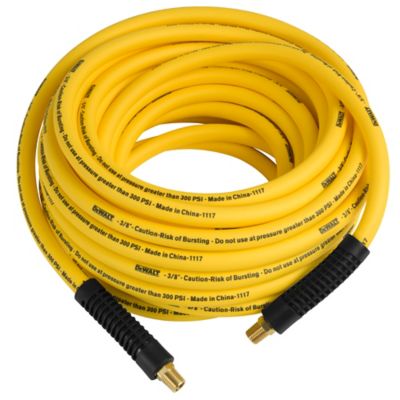
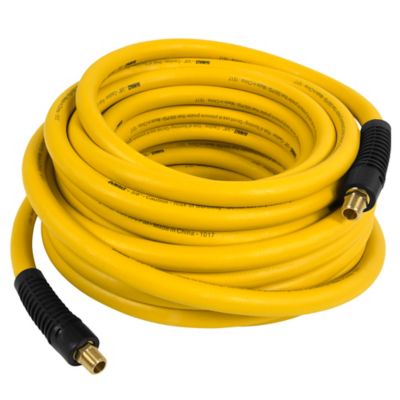
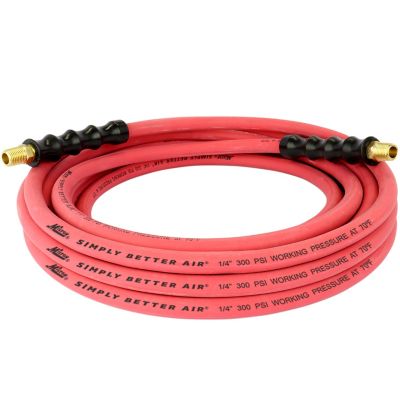
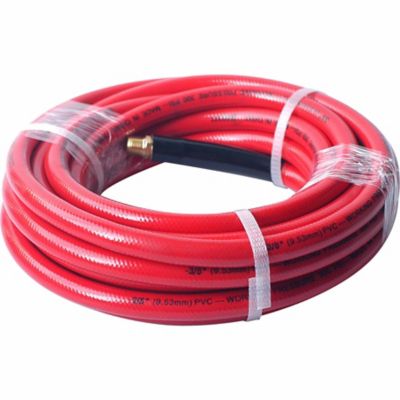
When comparing rubber air compressor hoses, start with the compressor and tools already in your workspace. Check the hose diameter, fitting size, working pressure, and length before placing an order. Common hose inside diameters include 1/4 inch, 3/8 inch, and 1/2 inch, with larger diameters generally allowing more air to reach tools that demand higher flow. A smaller line may be a sensible match for light inflation work, nailers, and blow guns, while a larger line can help supply air to demanding impact tools and other equipment. The compressor’s outlet and the tool’s inlet also need compatible fittings. Many air hoses have 1/4-inch or 3/8-inch NPT connections, and solid brass ends are popular because brass resists rust and corrosion in ordinary shop conditions. Take a close look at whether the ends are male or female, whether couplers are included, and whether your existing quick-connect system matches the hose. Working pressure is another key detail. Hoses in this category commonly support ratings around 250 to 300 PSI, but the printed rating on the hose should always guide your setup, and the hose should never be operated above that limit. Choose a length that reaches the work area without leaving a large coil underfoot. A 25-foot line can suit a compact bench, while a 50-foot line may give more reach around a vehicle or piece of equipment. Extra length can be handy, but it also adds weight and takes more room to coil. Rubber lines often feel heavier than plastic alternatives, especially at longer lengths, so consider how far the hose must be carried and how often it will be moved. A line with bend restrictors or sleeve guards near each fitting can help reduce sharp bends at the connection points, where repeated flexing may strain the hose. These guards are especially helpful when the line drops from a compressor, loops around a workbench, or gets pulled across a floor during a repair.
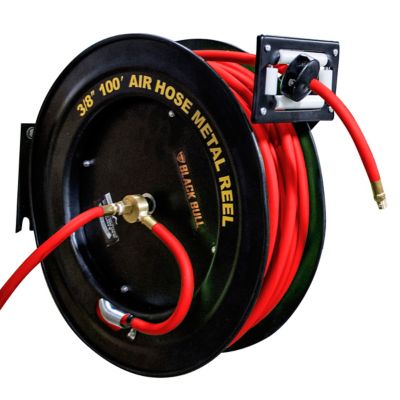
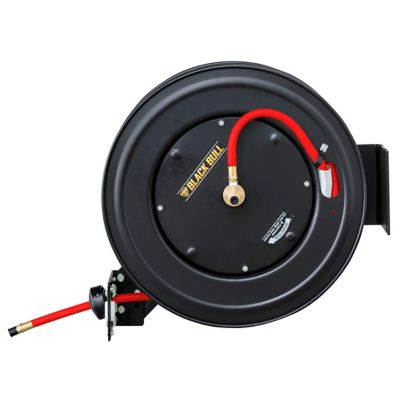
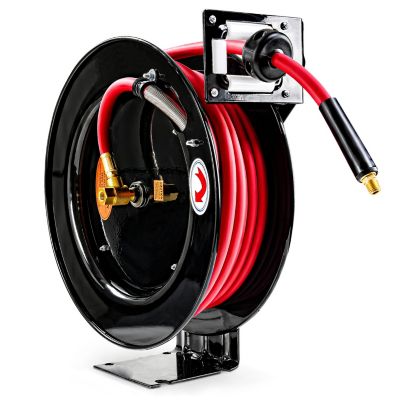
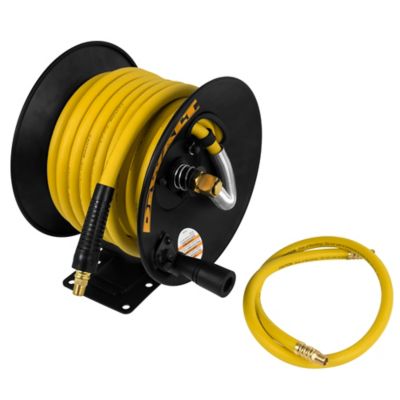
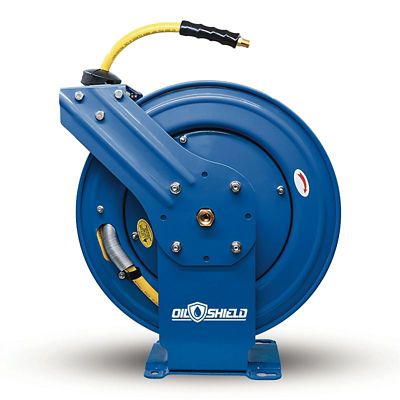
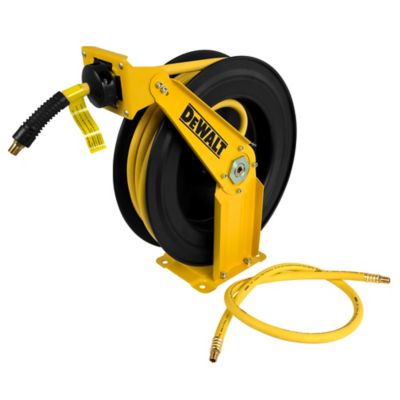
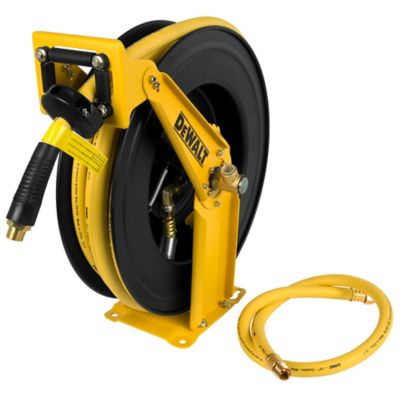
A little care helps keep an air hose ready for the next job. Before each session, look over the outer cover for cuts, deep scrapes, bubbles, soft spots, or exposed reinforcement, and inspect the fittings for damage. Listen for a steady hiss around the connections after the compressor builds pressure; escaping air can point to a loose fitting, worn seal, or damaged coupling. Keep the hose away from sharp edges, hot exhaust parts, welding sparks, and chemicals that may attack the rubber. When work is finished, shut off the compressor, release pressure according to the equipment instructions, and coil the hose in broad loops rather than tight bends. Store it off the ground when practical, away from standing water, direct sunlight, and places where livestock, vehicles, or machinery could run over it. A simple hook on a shop wall or a hose reel can keep the line from becoming a trip hazard and can make morning setup quicker. In a farm setting, that small bit of organization can save time when a tire needs air before heading down the lane or when a clogged radiator screen needs a blast of compressed air. In a home garage, it keeps the floor clear while you rotate tires, clean a workbench, or finish a woodworking project. During colder weather, allow a hose that has been stored in an unheated shed to warm gradually before forcing it into tight bends, since rubber can feel less flexible when chilled. Always pair the hose with a compressor, couplers, and tools that share suitable pressure and airflow requirements, and follow the safety directions supplied with each piece of equipment. With the right length, fitting, diameter, and pressure rating, a rubber air compressor hose can become a steady part of routine maintenance, from dusty farm repairs to weekend projects at the workbench.