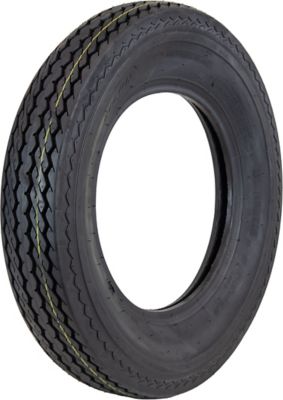
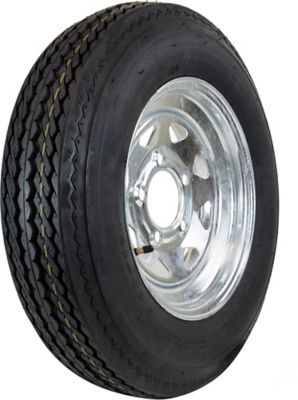
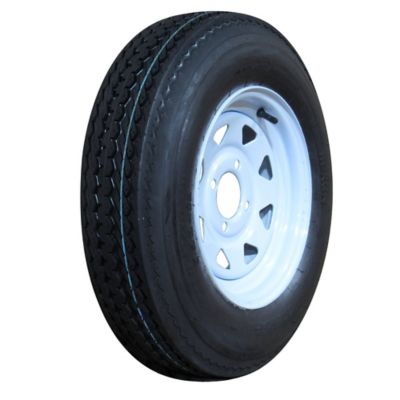
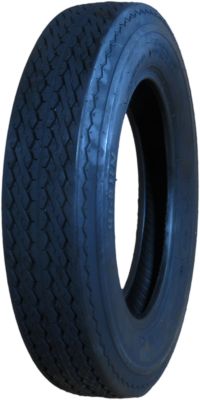
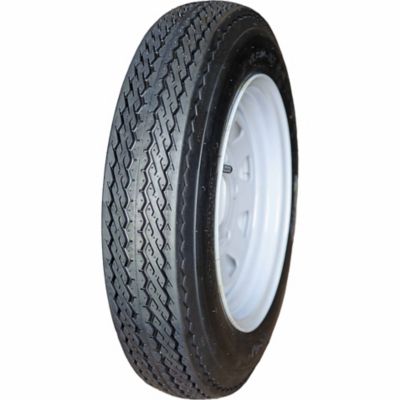
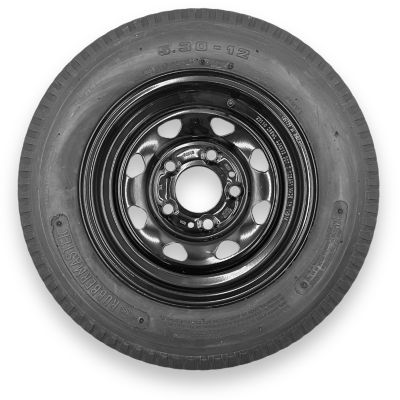
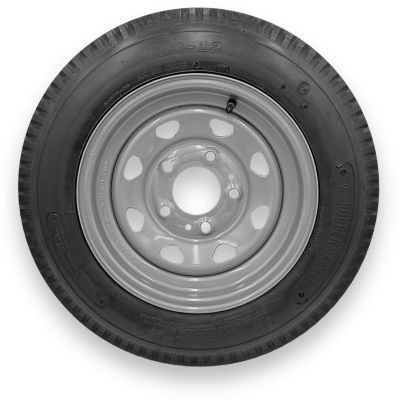
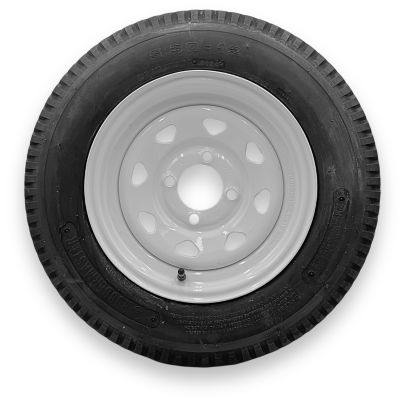
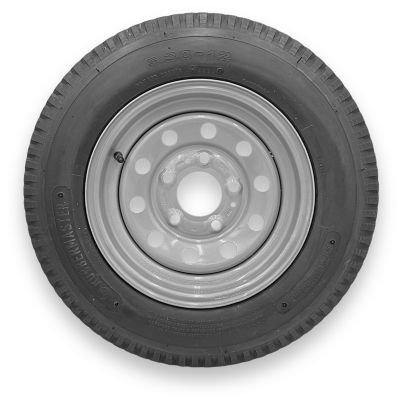
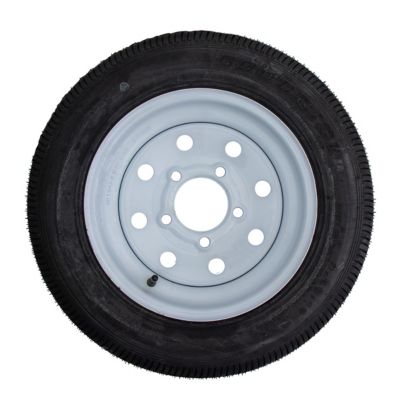
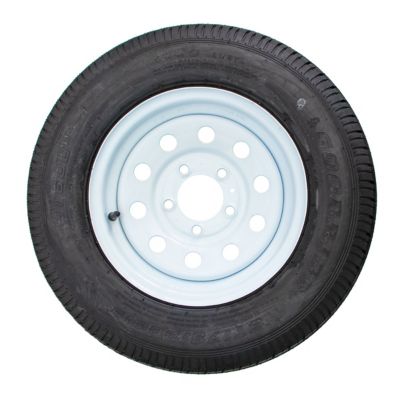
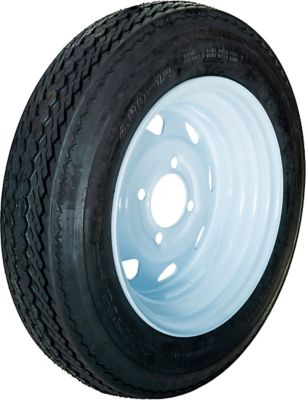
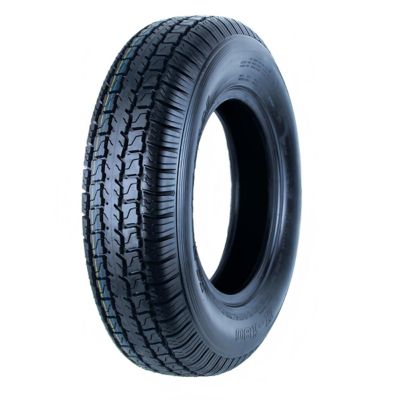
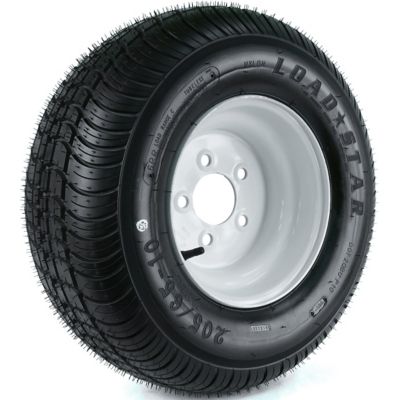
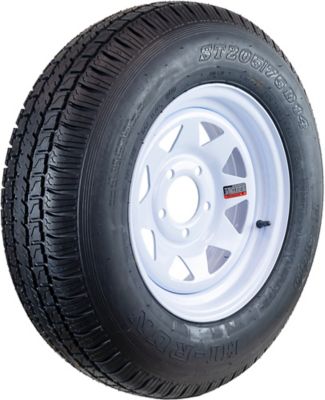
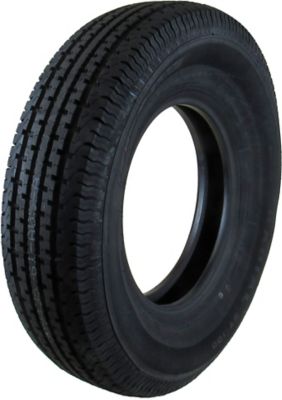
A 5.30-12 trailer tire is a compact tire size commonly found on small utility trailers, boat trailers and some light cargo trailers. It may also be written as 5.30x12 or 530-12, so those markings can point to the same nominal size rather than three different tire sizes. The 5.30 refers to the nominal tire width in inches, while the 12 identifies the wheel’s bead-seat diameter, also in inches. Many tires in this size measure roughly 21.5 to 21.9 inches in overall diameter and about 5.5 inches across the section width, though exact measurements depend on the tire design and approved wheel width. That compact footprint suits trailers carrying loads such as fencing supplies, a small fishing boat, lawn equipment or tools headed out to a job. Most 5.30-12 trailer tires have bias-ply construction, with reinforcing cords running diagonally through the tire casing. The crossed layers support relatively firm sidewalls, a useful trait for carrying trailer loads. Rubber tread compounds, cord reinforcement and bead construction work together to support the tire’s intended service, while tread patterns vary by design. These tires are meant for trailer duty, not as substitutes for passenger-car tires or tires on powered equipment. Trailer-service markings and the trailer manufacturer’s specifications matter more than a similar-looking tread. A tire-only replacement makes sense when the existing wheel is sound and correctly sized; a mounted tire and wheel assembly brings the two components together but still needs to match the trailer’s hub and other fit requirements. For a property owner hauling a mower between fields or a boat owner towing to the ramp, the right fit comes down to more than getting a tire onto a 12-inch wheel. Tire size, construction, load rating and clearance all play a part in keeping the setup suited to the work.
Load range is another important difference among 5.30-12 trailer tires. Load Range C is commonly described as six-ply rated, while Load Range D is commonly described as eight-ply rated. Those ratings describe a strength classification, not necessarily the number of physical layers inside the tire. Many Load Range C tires in this size carry maximum ratings around 1,045 to 1,050 pounds per tire, while some Load Range D versions carry up to 1,250 pounds per tire. The exact sidewall rating and the inflation pressure tied to that rating are the deciding figures, since size alone does not establish carrying capacity. A higher-rated tire also does not increase the trailer’s rated capacity; the axle, wheels, hubs, frame and other components still have their own limits. The trailer’s weight counts along with the cargo, whether that cargo is a stack of fence panels, a fishing boat and its gear, or a load of bagged feed. Uneven loading can place more weight on one tire than the other, so simply adding two tire ratings together does not tell the whole story. Wheel fit deserves the same attention. A 12-inch wheel must have a width approved for the tire, and a replacement assembly must match the hub’s lug count, bolt circle and mounting requirements. Two wheels with the same lug count can still have different bolt patterns. Center-bore fit, offset and clearance around the fenders, frame and suspension can also affect compatibility. Steel trailer wheels may have painted or powder-coated finishes, but the wheel’s dimensions and load rating matter more than its appearance. Valve stems must be suited to the required inflation pressure, too. The broader
Trailer Tires category includes other sizes and constructions, but a nearby size is not automatically interchangeable with 5.30-12. Matching the trailer’s specified size and keeping compatible tires on the same axle helps maintain the setup the trailer was designed to carry.
Routine care matters even when a small trailer spends more time beside the barn than on the road. Tire condition depends on age, loading, inflation and storage as well as miles traveled, so deep tread alone does not mean a tire is ready for another haul. Sidewall cracking, bulges, exposed cords, uneven wear or recurring pressure loss deserve attention before the trailer carries a load. Inflation pressure is best measured before towing, with the tires at rest, and set according to the applicable tire and trailer manufacturer’s requirements. A tire that looks properly inflated can still be below its required pressure, especially under a full load. The maximum load shown on the sidewall is tied to a specified pressure, not to any pressure that happens to keep the tire standing upright. Small trailer tires also turn many times over the course of a trip, making the tire’s speed rating important on longer stretches of road. Staying within that rating and the trailer’s limits matters whether the trip is five miles to a neighboring property or a longer run with a boat in tow. Parking on firm, level ground, keeping tires clear of standing water and protecting them from prolonged sunlight can help limit unnecessary deterioration. Oil, fuel and harsh cleaners should stay off the rubber, while ordinary dirt can generally be removed with mild soap and water. A spare belongs in the same fit discussion as the tires carrying the trailer: its size, load rating, wheel mounting pattern and condition need to suit the trailer before it is needed beside the road. Wheels, bearings and fasteners deserve attention as part of the whole running assembly, rather than leaving every towing concern to the tires. For everyday hauling around a property or out on the road, a correctly matched 5.30-12 trailer tire supports a practical setup built around the trailer’s specifications, the weight it carries and the miles ahead.