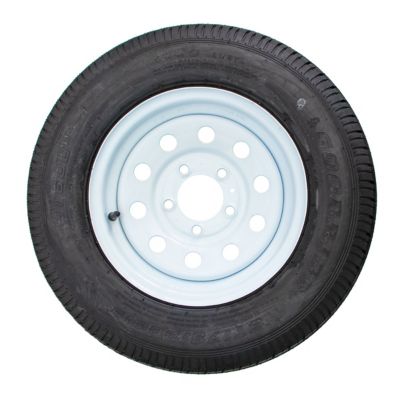
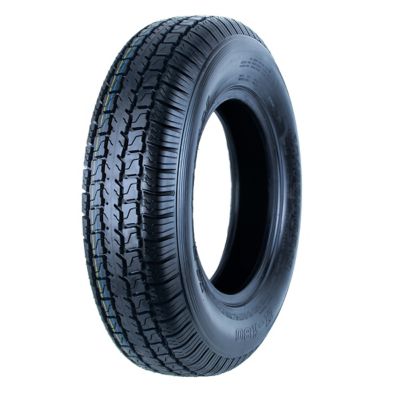
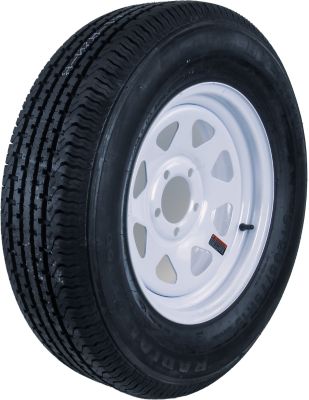
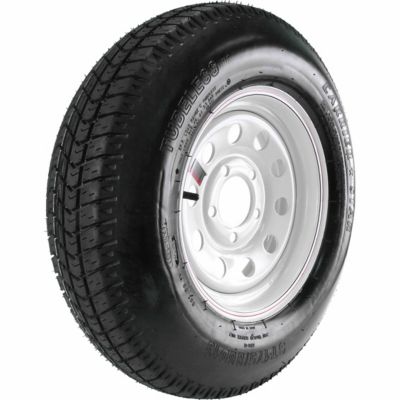
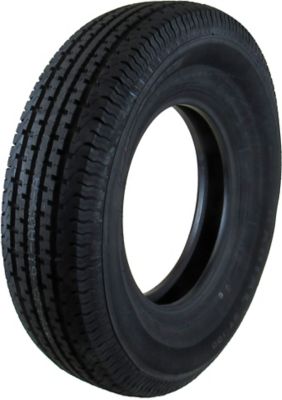
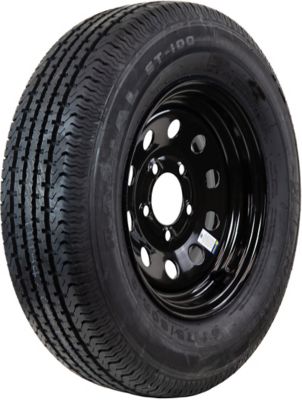
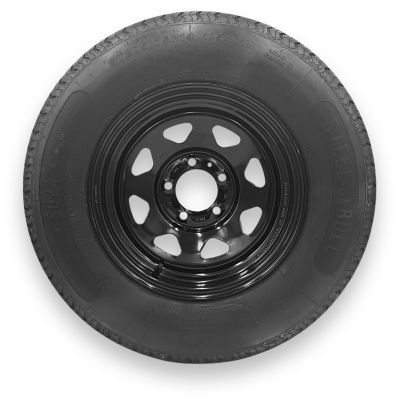
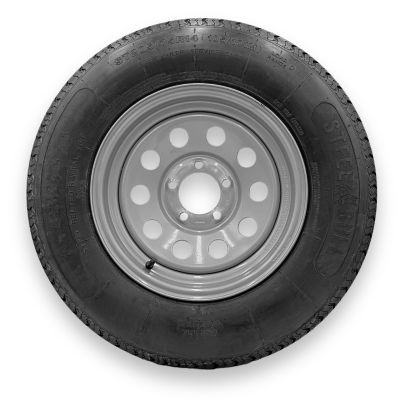
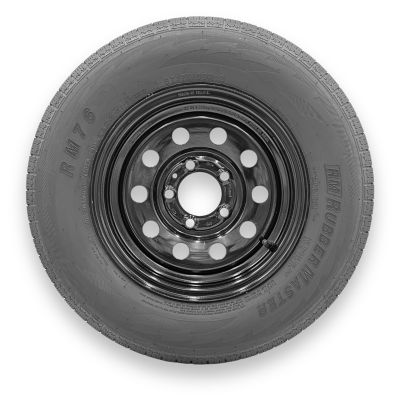
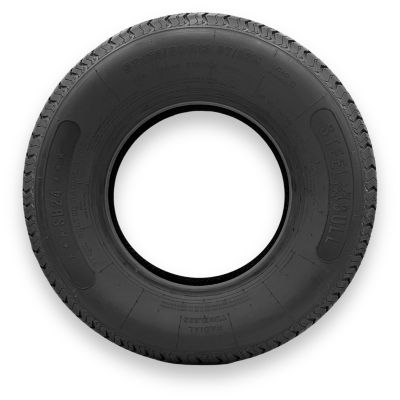
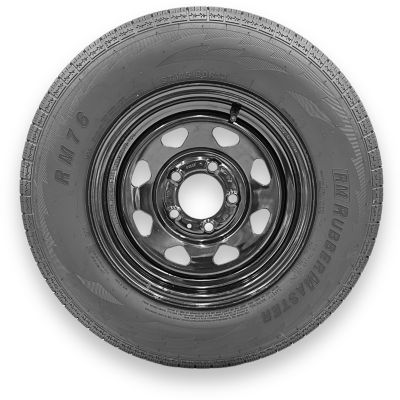
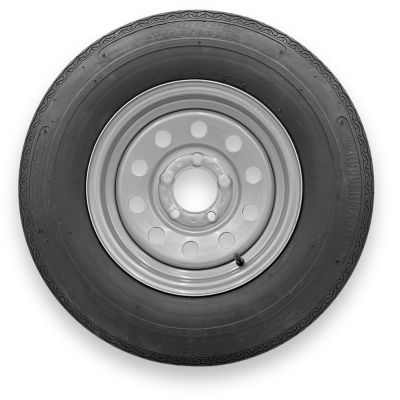
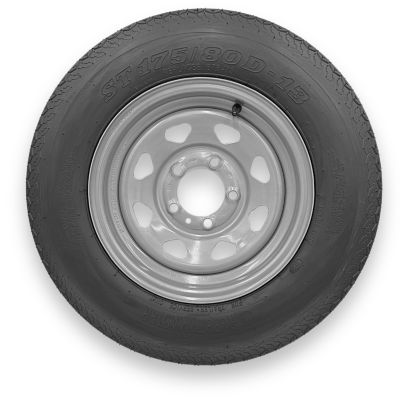
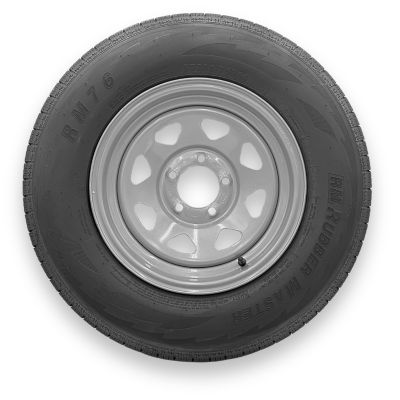
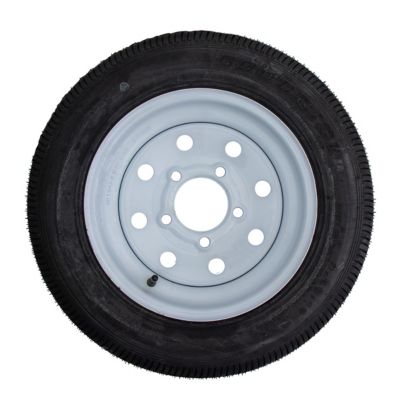
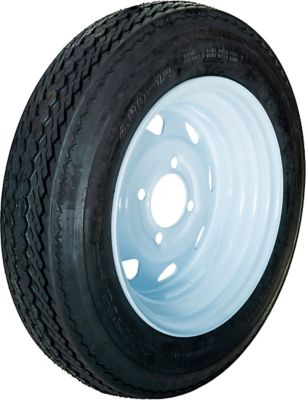
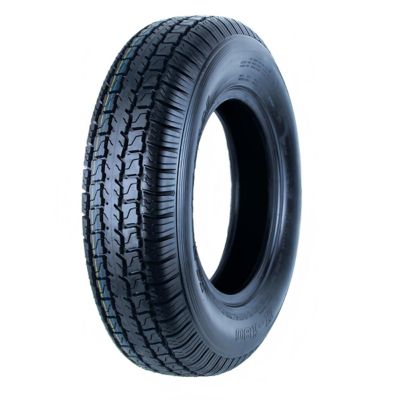
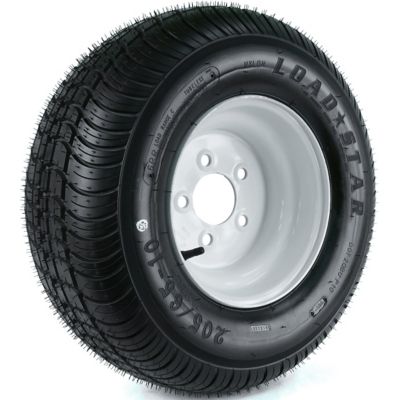
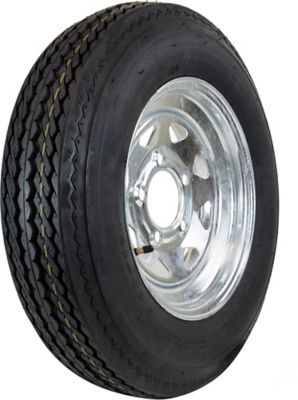
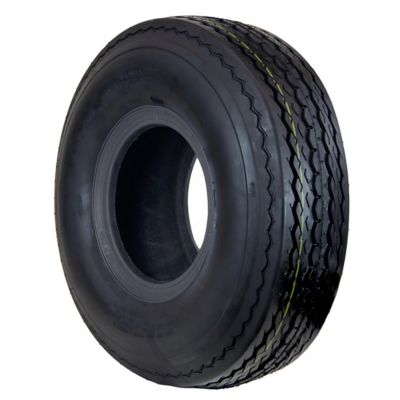
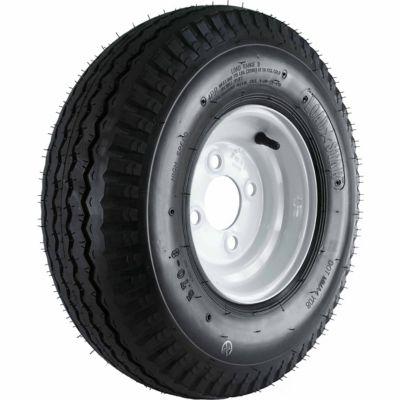
13-inch trailer tires are commonly found on light-duty utility trailers, small boat trailers, motorcycle trailers and compact campers. They suit many smaller hauling setups, whether the load is a riding mower headed across town, a fishing boat going to the ramp or tools headed to a fencing job. The 13-inch measurement refers to the wheel diameter at the tire’s bead seat, not the tire’s overall height. That distinction matters because two tires made for 13-inch wheels can have different widths, outside diameters and load ratings. A tire that mounts on the wheel still needs to match the trailer’s requirements and leave enough clearance around the fender, frame and suspension throughout normal suspension travel. The full tire size, approved rim width and load requirements in the trailer manufacturer’s information provide a better starting point than appearance alone. An ST marking identifies special trailer service; it is not the same designation as a passenger-car or light-truck tire. Trailer tires carry a load while following the tow vehicle, and their construction accounts for that job. For a homeowner hauling bagged feed or a landowner moving mowing equipment, the important match is between the tire’s specifications and the trailer’s actual working load. That load includes the trailer itself along with everything riding on it, from a toolbox tucked against the front rail to equipment secured over the axle. The tires must provide sufficient capacity for the weight they carry without exceeding the trailer’s axle, wheel or gross vehicle weight ratings. A higher tire load rating does not raise those other limits. Load distribution matters, too: a trailer can remain below its total weight limit while placing too much weight on one tire or axle. Matching the full size and service requirements helps keep a compact hauling setup suited to its everyday work, rather than relying on the wheel diameter as the only deciding factor.
Construction is another meaningful difference among 13-inch trailer tires. Radial tires have body cords running across the tire beneath the tread, typically with reinforcing belts, while bias-ply tires have layers of cords crossing at diagonal angles. Radial construction generally allows the tread and sidewalls to flex more independently and often suits trailers that spend plenty of time on paved roads. Bias-ply construction has a different flex pattern and may fit certain trailer applications specified by the manufacturer. Neither construction makes load limits, inflation requirements or speed ratings optional. Matching construction across the trailer, along with the specified size and load capability, helps maintain consistent handling; mixing radial and bias-ply tires is best avoided unless the trailer manufacturer expressly permits it. Rubber compounds, reinforcing cords, beads and belts all contribute to how a tire supports its load and holds its shape. Those internal materials work together with the tread, so a deeper-looking pattern alone does not establish a tire’s carrying capacity or expected service life. Tread designs can also differ in how they channel water, wear and respond to road surfaces. For a small camper traveling highway miles, sustained towing demands deserve attention. For a utility trailer making frequent loaded trips between properties, uneven loading, tight turns and repeated contact with rough ground can add their own strain. Inflation connects all of those demands. Pressure should follow the trailer and tire manufacturers’ guidance for the application, checked before travel while the tires are cold. Letting air out simply to soften an empty trailer’s ride can leave the tires without enough support when the next load goes aboard. Underinflation and overloading increase flex and heat buildup, even when the tread still looks substantial. The sidewall’s speed rating also matters independently of the posted speed limit, and some tire ratings have specific operating conditions. Keeping those limits in mind helps match the tire to the hauling routine, whether that means short supply runs or longer stretches behind a pickup.
Fit also extends beyond the rubber when a tire comes mounted on a wheel. A 13-inch tire-and-wheel assembly needs the correct bolt pattern, wheel width, offset, center opening and mounting-seat configuration, along with wheel and valve ratings suited to the application. A wheel that looks close is not enough, and an assembly’s working limits depend on every component, not just the tire sidewall. A matching spare deserves the same attention, especially on a boat trailer headed down a two-lane road or a utility trailer carrying equipment needed at the next stop. The spare should fit the hub, clear nearby parts and have suitable capacity and inflation before it is needed. Regular care helps protect that investment in the hauling setup. Sidewalls, tread grooves and valve stems merit a close look for cracks, cuts, embedded objects, bulges or signs of air loss. Uneven wear can point to inflation trouble, alignment issues, worn suspension parts or other conditions that a replacement tire alone will not fix. Boat trailer tires also share road duty with hubs and bearings that need their own maintenance; good tire condition cannot make up for a neglected wheel end. Tire age matters even when mileage is low, so the manufacturing date and the tire maker’s inspection and replacement guidance belong alongside tread condition in any assessment. During longer periods of storage, keeping tires clean and protected from prolonged direct sunlight and petroleum products helps limit avoidable damage. A mild soap-and-water cleaning is a better choice than harsh solvents. Mounting, puncture assessment and repairs call for equipment and methods appropriate to trailer tires, with wheel fasteners tightened and rechecked according to the trailer or wheel manufacturer’s instructions. Comparing 13-inch options within the broader
Trailer Tires category comes back to the same practical details: the right dimensions, enough rated capacity, compatible construction and a setup that fits the trailer’s work.