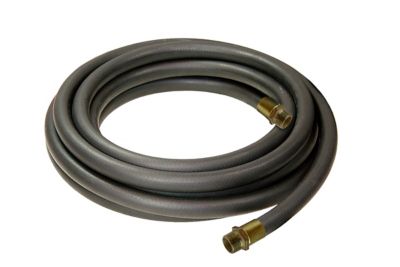
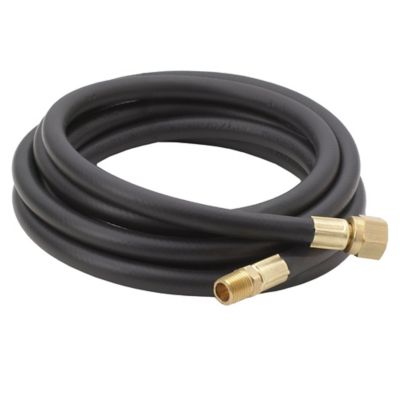
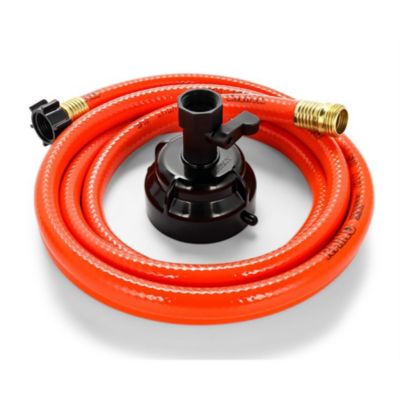
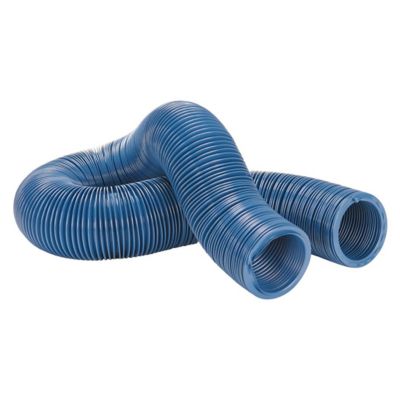
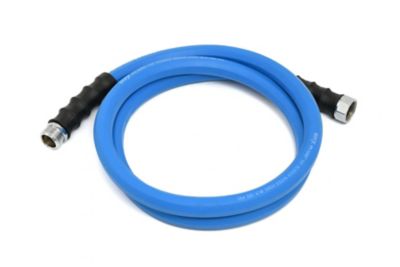
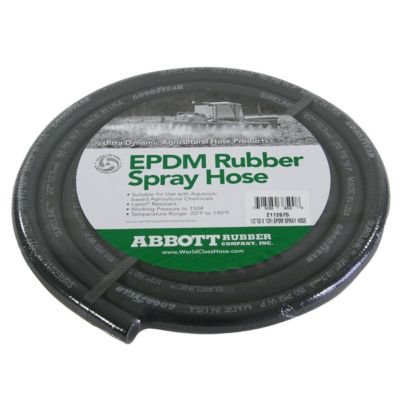
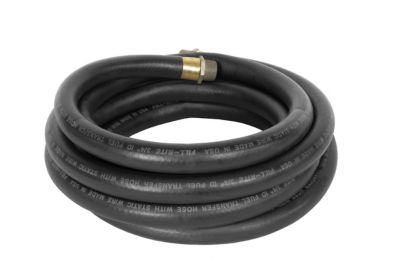
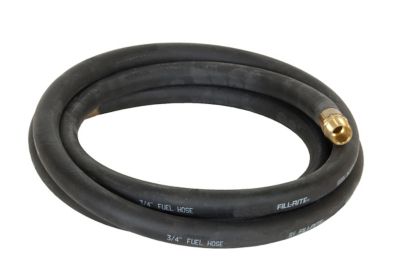
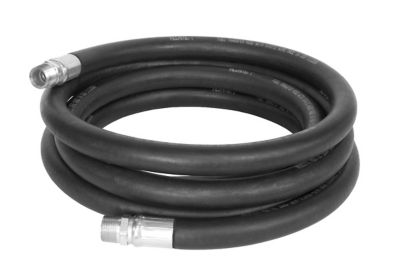
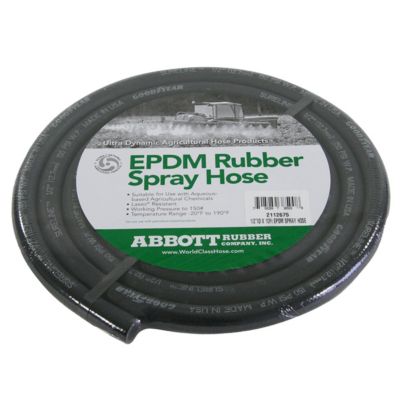
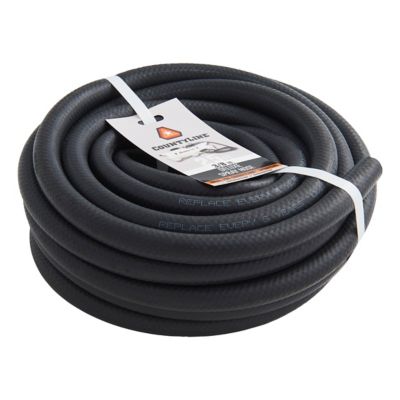
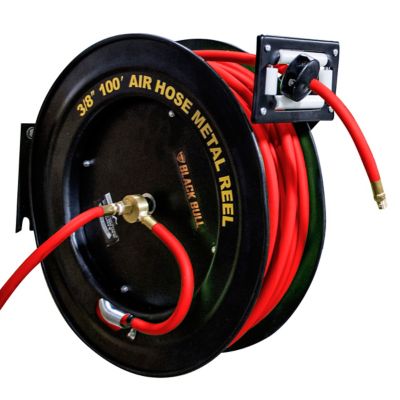
A 10-foot hose is a short garden hose that connects a nearby spigot to a hose reel, sprinkler, or watering attachment without leaving a long coil on the ground. Often called a leader hose or lead-in hose, it makes sense where the water source and the work are close together: beside a potting bench, along a barn wall, near a wash station, or between a faucet and a reel mounted a few feet away. That shorter reach keeps excess hose out from underfoot and takes less room to coil when the job is done. It also gives a reel connection some breathing room, so the line does not have to stretch tight across a corner or bend sharply at the faucet. Ten feet describes the hose’s length, not its diameter or connection size, and those other measurements matter just as much. A hose marked 5/8 inch by 10 feet generally has a 5/8-inch inside diameter; many garden hose connections have 3/4-inch garden hose threads. The two measurements describe different parts and are not interchangeable. A smaller inside diameter may suit modest watering needs, while a larger opening can support greater flow when the water supply and attachments allow it. A short run also creates less friction loss than a much longer hose of the same diameter at the same flow, though it cannot increase the pressure coming from the spigot. Connection layout deserves a look, too. Many garden hoses have a female coupling at one end and a male coupling at the other, while certain reel setups call for female connections at both ends. Garden hose threads also differ from tapered pipe threads, even when the size descriptions sound similar. The best fit leaves enough slack for a gentle curve without creating a loop across a doorway, walkway, or equipment path. Measuring the actual route around a post or behind a reel gives a better sense of fit than measuring straight across the ground.
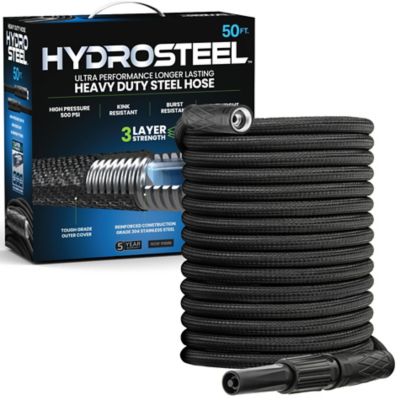
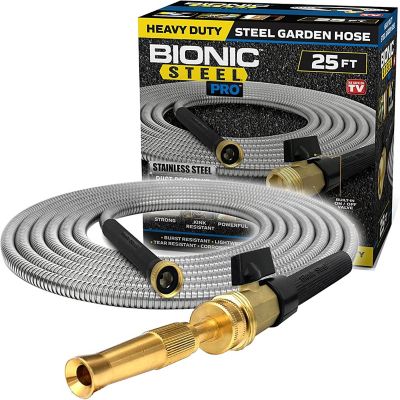
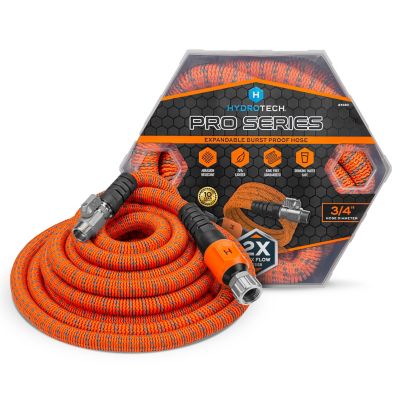
Material and construction affect how a 10-foot garden hose feels in the hand and holds up around the place. Vinyl hoses tend to be light and easy to manage for simple connections that stay mostly in one spot. Rubber hoses often have more weight and suit jobs where a substantial feel matters, though the exact handling and wear resistance depend on the construction. Hybrid polymer hoses combine materials to balance flexibility and manageable weight, making them worth considering when the hose gets moved between a faucet, a reel, and a nearby watering area. A stainless steel outer jacket adds a protective covering around an inner water-carrying tube; the jacket does not determine drinking-water suitability or make the entire assembly immune to damage. Rough concrete, gravel, sharp edges, and repeated dragging can wear on different hose surfaces in different ways. Reinforcement, wall construction, and protection near the couplings all play a part in how a hose handles everyday work. Kink resistance is helpful when a short line has to curve behind a reel, but even a flexible hose needs room to bend rather than fold tightly. Couplings deserve the same attention as the hose body. Brass, aluminum, and other fitting materials have different handling characteristics, and compatibility with the adjoining connection matters. Larger grips can make attachment easier with wet hands, while swivel-style fittings can reduce twisting as a connection is tightened. A sound washer inside a female fitting helps form the seal; extra force is no substitute for a missing or damaged washer. Working-pressure ratings also matter, especially with spray nozzles and other attachments that stop the flow downstream. A burst-pressure figure is not the same as an allowable working-pressure rating. The hose, fittings, and attached equipment all need to suit the intended water pressure, and the lowest-rated component limits the setup. Turning off the supply after the task helps keep a closed nozzle from holding pressure in the line between chores.
Intended use is especially important when a short hose carries water for people or animals. A 10-foot leader hose for watering flowers does not automatically belong on an RV drinking-water connection, at a pet bowl, or beside a livestock water tank. Drinking-water-safe labeling should apply to the hose itself, and any fittings or accessories in the same water path need to be appropriate for that purpose as well. Neither a metal covering nor a particular color proves that a hose is suitable for potable water. Keeping a drinking-water hose separate from one connected to a garden sprayer or exposed to fertilizers helps avoid cross-contamination. Backflow protection at the water source may also be necessary for the setup and local requirements, particularly around tanks or chemical application equipment. For everyday care, a short hose is easy to inspect from end to end: look for splits, flattened areas, worn spots, damaged threads, and leaks around the couplings. Dirt caught in a fitting can interfere with the seal, while a worn washer may need replacement even when the hose itself still looks sound. Gentle curves, a broad coil, and storage away from sharp tools help prevent unnecessary strain. Supporting the line near the faucet also keeps the full weight of the hose and attachments from pulling sideways on the connection. After watering, shut off the source, release pressure safely through the attachment, and drain the hose as directed by its manufacturer before putting it away. Keep open ends off dirty ground, especially when the hose serves a drinking-water connection. For a nearby reel or compact work area, ten feet can be plenty; for watering rows, reaching an outbuilding, or crossing a larger yard, a
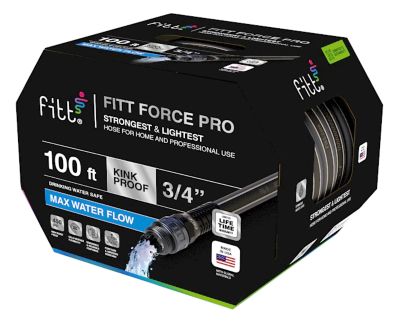
100 Ft Hose provides a different amount of reach. Matching length to the actual route keeps a simple watering job from turning into a pile of extra hose.