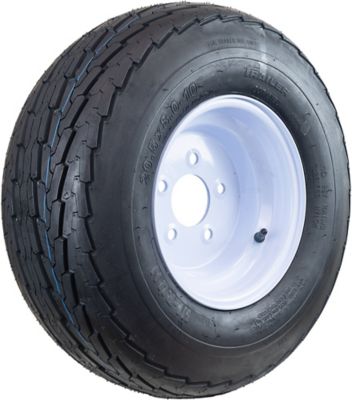
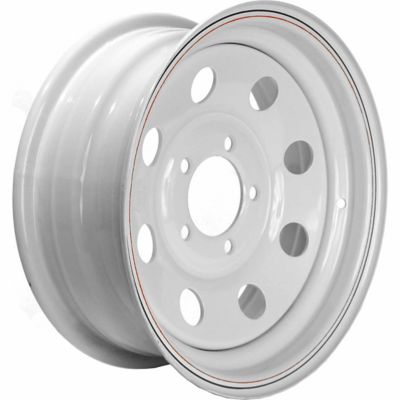
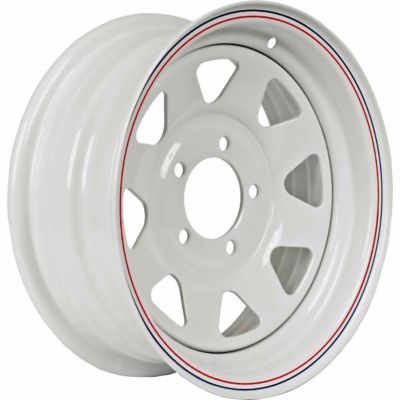
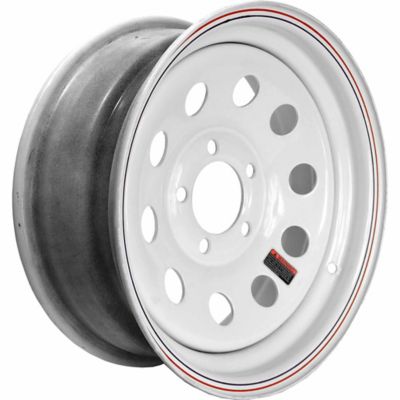
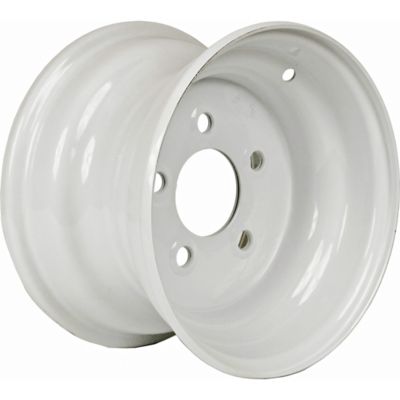
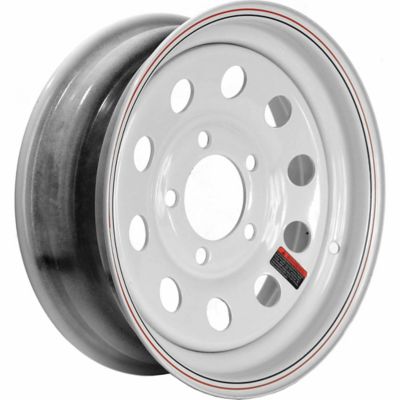
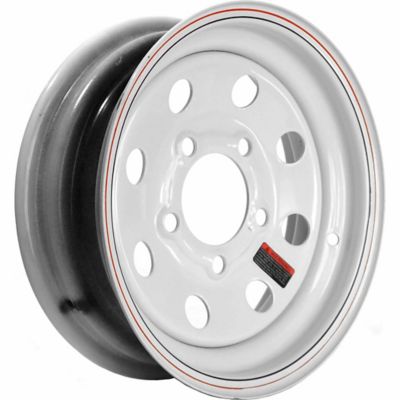
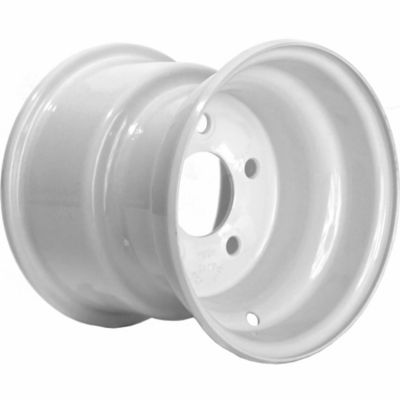
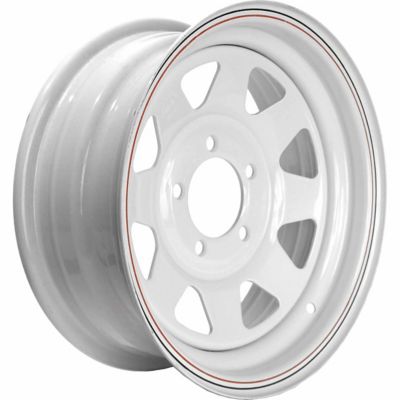
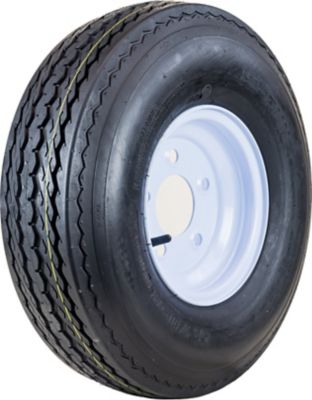
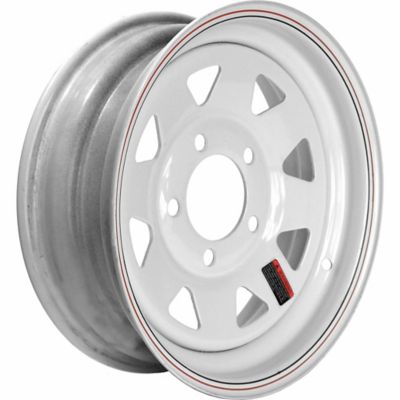
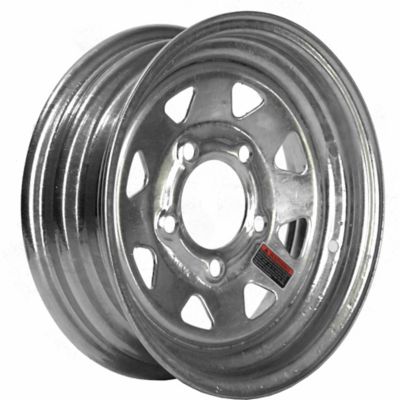
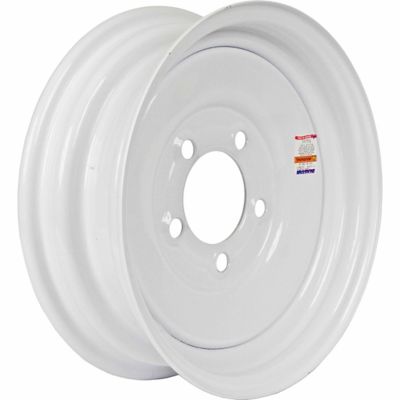
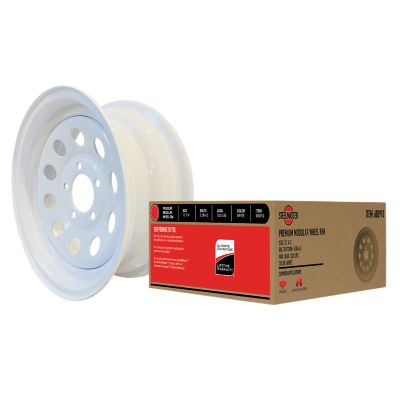
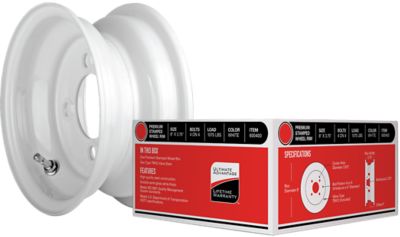
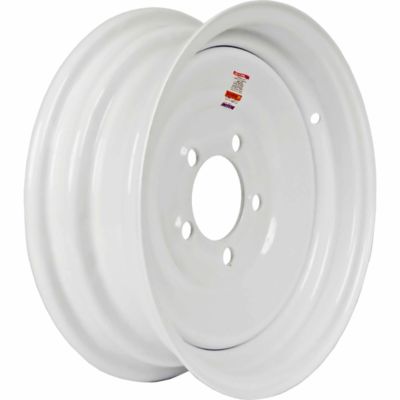
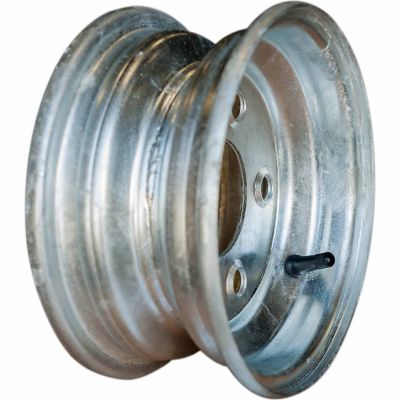
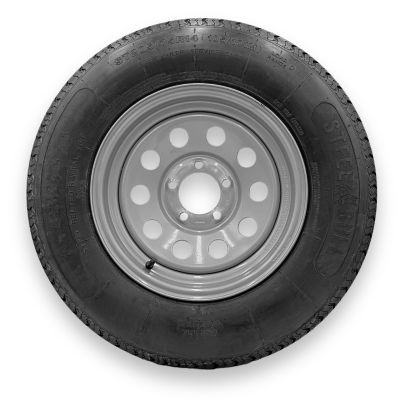
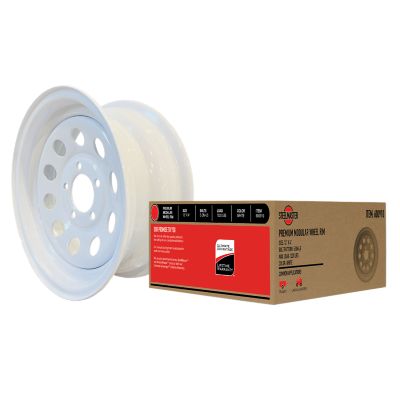
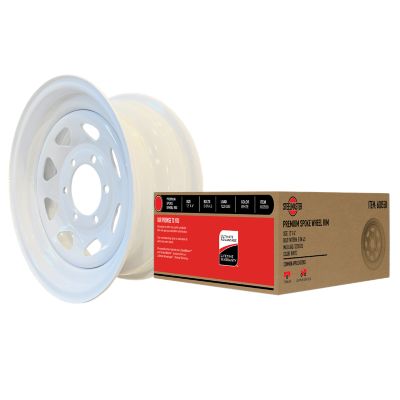
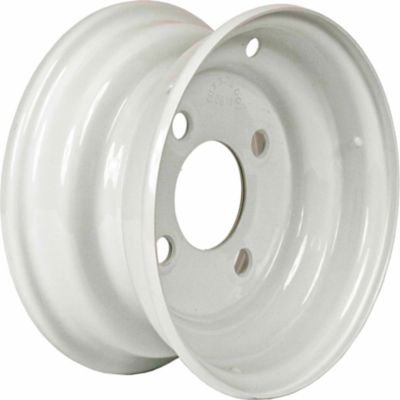
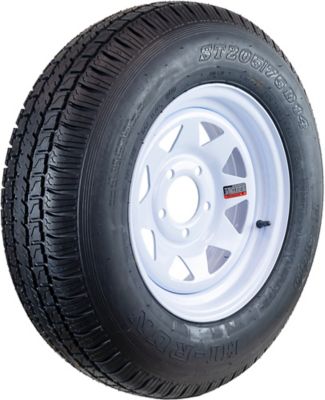
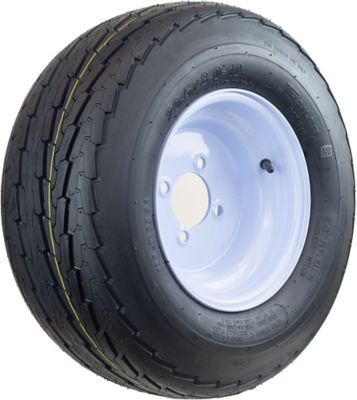
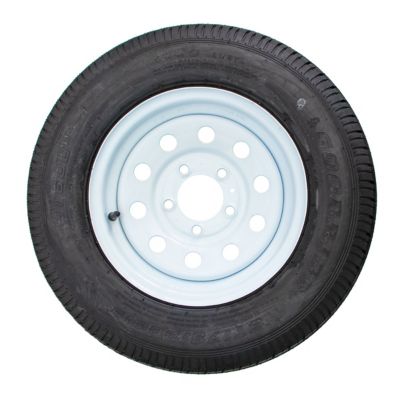
5 lug trailer wheels have five mounting holes that fasten the wheel to a matching trailer hub. They’re common on utility trailers, boat trailers, and some smaller travel trailers, handling jobs from hauling a mower across the county to carrying fencing supplies back to the farm. The five-hole layout is only part of the fit, though. Bolt pattern describes both the number of holes and the diameter of the circle running through their centers. A 5 on 4.5-inch bolt pattern, for example, means five mounting holes arranged on a circle measuring 4.5 inches across. Other five-lug patterns exist, so matching the lug count alone isn’t enough. Because a five-lug wheel has no stud directly opposite another, its bolt circle cannot be measured straight across between the centers of opposite studs. A bolt-pattern template helps identify the pattern; another method measures between the centers of neighboring studs and multiplies that distance by approximately 1.701 to calculate the bolt-circle diameter. Checking that result against the trailer or hub manufacturer’s specifications helps keep similar-looking patterns from getting mixed up. Wheel diameter, rim width, center bore, offset, and backspacing matter alongside the bolt pattern. The nominal wheel diameter is measured where the tire beads seat, not across the outside edges of the rim. The center opening must clear the hub assembly and meet its centering requirements, while offset and backspacing determine where the wheel sits relative to the mounting face. Those dimensions affect clearance around the fender, frame, suspension, and brake components. A wheel that bolts onto the studs can still sit too far inward or outward for the trailer. For a utility trailer carrying a compact mower, that clearance matters when the trailer is loaded and the suspension moves. Matching the original specifications, or an approved replacement specification, keeps the focus on the whole assembly rather than just the five holes visible from the driveway.
Steel and aluminum are common materials for five-lug trailer wheels, with finishes that suit different hauling routines. Steel wheels often have painted, powder-coated, or galvanized surfaces, while aluminum wheels may have painted, polished, or machined finishes. Steel generally brings a practical, work-ready look; aluminum can reduce wheel weight in some comparable sizes, though the actual specifications matter more than assumptions about the material. Neither material alone establishes how much a wheel can carry. Each wheel has its own load rating, and that rating needs to meet the trailer manufacturer’s requirements along with the ratings of the tires, hubs, axles, and other components. Higher-rated wheels do not raise the trailer’s gross vehicle weight rating. A load of bagged feed, lumber, or equipment still has to stay within the trailer’s limits and be positioned to maintain the specified tongue weight. The tire-and-wheel pairing deserves the same attention as the hub connection. When comparing
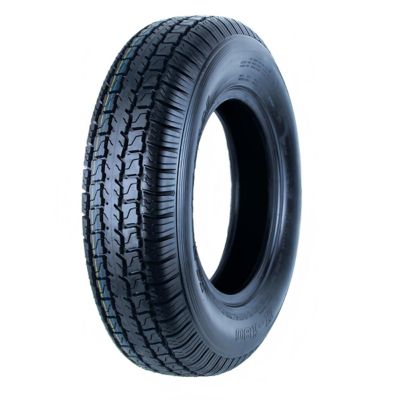
Trailer Tires, the tire’s bead diameter must match the wheel diameter, and the wheel width must fall within the tire manufacturer’s approved range. Tire load capacity, speed rating, and inflation requirements also need to suit the application. The wheel and valve stem must support the required inflation pressure; a valve stem that fits the opening is not automatically rated for every tire setup. Proper lug hardware matters, too, because the nut’s seat shape must match the wheel’s mounting holes. For a boat trailer making repeated trips down a launch ramp, corrosion-resistant finishes and care after saltwater exposure deserve attention. For a utility trailer hauling gravel or brush, easy-to-clean surfaces make it simpler to spot damage around the rim and mounting holes. Finish choice can help with upkeep, but it cannot substitute for the right dimensions, load capacity, and hardware.
A matching spare wheel and tire assembly can make a long haul less of a headache, especially when the route runs well beyond the nearest repair shop. Compatibility means more than sharing a five-lug pattern: the spare also needs the proper tire size, load capacity, inflation rating, offset, center clearance, and lug-seat fit. Its outside dimensions must work with the trailer’s spare carrier, too. For owners managing several trailers, keeping wheel specifications with each trailer’s records helps prevent a utility trailer spare from being mistaken for a boat trailer spare just because both have five holes. Day-to-day care is straightforward, but it pays to look beyond the visible face of the wheel. Dirt packed around the mounting area, corrosion on mating surfaces, and damage near the lug holes can interfere with proper seating. Heavy rust, cracks, bent rim flanges, elongated holes, or recurring air loss deserve inspection before another loaded trip. A fresh coat of paint does not address structural damage. After wheel installation, lug nuts need tightening in the manufacturer’s specified sequence and to the specified torque with a torque wrench, followed by checks at the intervals the manufacturer calls for. Tire pressure should be checked when the tires are cold, following the trailer and tire manufacturers’ load and inflation guidance. Cleaning away mud and road residue makes inspection easier, while rinsing after saltwater exposure helps limit corrosion. Tire mounting and wheel damage assessments are jobs for a properly equipped service professional. Whether the trailer carries lawn equipment to a job, supplies to a back pasture, or a boat to the ramp, the right five-lug wheels belong to a matched system. Consistent sizing, suitable load ratings, sound mounting surfaces, and regular checks help keep that system ready for the next haul without turning a simple wheel replacement into a string of fit problems.