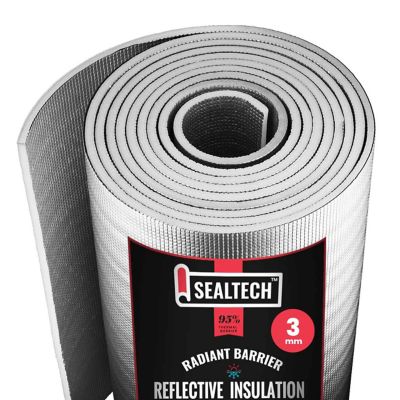
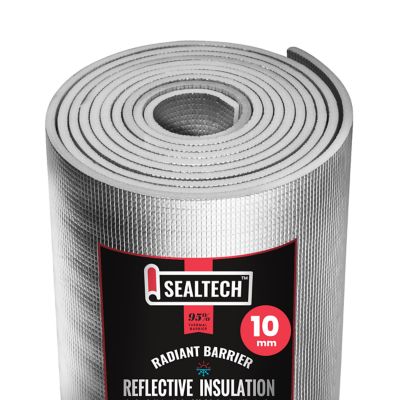
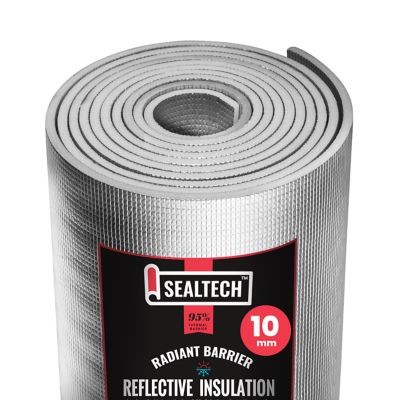
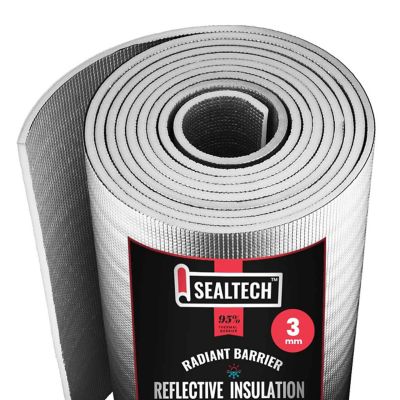
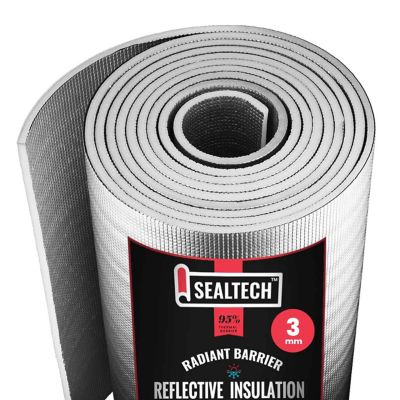
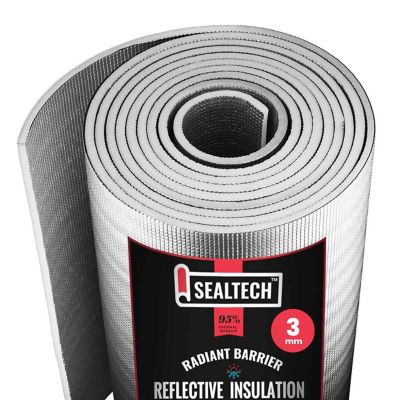
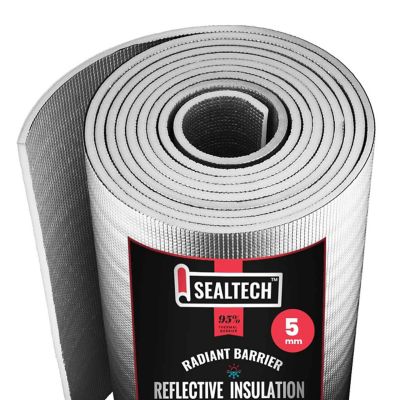
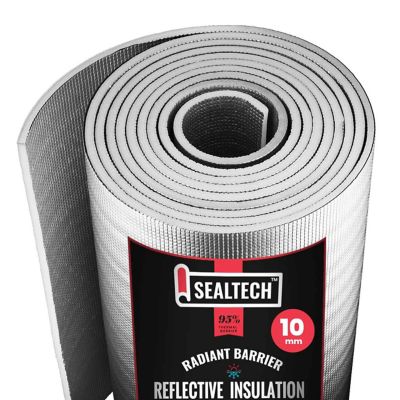
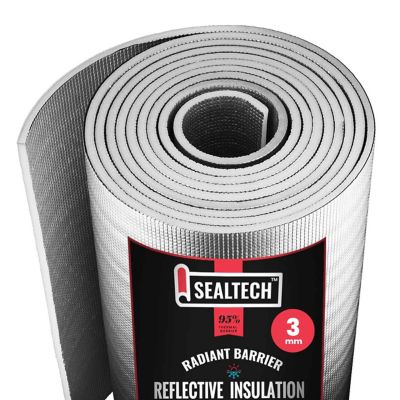
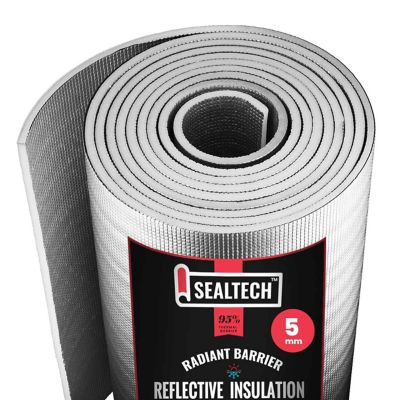
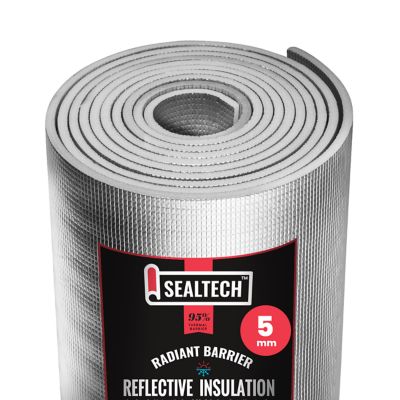
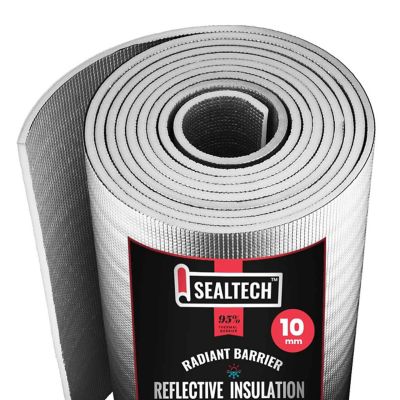
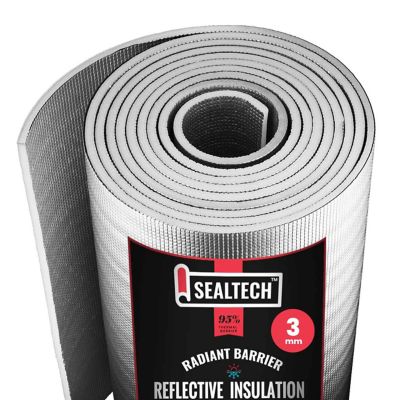
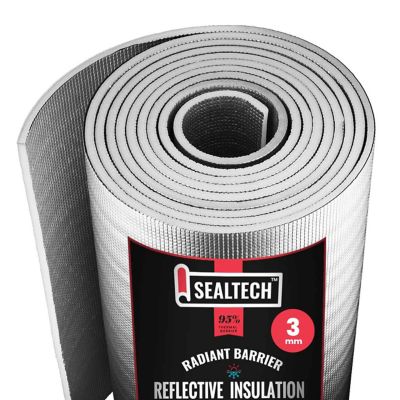
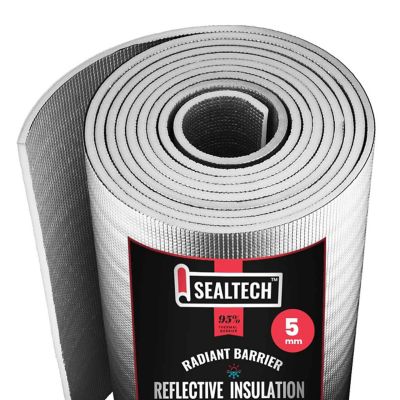
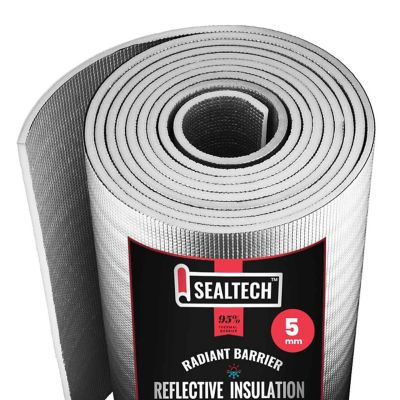
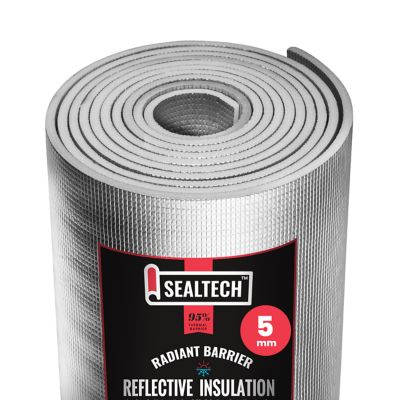
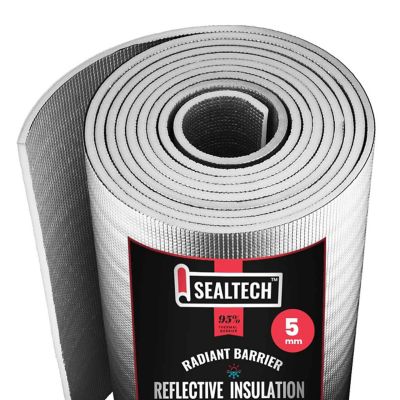
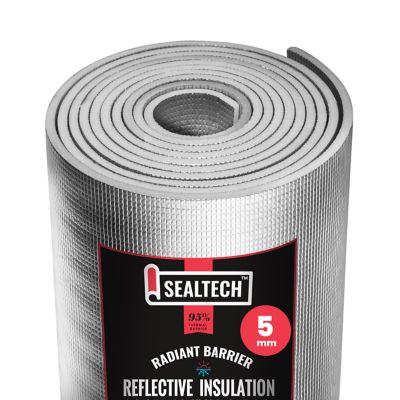
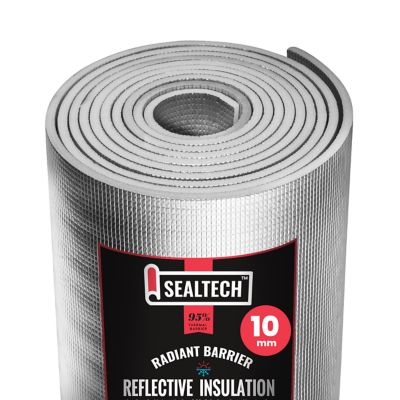
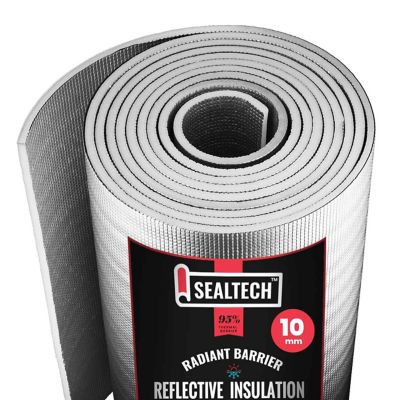
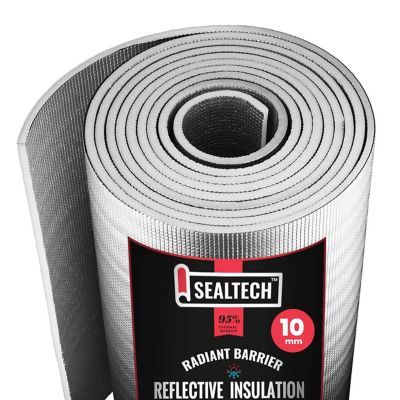
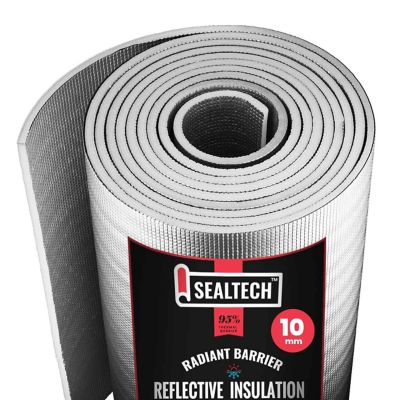
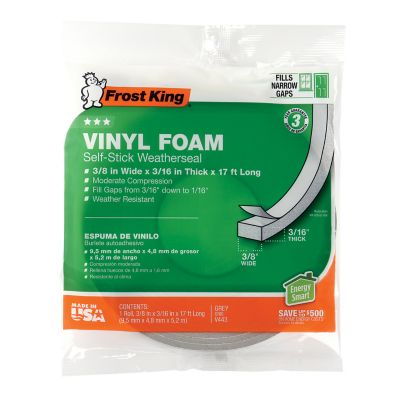
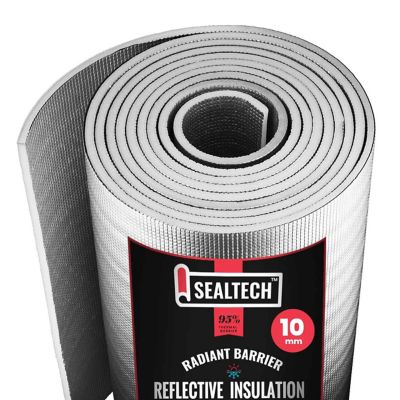
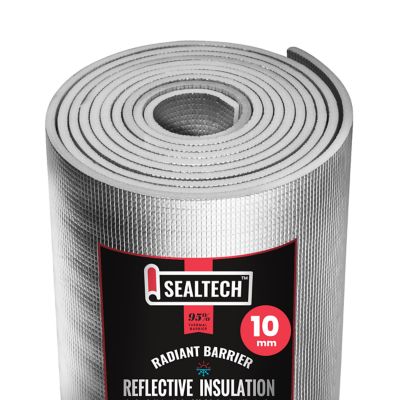
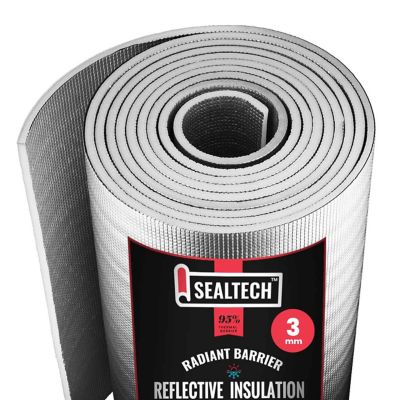
A 48-inch-wide insulation roll covers a four-foot-wide strip, making this size a practical fit for broad surfaces in garages, workshops, storage sheds, and certain metal-building assemblies. Roll length determines total coverage: a roll measuring 48 inches wide by 25 feet long contains 100 square feet of material before allowances for trimming, overlaps, and openings. That broad coverage can mean fewer seams than narrower material across an open surface, though the best fit depends on the framing and installation requirements. Width alone does not tell the whole story. Insulation rolls can differ in core material, thickness, facing, thermal performance, and approved applications, so two rolls with the same dimensions may serve very different purposes. Reflective insulation commonly combines a reflective facing with a bubble or foam core, while fiberglass blanket insulation slows heat transfer through a network of glass fibers. A reflective surface works by reducing radiant heat transfer when it faces an appropriate air space; it does not perform the same job as a thick layer of fiberglass simply because both come on a roll. For a farm shop with a broad roof area, a detached garage with exposed framing, or a utility room undergoing renovation, those differences matter more than the roll’s appearance. Homeowners, farmers, property managers, and contractors may find the four-foot width convenient for larger layouts where the material’s specifications match the building assembly. Flexible rolls can also be easier to carry through a doorway or position along a long wall than large rigid sheets, depending on their weight and thickness. The important match is between the roll and the job: a radiant barrier beneath a roof, insulation within an approved wall assembly, and a garage-door insulation layer each have different requirements. Product descriptions should identify the material and intended application clearly enough to distinguish among those uses, rather than treating every silver-faced roll or fiber blanket as interchangeable.
Material construction is a useful starting point when comparing 48-inch-wide insulation rolls. Reflective bubble insulation has enclosed air pockets between facings, while reflective foam insulation pairs a foam layer with one or more reflective surfaces. These relatively thin materials can suit some spaces where a thick blanket would be difficult to accommodate, but their stated thermal performance often depends on the surrounding assembly, including the size and placement of air gaps. An R-value describes resistance to heat flow, and a value listed for a complete assembly should not be mistaken for the performance of the roll by itself. Fiberglass rolls generally require their specified installed thickness to deliver their rated resistance; squeezing a blanket into a shallow space can reduce its total R-value. A four-foot-wide blanket also is not automatically a direct fit between standard wall studs. Broad rolls may need cutting or may be intended for installation across framing in a specified system. Facings add another consideration because foil, film, and kraft paper can affect vapor movement and fire-related installation requirements. The right vapor-control arrangement depends on the building’s location, indoor conditions, and existing layers. In a metal shed housing tools and equipment, for example, insulation may be part of a condensation-control plan, but it cannot substitute for addressing leaks, air movement, and ventilation. Reflective material pressed directly against another surface also will not provide the same radiant-barrier benefit as a reflective face bordering the required air space. For a garage door, added weight, moving joints, panel depth, and clearance around hardware all affect suitability, and the door manufacturer’s requirements take priority. Around electrical equipment, foil-facing conductivity matters, while chimneys, flues, recessed fixtures, and other heat-producing components have their own clearance rules. Fire classifications and requirements for protective coverings deserve attention anywhere insulation might remain exposed. These details help separate a roll that merely fits the opening from one suited to the work it needs to do. Sound control is another distinct consideration: a thin reflective layer should not be assumed to provide the sound absorption associated with some fibrous insulation assemblies.
Fit and handling become especially important across the long runs common in workshops and outbuildings. A 48-inch width can span a generous area, but posts, braces, windows, outlets, and door tracks interrupt that span. Comparing usable coverage rather than roll dimensions alone leaves room for required seams and cuts around those obstacles. Roll weight, package size, flexibility, and the recommended fastening method also affect how manageable the material will be on a ladder or overhead. Some installations call for support systems or compatible tape, and the attachment method must suit both the insulation and the surface behind it. Tape that sticks at first is not necessarily suitable for the facing or conditions over time. A well-matched installation keeps edges supported, limits tears, and maintains any specified air space without blocking necessary ventilation. In a working barn or equipment shed, protection from birds, rodents, livestock, and everyday bumps can matter as much as handling during installation. An exposed edge beside a feed aisle or tool bench faces different wear than insulation enclosed behind a finished wall. Moisture protection and periodic checks help preserve performance: roof leaks, torn facings, loose seams, and compressed sections all warrant attention. Fiberglass that becomes wet needs evaluation and the moisture source corrected, while reflective surfaces perform best when the relevant face remains in the condition required by the manufacturer, including freedom from heavy dust buildup. Cleaning methods should follow material-specific directions rather than treating every facing as washable. Gloves, eye protection, and any recommended respiratory protection belong with the job, particularly when cutting or handling fibrous material. For adjoining living spaces,
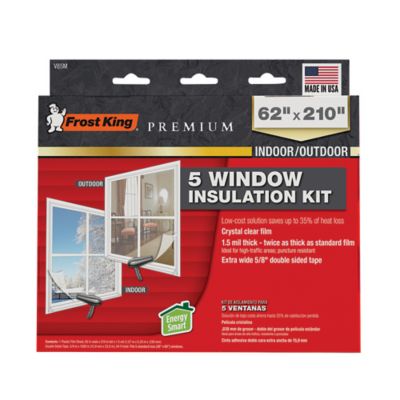
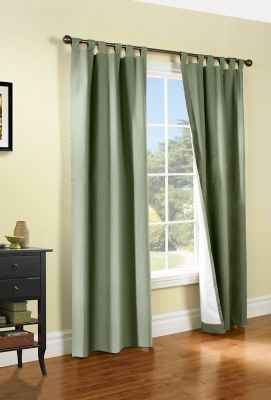
Thermal Insulated Window Curtains offer a separate window-focused layer, not a replacement for building insulation or air sealing. Whether the project involves a workbench corner or a larger enclosed workspace, the most useful comparison brings together material type, installed thickness, documented thermal performance, facing, coverage, and application limits. That keeps the choice grounded in the building and the way the space gets worked every day.